Showcase
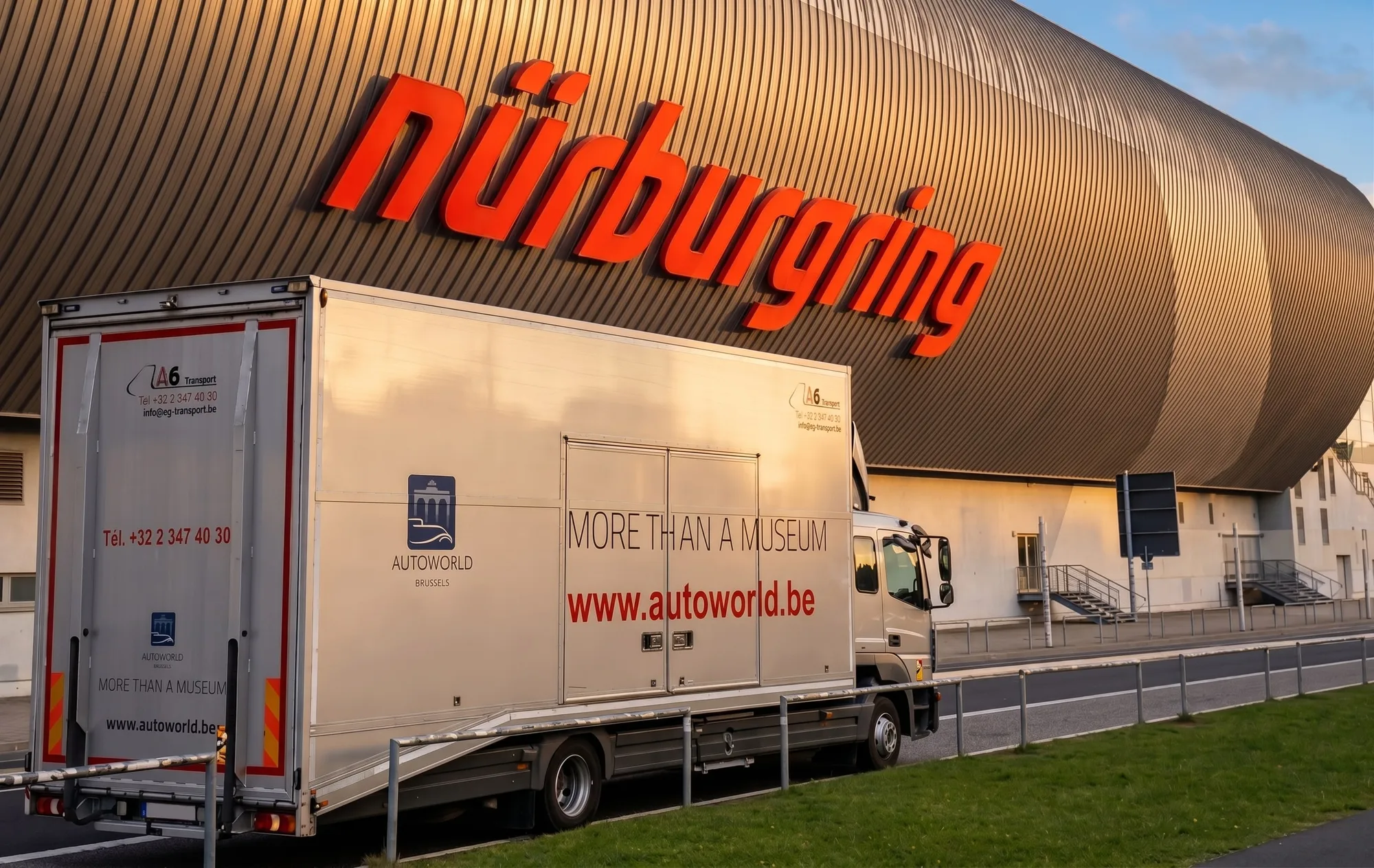
At the Nürburgring
Some deliveries are made at the foot of a circuit, not outside a garage.
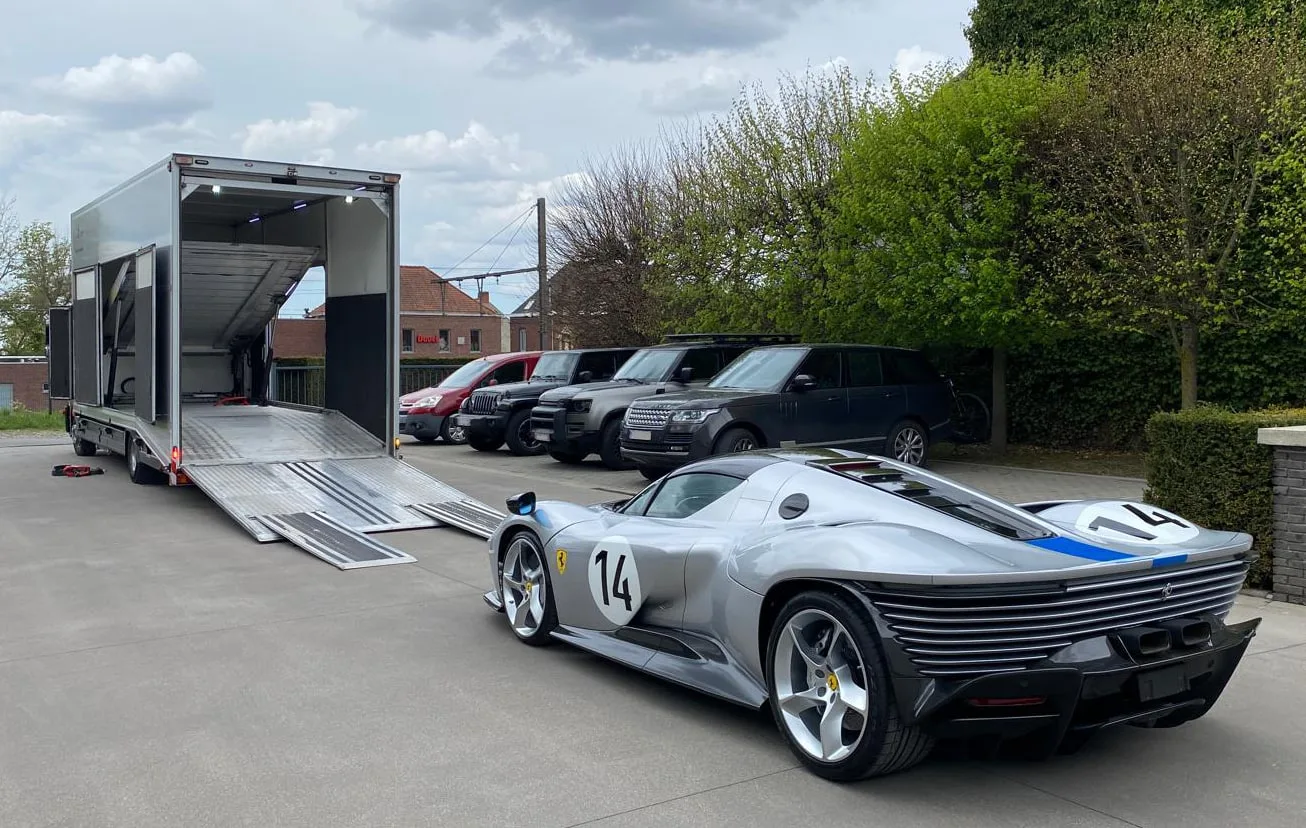
Collected from the driveway
The truck comes to the house. The car does not roll on its own wheels.
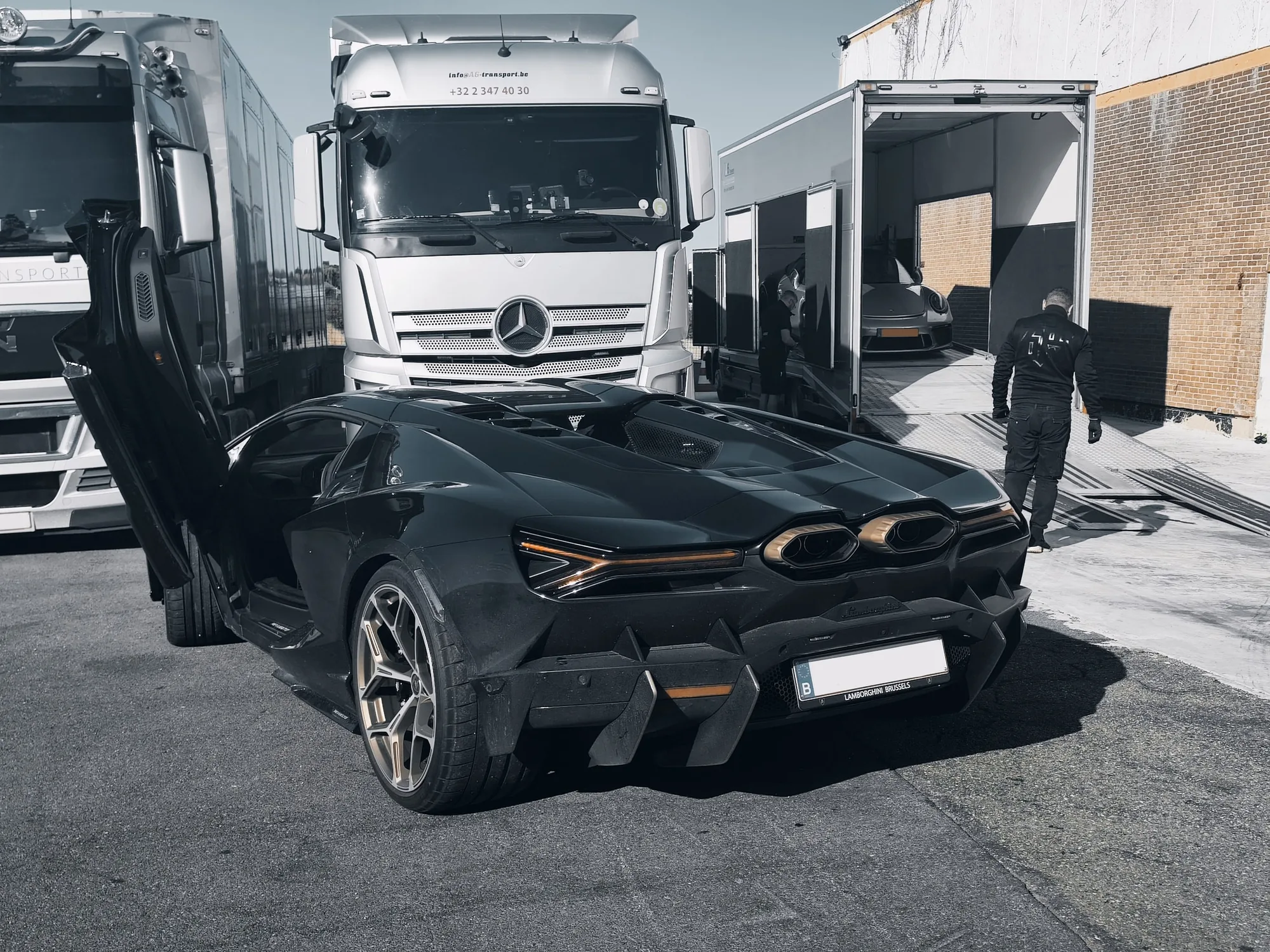
Scissor doors up
Open to let the driver out, not for the photograph.
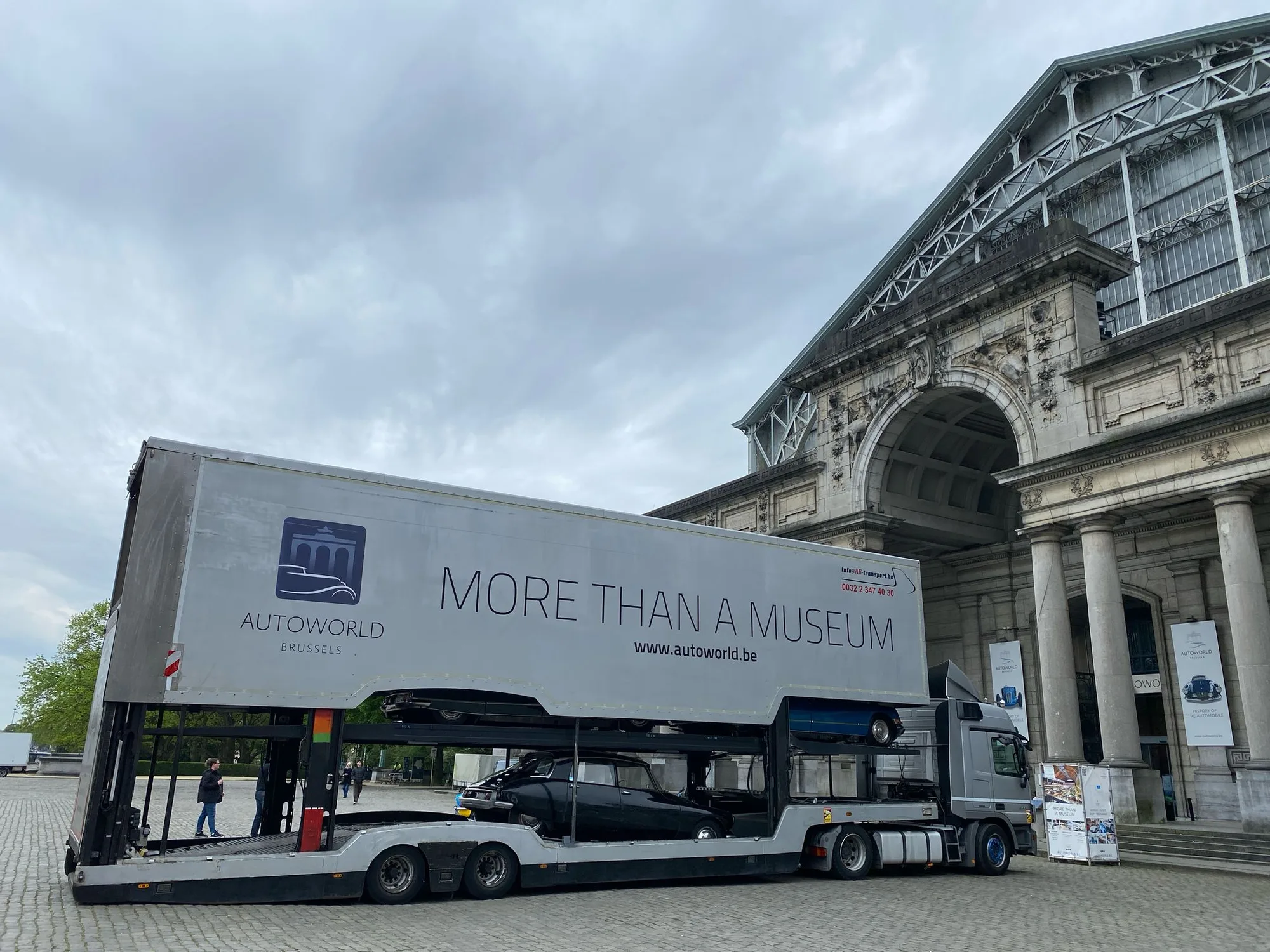
At the museum
Read the articleThe Brussels motor museum's own transporter, at the Cinquantenaire entrance.
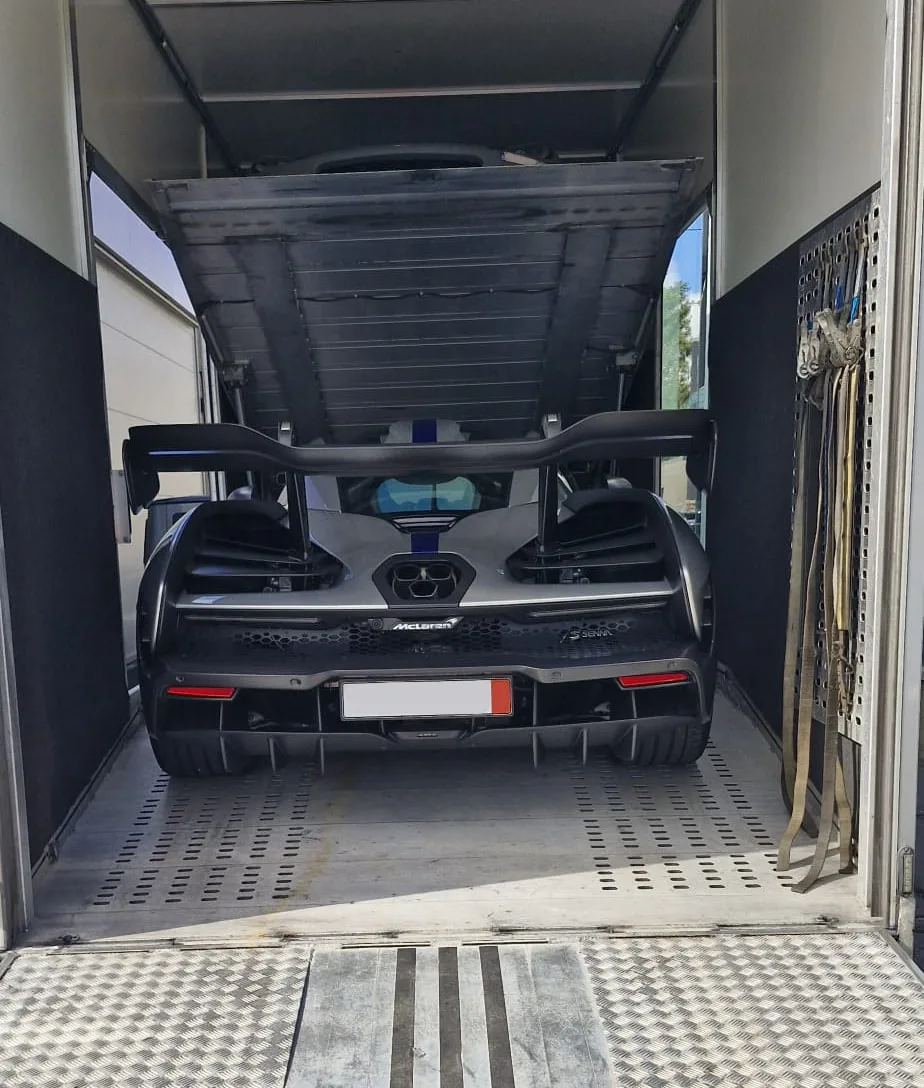
Centred on the deck
A hand's width each side of that rear wing, and the straps still to come.
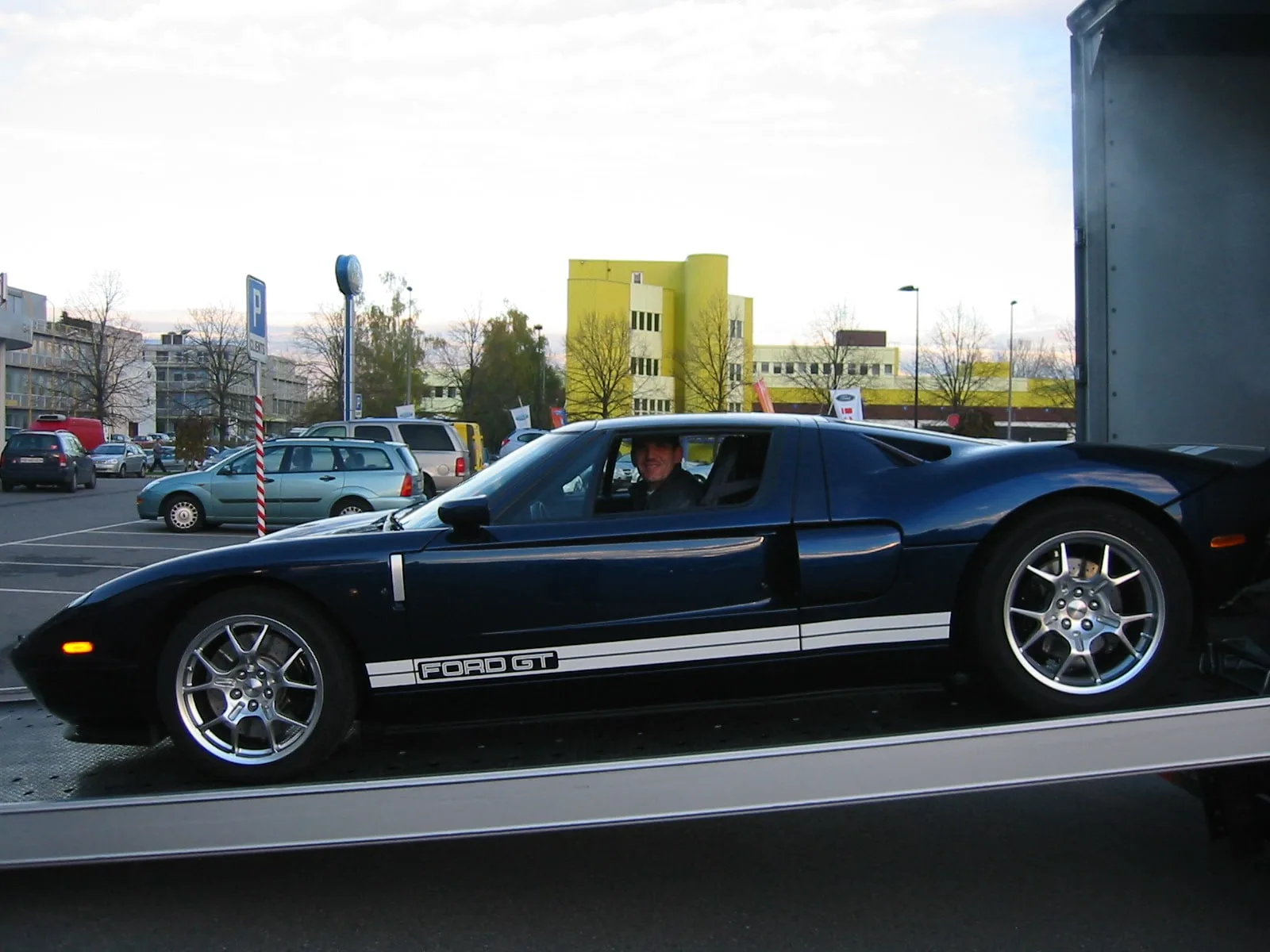
Ford GT
Low nose, long overhang: it goes up the ramps at walking pace, on the flattest angle.
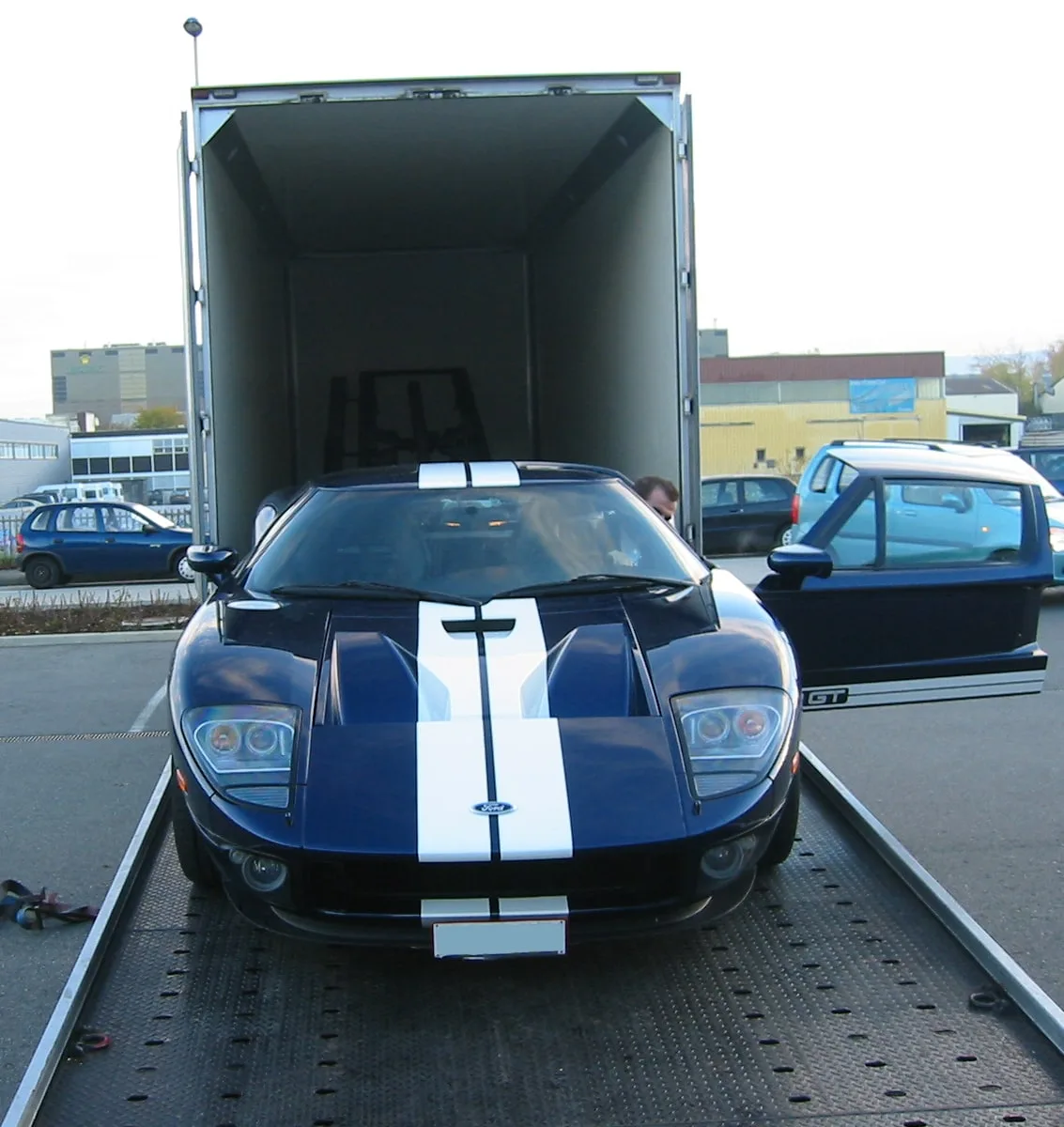
Nose first
Loaded facing forward, so it leaves the way it came in: driven, not pushed.
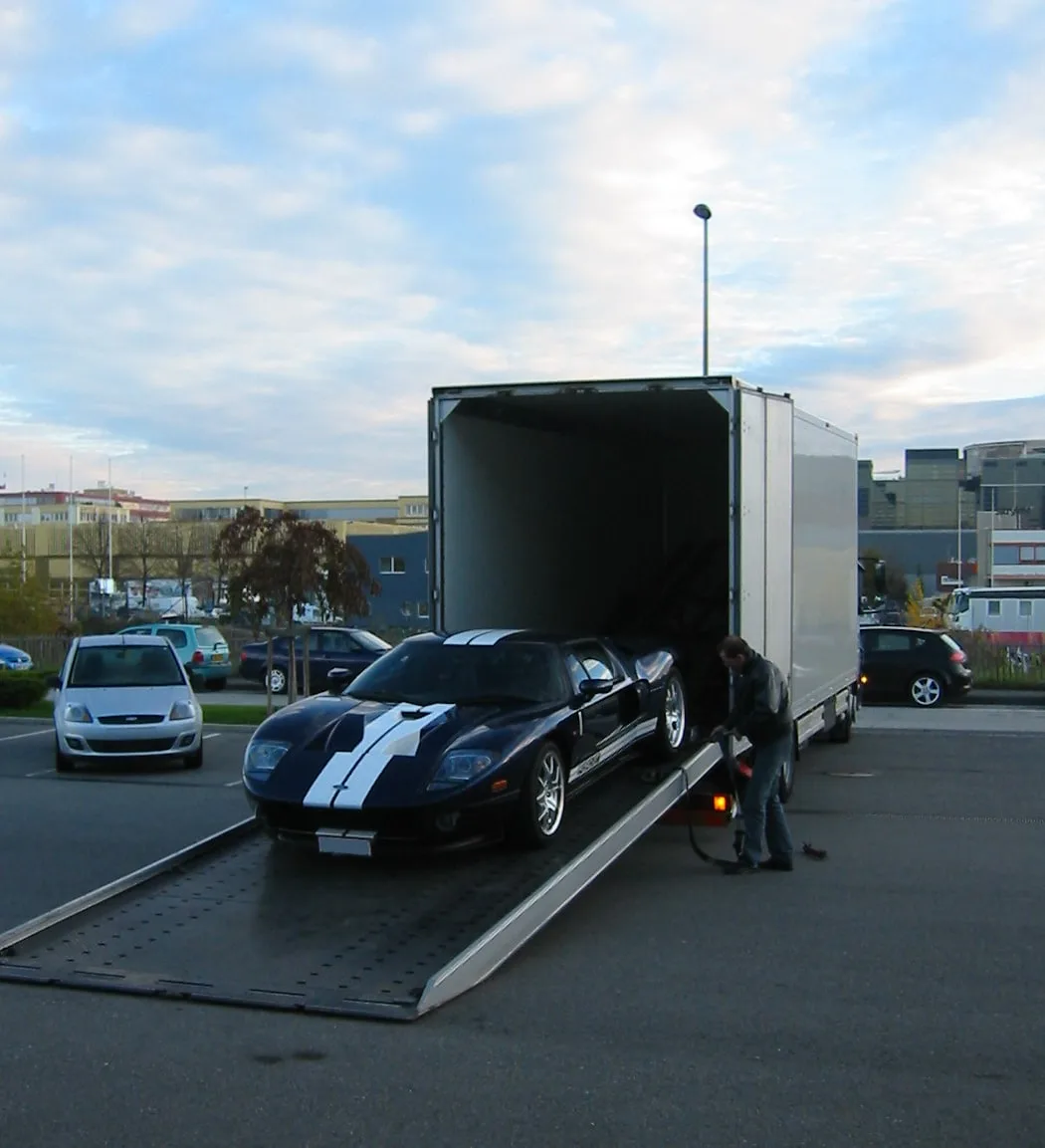
Last load of the day
The car is expected in Switzerland. The light goes before the work does.
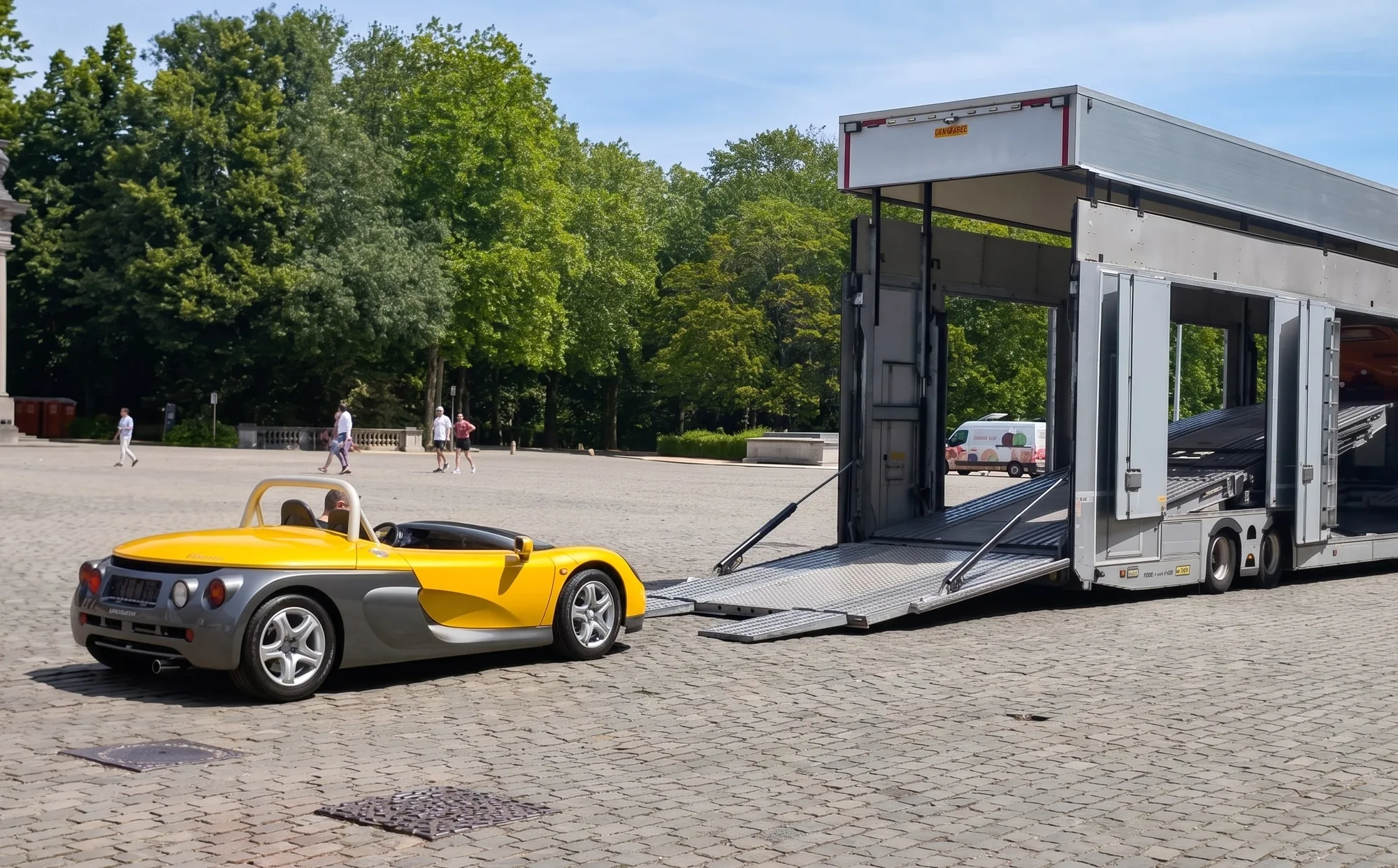
Sport Spider
A roadster with no windscreen, carried enclosed for exactly that reason.
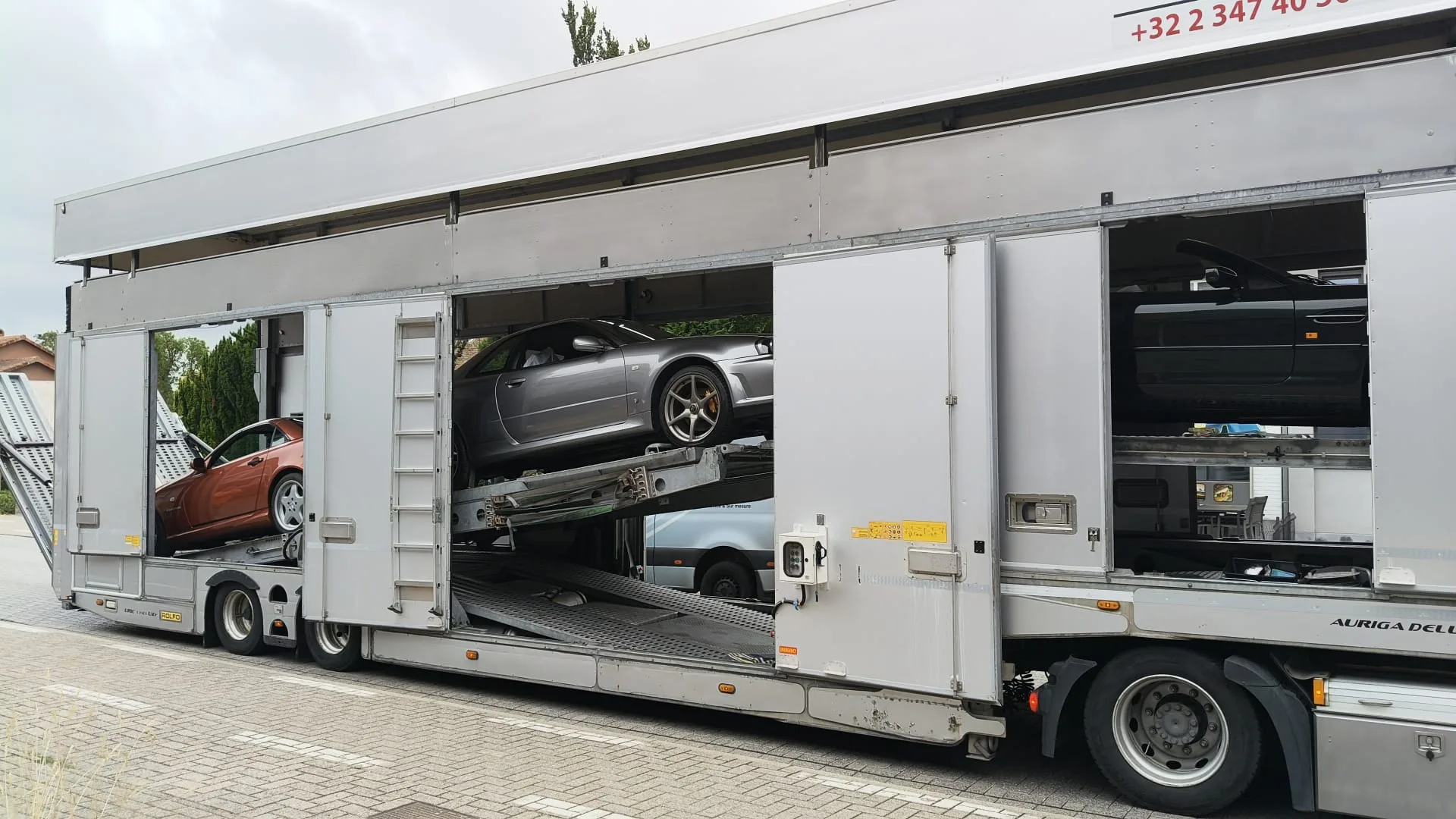
Mercedes collection
Several cars from one owner moved in a single load.
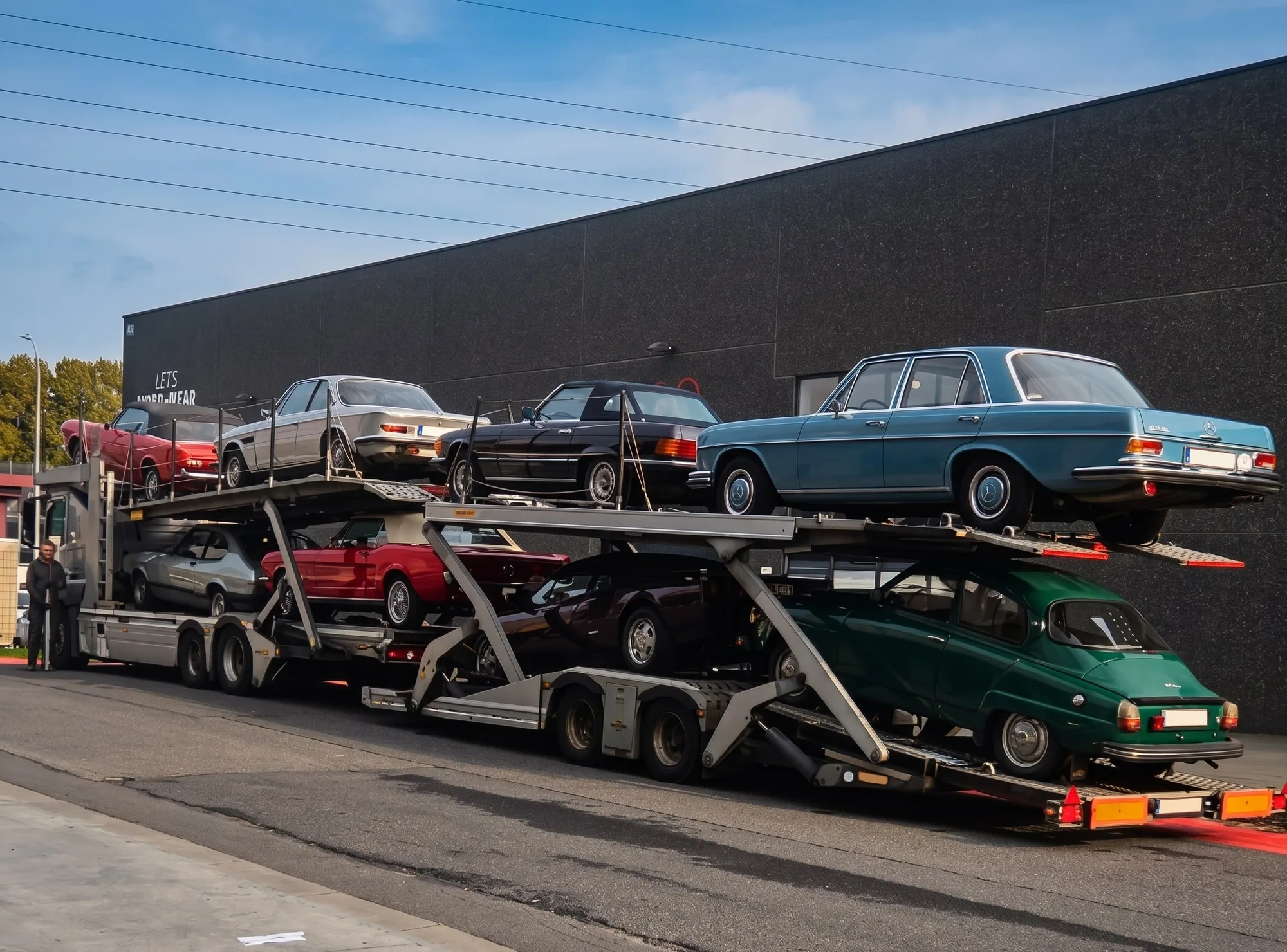
A collection on the move
When every car on board is a runner, one open carrier replaces four trips.
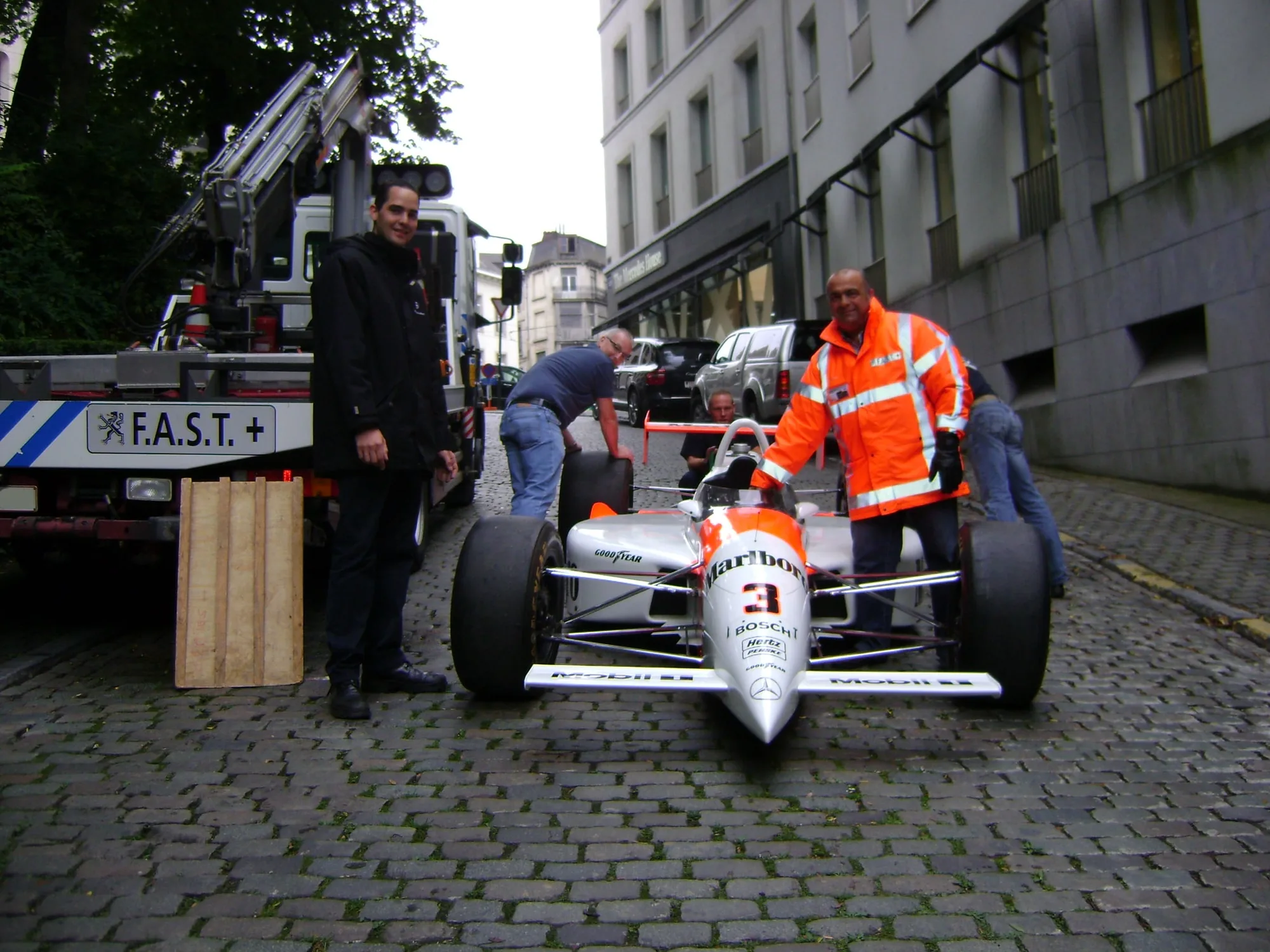
Pushed to the stand
No starter, no reverse, tramlines underfoot. Four people and a walking pace.
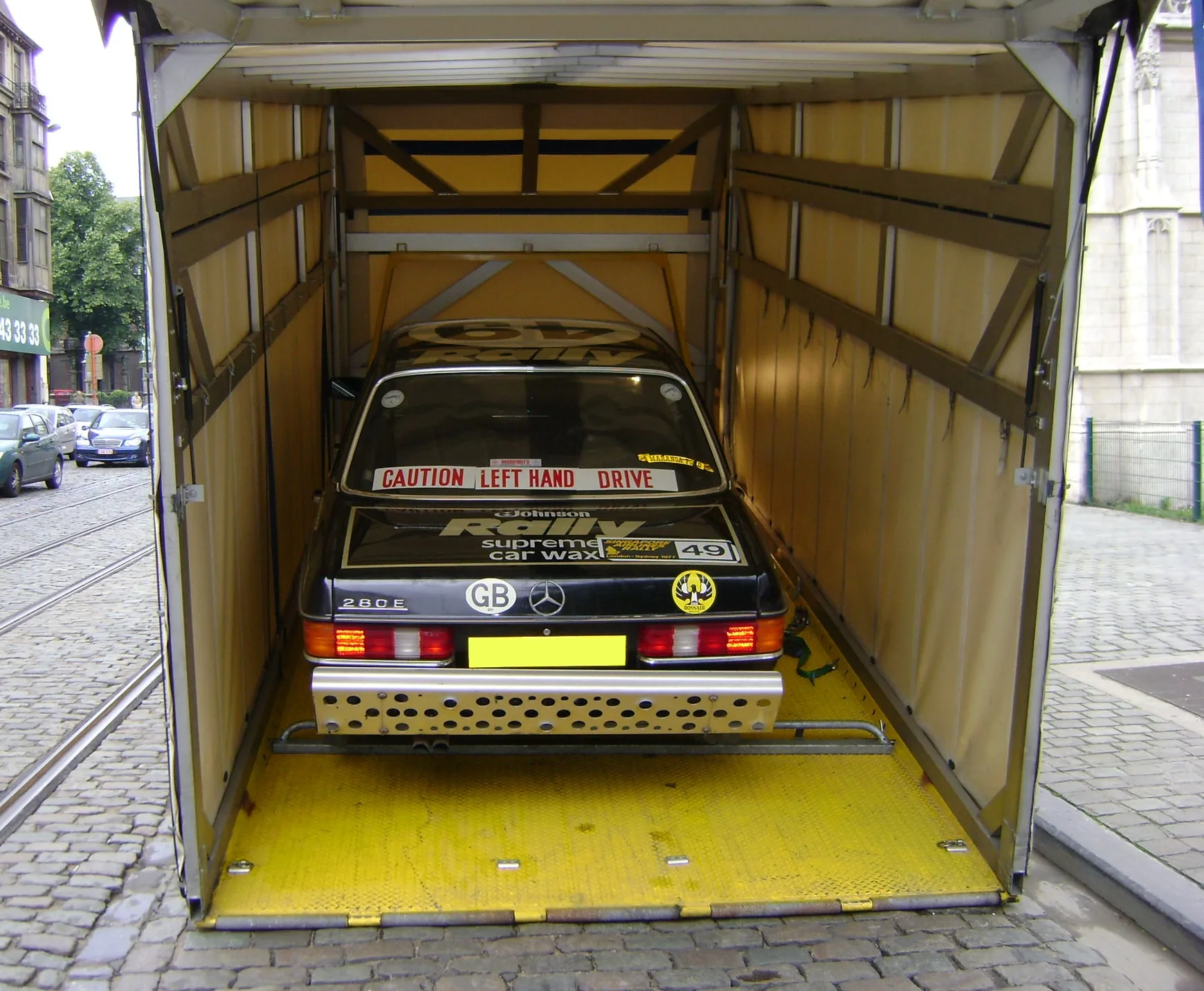
In the box
A touring car that raced for a living, carried the way it is worth today.
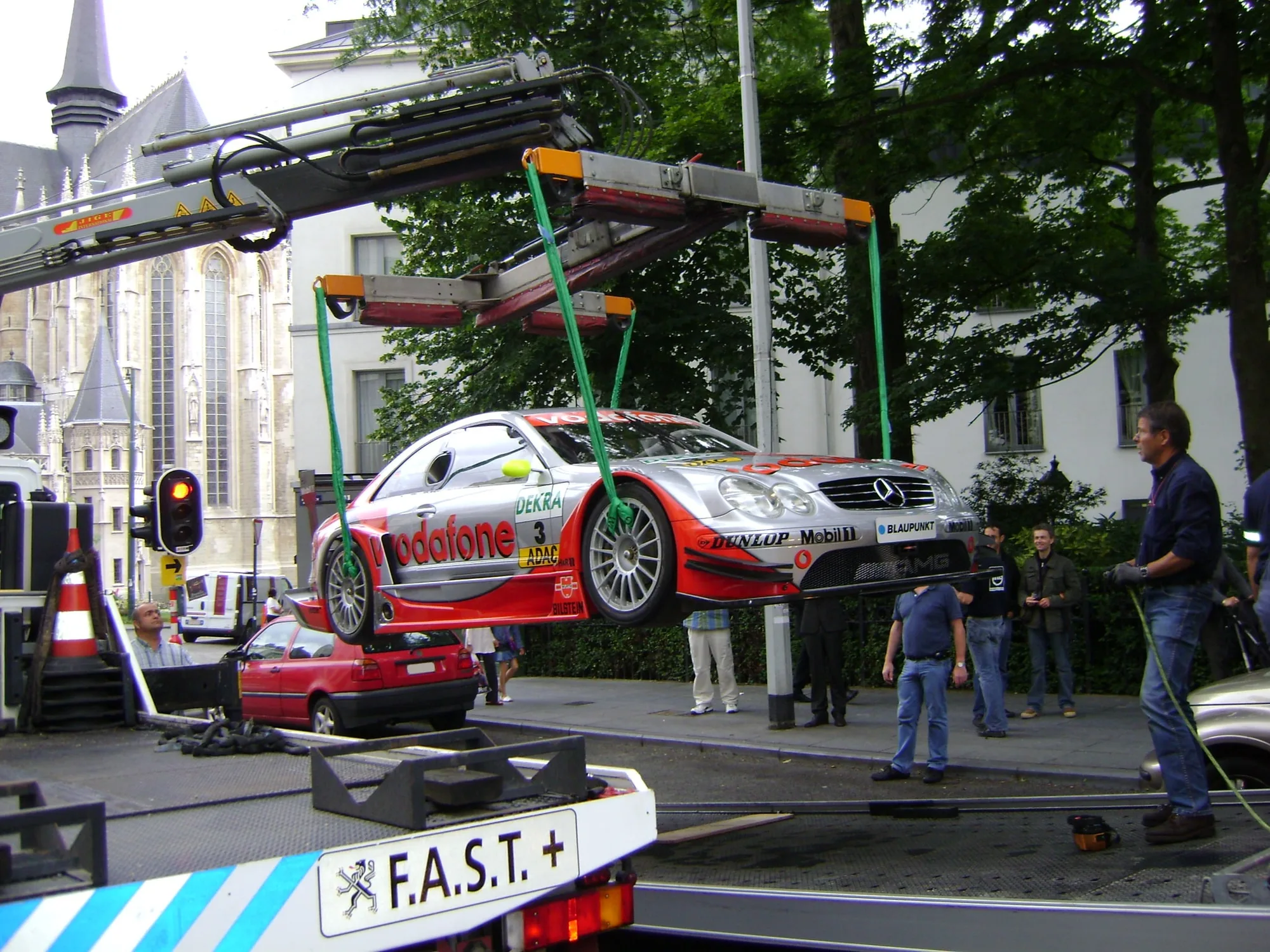
Lifted into place
The stand sits where no ramp reaches. The group's recovery trucks bring the arm.
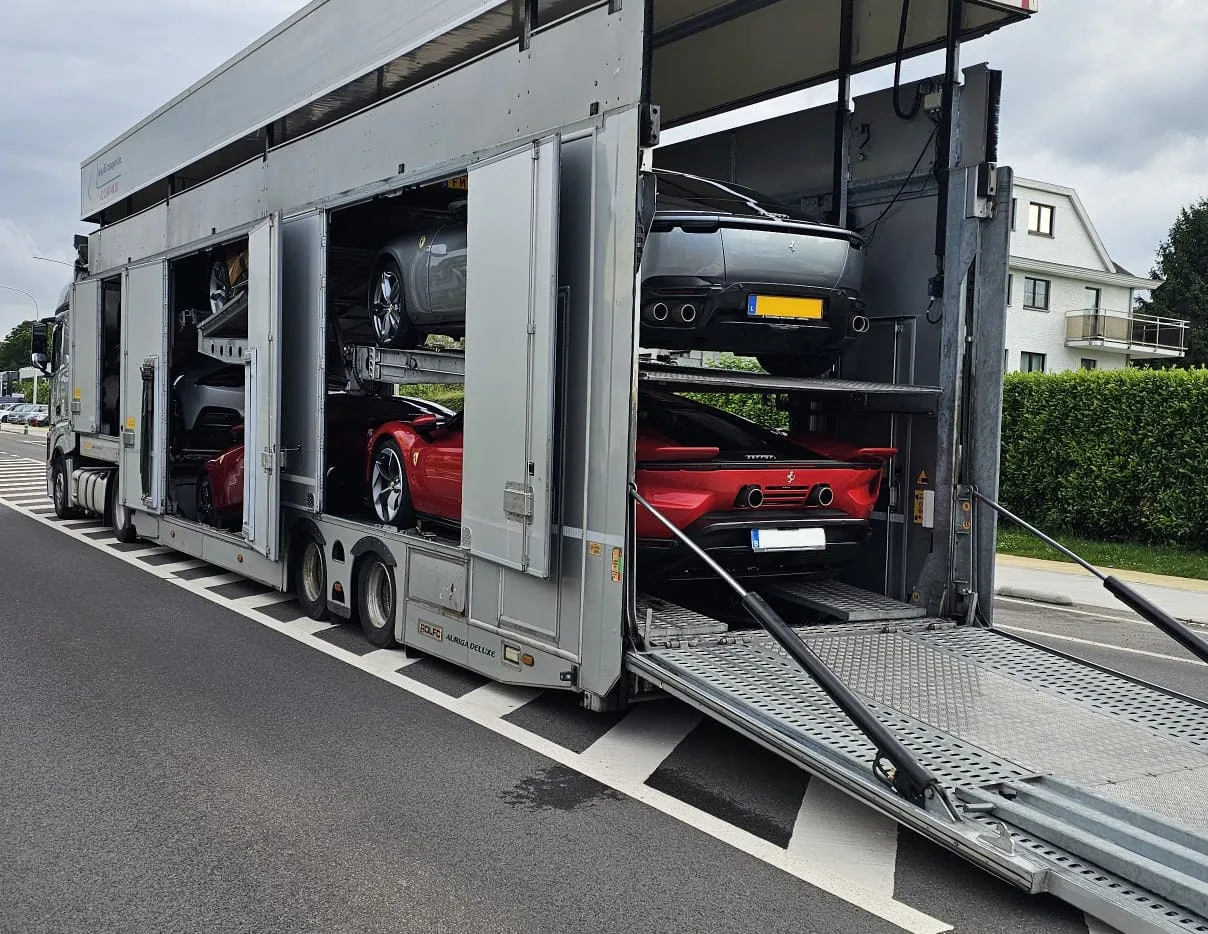
In transit
From one point in Europe to another, with no transfer along the way.
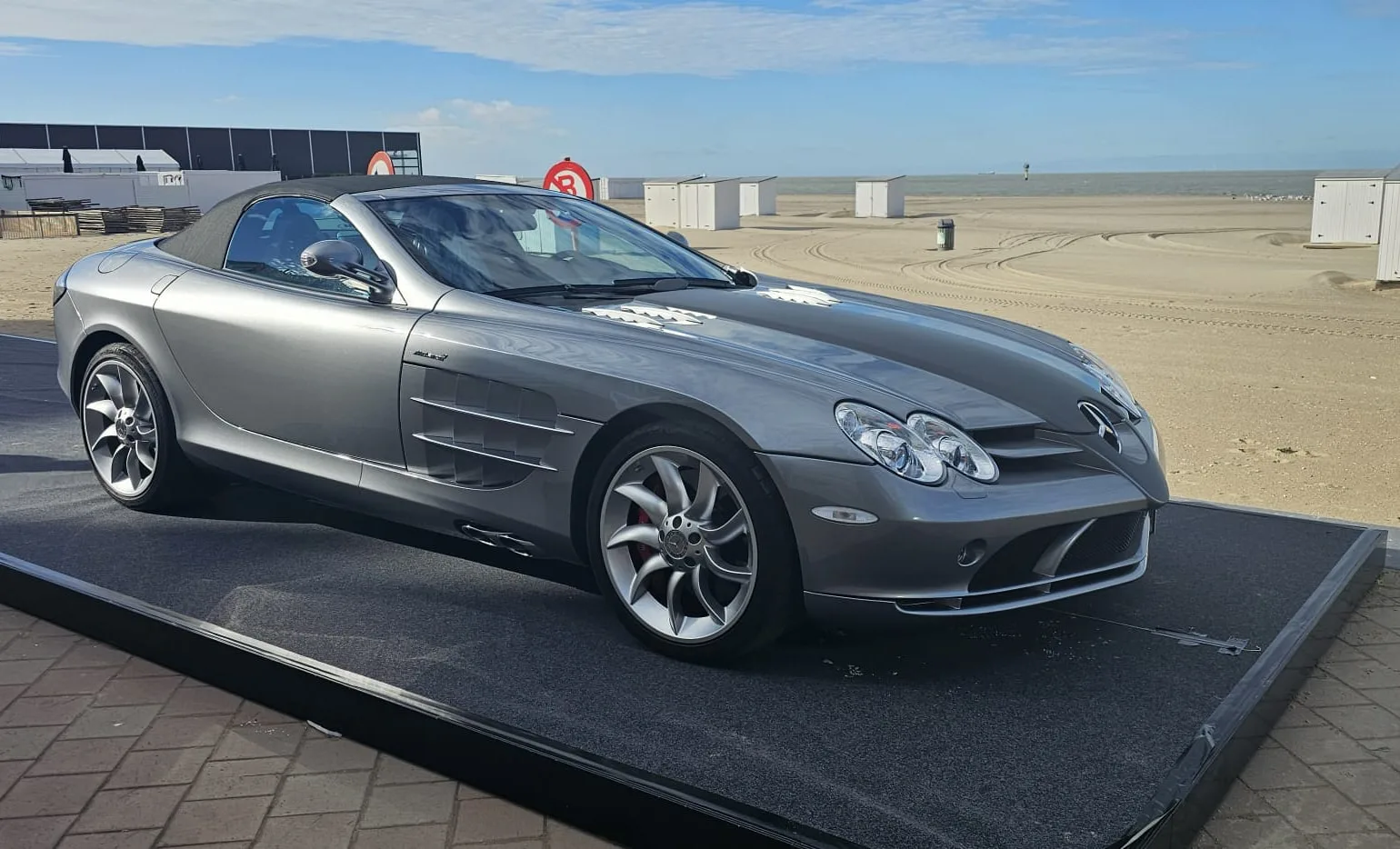
Delivered to the sand
Some cars are not delivered to a garage but to a stand, on time and unmarked.
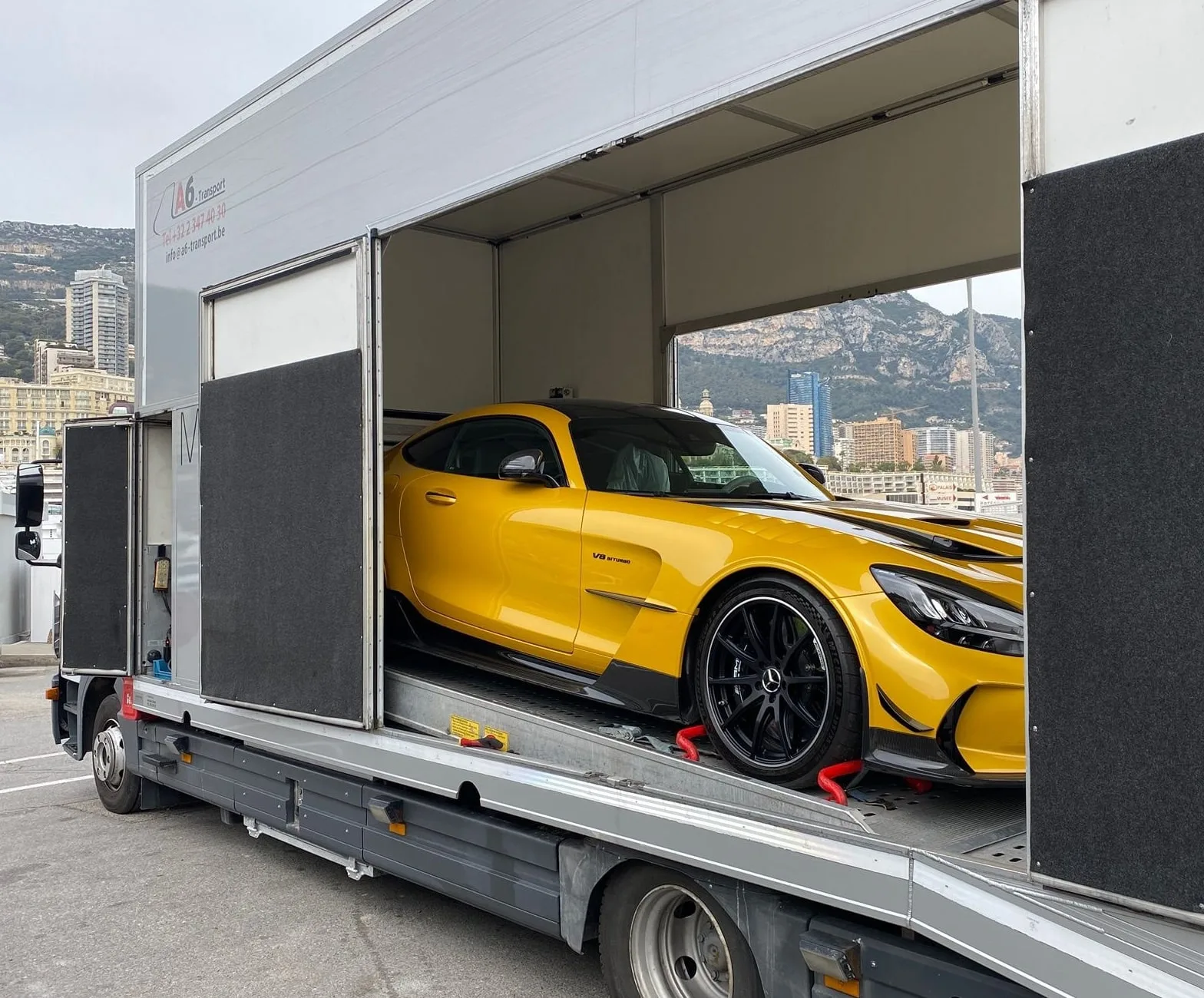
Down to Monaco
An AMG GT Black Series arrived by road, under cover from the first mile to the last.
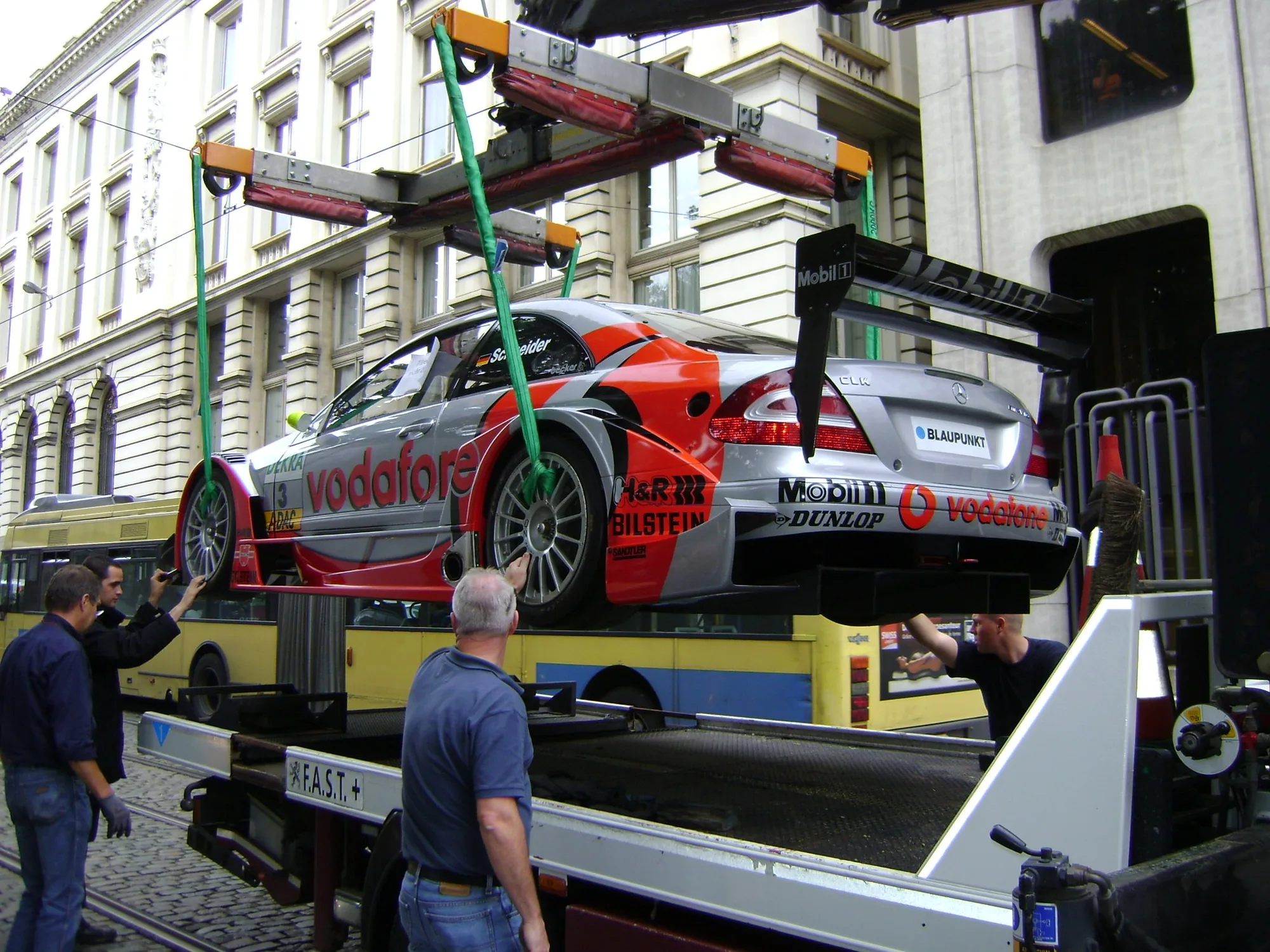
Back on its wheels
Slings off, straps coiled. The whole lift takes longer to prepare than to perform.
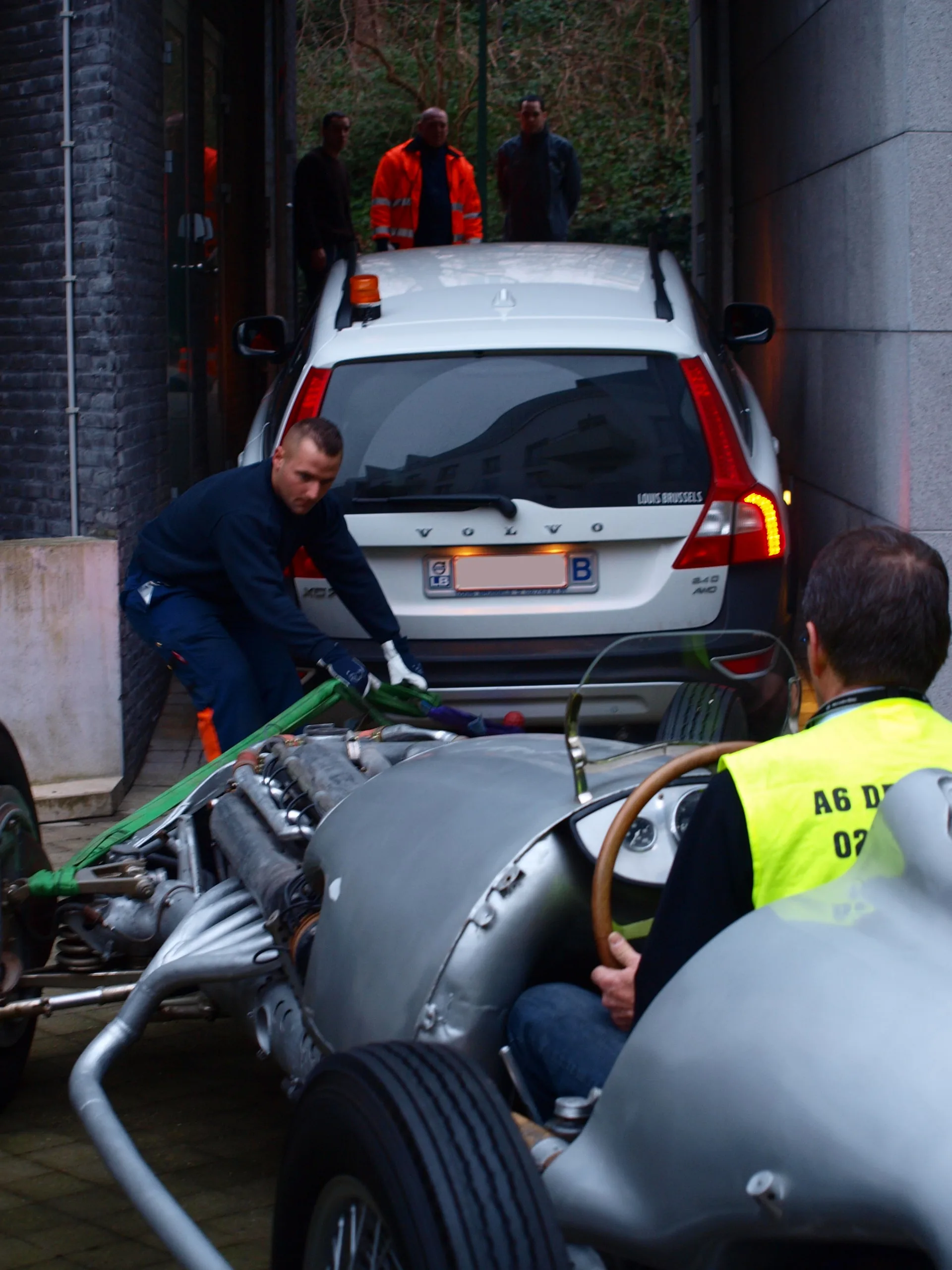
The Silver Arrow
Bare aluminium, no paint to hide a mark. Everything is done with two hands on the tyres.
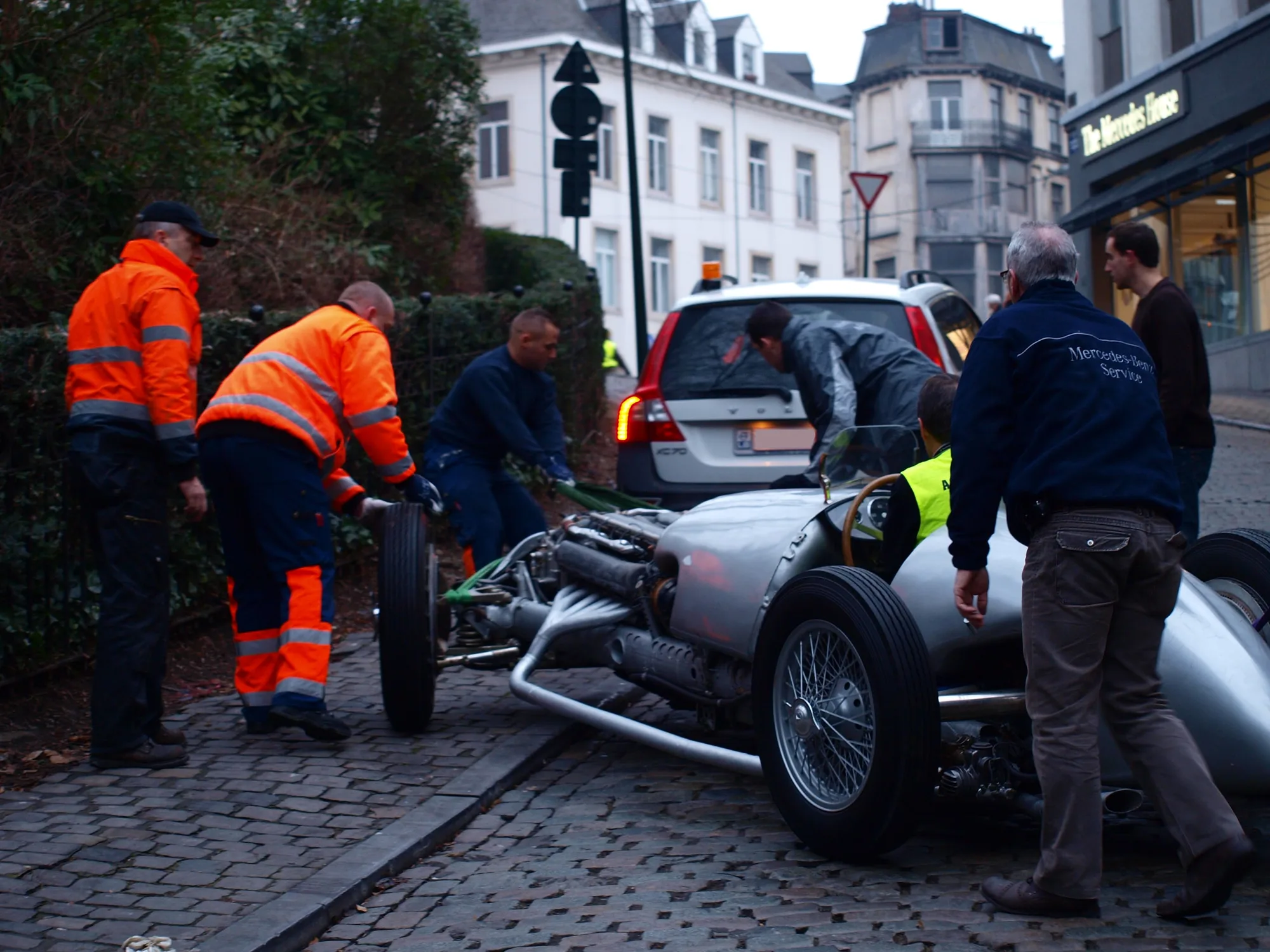
Six pairs of hands
A grand prix car of this age is not driven between two points. It is walked.
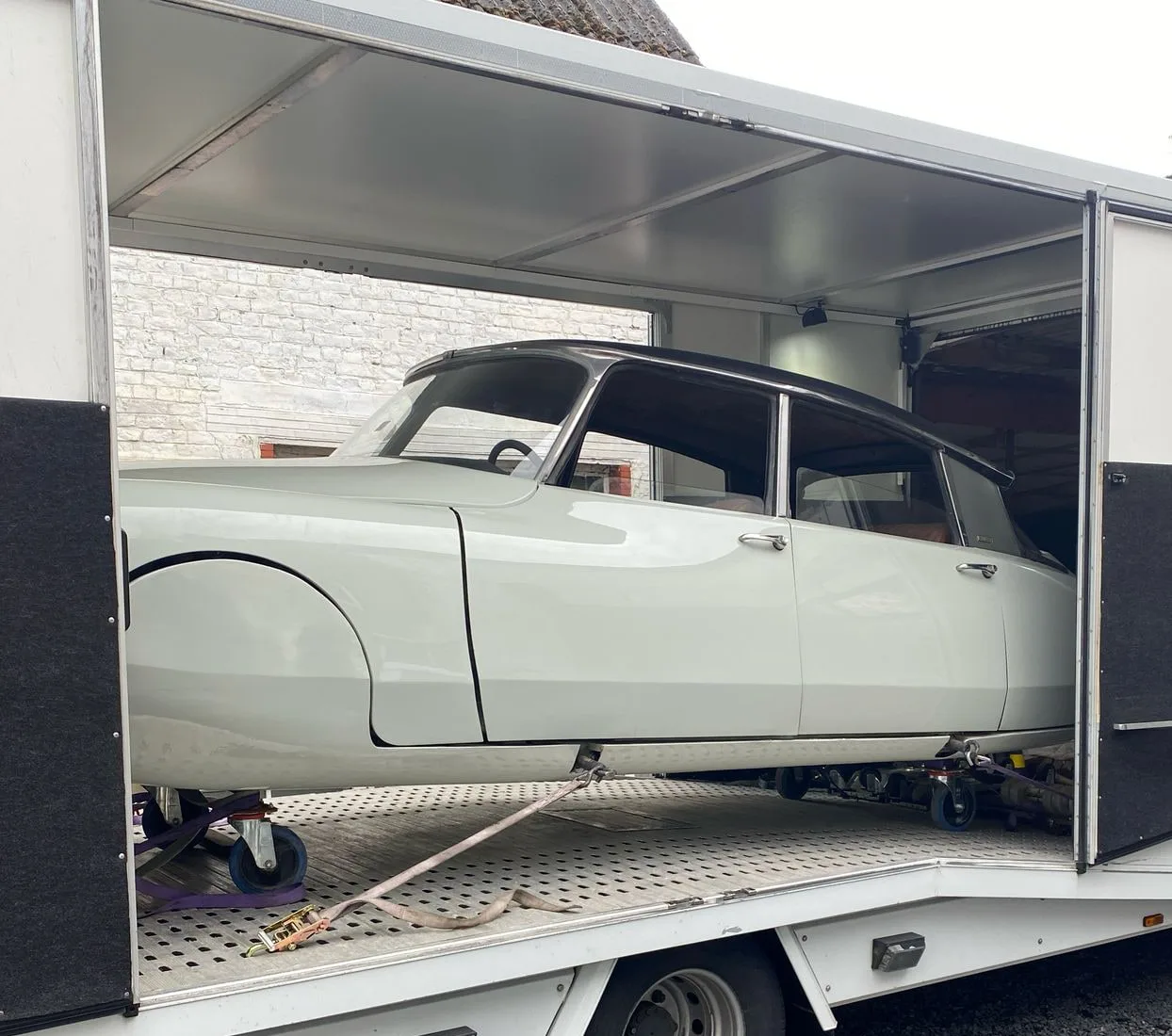
Citroën DS
Out of a barn, loaded without starting: a car that will not run still travels.
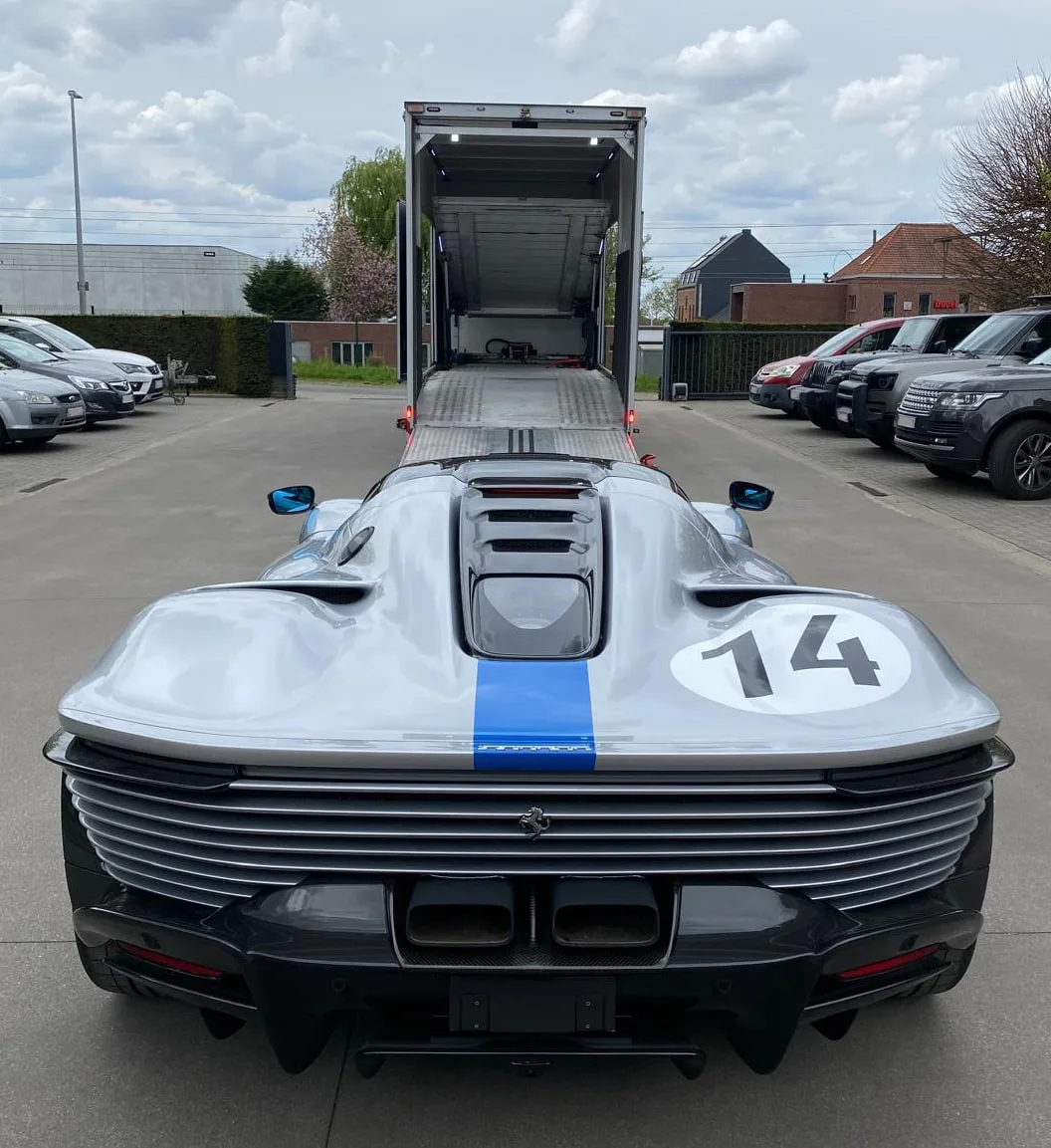
Lined up with the ramps
One person aligns the car, another watches the clearance. Nobody rushes.
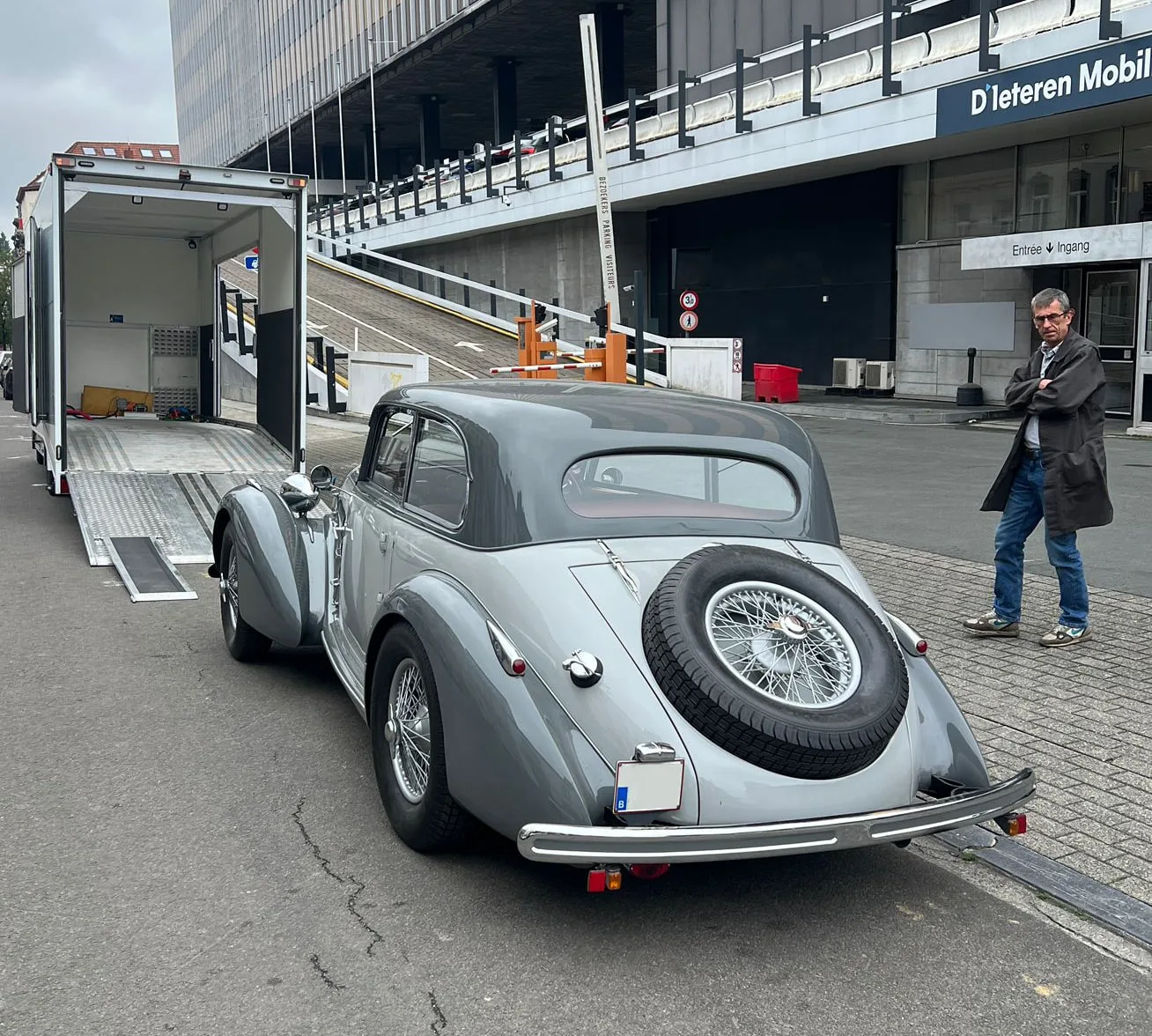
Pre-war drophead
Spare wheel on the flank, whitewall tyres: nothing sticks out of the cabin.
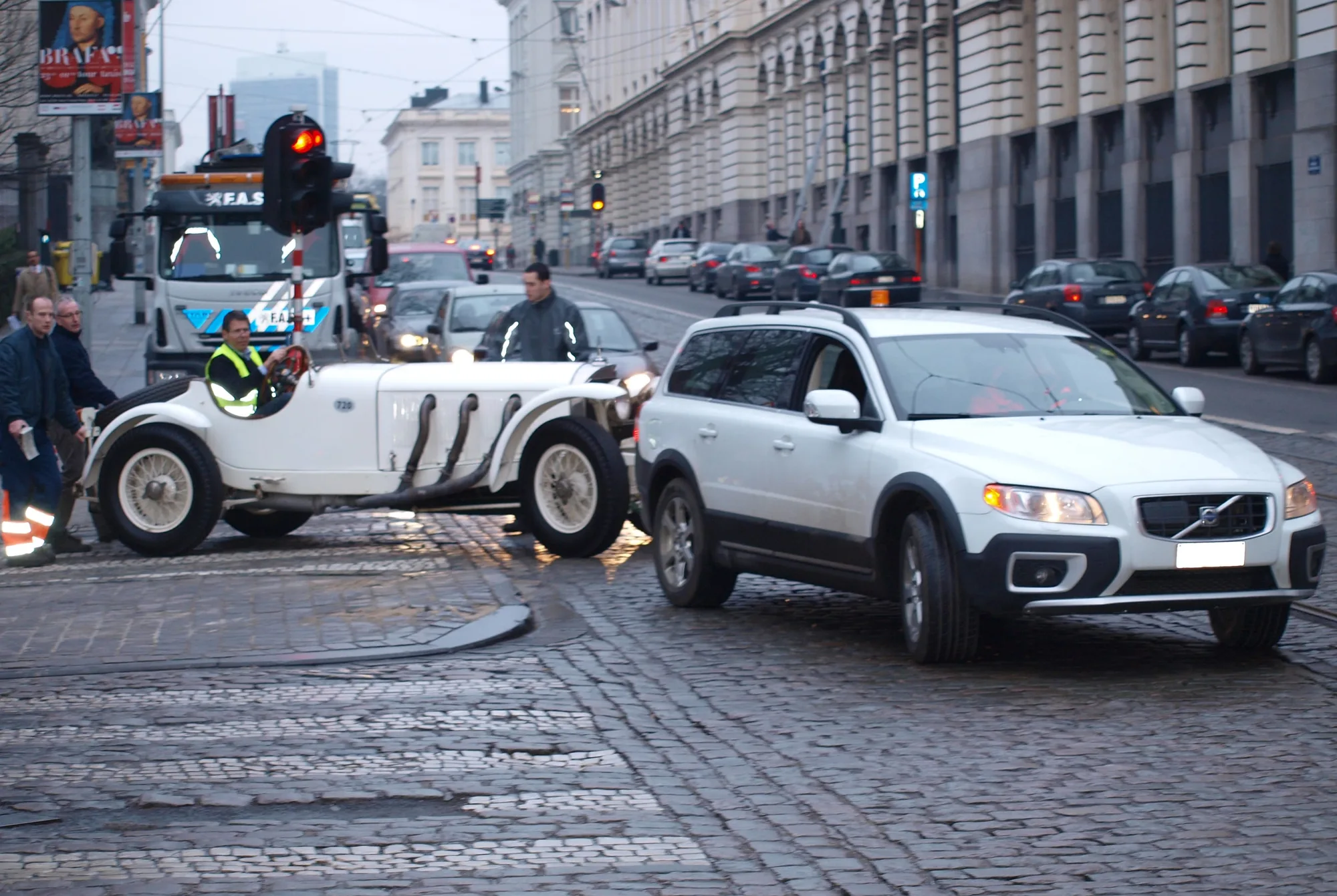
Across the tramlines
Fifty metres of public road between the truck and the door. They are the longest of the job.
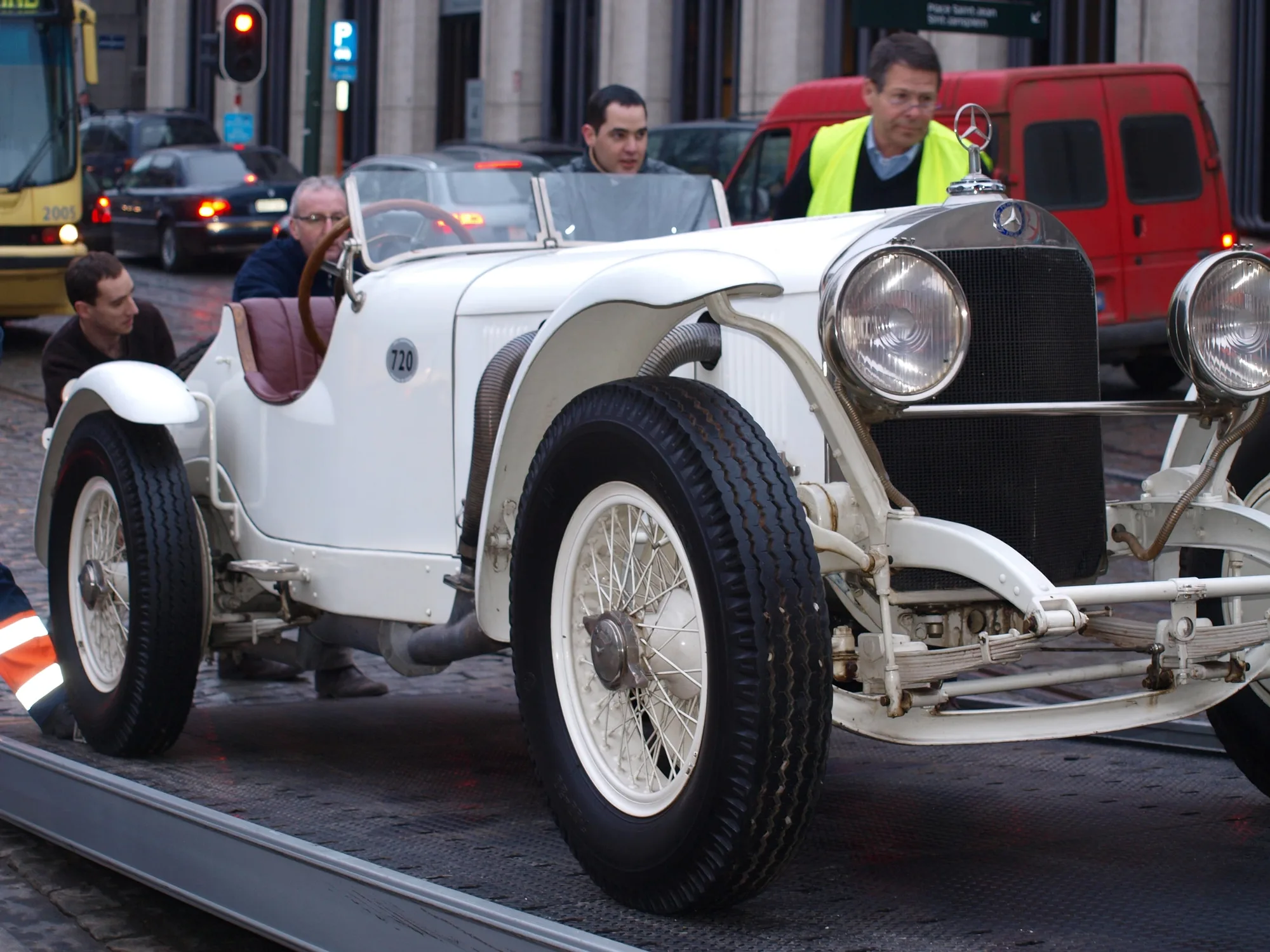
Outside exhausts
Cream paint, exposed pipes, spoked wheels: nothing on this car forgives a knock.
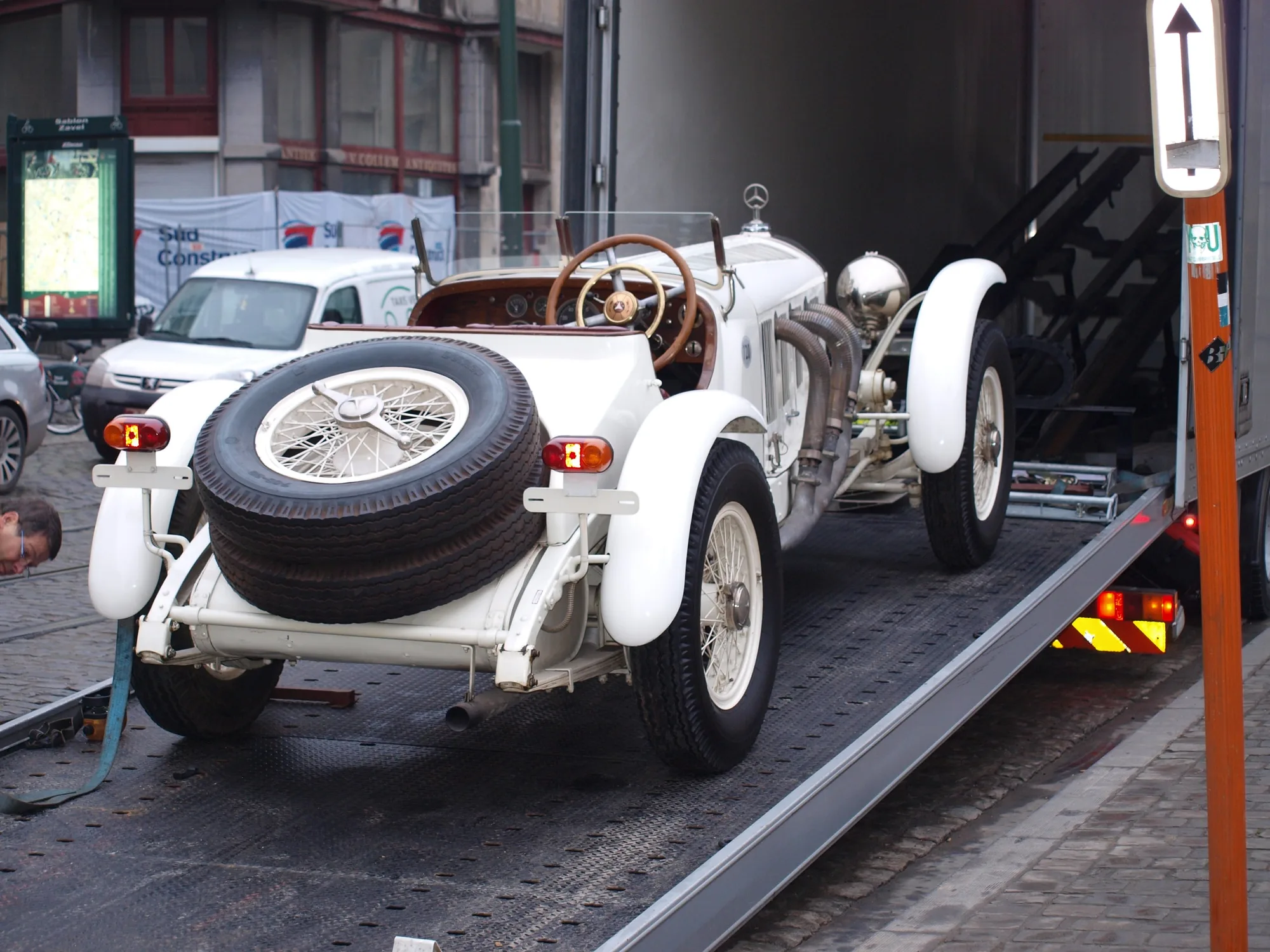
Two spares on the tail
Everything that sticks out is a corner to protect. There are more of them than on a modern car.
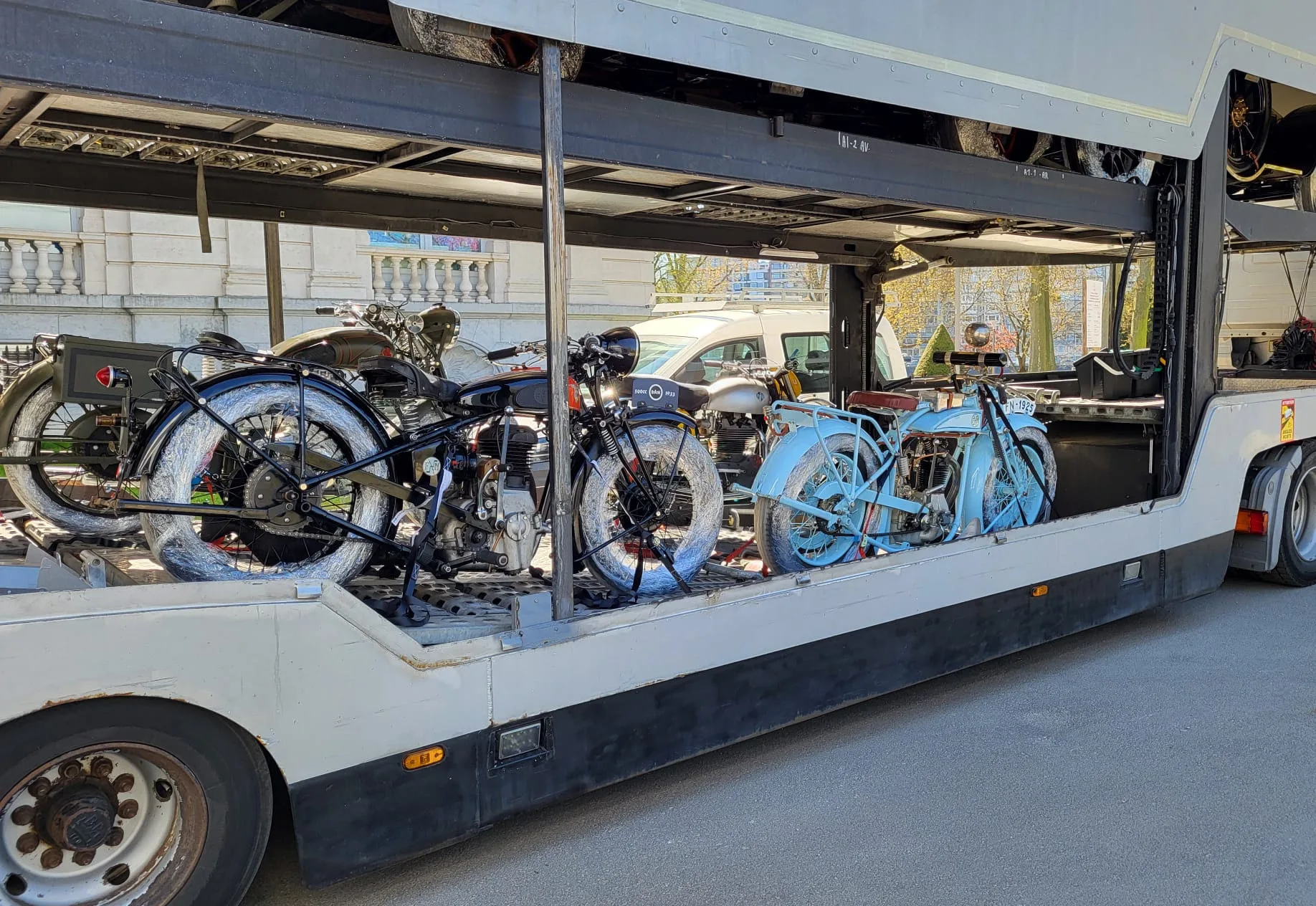
Vintage motorcycles
Each machine on its own cradle, strapped by the fork and never by the bars.
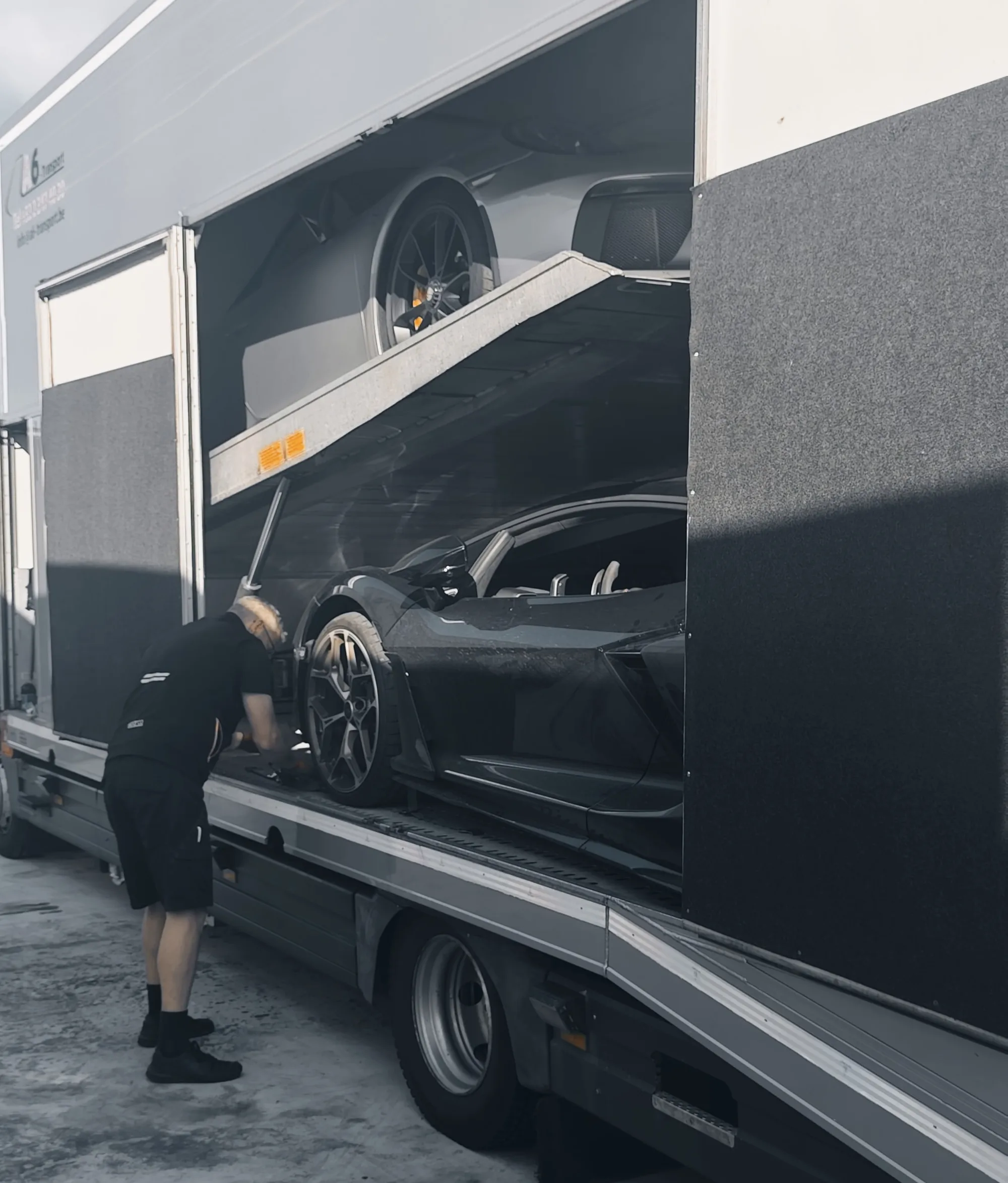
Lashing down
Securing takes longer than loading, and that is deliberate.
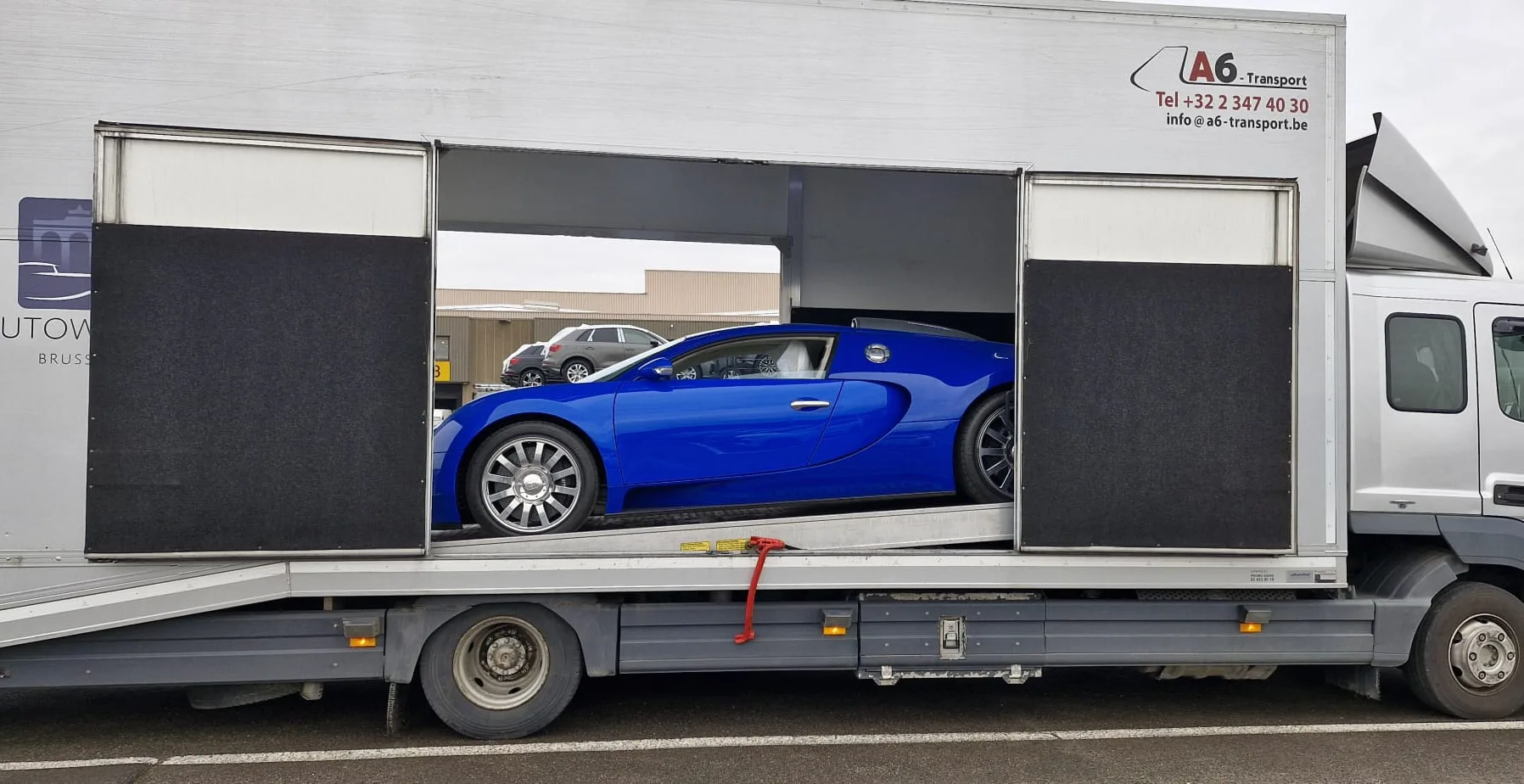
Veyron, museum bound
Straight from the trailer to the exhibition floor, without a lap of the block.
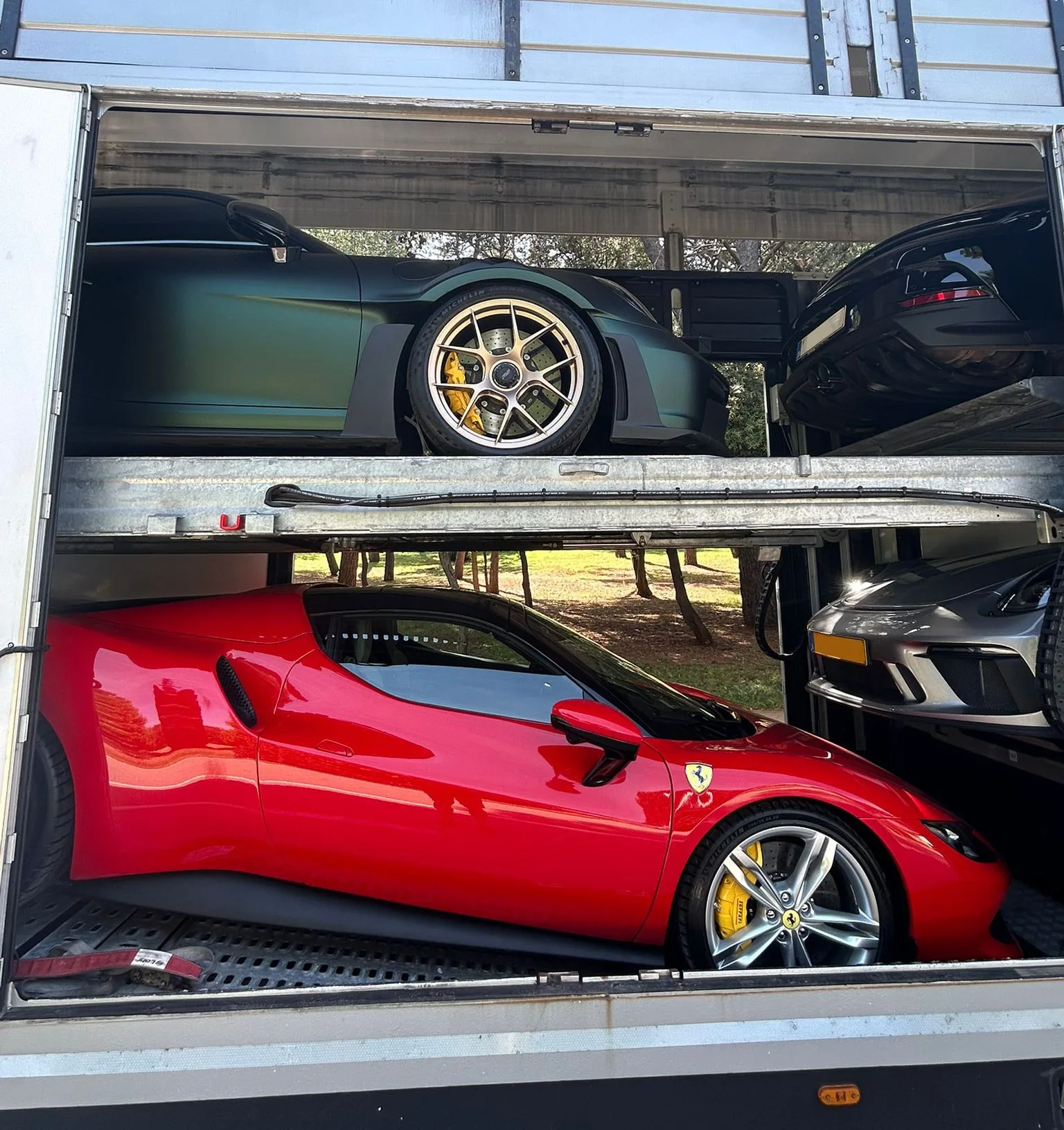
296 and GT3 RS
Two new cars on two decks, never seeing each other for the whole trip.
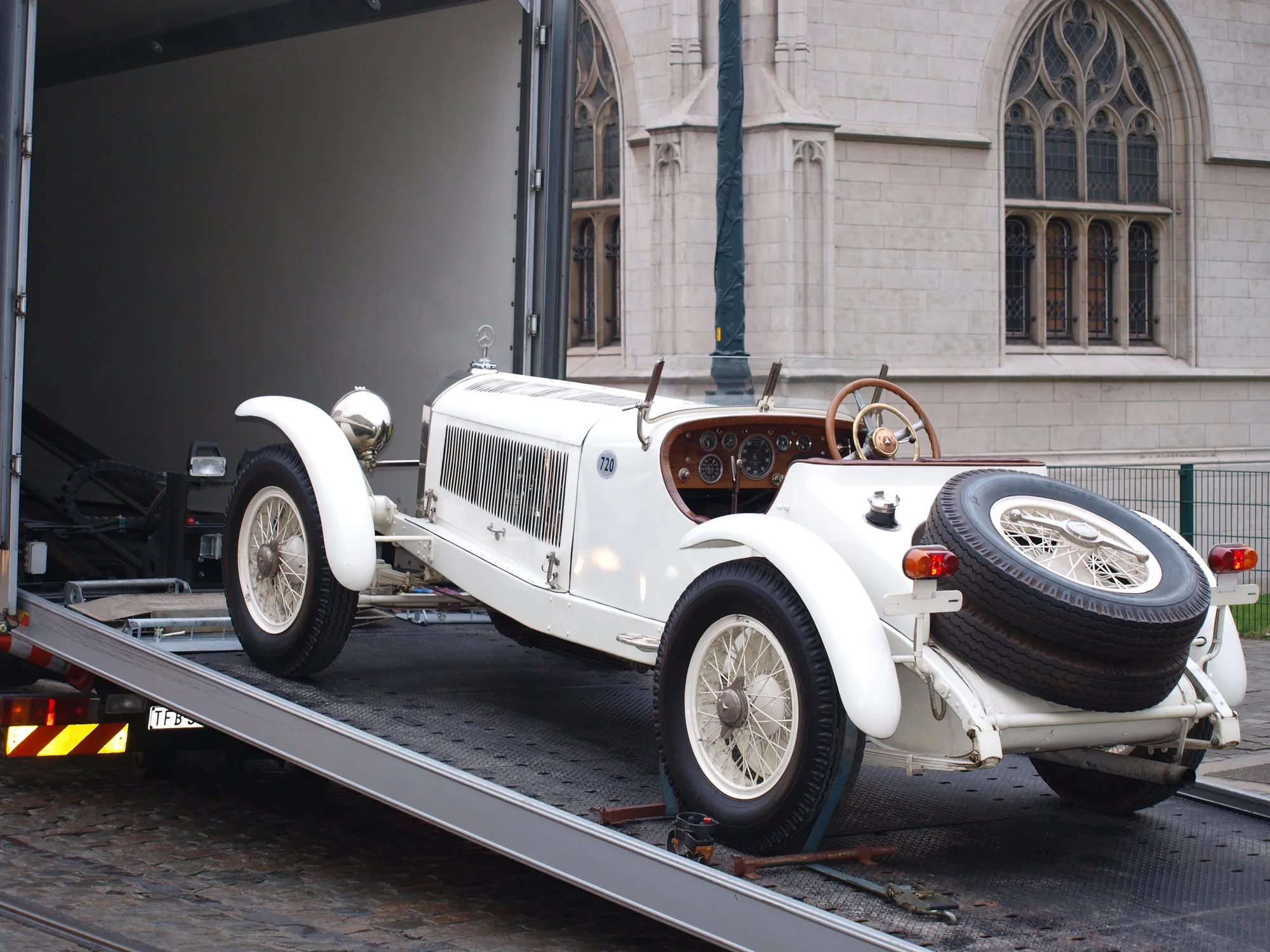
Onto the ramp
Long wheelbase, hard springs, no synchromesh. It goes aboard at the pace of the slowest hand.
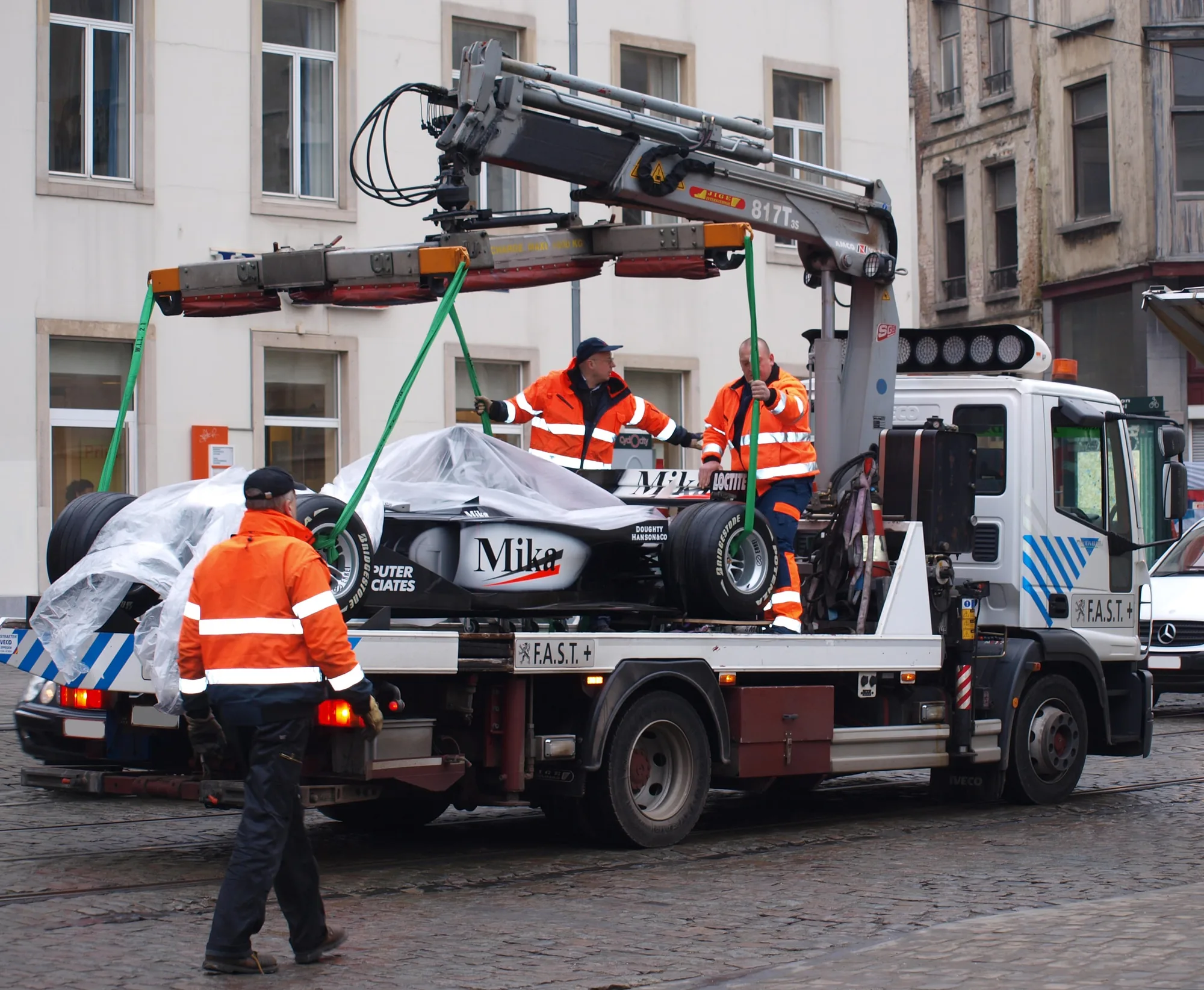
Over the pavement
A single-seater cannot climb a kerb. It goes over it, in slings, with the street closed.
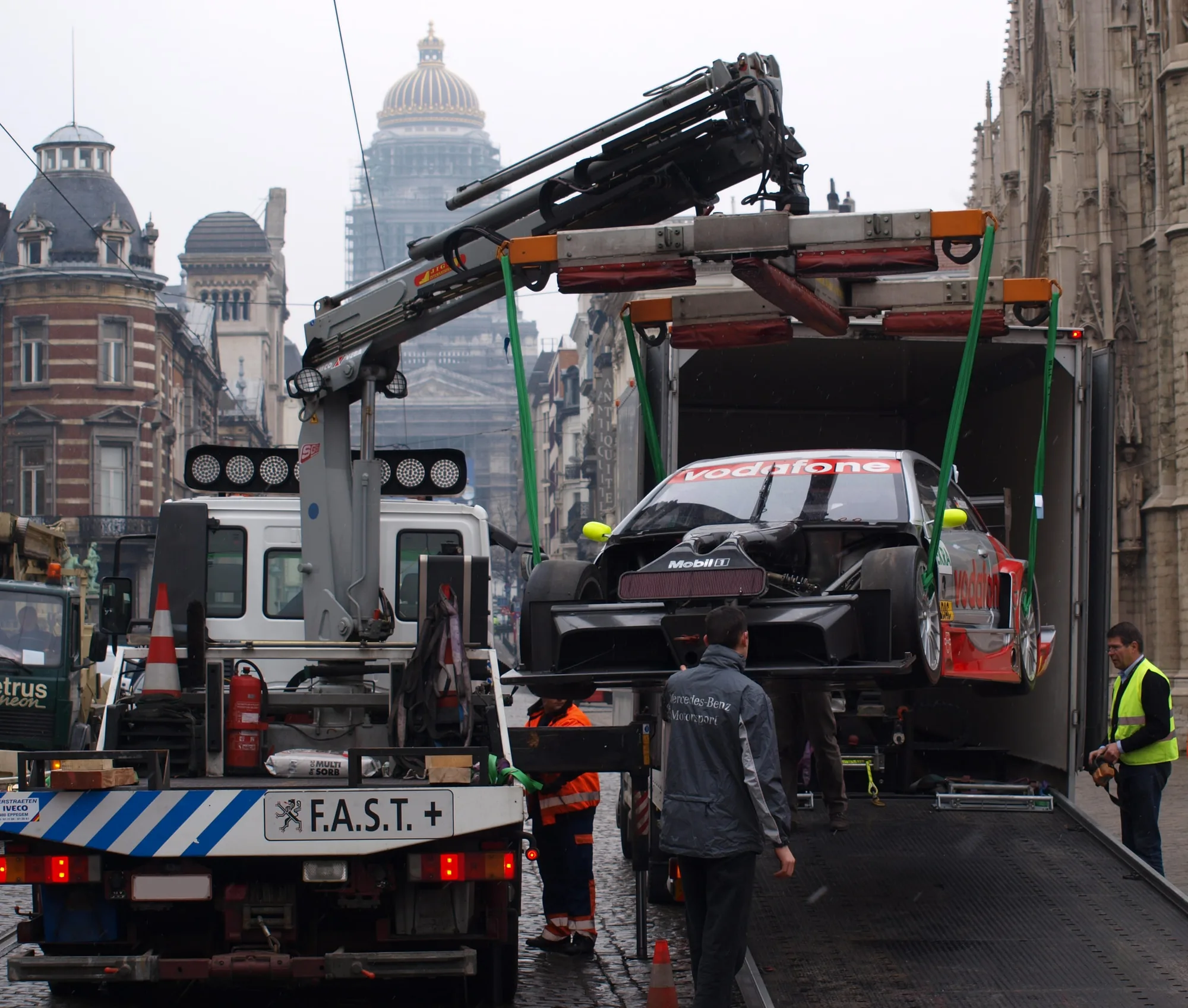
The street as a dock
City-centre work has no yard and no room to turn. The plan is made before the trucks arrive.
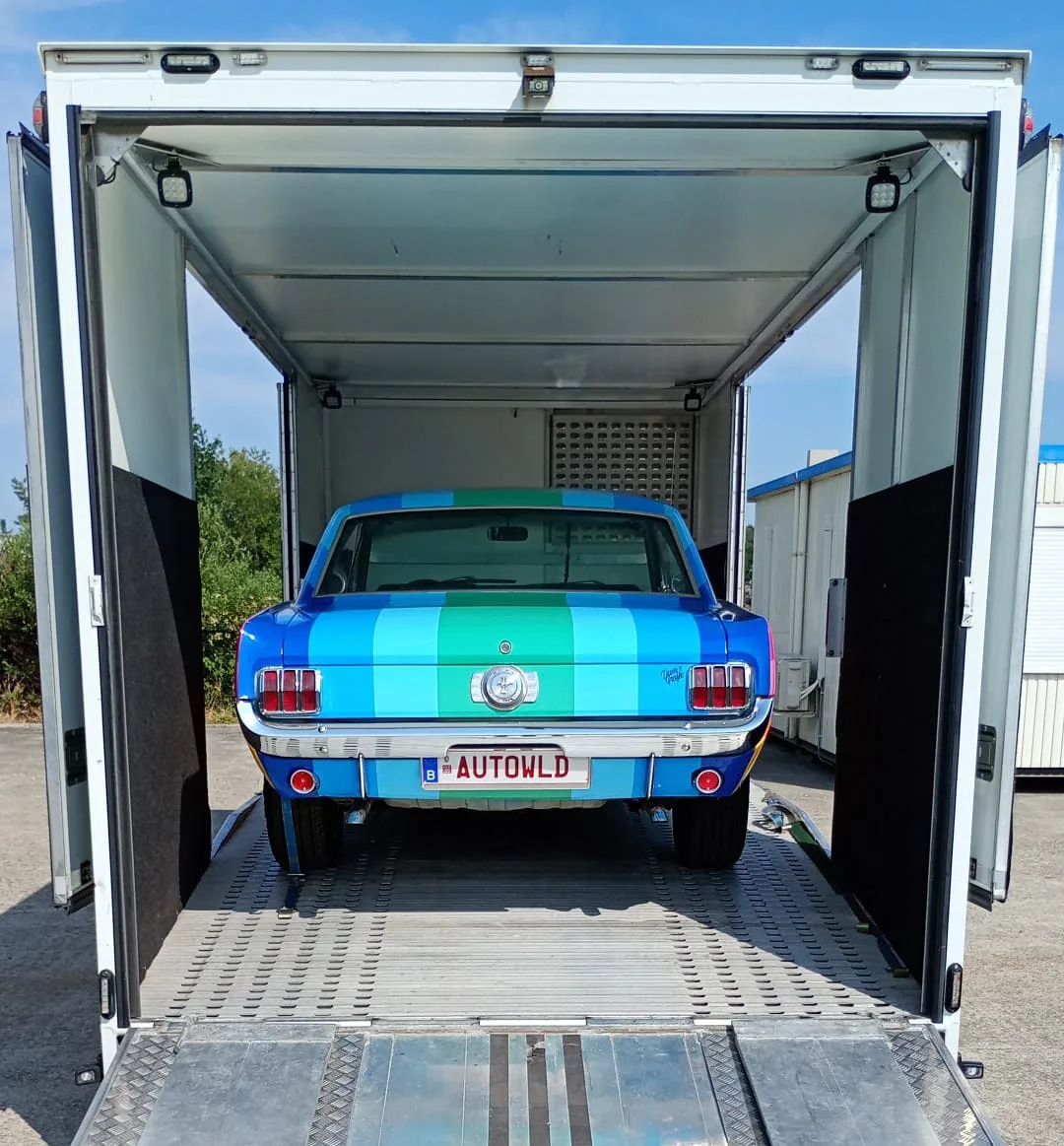
Mustang art car
A hand-painted body: what it fears most is being brushed against.
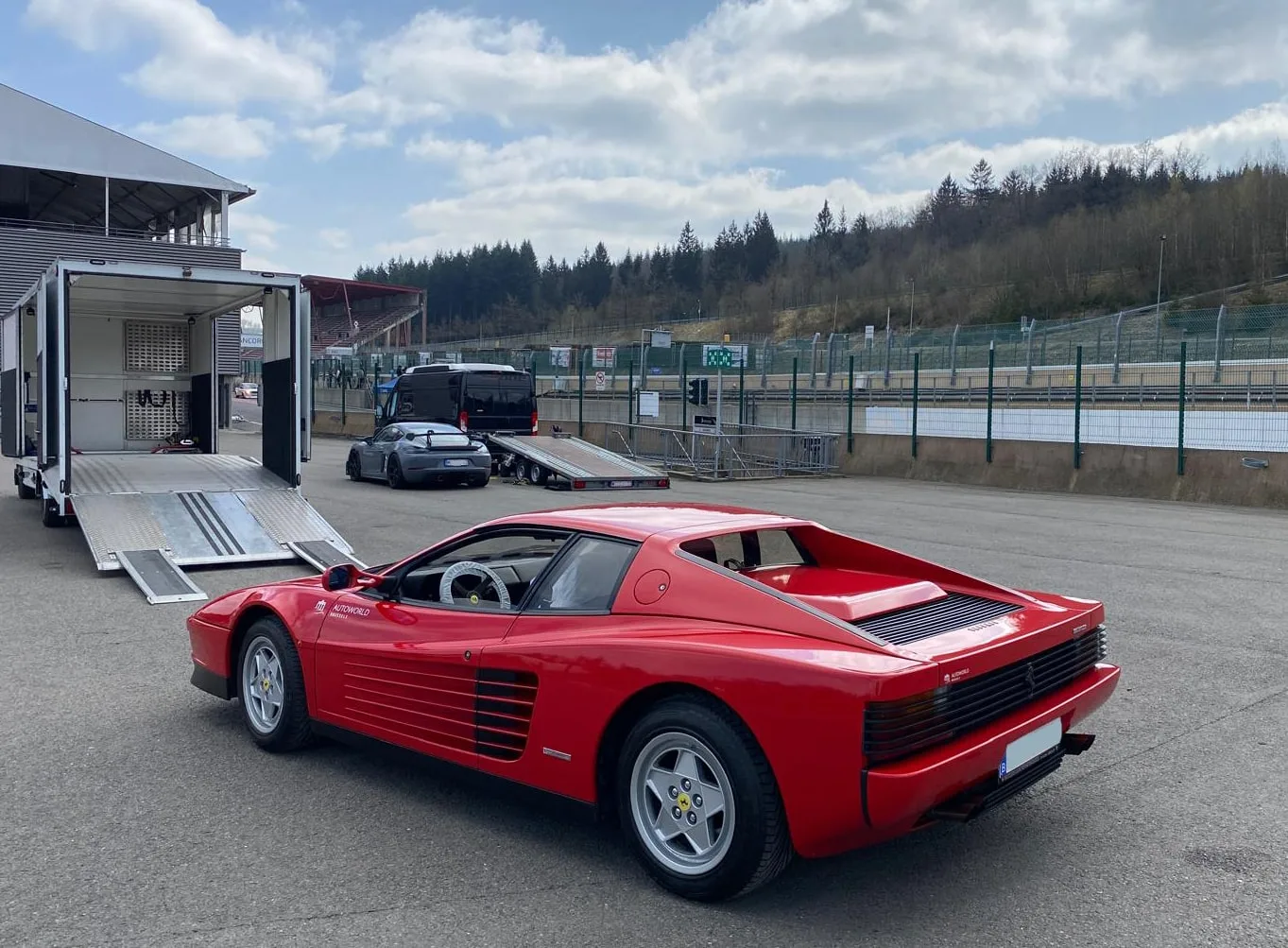
Delivered trackside
Unloaded at the pit lane, ready to be driven the moment the track opens.
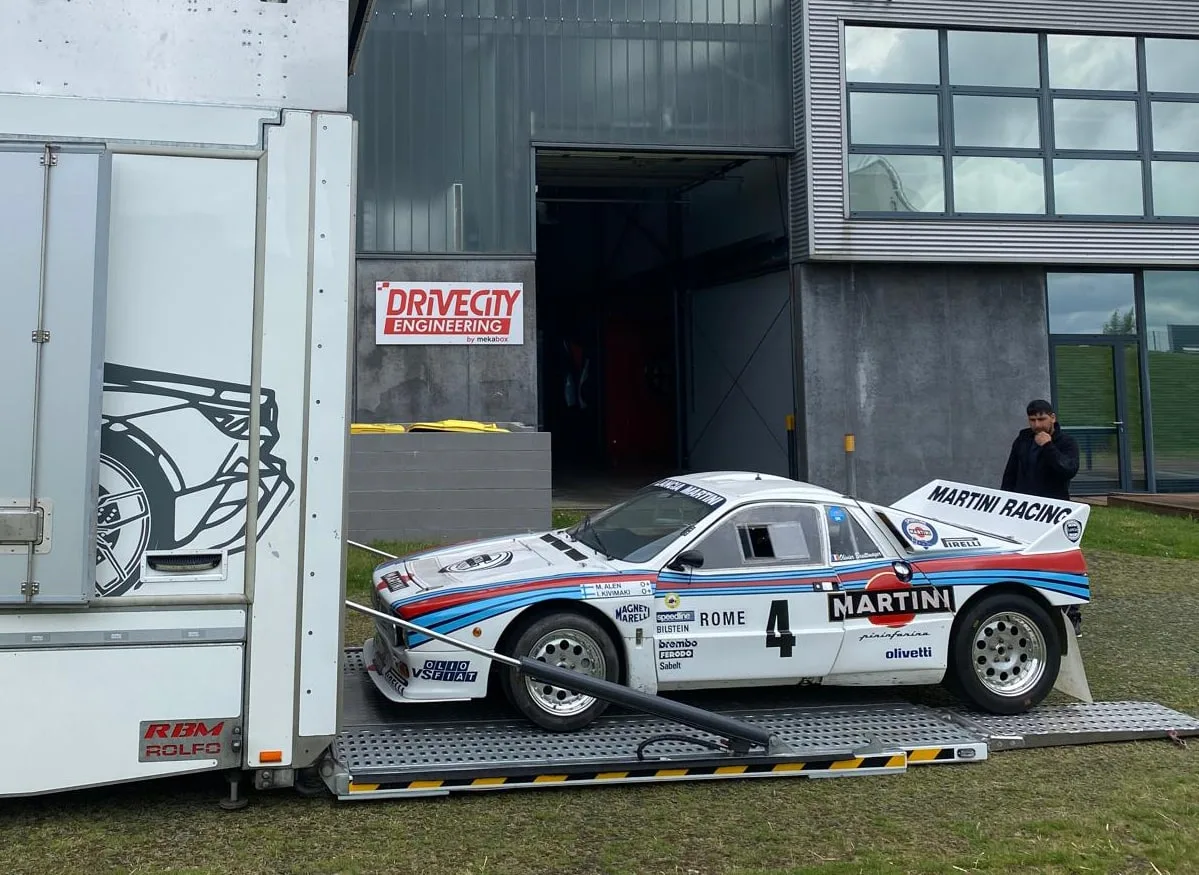
Lancia 037
A Group B rally car at the foot of the ramps, ready for the exhibition.
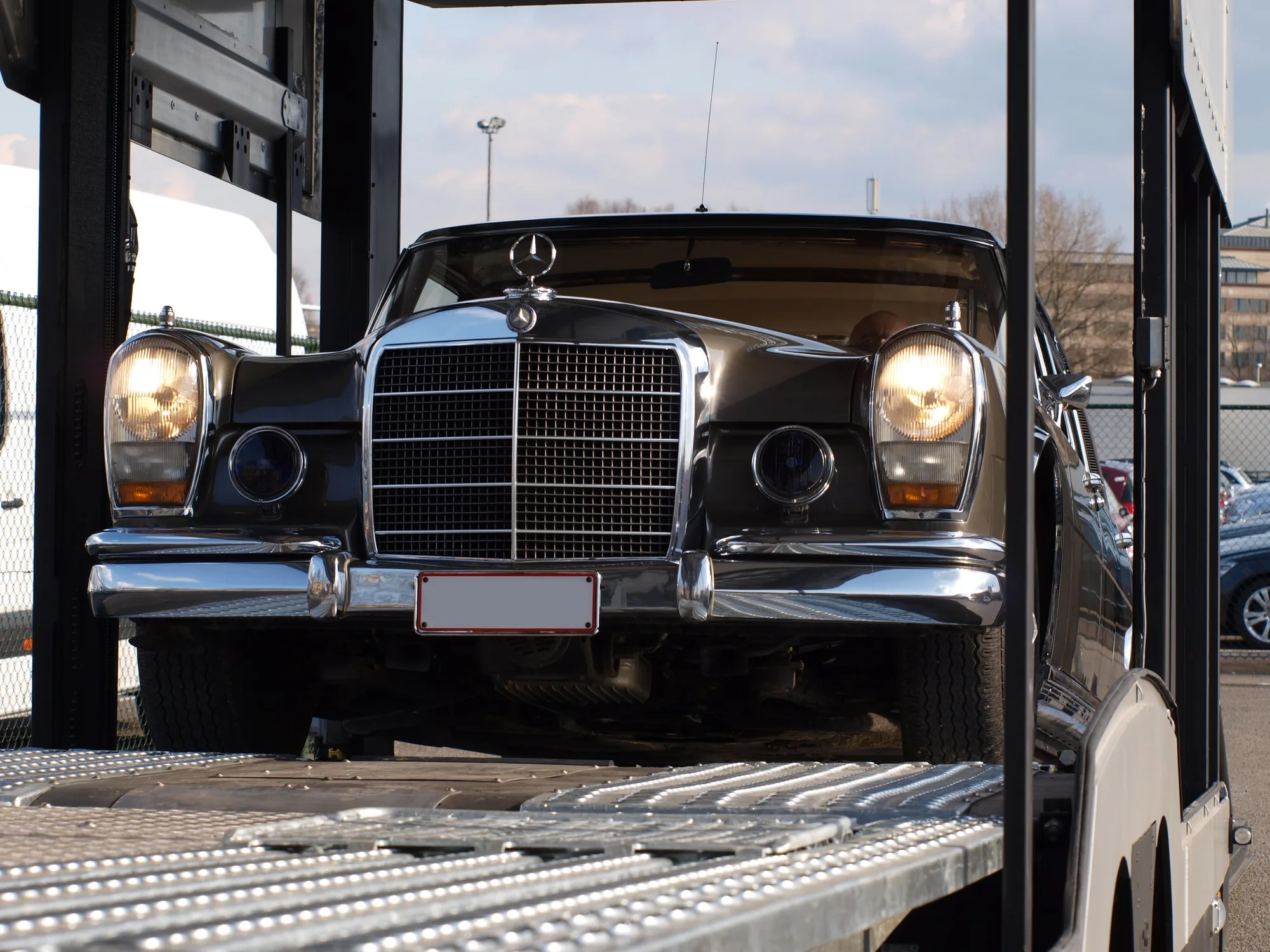
Chrome and vertical headlamps
The bumpers of this era are steel and stand proud. They meet the deck before the tyres do.
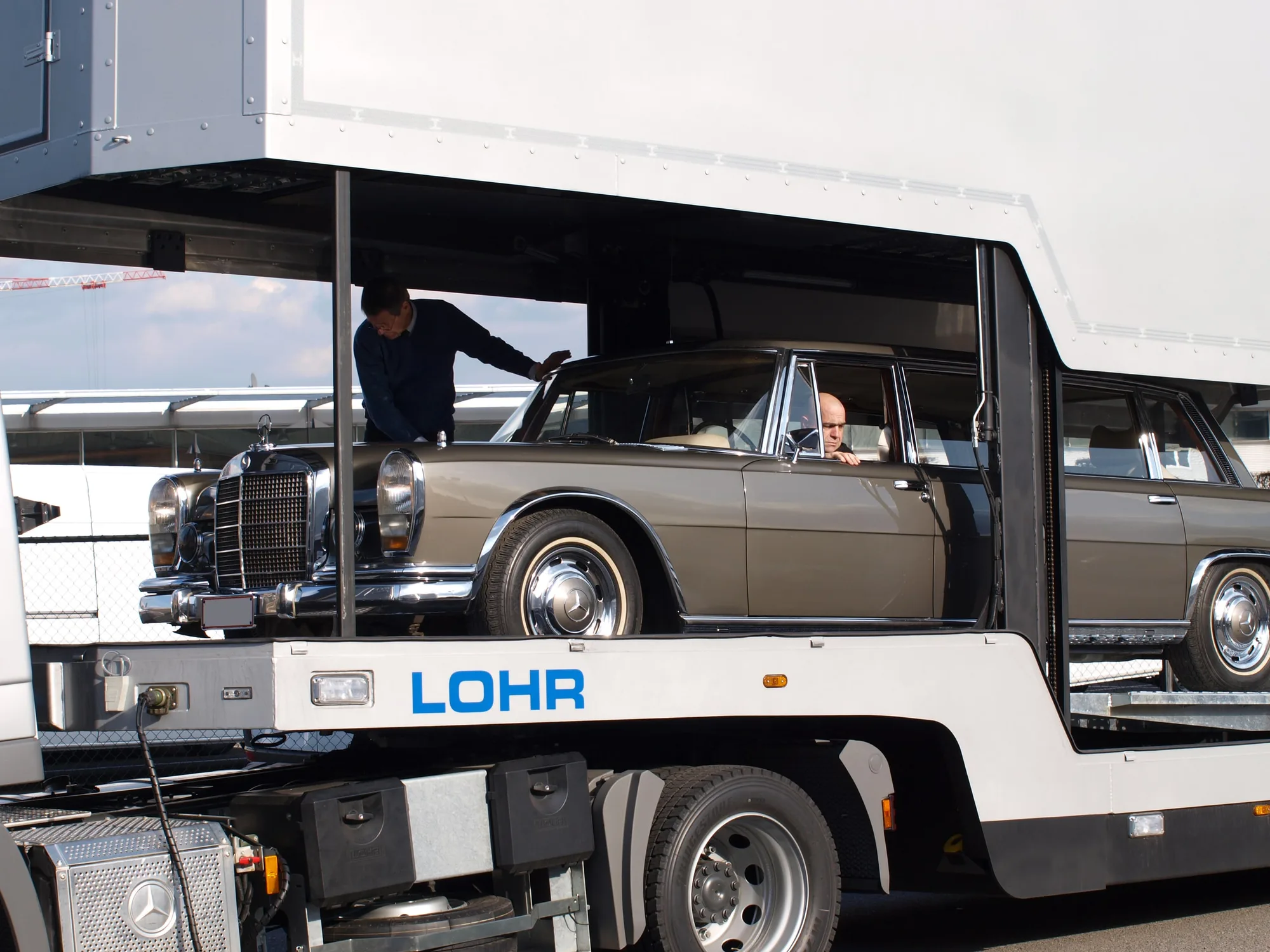
Lower deck
The low deck is for the low car. Which one goes where is decided before anything moves.
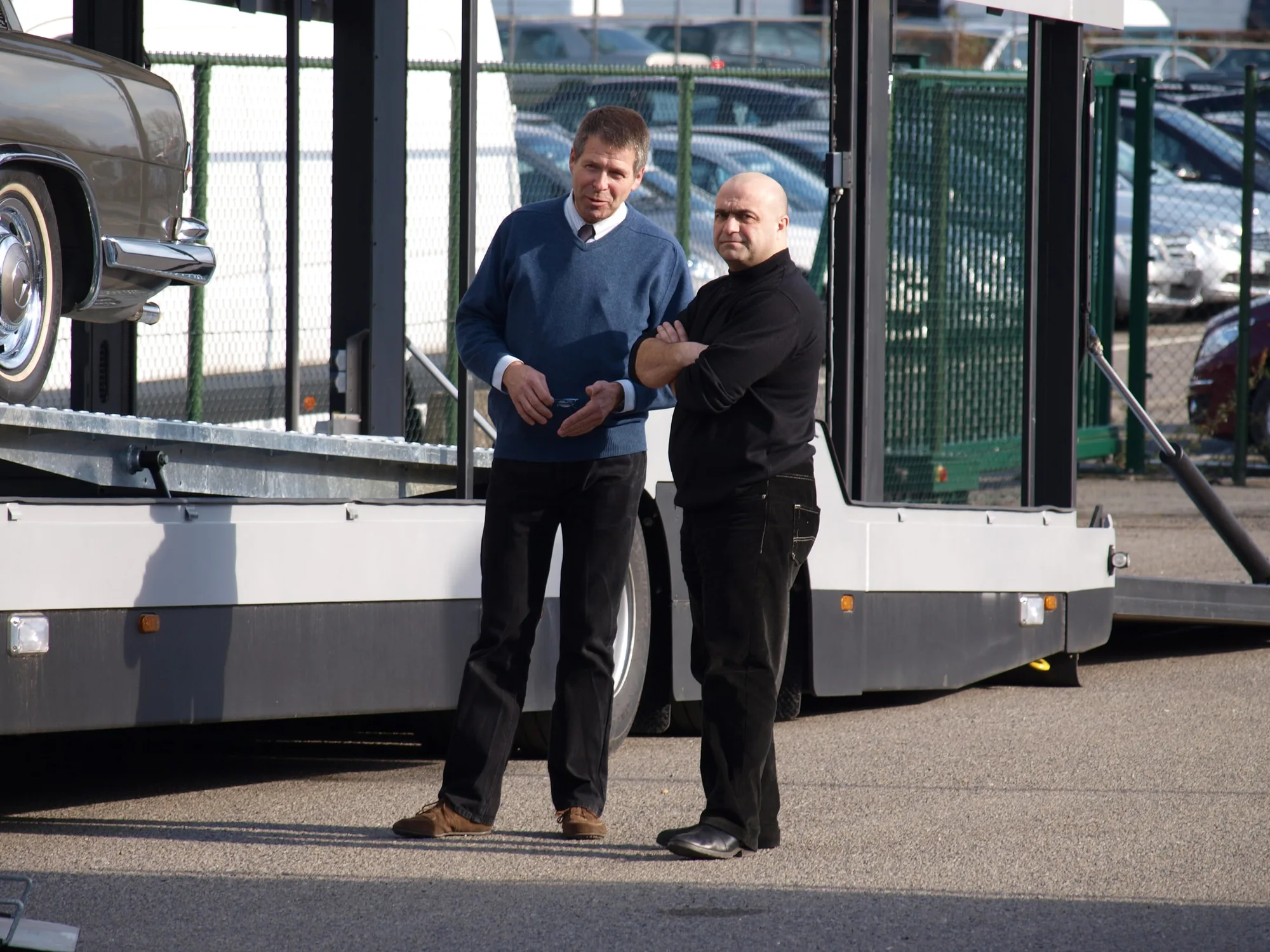
The handover
The job ends here, in front of the truck, with the owner. Not with a signature at a gate.
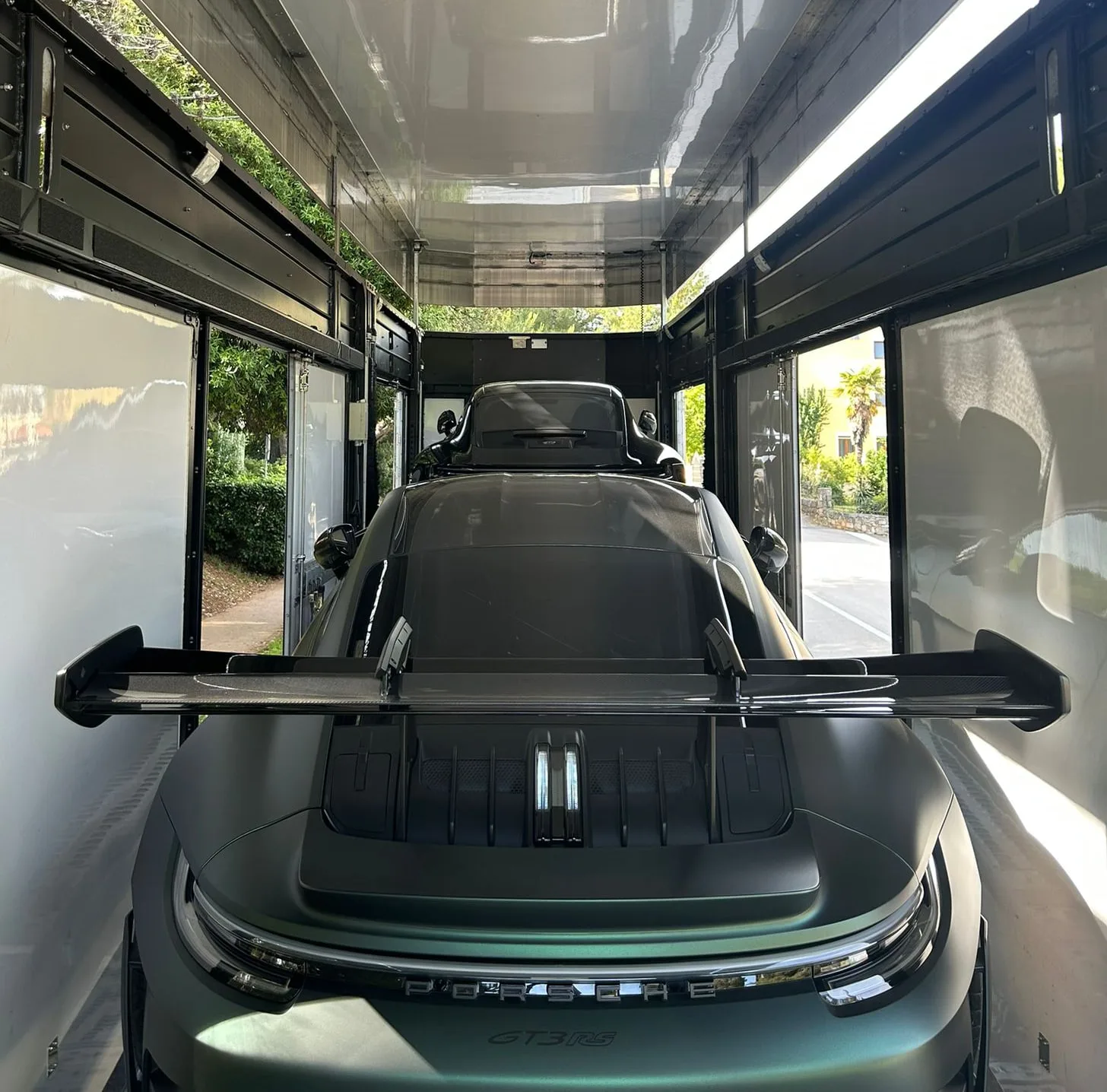
GT3 RS wing
The wing clears: height is checked at loading, not on arrival.
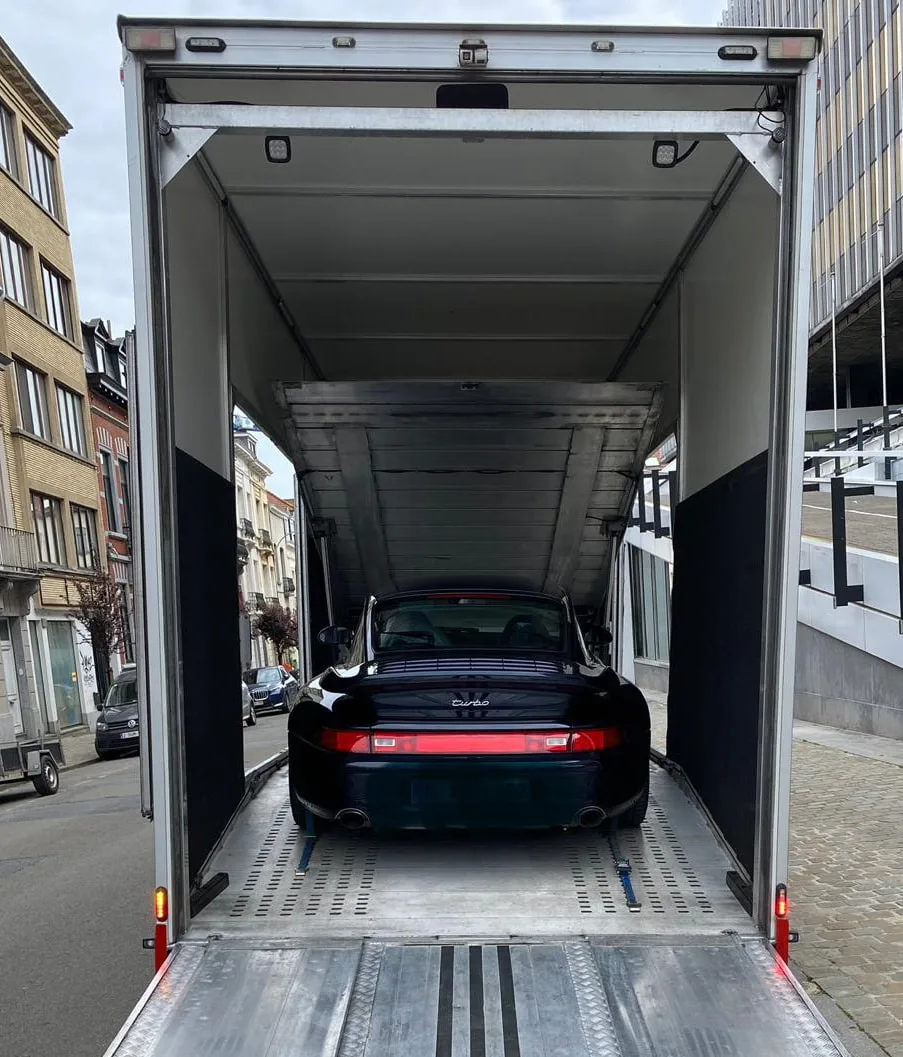
993 Turbo
A sought-after youngtimer travels like a new car.
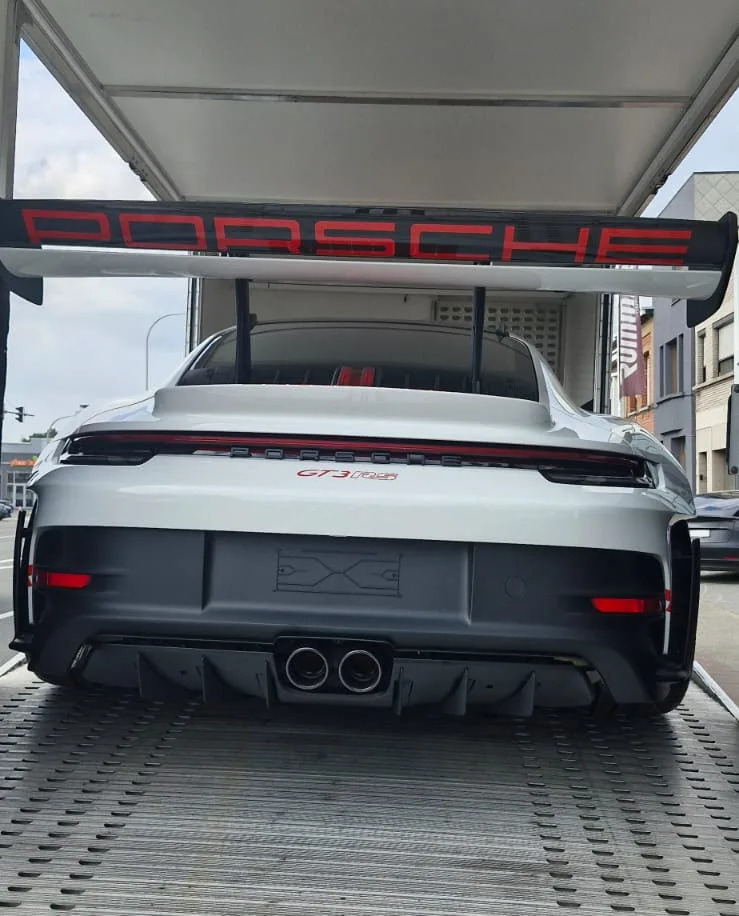
The wing fits
That rear wing sets the height of the load, and it clears the roof.
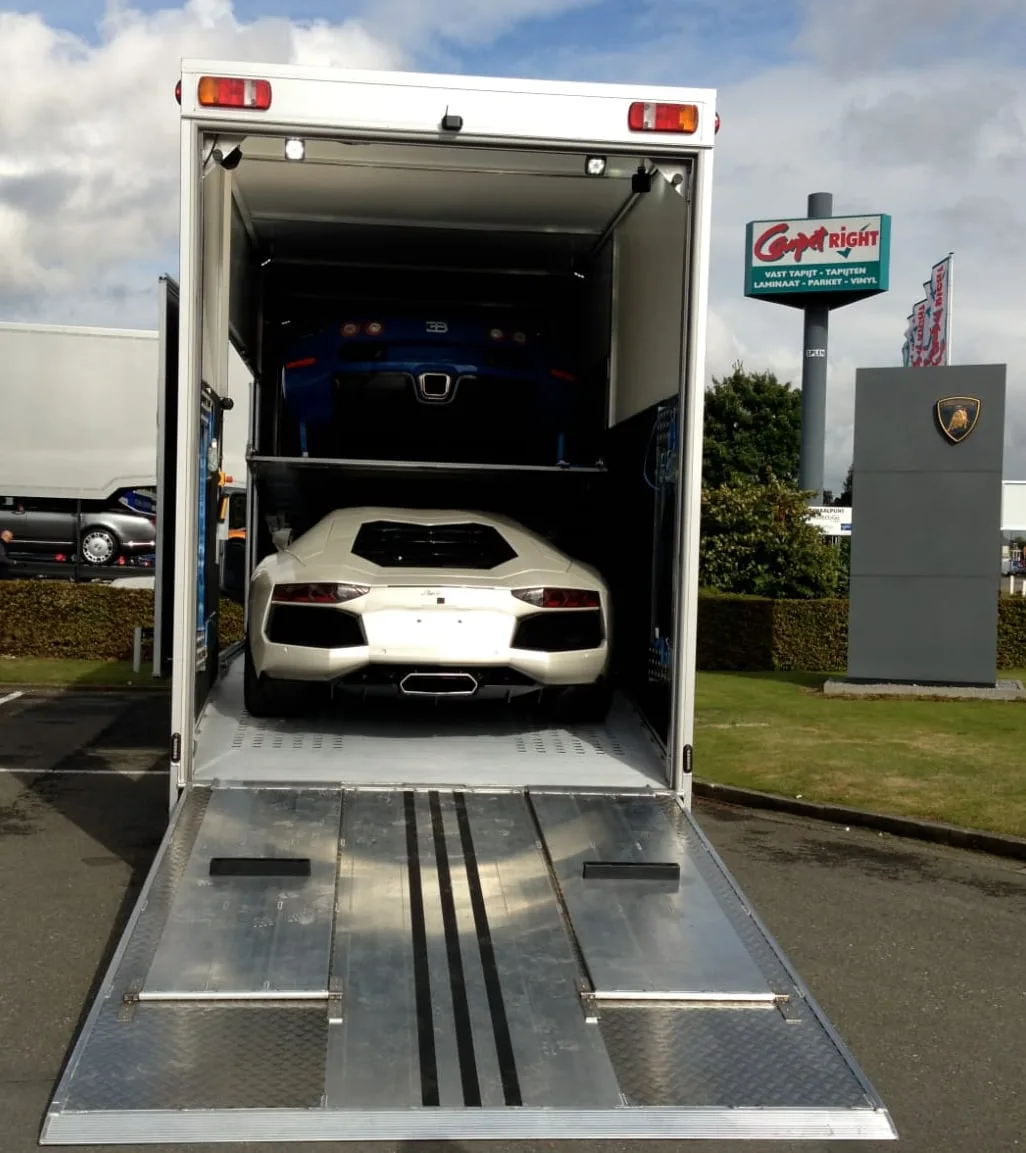
Two Lamborghinis
Two cars for one client delivered on the same truck, a deck apart.
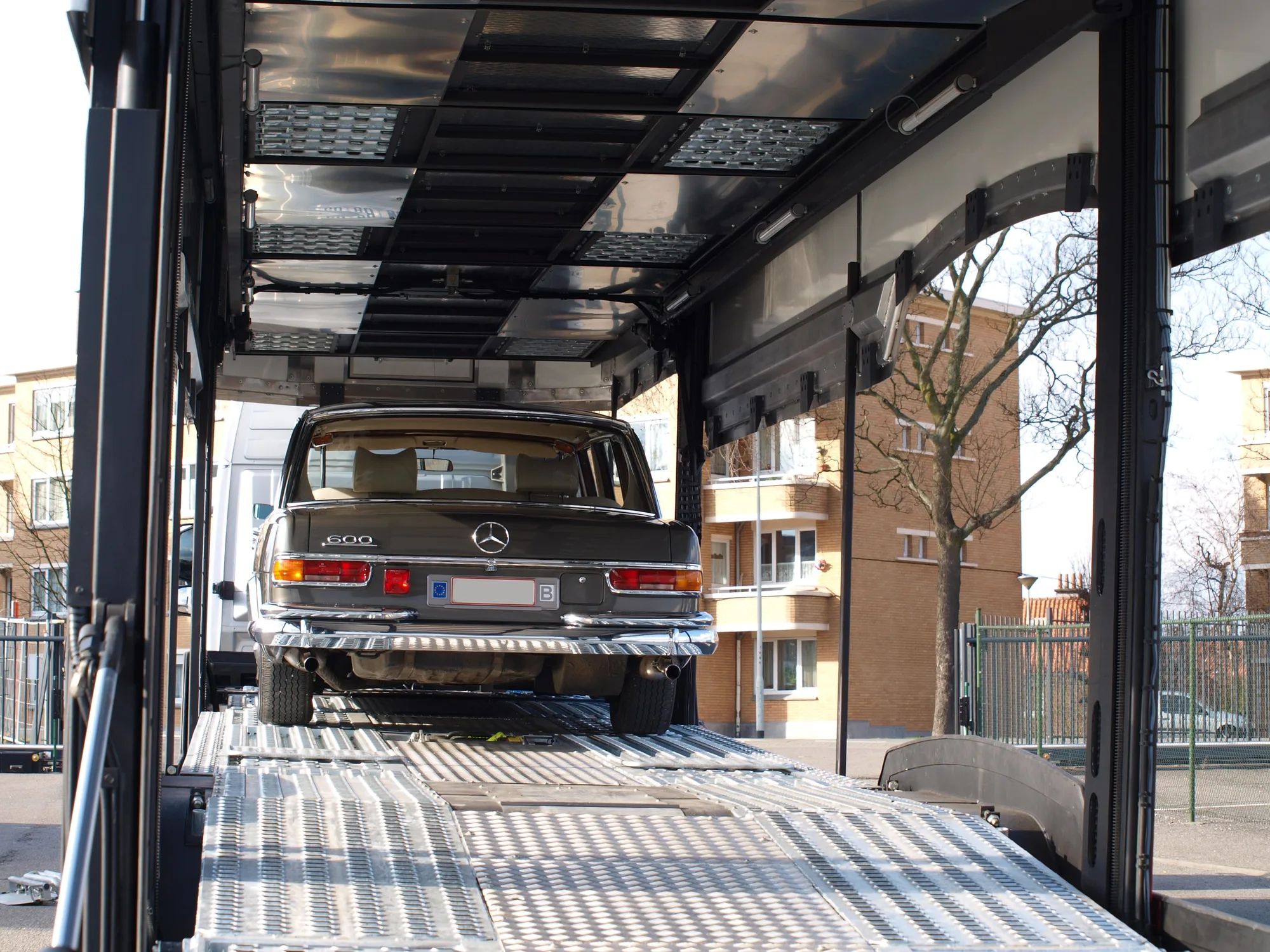
Seen from the ramp
Half a metre either side. The mirrors come in before the car does.
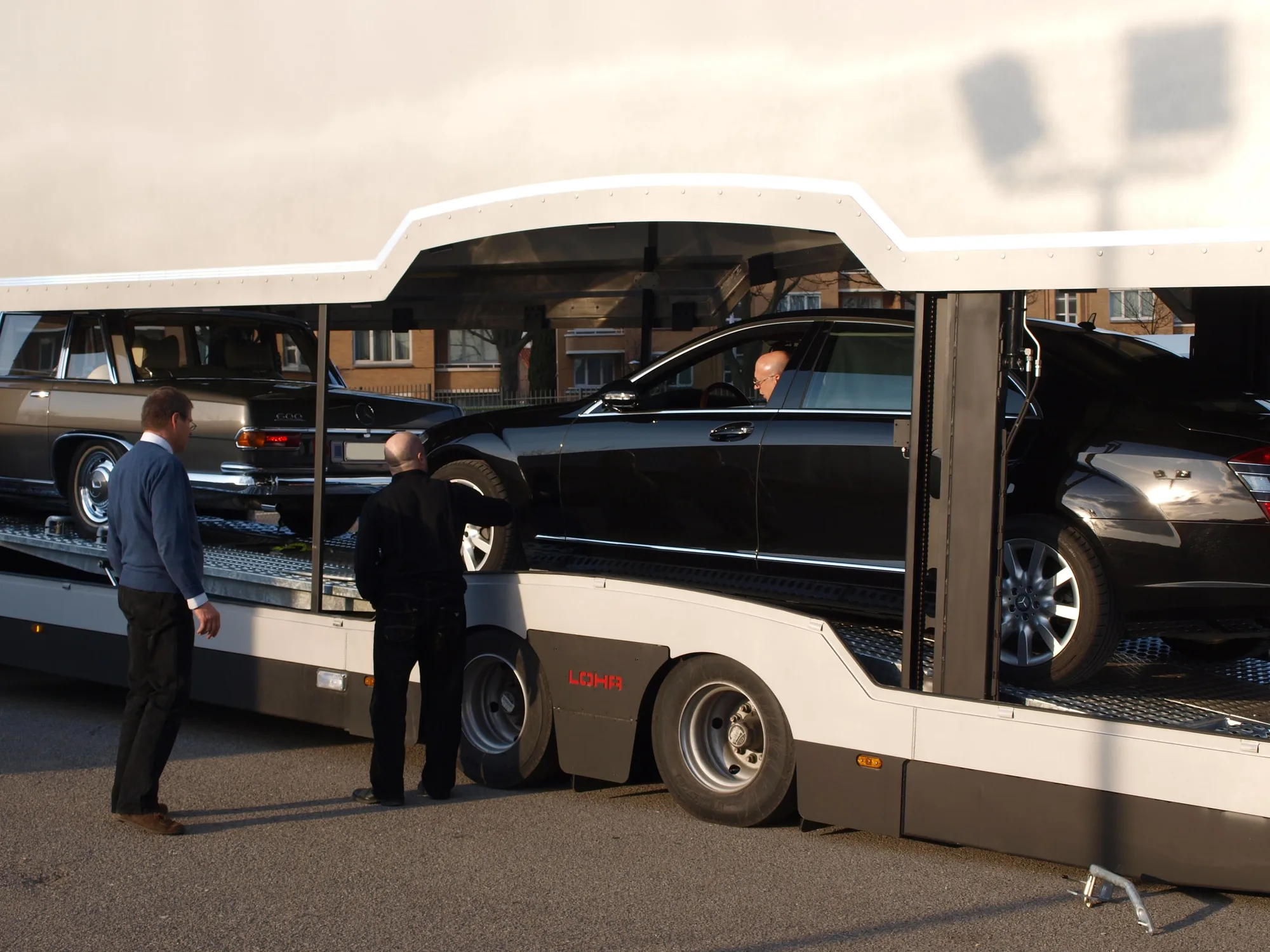
Before setting off
The last look is taken together. Anything noticed now costs nothing to fix.
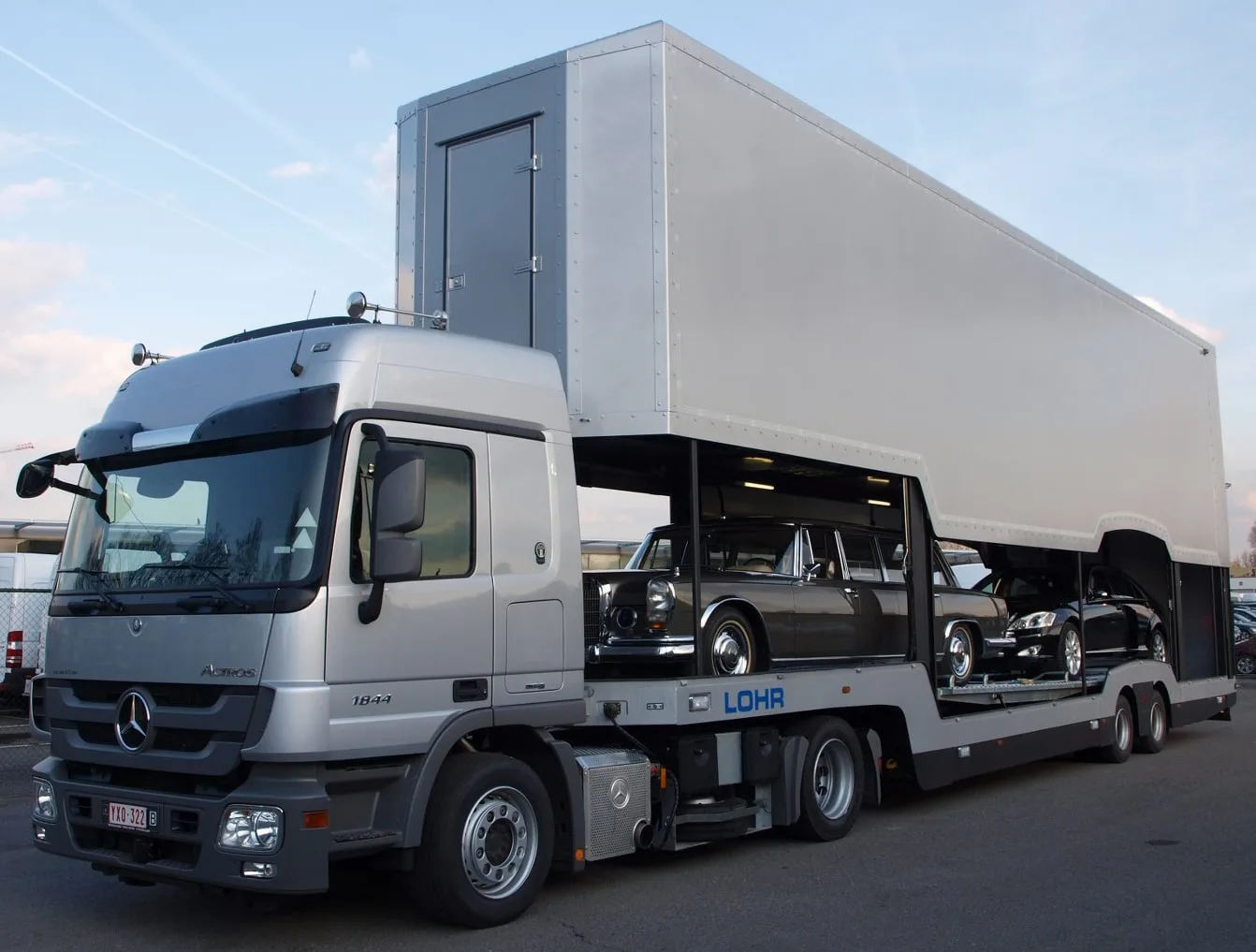
Loaded and closed
Four cars, one truck, one driver who does not hand over at a border.
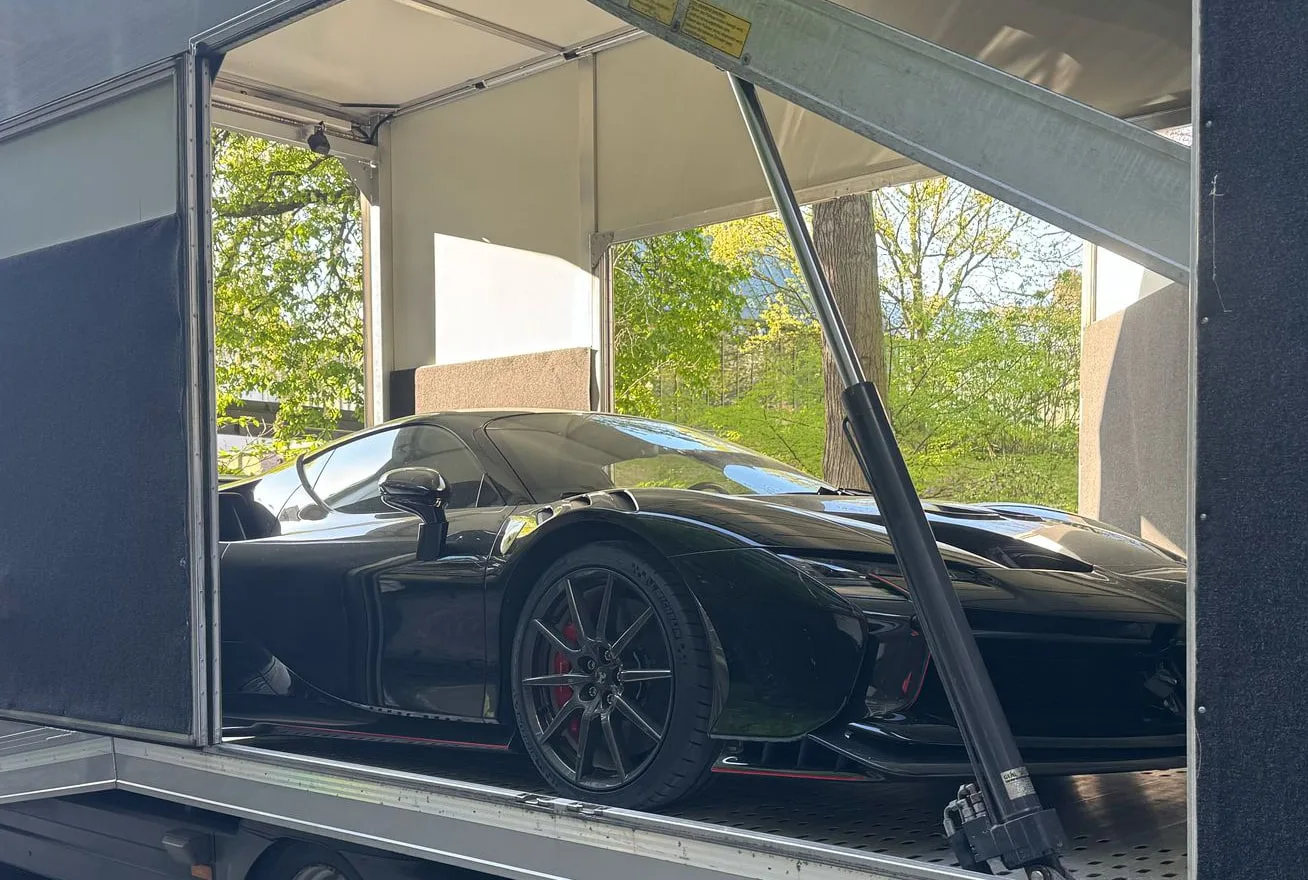
Private collection
A hypercar collected from a private driveway, with no crowd and no waiting in the street.
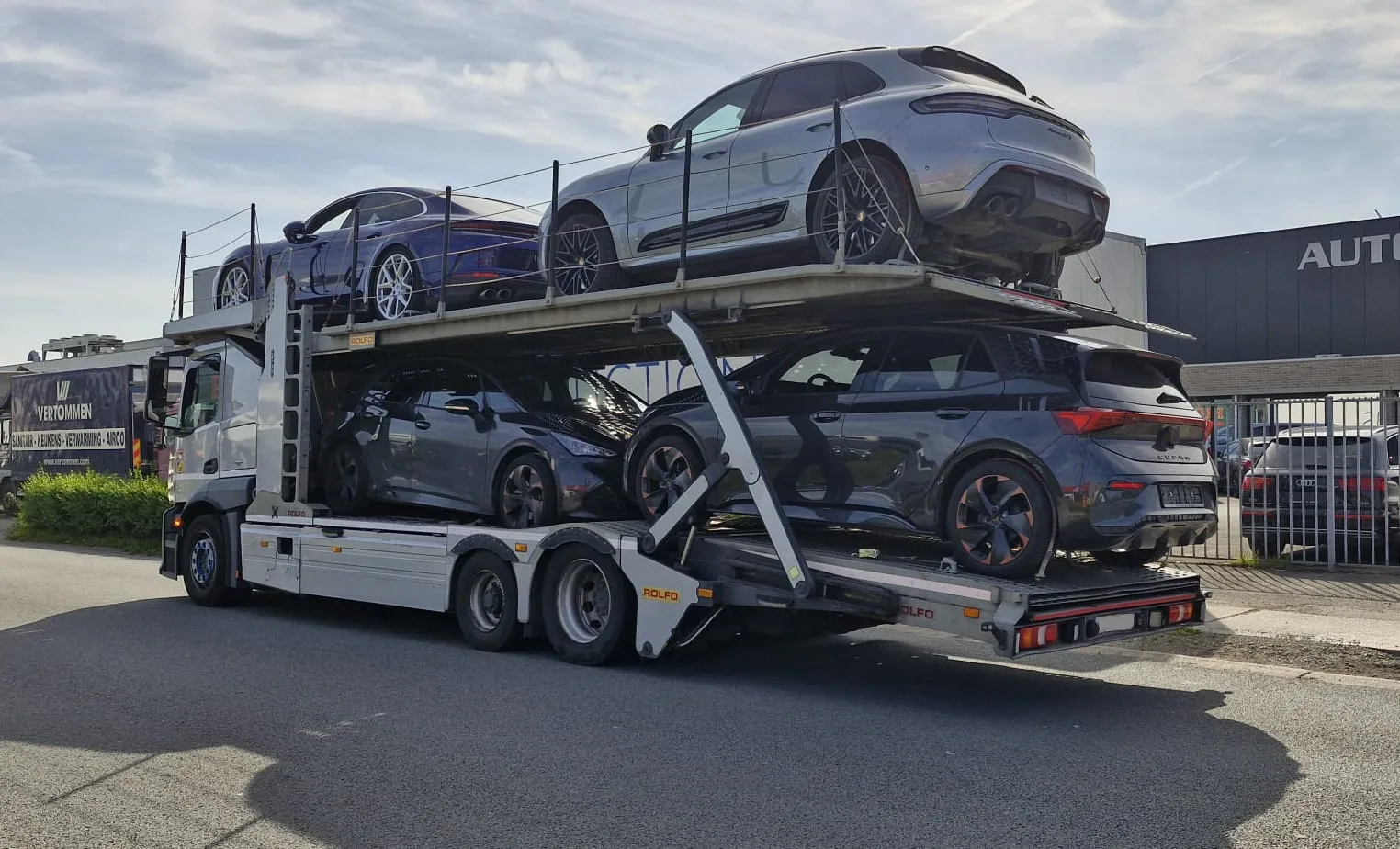
Four cars, open deck
Open transport is the right answer when the car is new and the run routine.
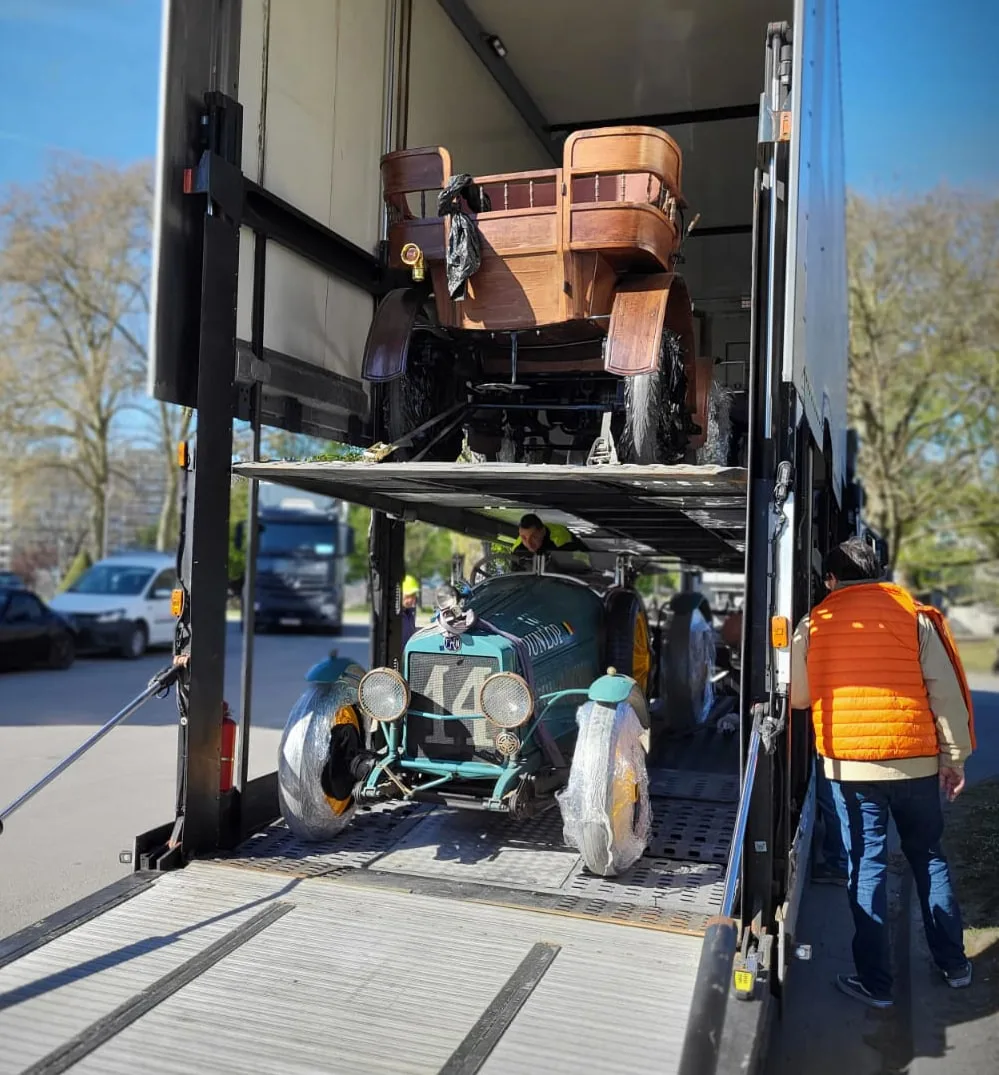
Upper deck
A turn-of-the-century car comes off the top deck, winched at walking pace.
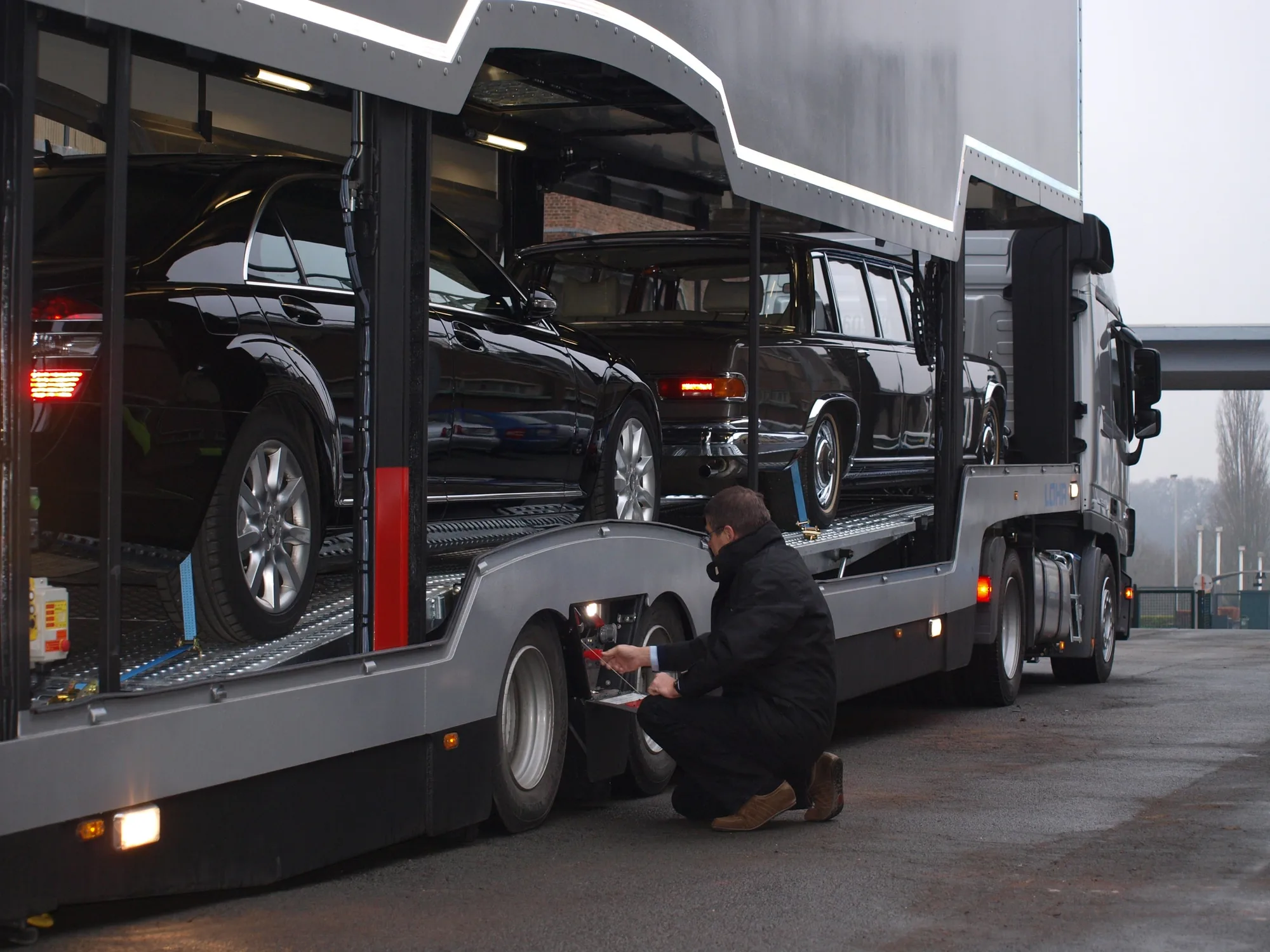
Four straps, on the wheels
Straps go around the tyres. Nothing pulls on an axle, a subframe or a chrome bumper.
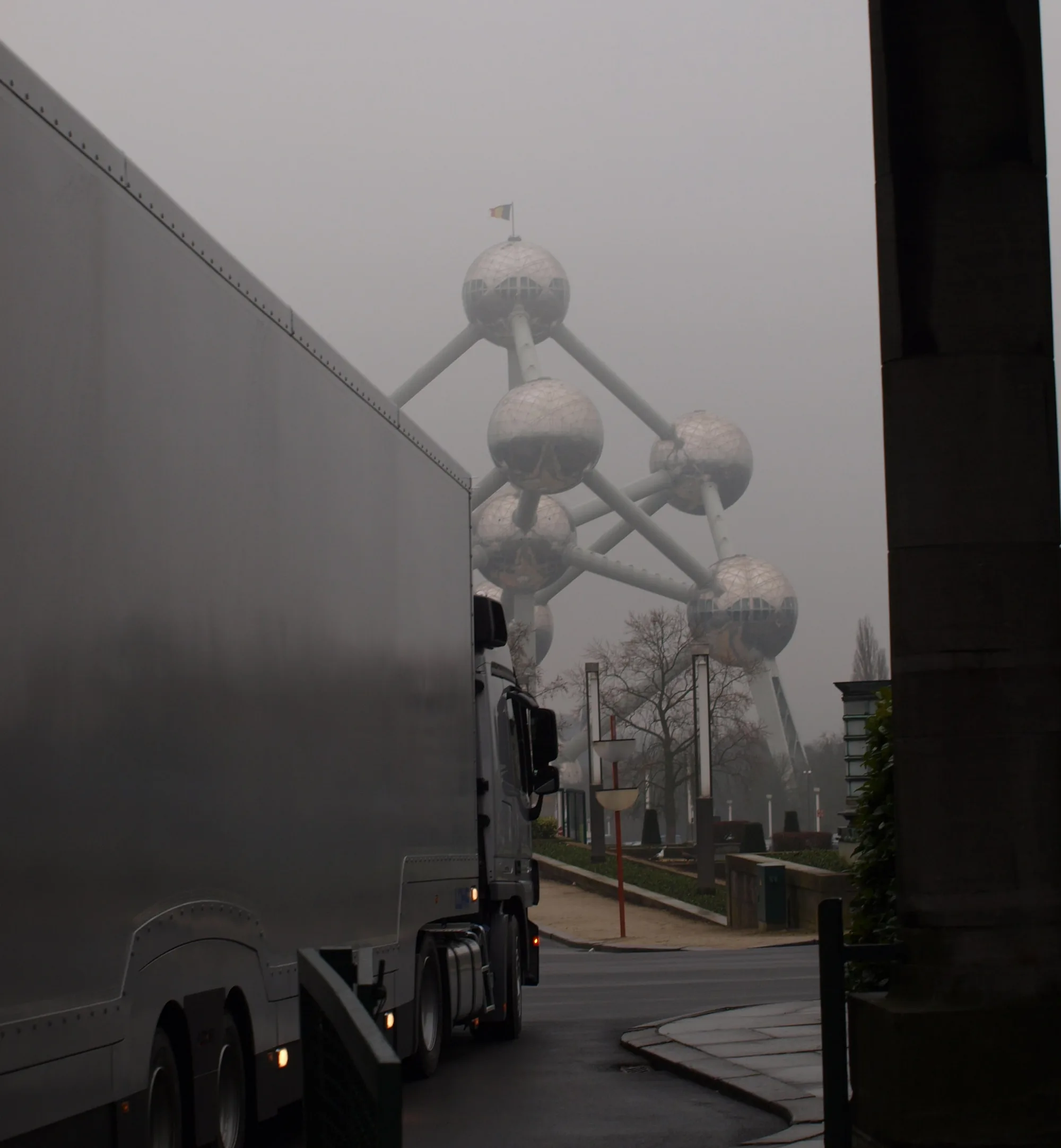
Past the Atomium
Fog on the ring road. The pace drops, the delivery window does not.
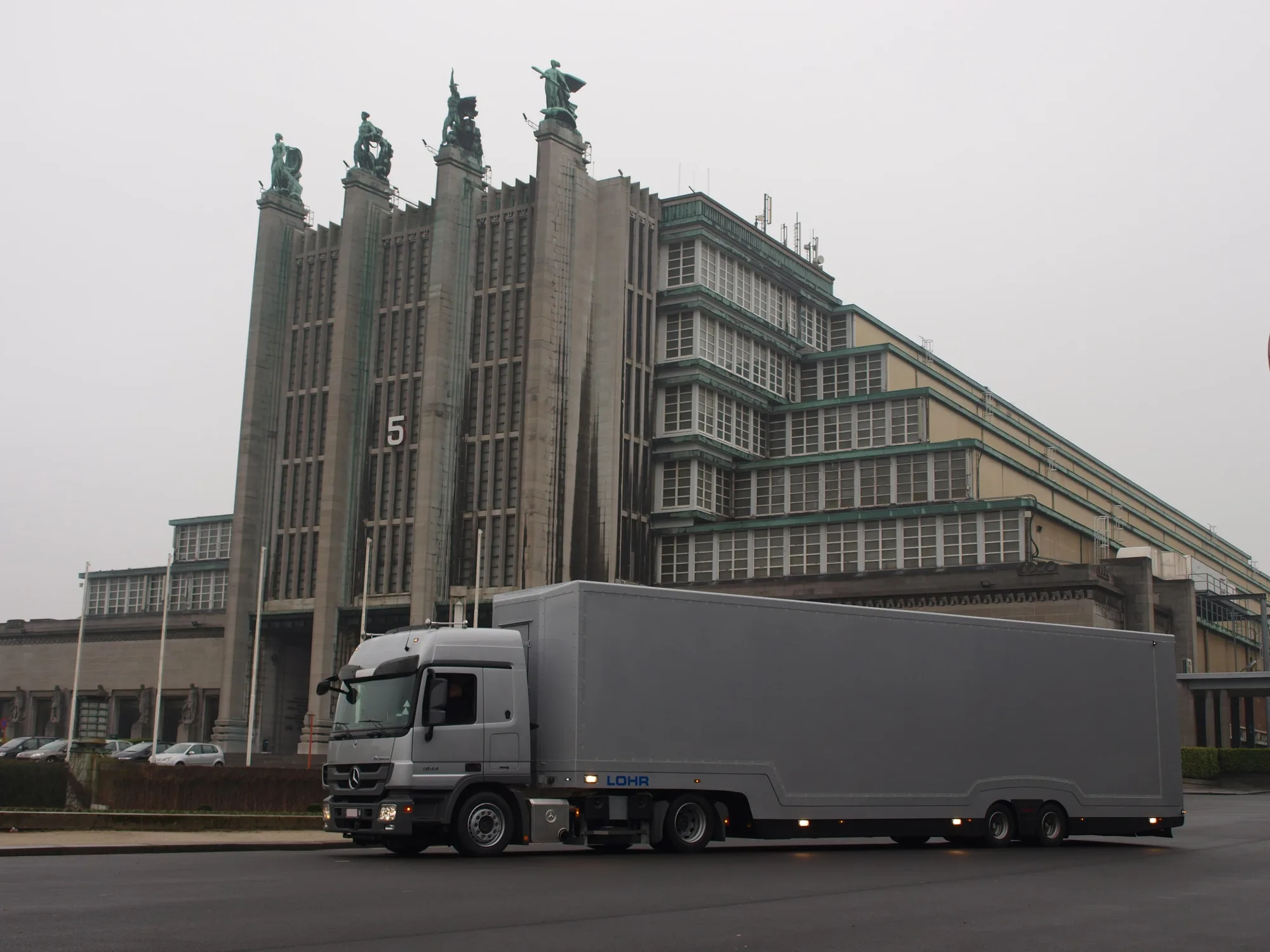
At the exhibition halls
Show cars arrive days before the doors open, and leave the night they close.
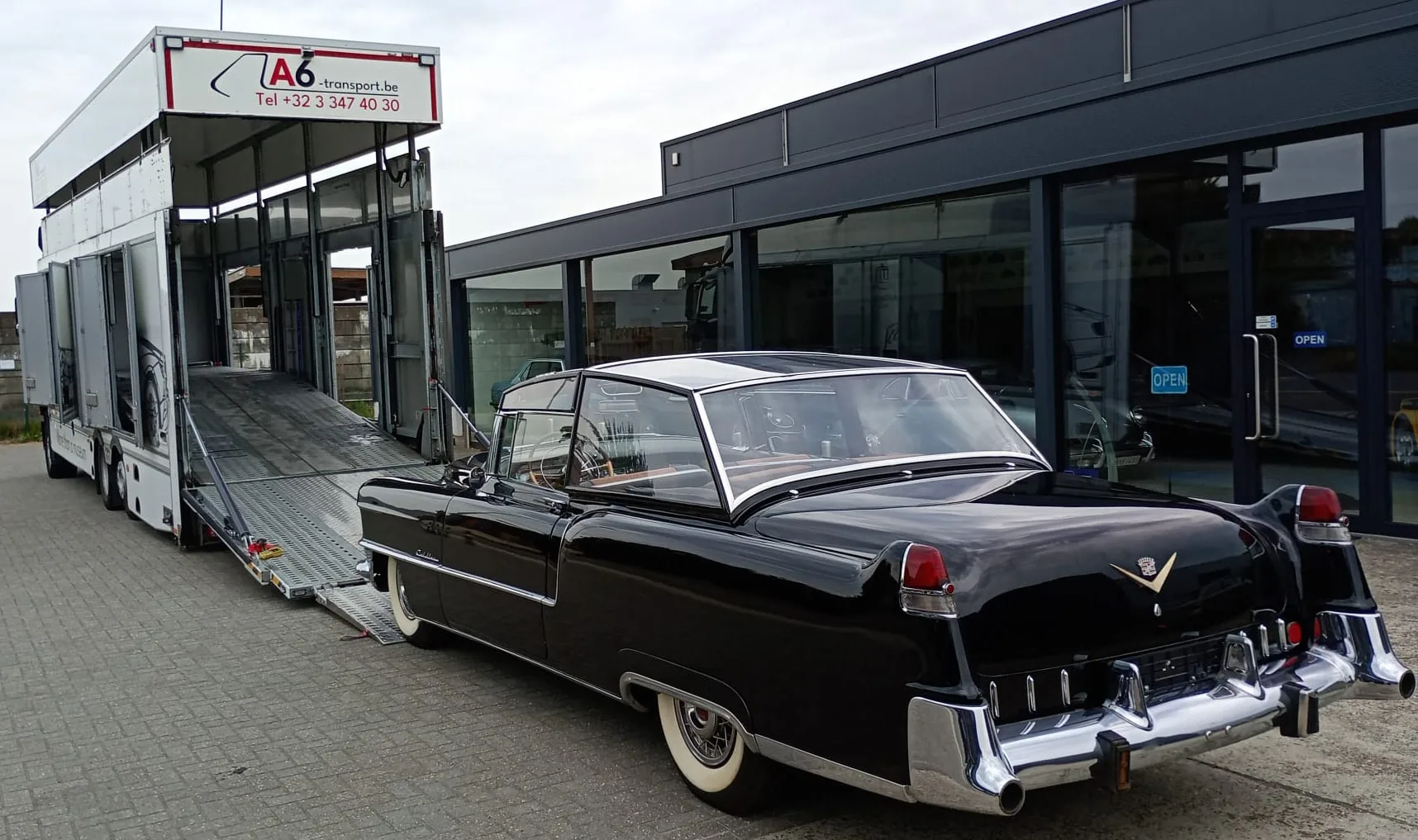
Cadillac convertible
A fifties American set down outside the dealership, roof up.
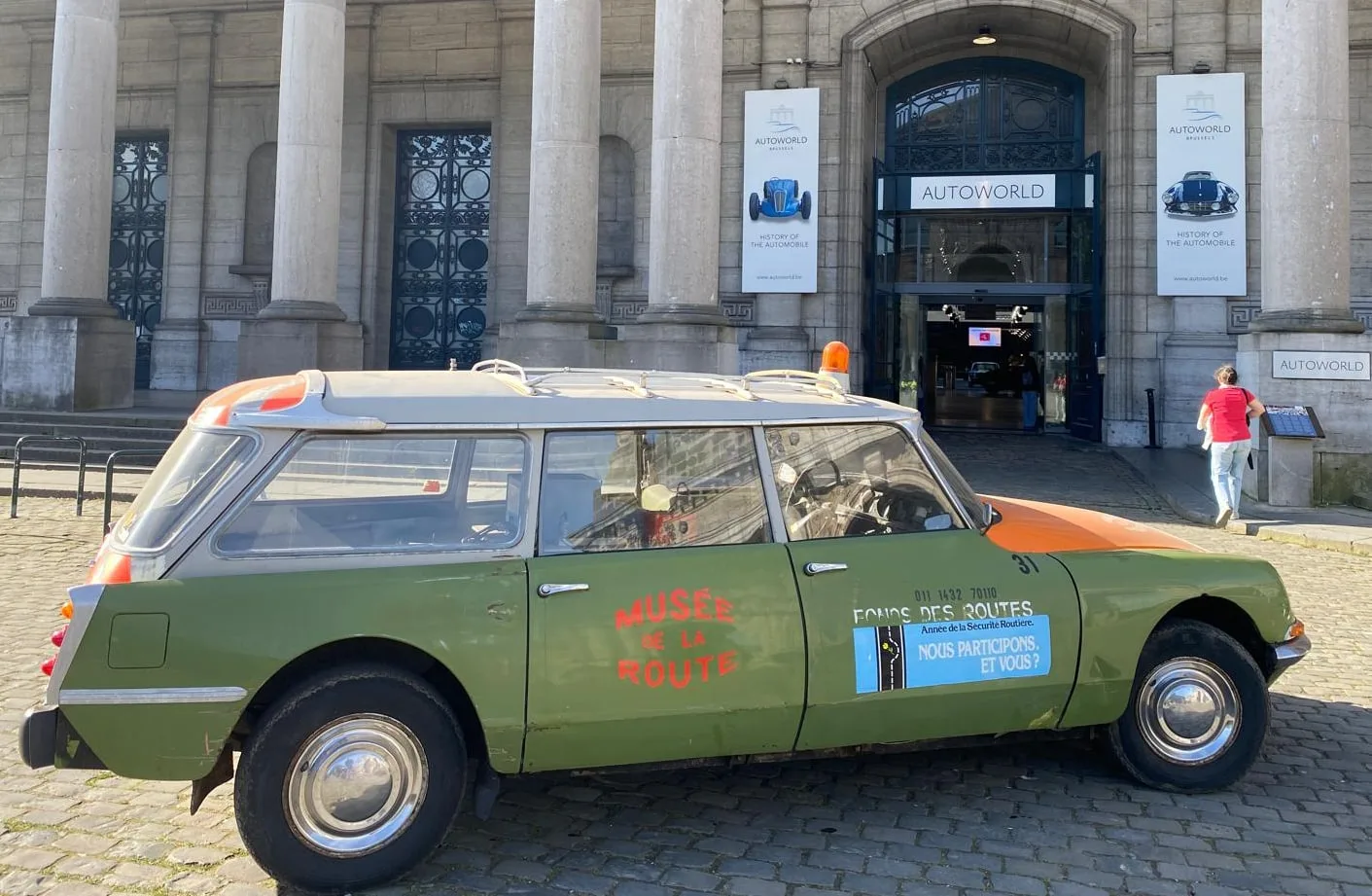
Museum estate
Period livery kept exactly as it is, down to the painted lettering.
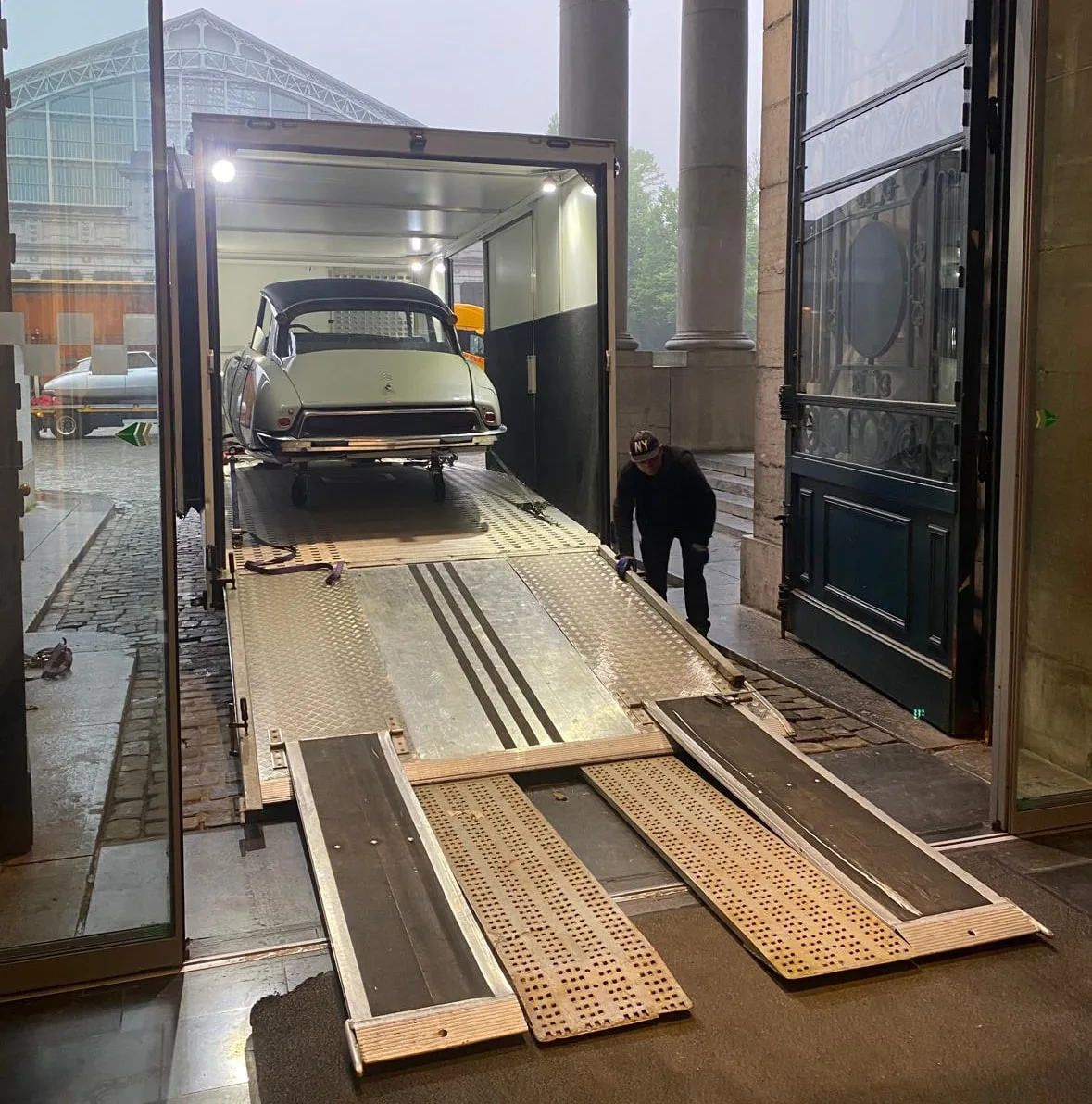
Door to ramp
Read the articleRamps laid right up to the doorway so the wheels never touch the cobbles.
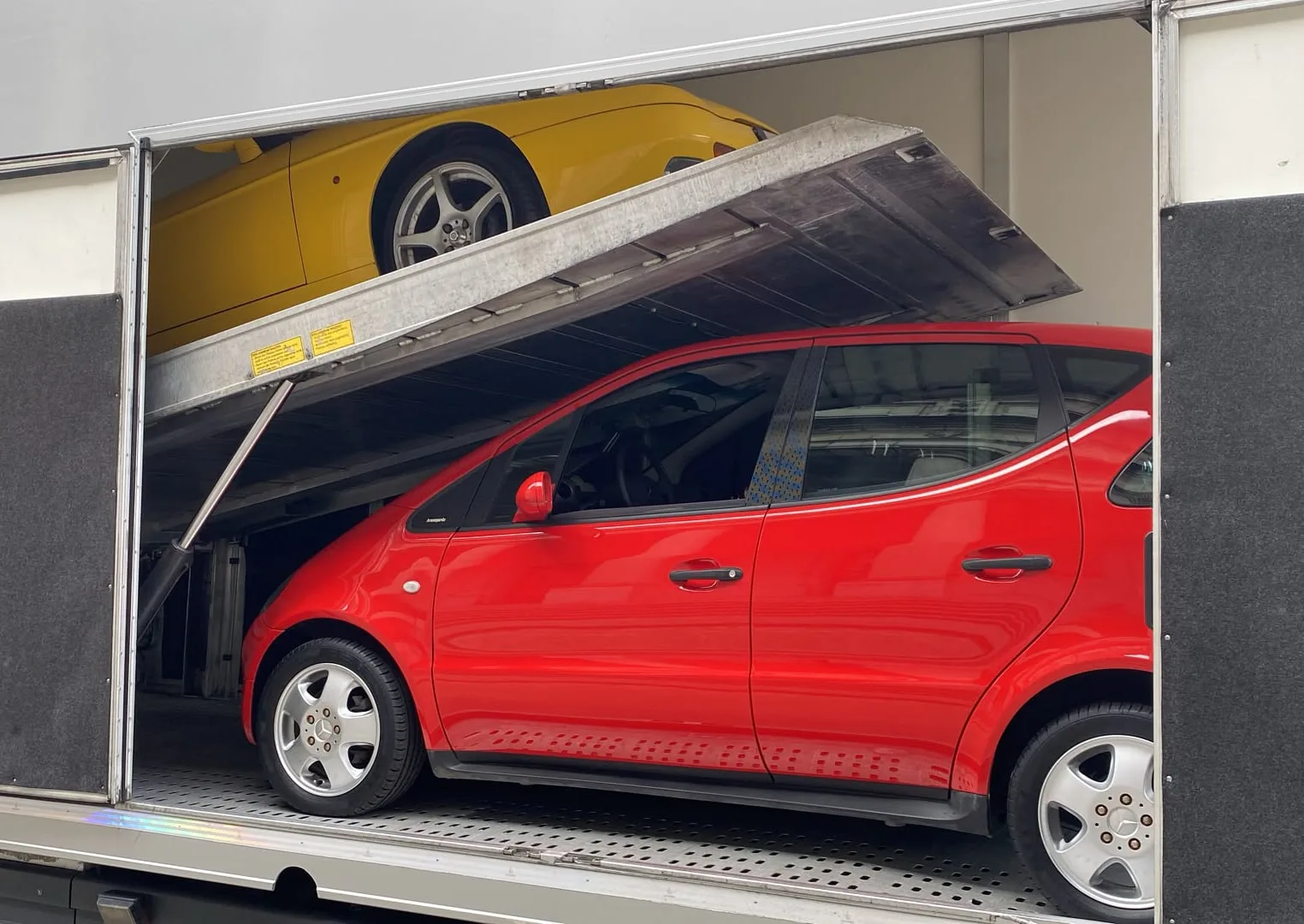
Two decks
A city car under a sports car: the upper deck isolates the one below completely.
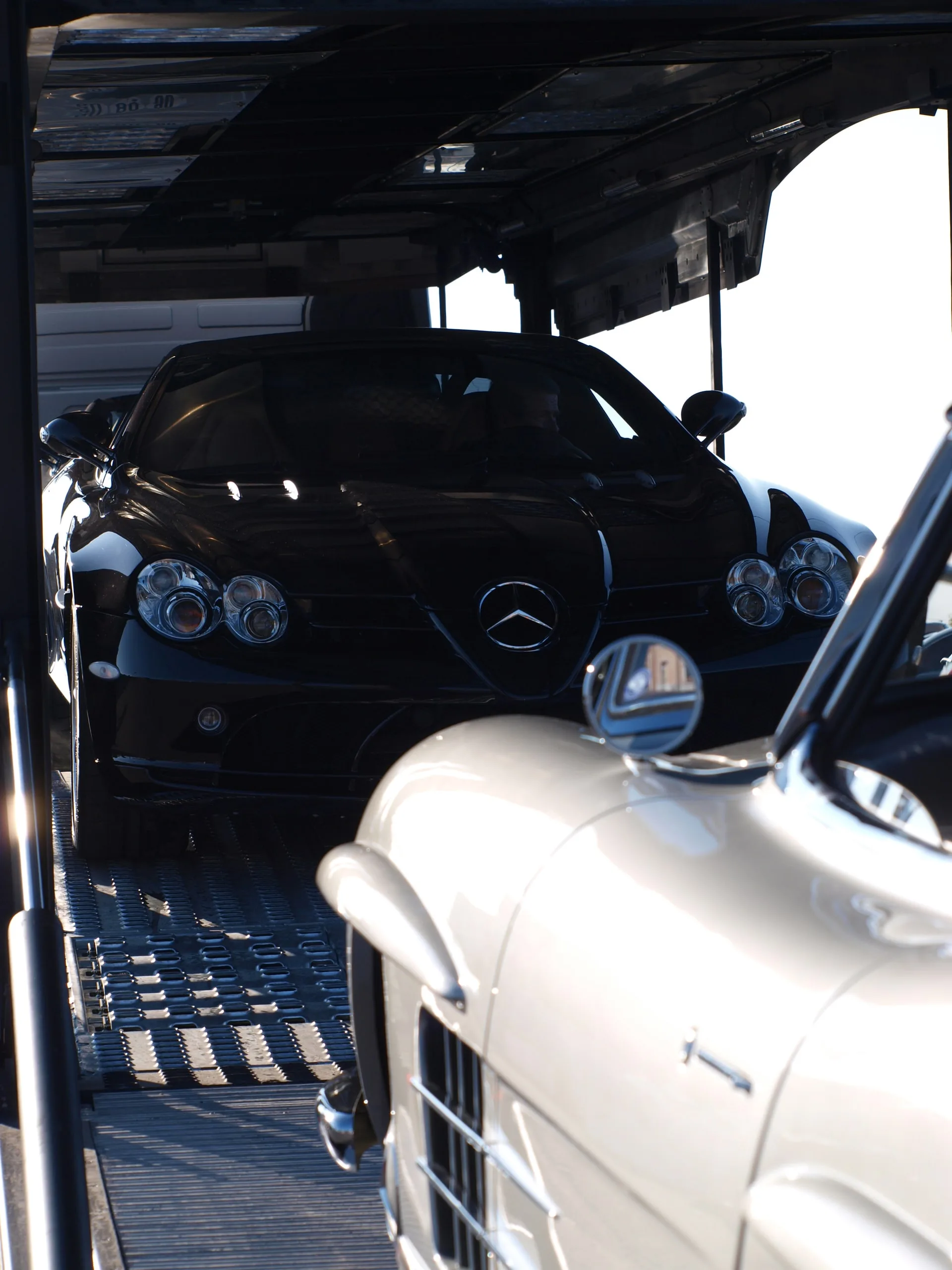
Fifty years apart
Two cars from the same marque and two eras, on the same deck, strapped the same way.
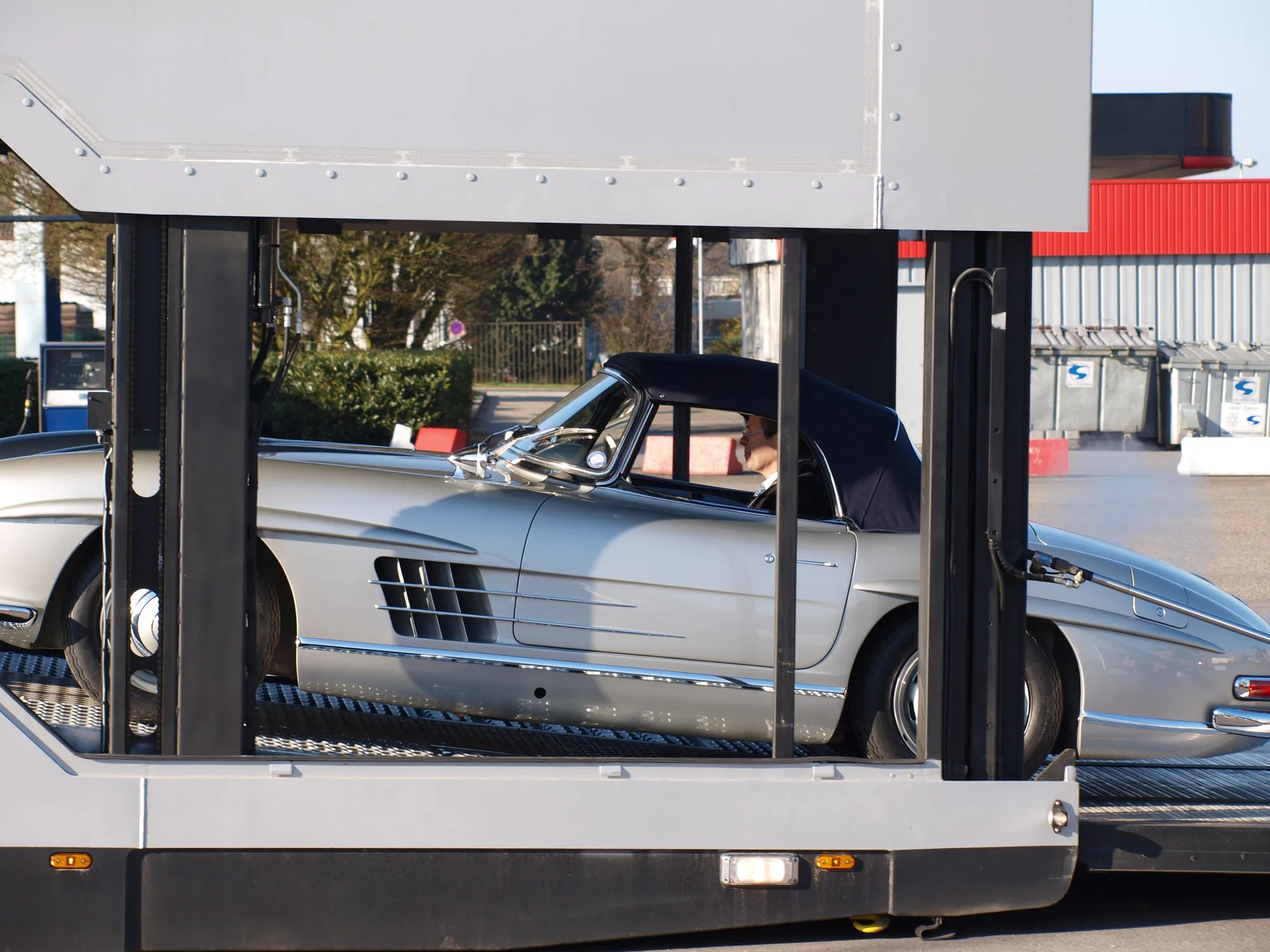
Through the side
The side opens along the whole length. A door that opens upwards needs the room above it.
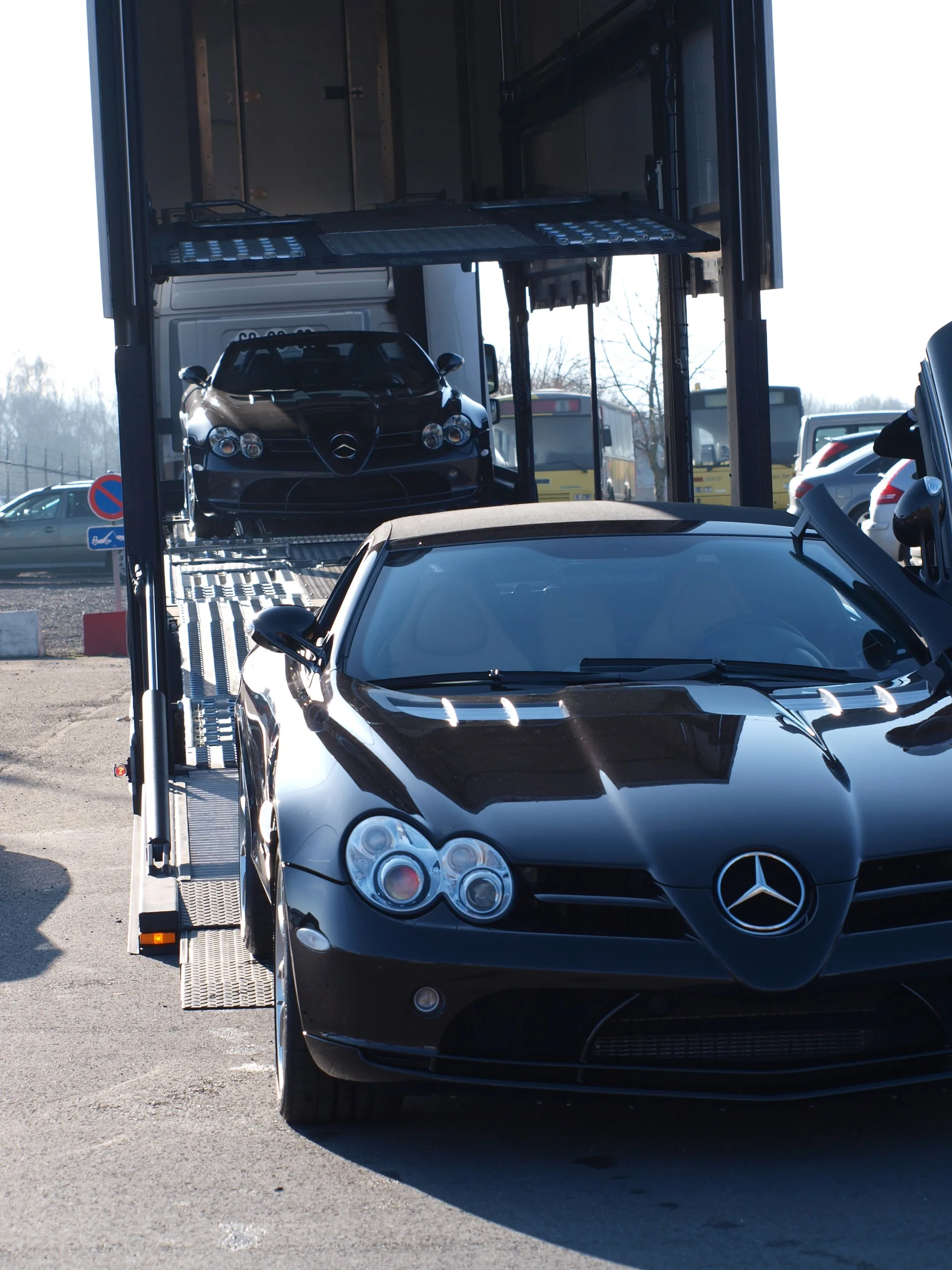
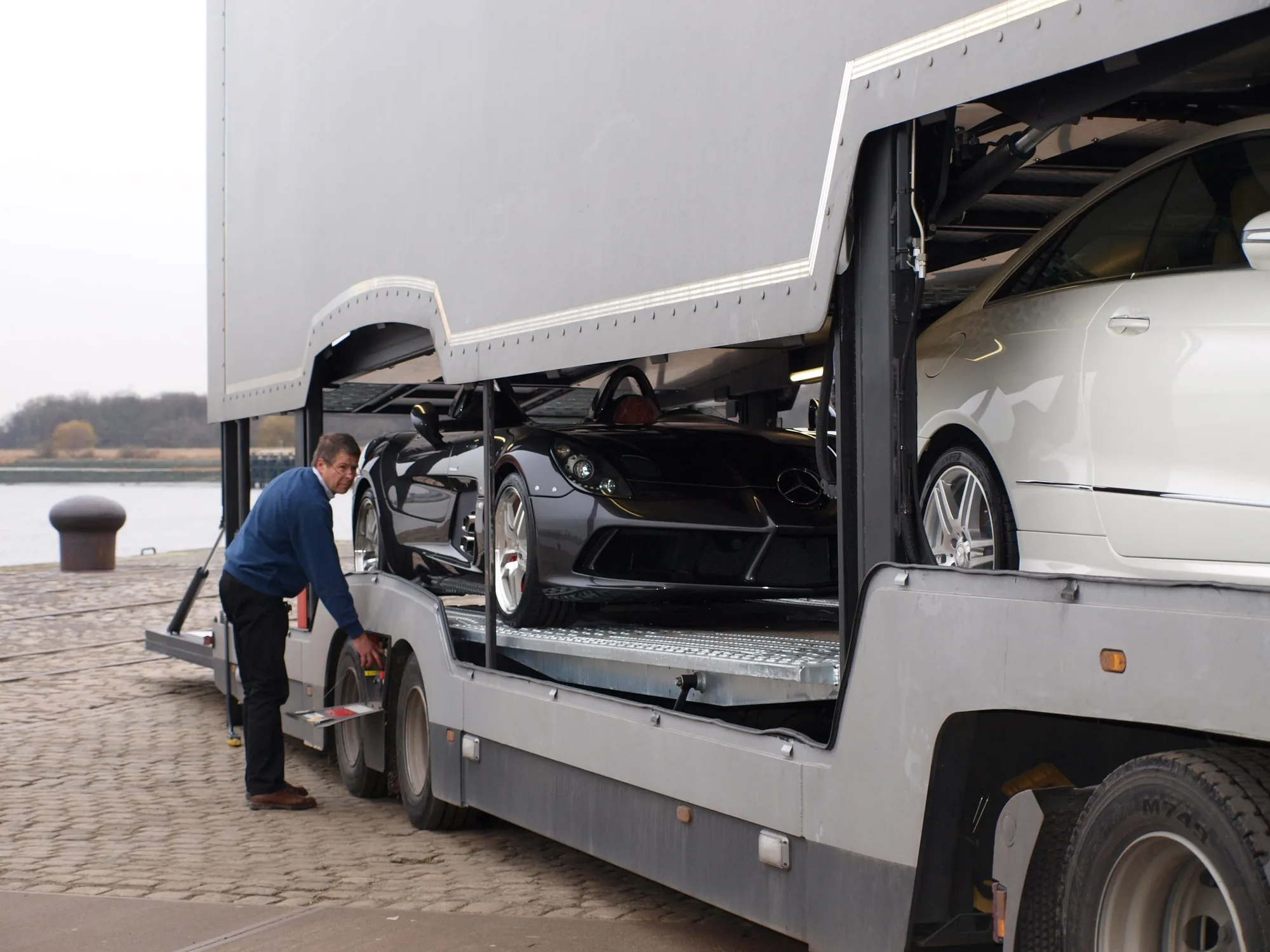
SLR McLaren
Carbon nose, side exhausts behind the front wheels. Nothing about it is standard to handle.
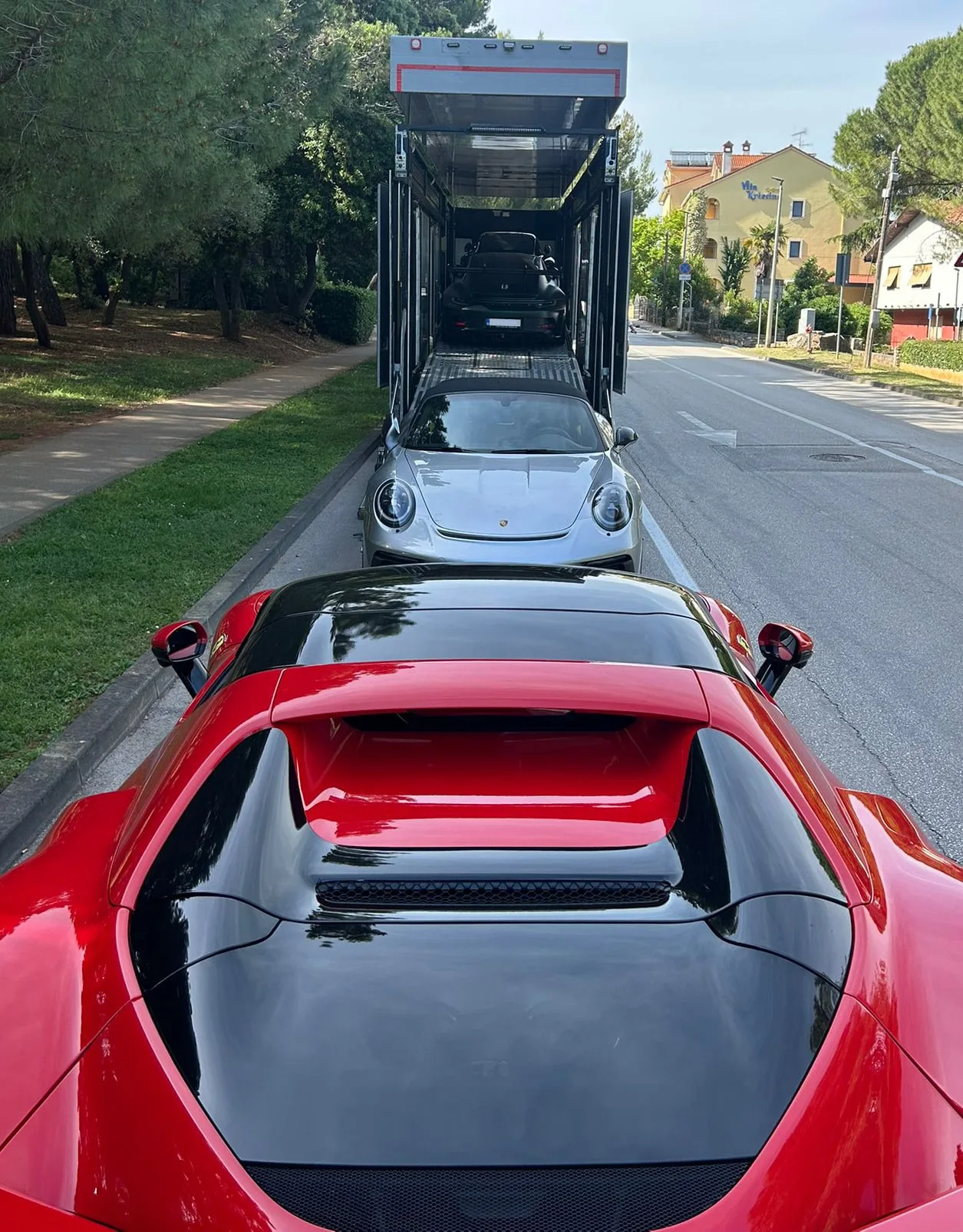
Coastal road
Two cars with the transporter behind: some jobs move as a convoy.
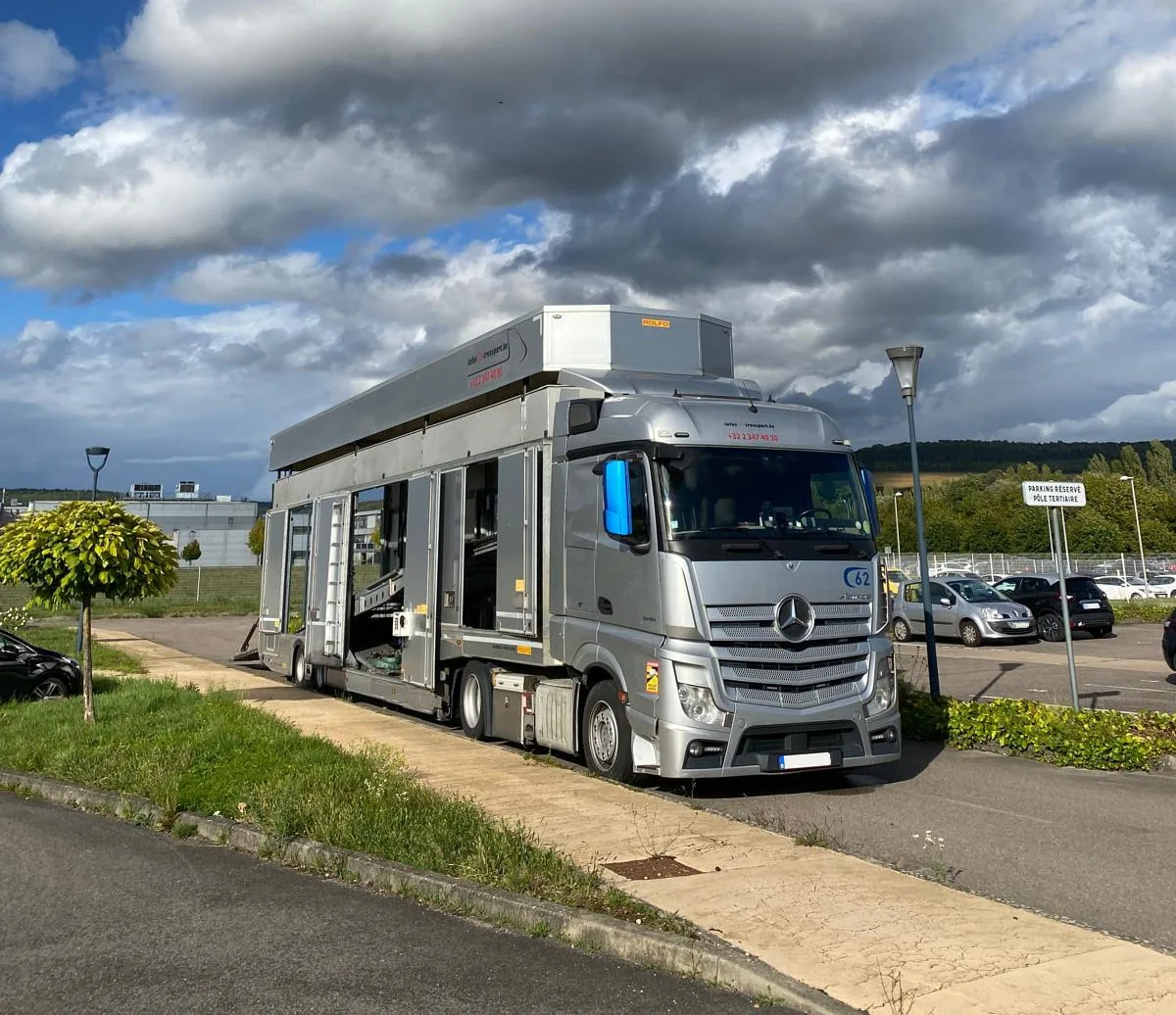
A stop on the way
Between two loadings, the trailer stays closed and the car stays out of sight.
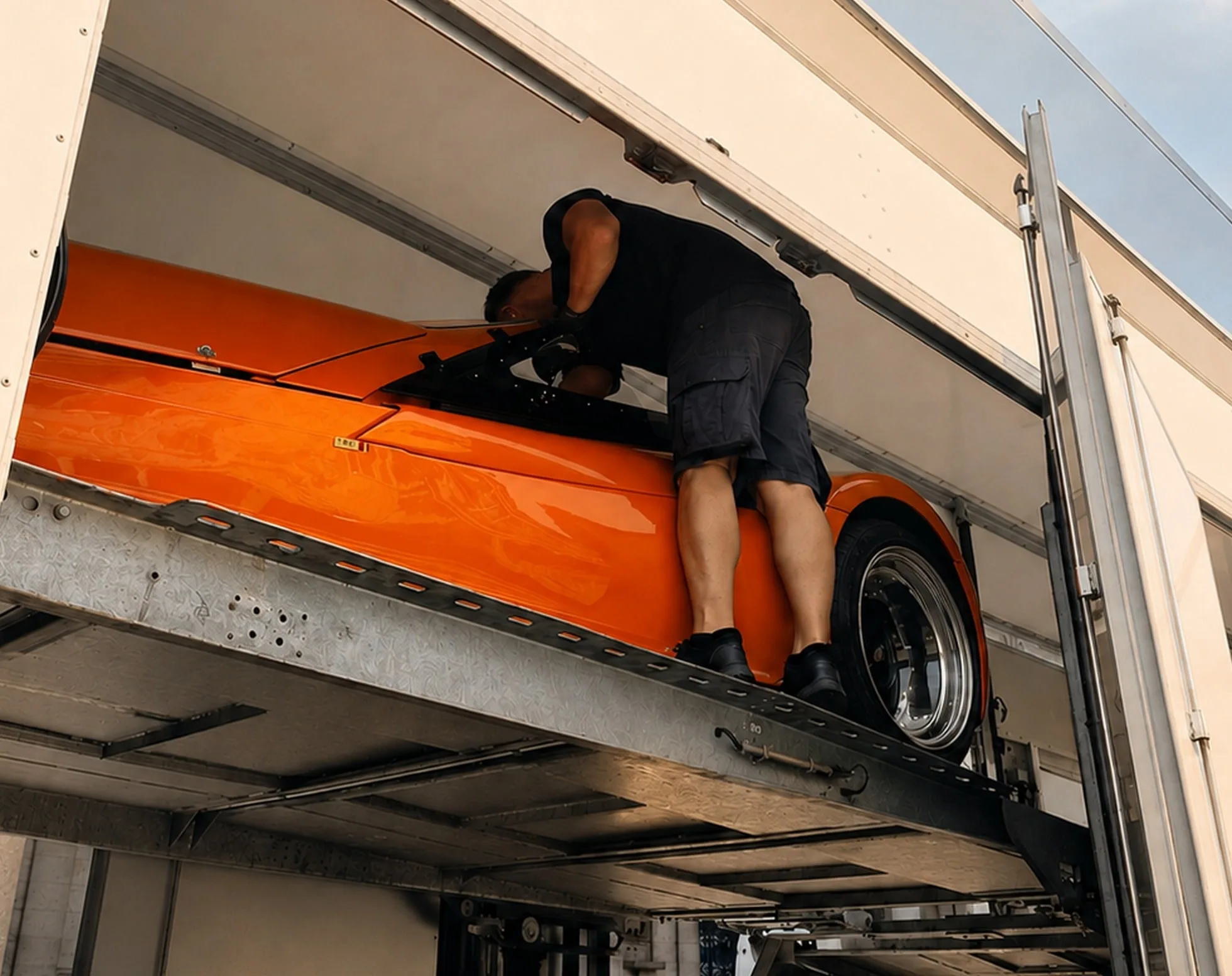
Releasing the straps
The upper deck is worked on your knees, one strap at a time.
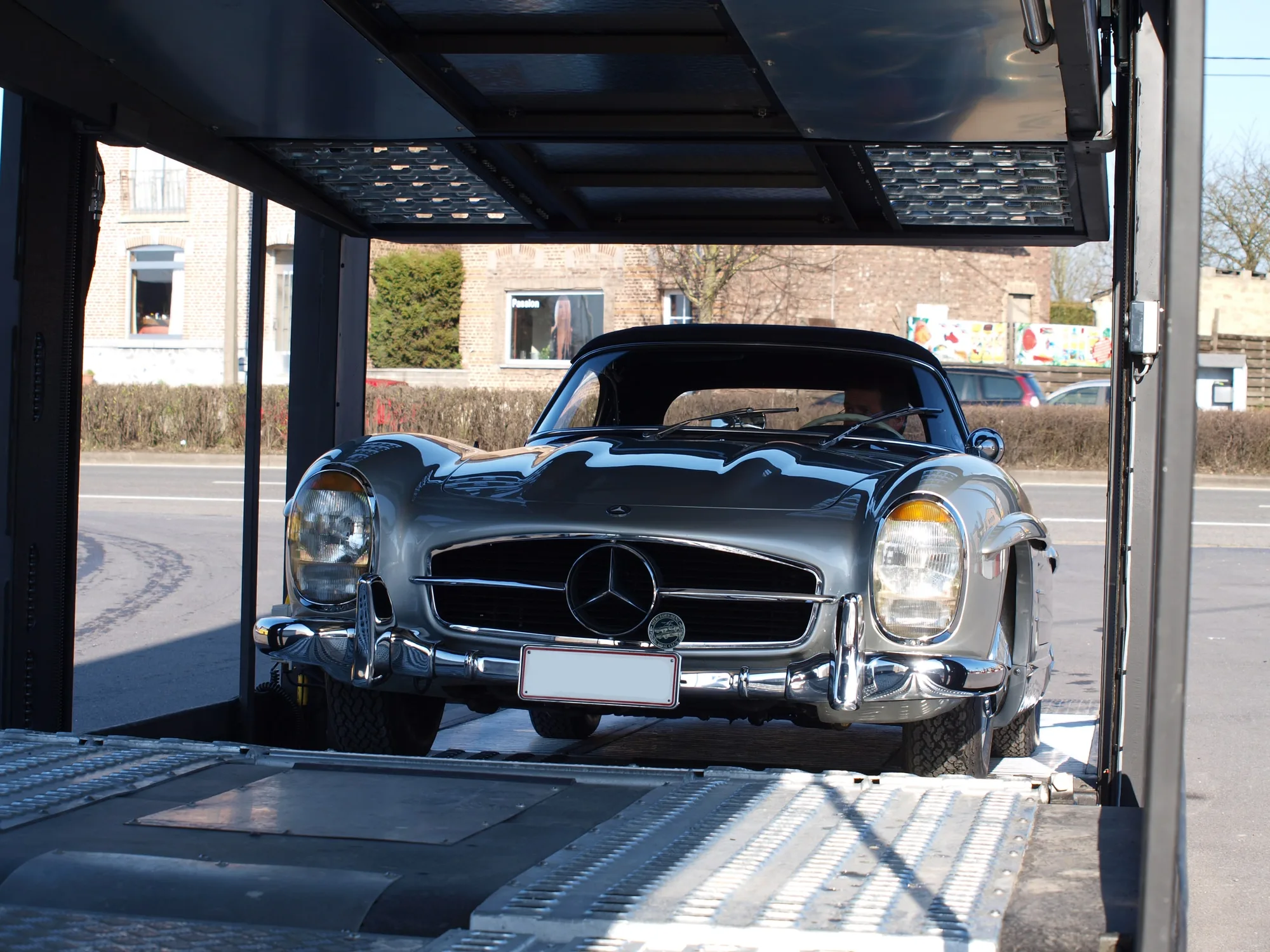
Framed
About fourteen hundred were built. This one travels alone on its deck.
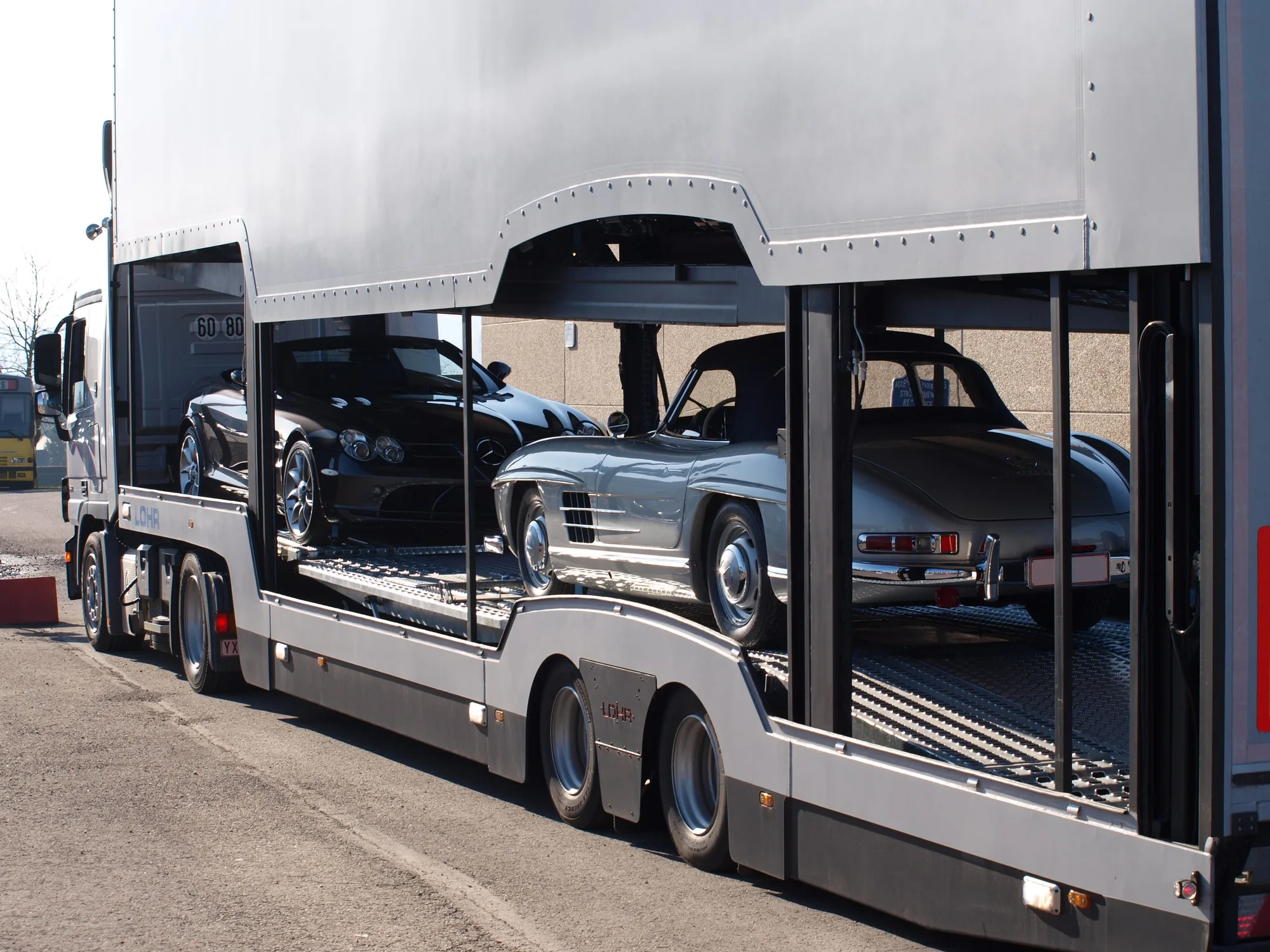
Both on board
The pair travels together because it is shown together. One truck, one route, one arrival.
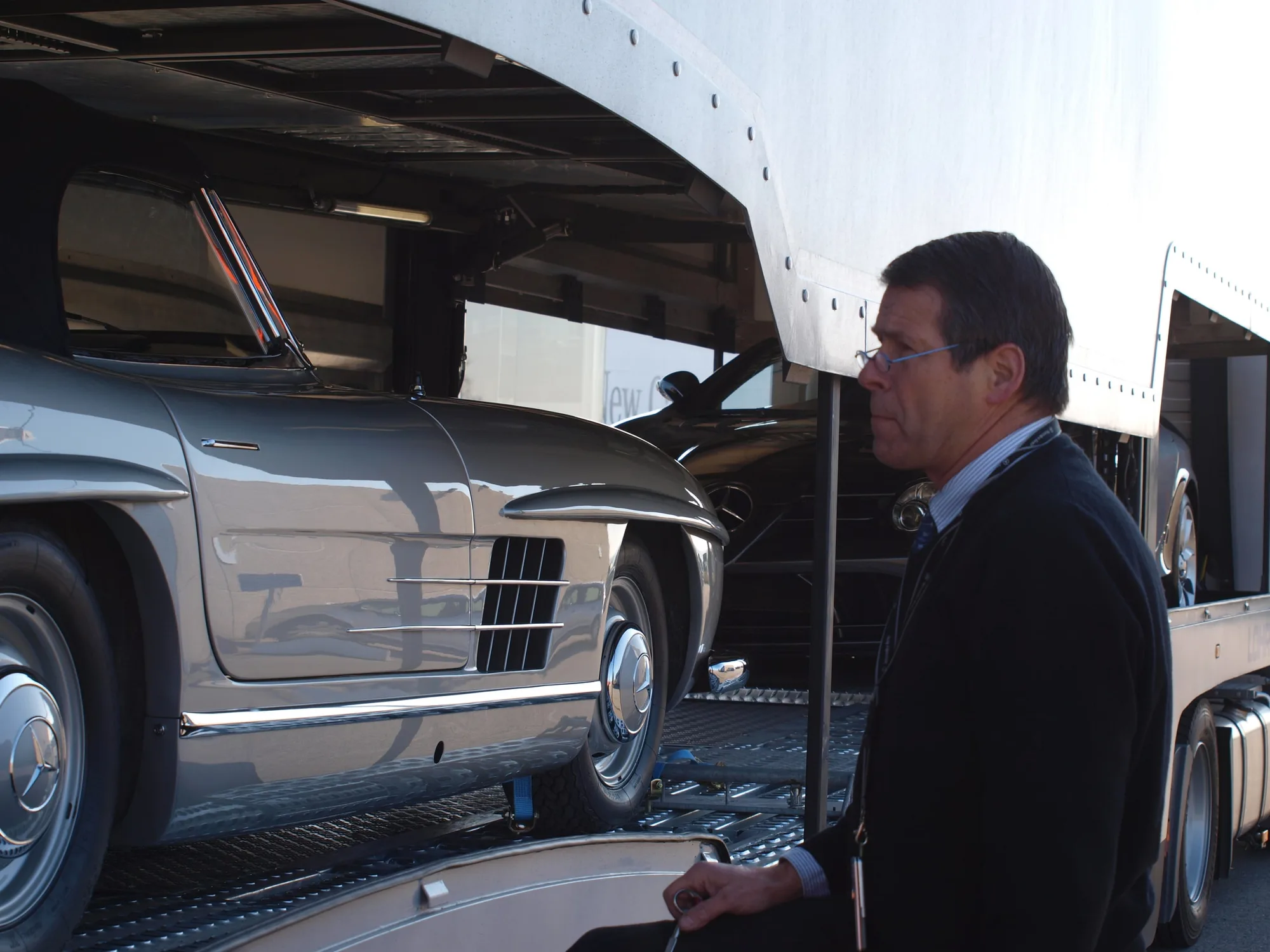
Before the ramps go down
Look first, touch second. Everything that gets checked here does not get discovered later.
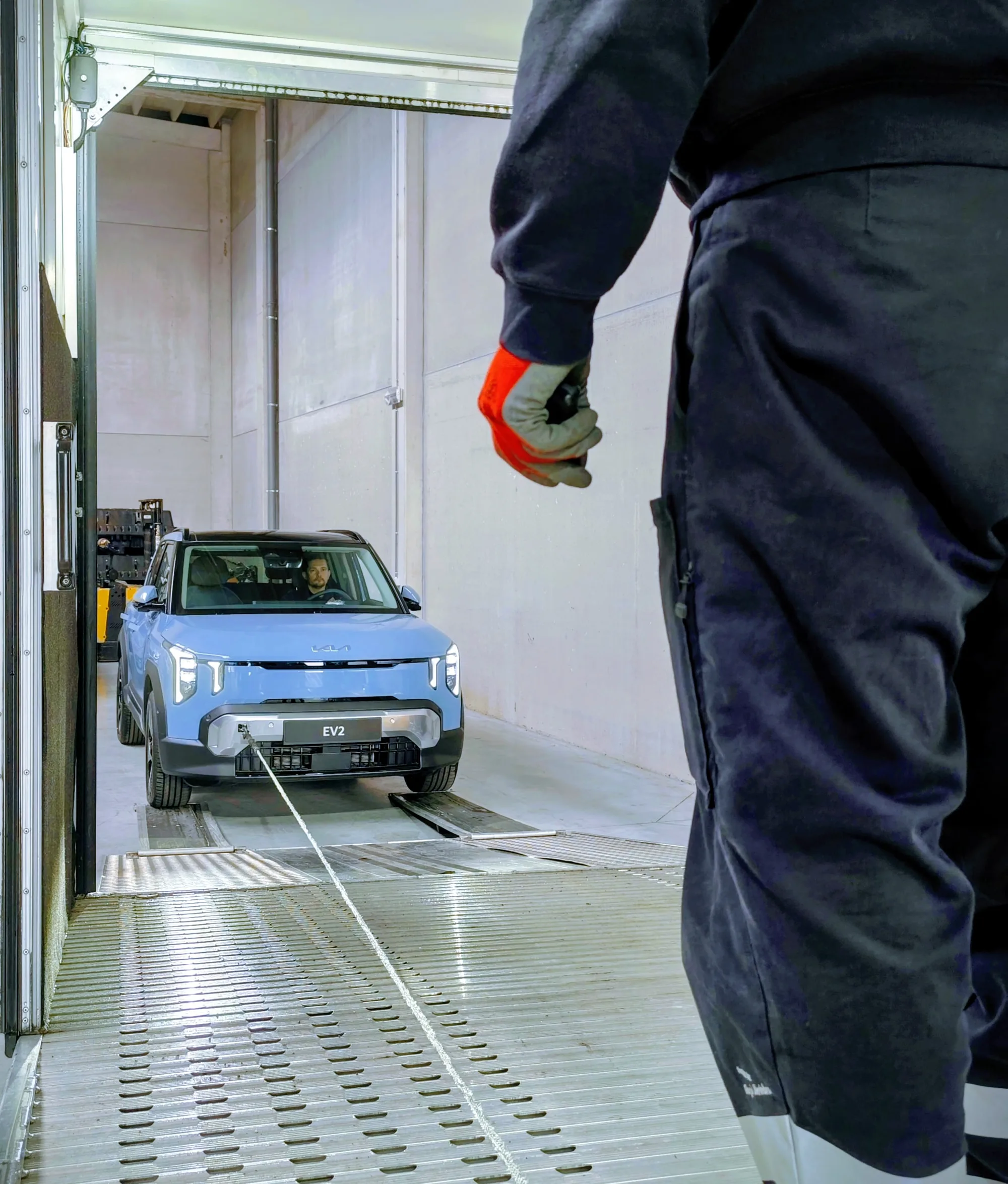
Strap in hand
Guided by voice, strap ready: nobody drives aboard on guesswork.
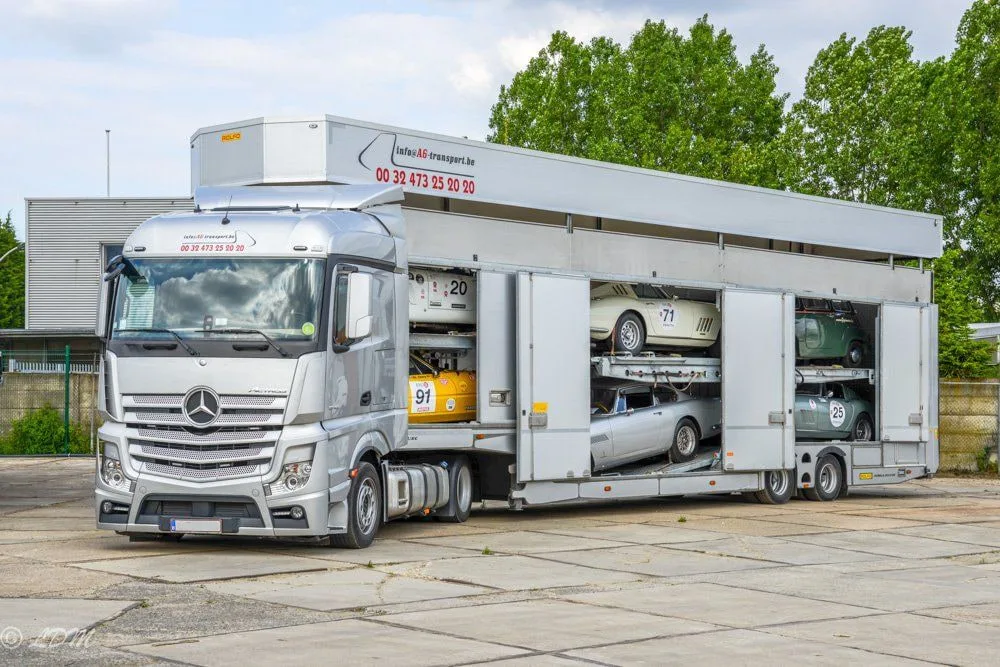
Side doors open
Four racing cars on two decks, and a door for every one of them.
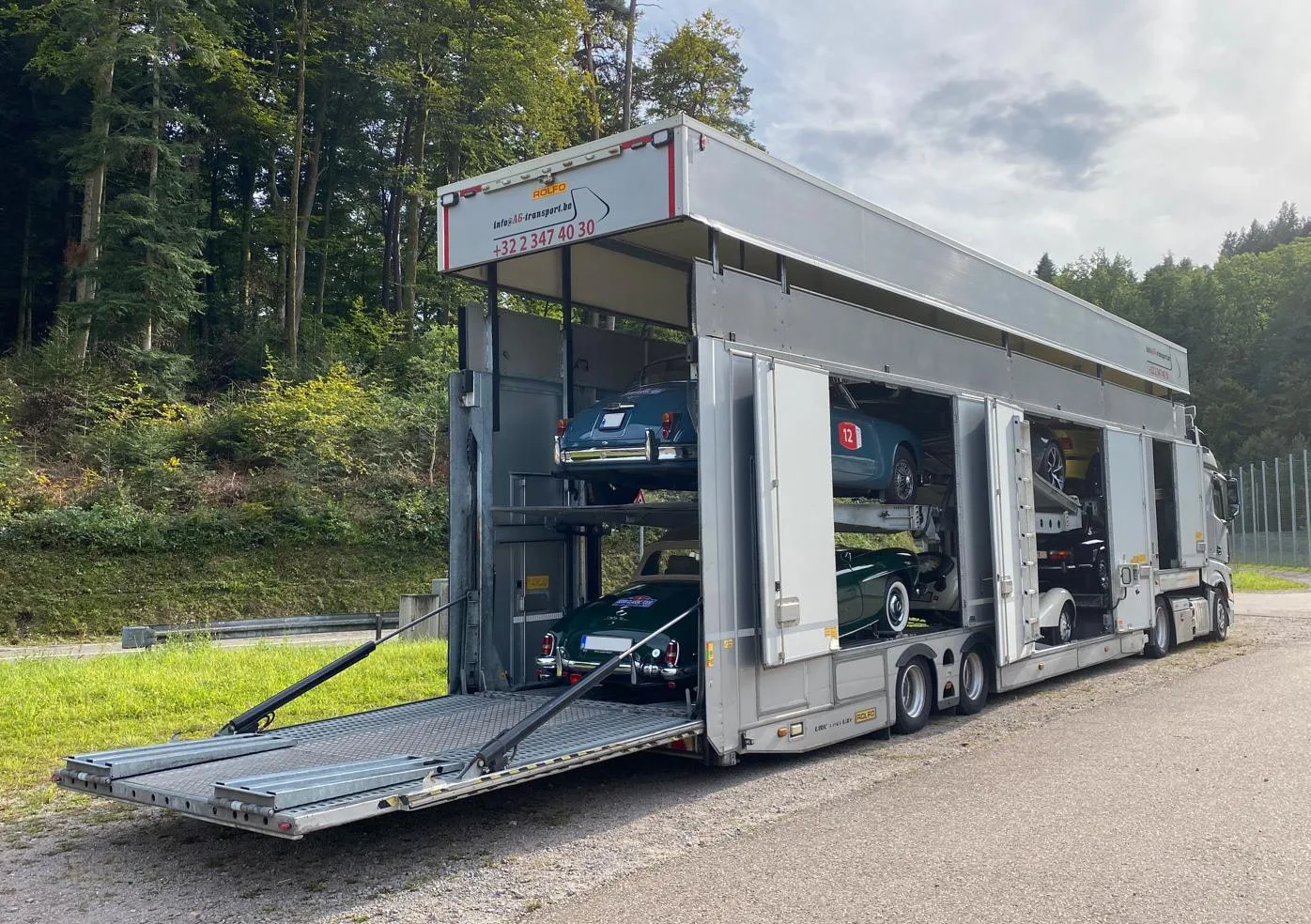
Ready to unload
Ramps down, side doors open — four classics come out one by one.
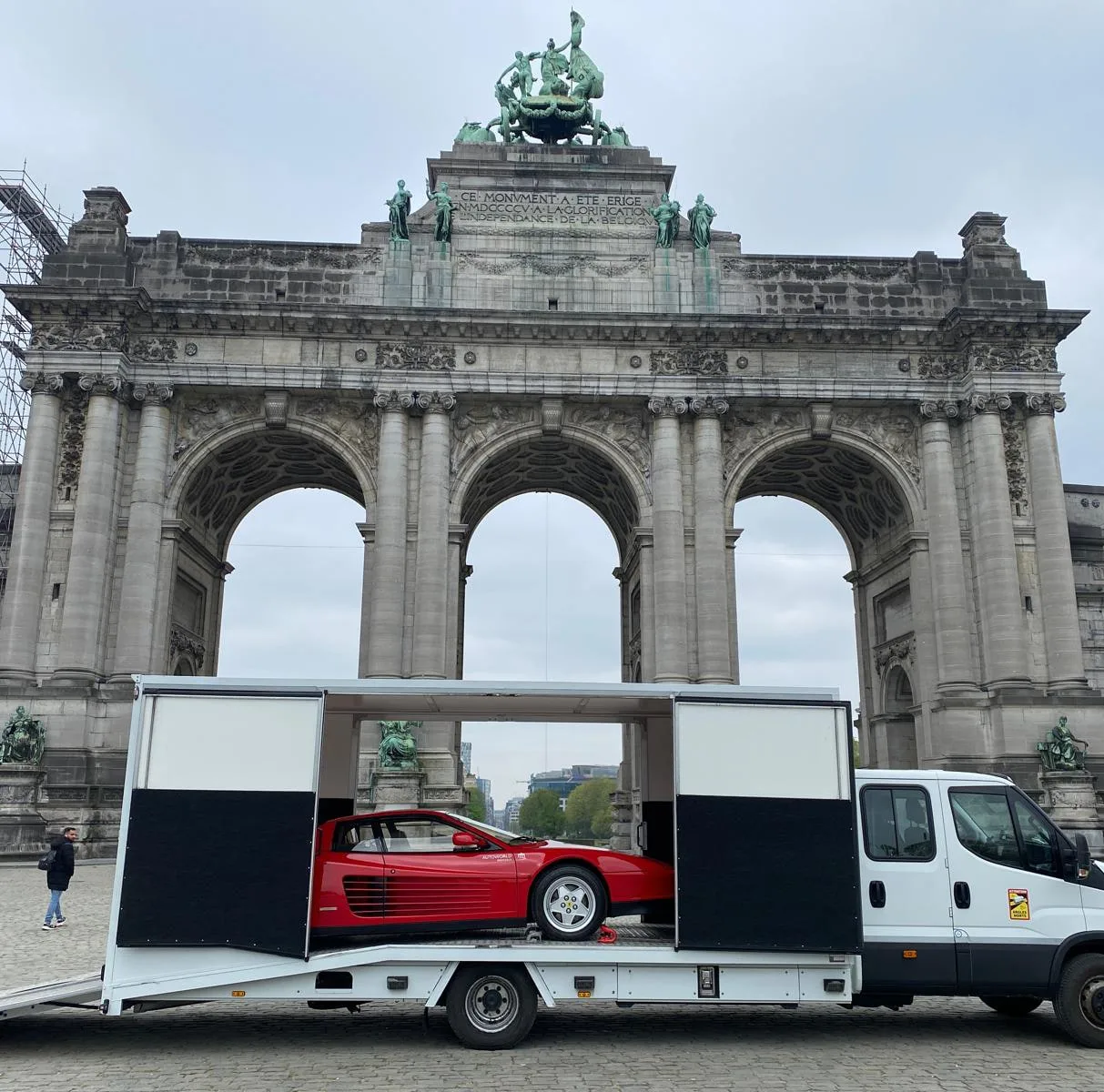
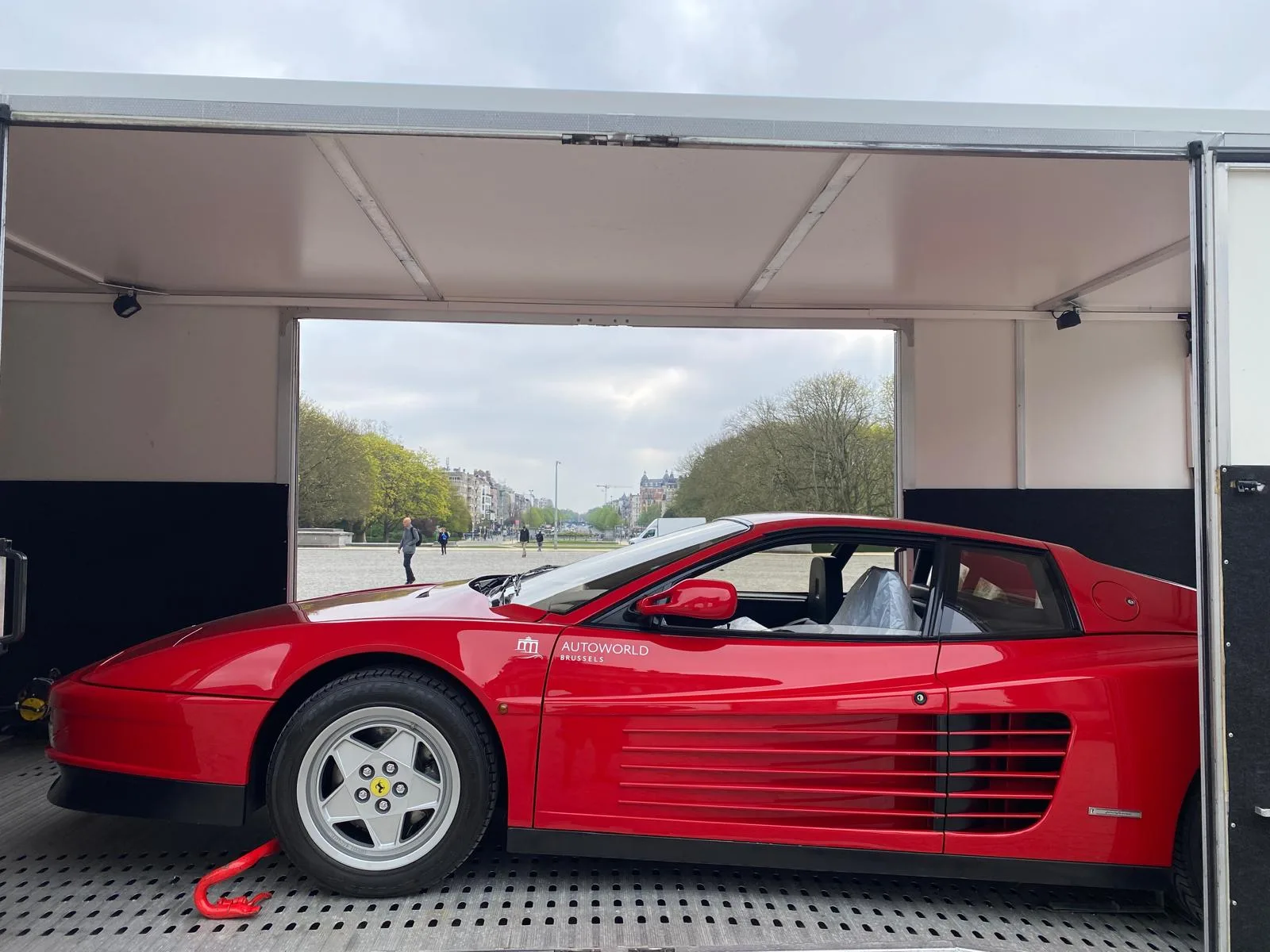
Testarossa
Read the articleA Testarossa delivered under the arch, transporter doors wide open.
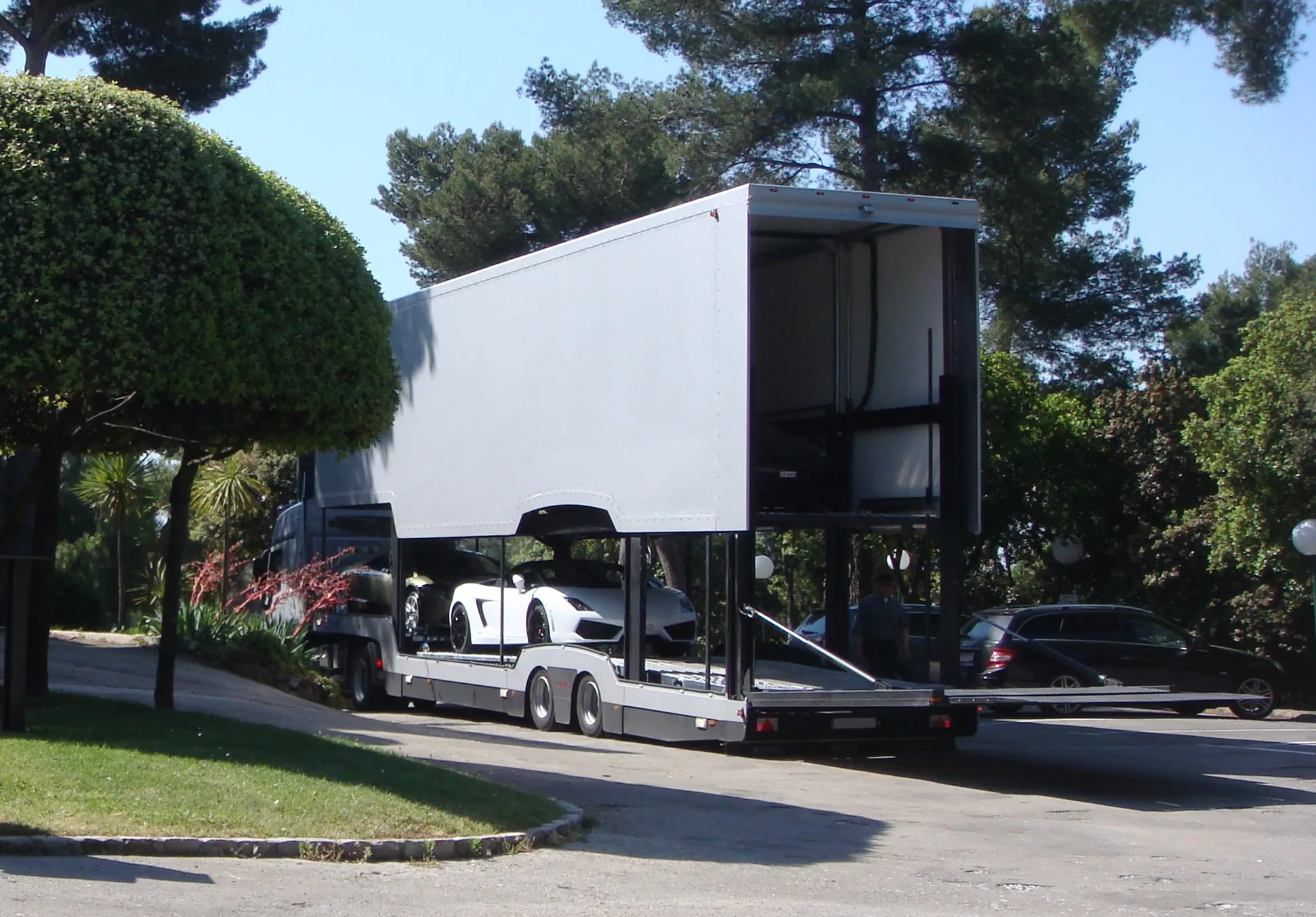
Deck up
The upper deck rises to make room below. A collection is loaded in an order, not at random.
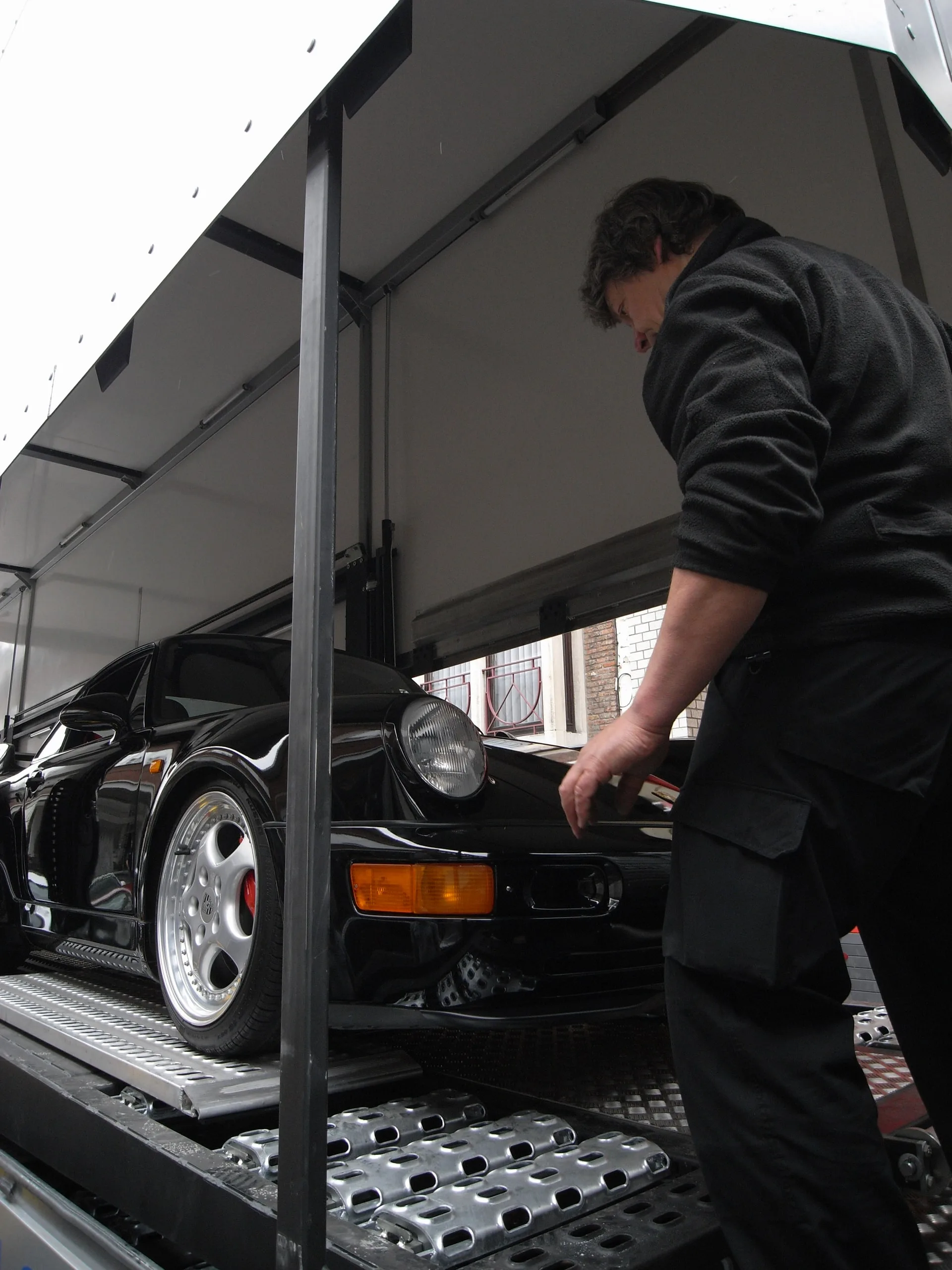
Guided in
Someone walks beside the car all the way in. The driver sees the deck; he sees the clearances.
Aboard
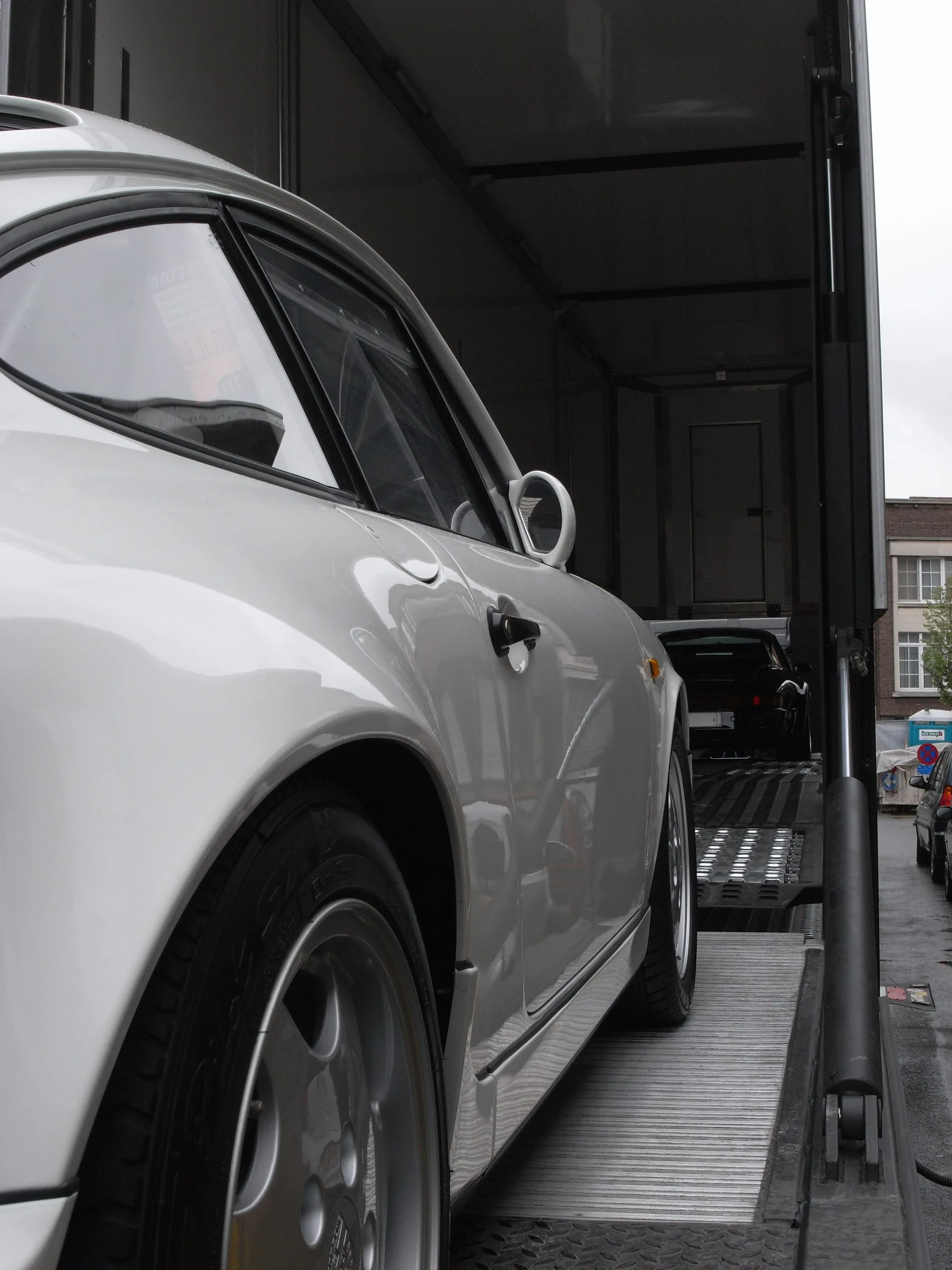
The doors close on the car before the truck leaves the kerb.
Group B
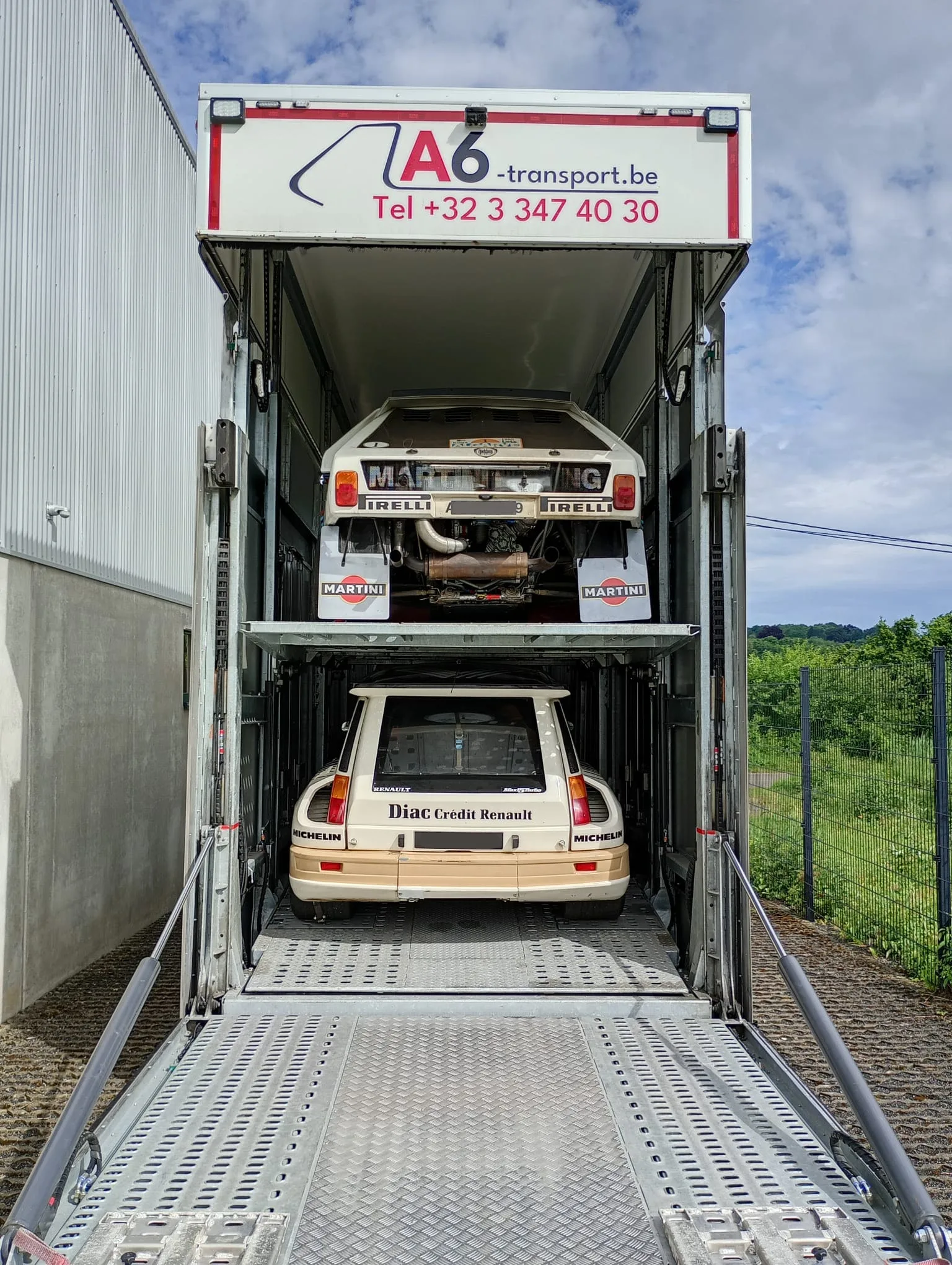
Two historic rally cars moved together to the same exhibition.
Huracán
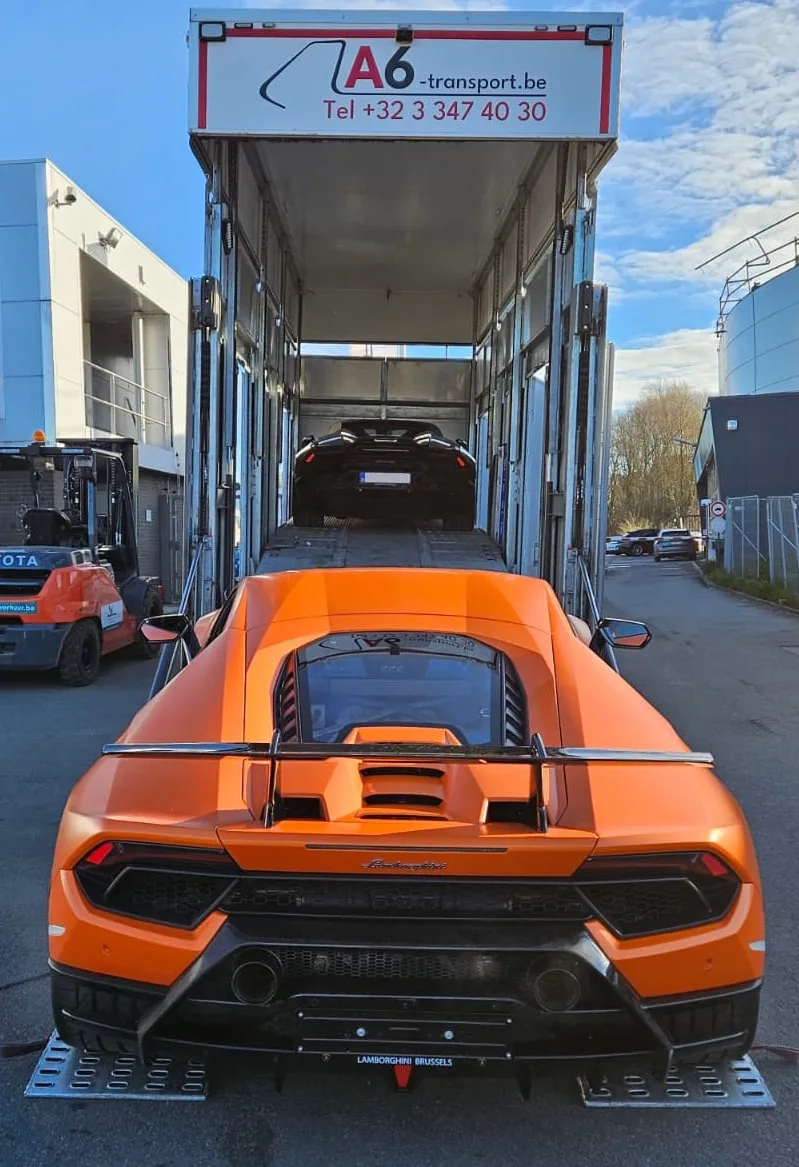
Wing, diffuser, ground clearance: the ramp angle is set before it descends.
Matte black, no marks
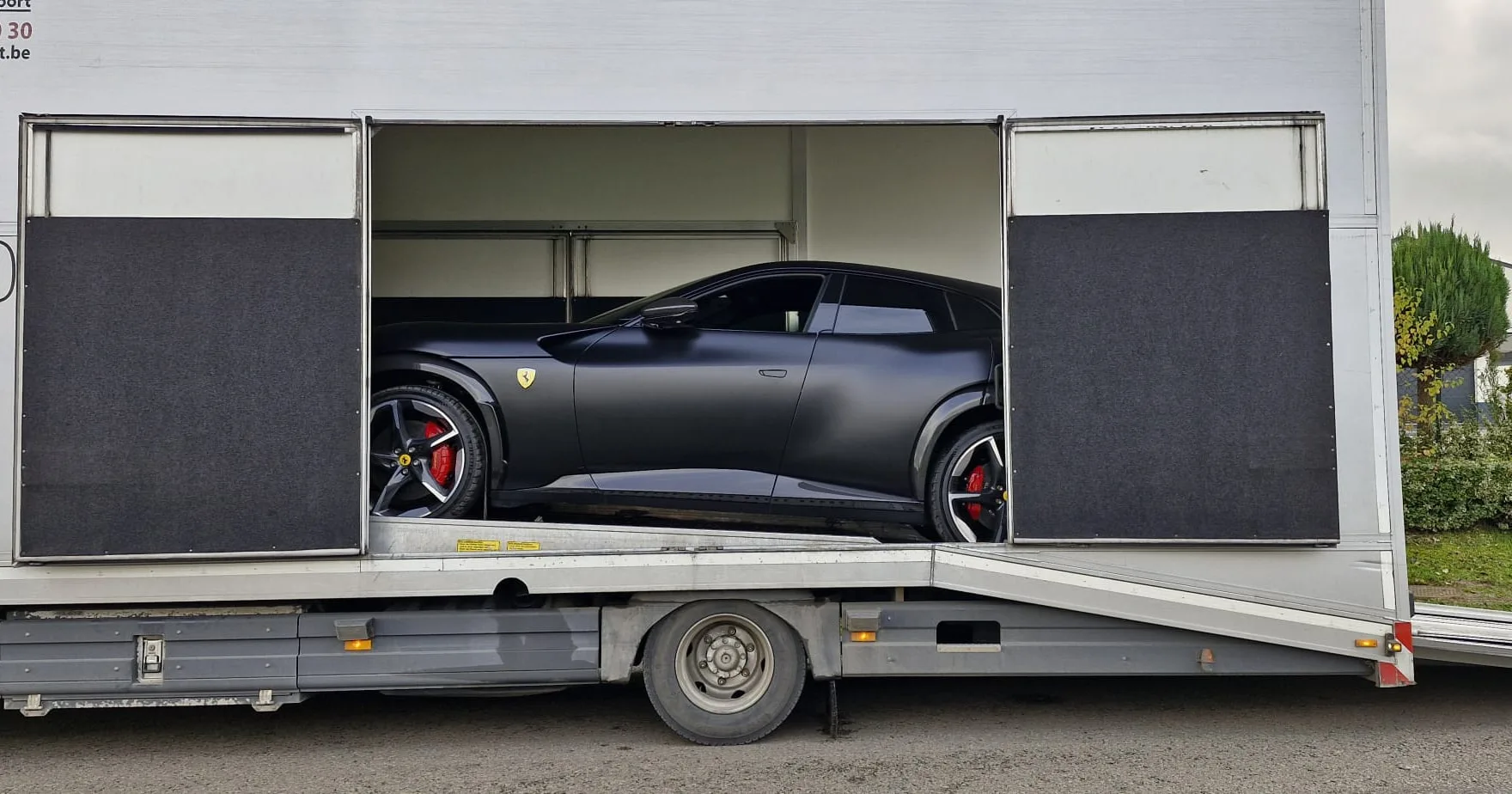
Matte paint shows every fingerprint, so nobody touches the panels.
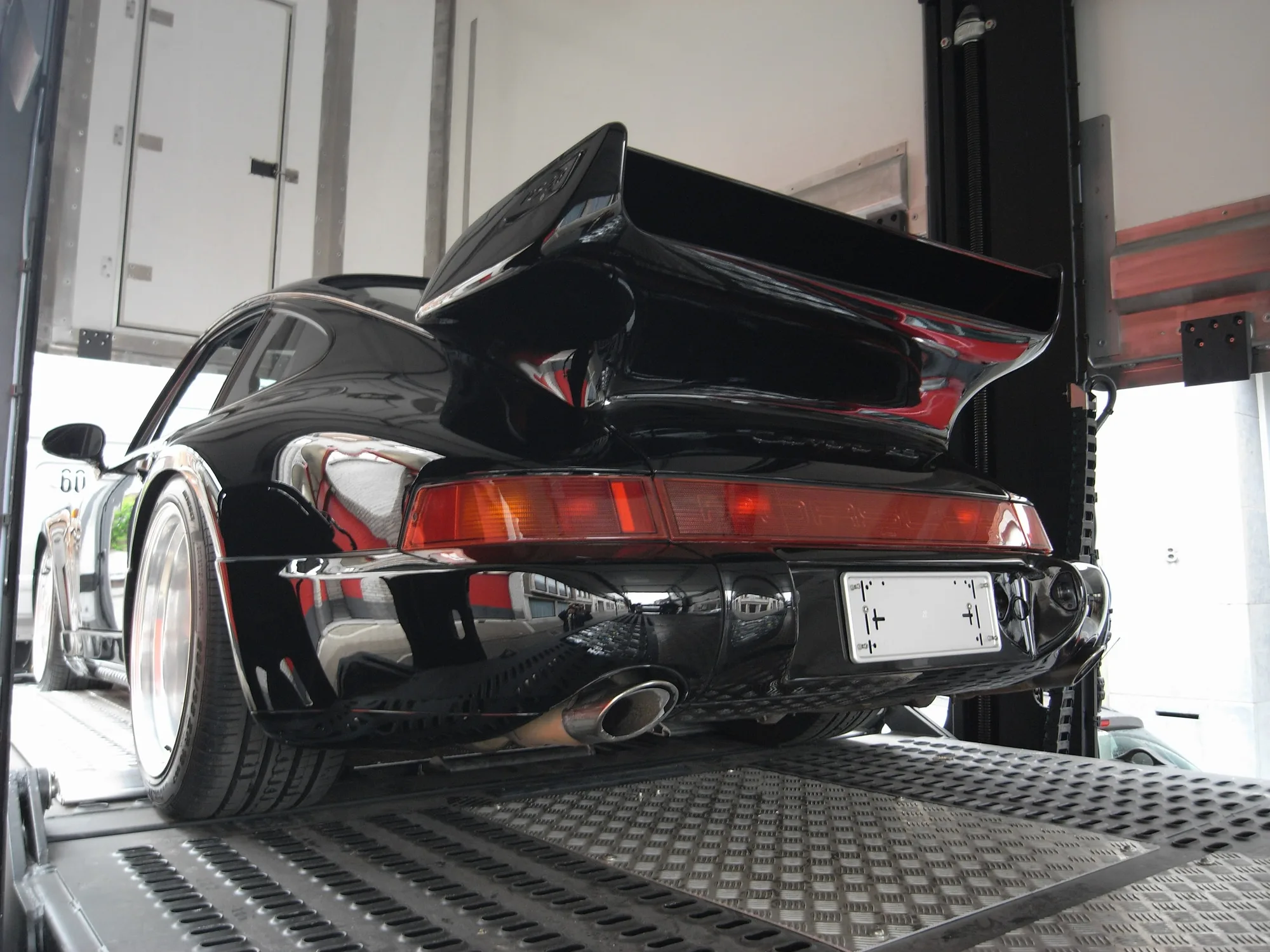
The tail decides
The wing sets the height, not the roof. It is measured before the deck above is dropped.
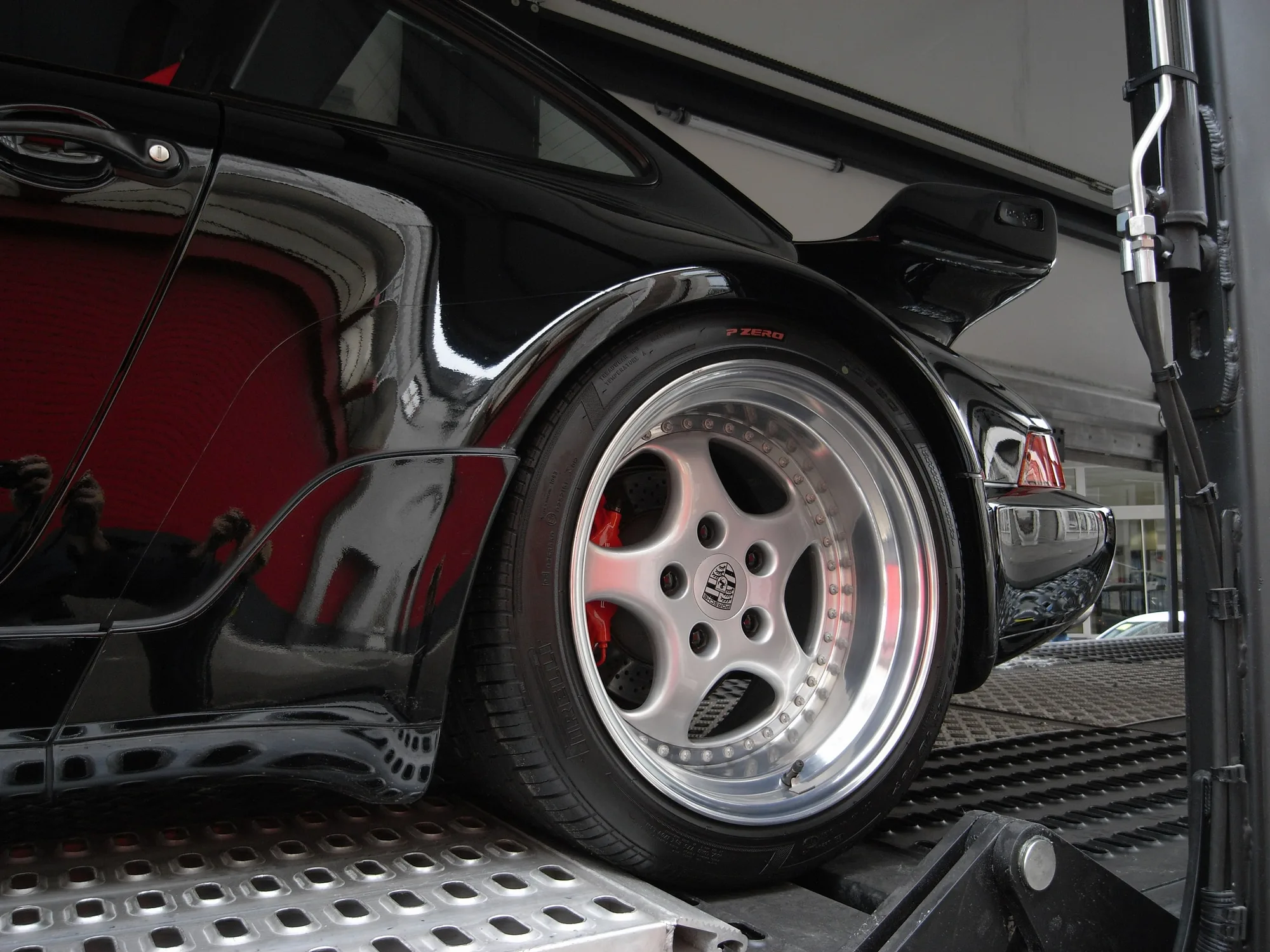
Polished lips
A kerbed rim on a car like this is not a repair, it is a refinish. The straps never touch it.
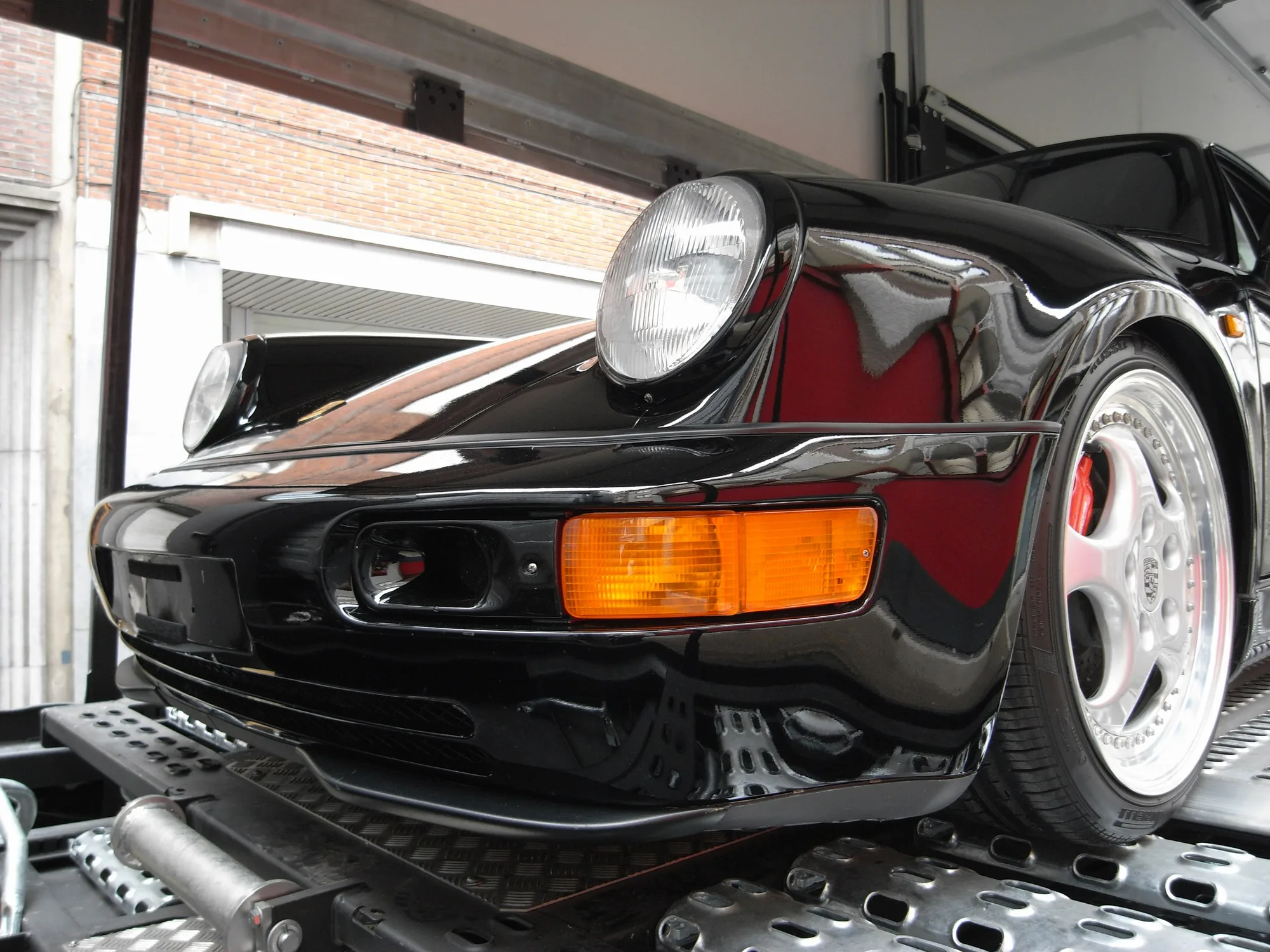
Black on red
Air-cooled, wide arches, and paint that shows a fingerprint. Gloves stay on.
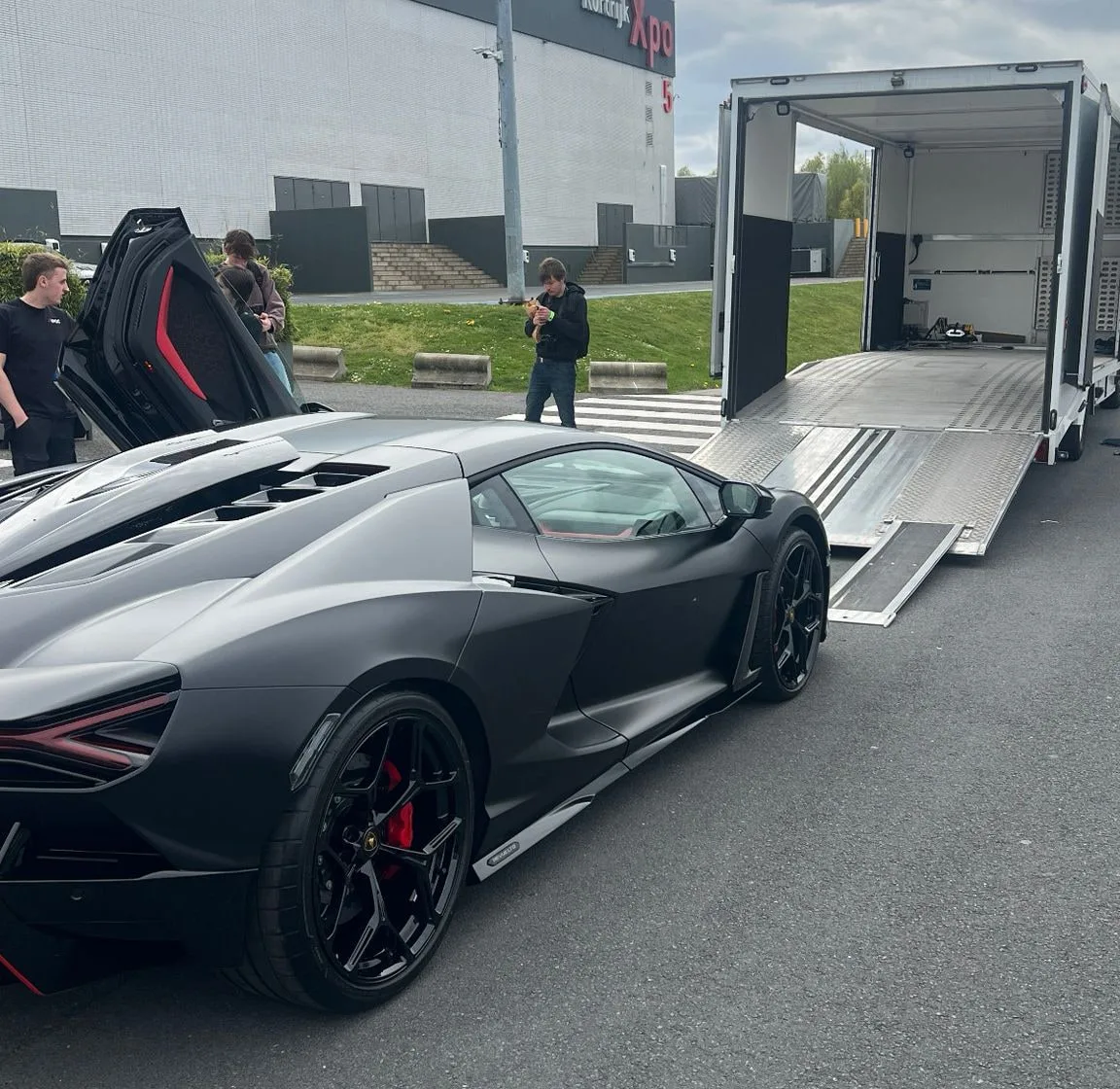
Matte paint
Matte paint cannot be polished out, so it does not get touched.
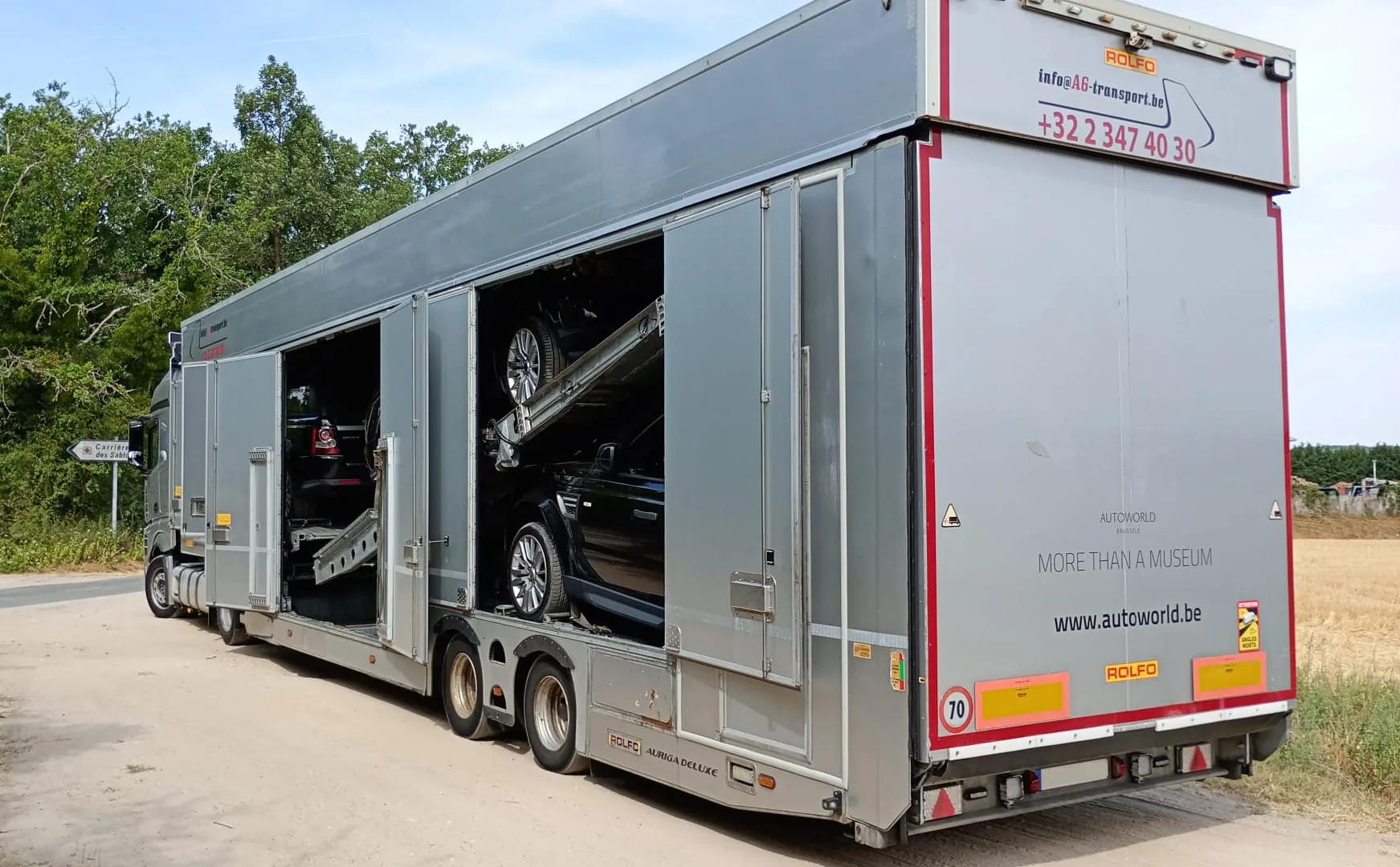
Farm track
The last stretch is not always tarmac. It gets done anyway.
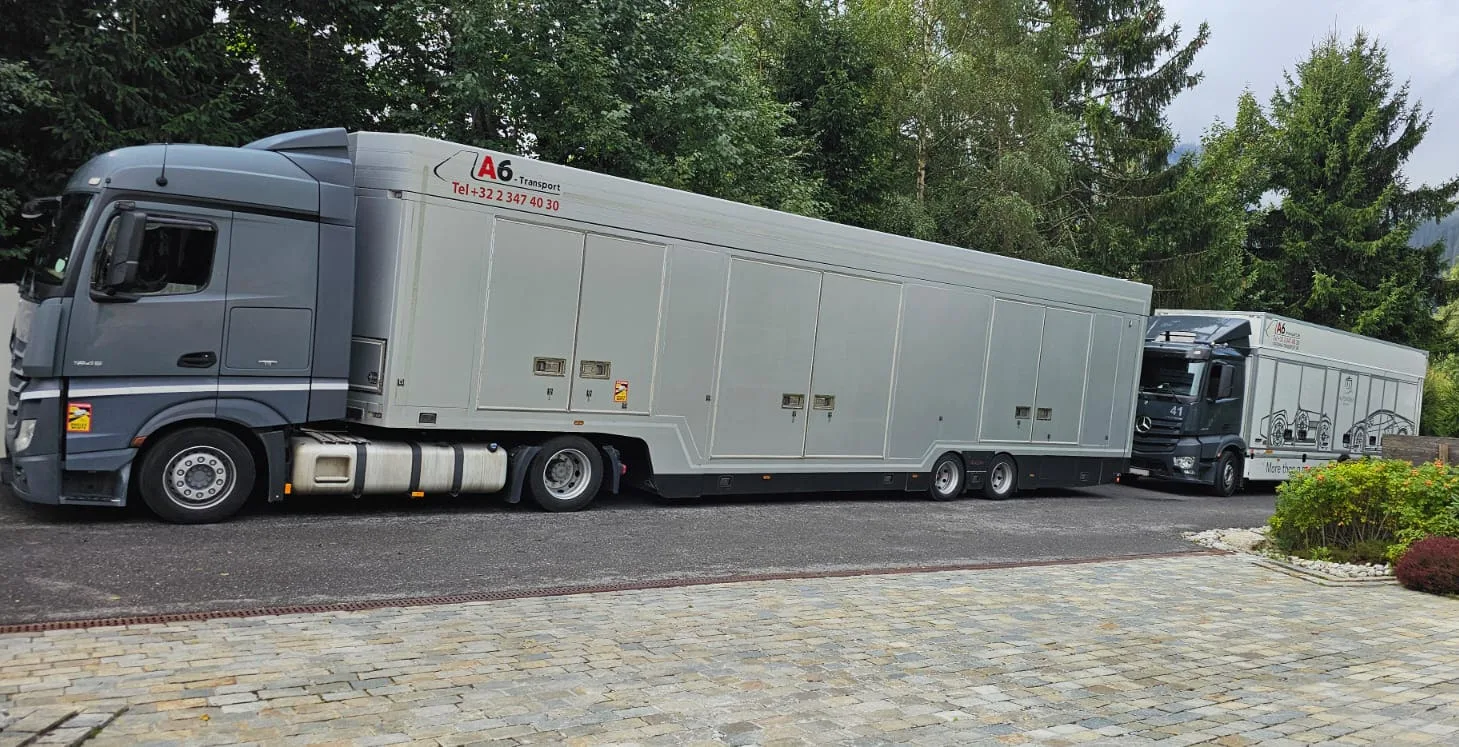
Two trucks, one address
A collection does not move one car at a time when the address is this far.
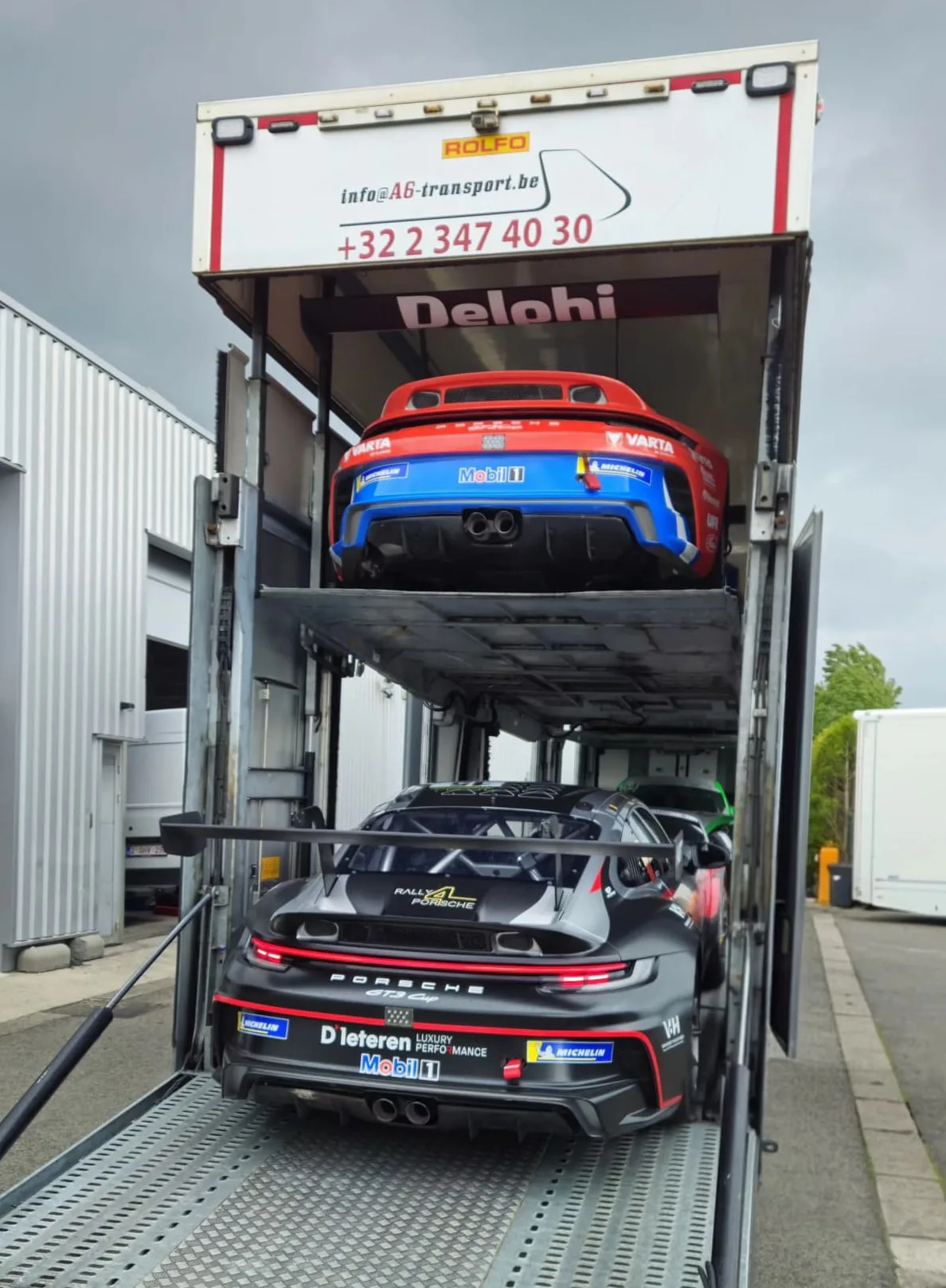
Cup cars aboard
Loaded on both decks for the same meeting, the rear still open.
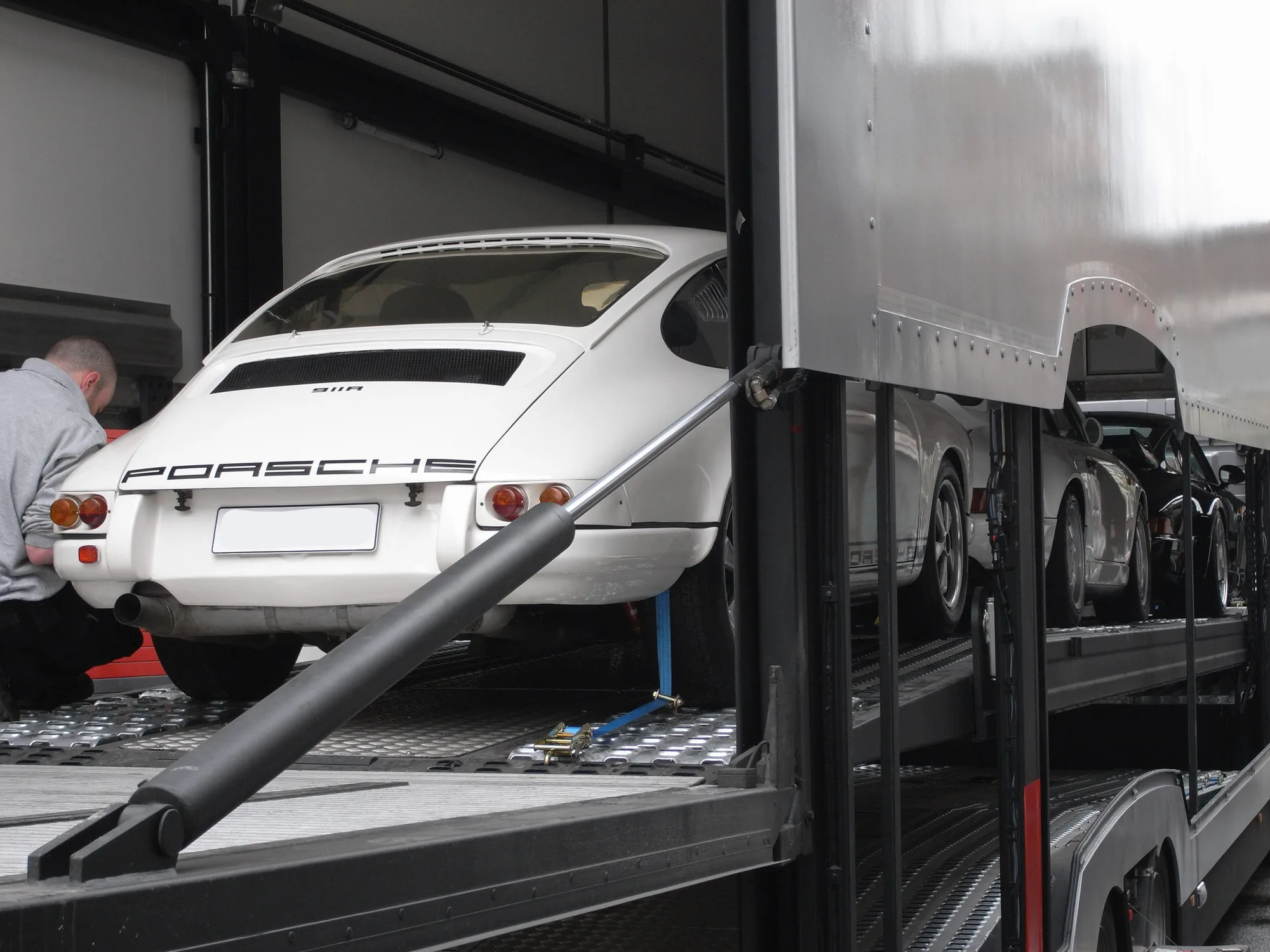
An early 911
Narrow body, thin bumpers, chrome script. Sixty years on, it is still driven aboard.
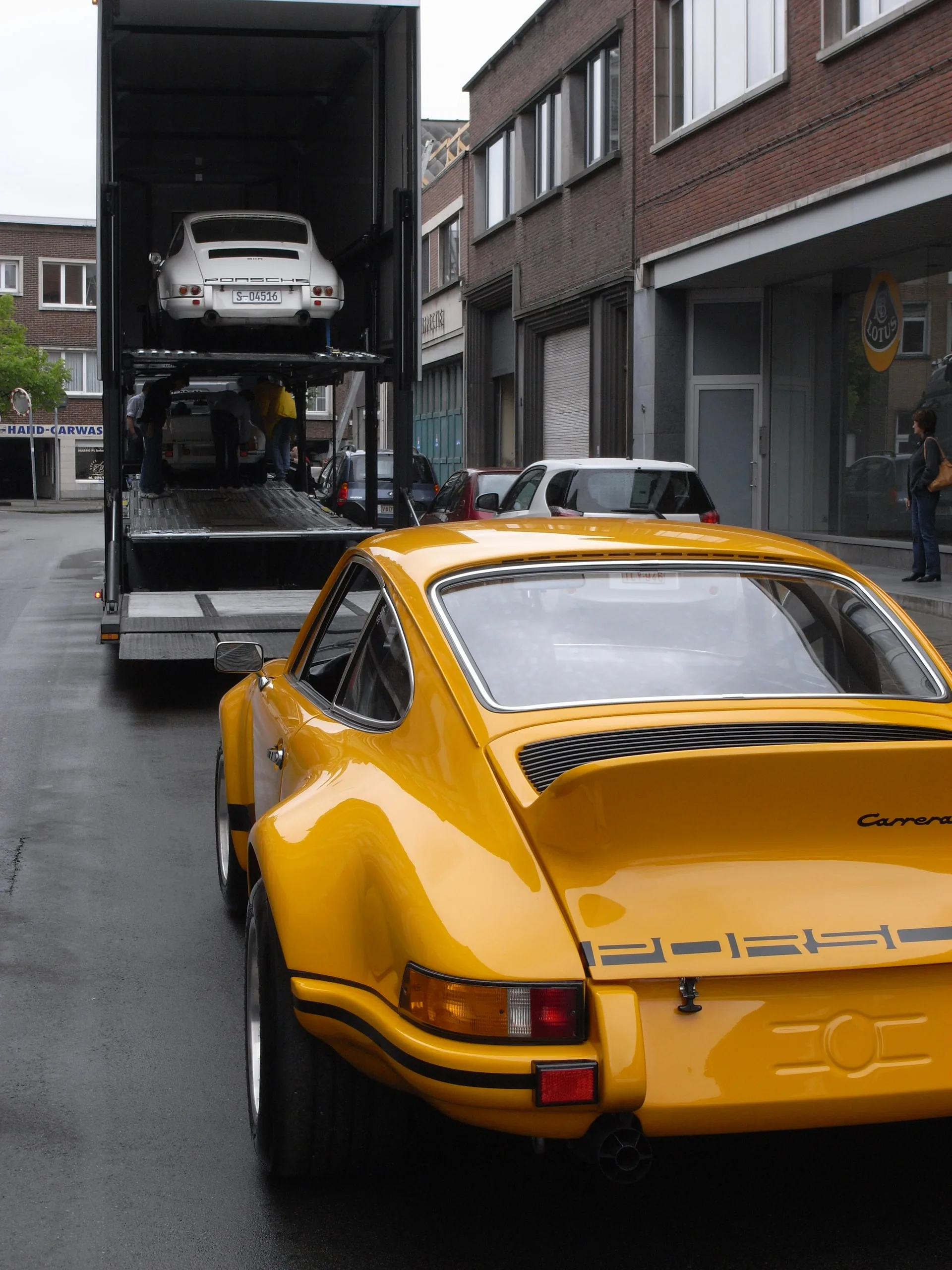
Ducktail
A ducktail and a lightweight shell. It came off the truck and it goes straight back on.
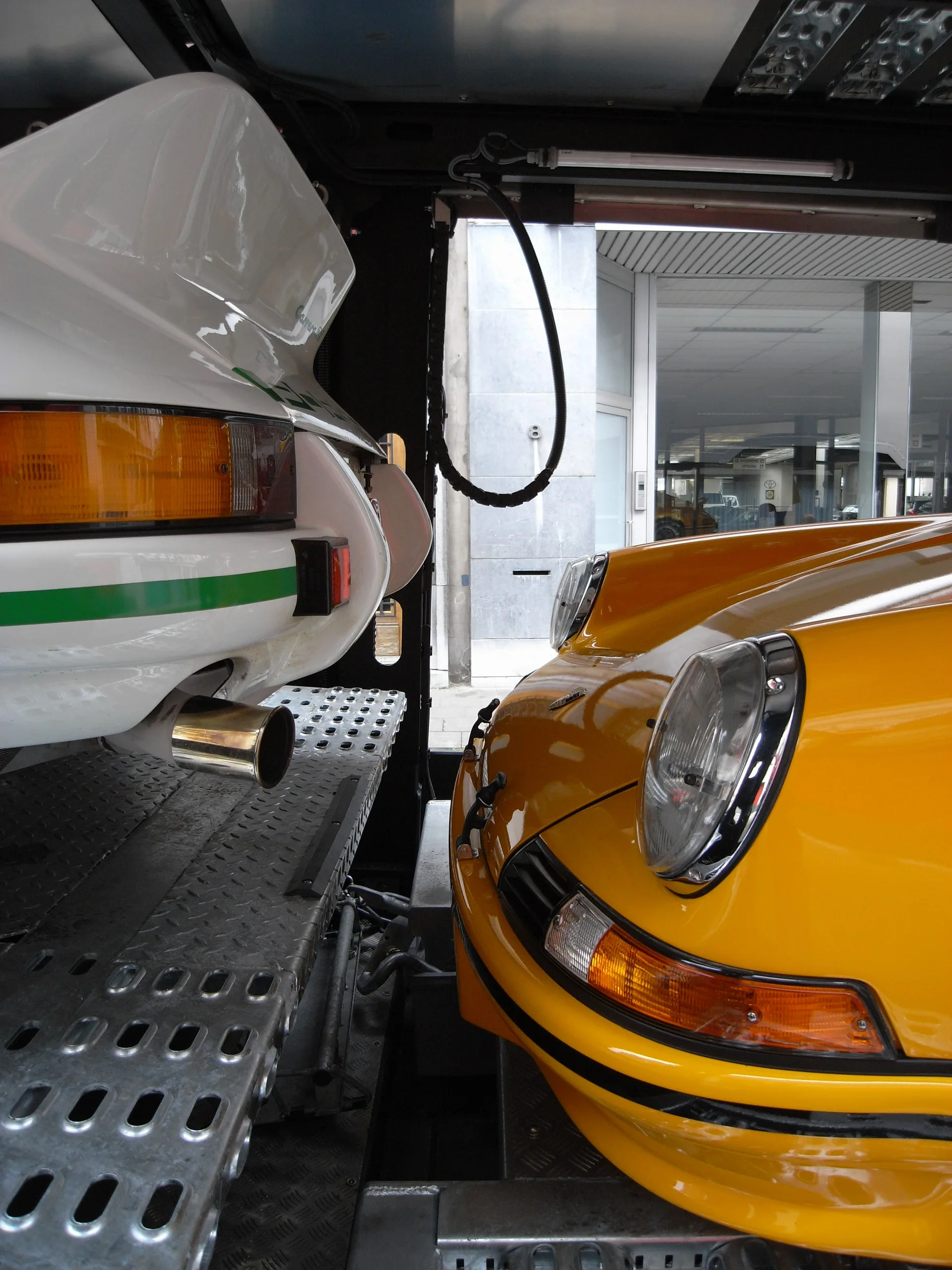
Two RS, one deck
Same model, two liveries, one owner. They are loaded in the order they will be shown.
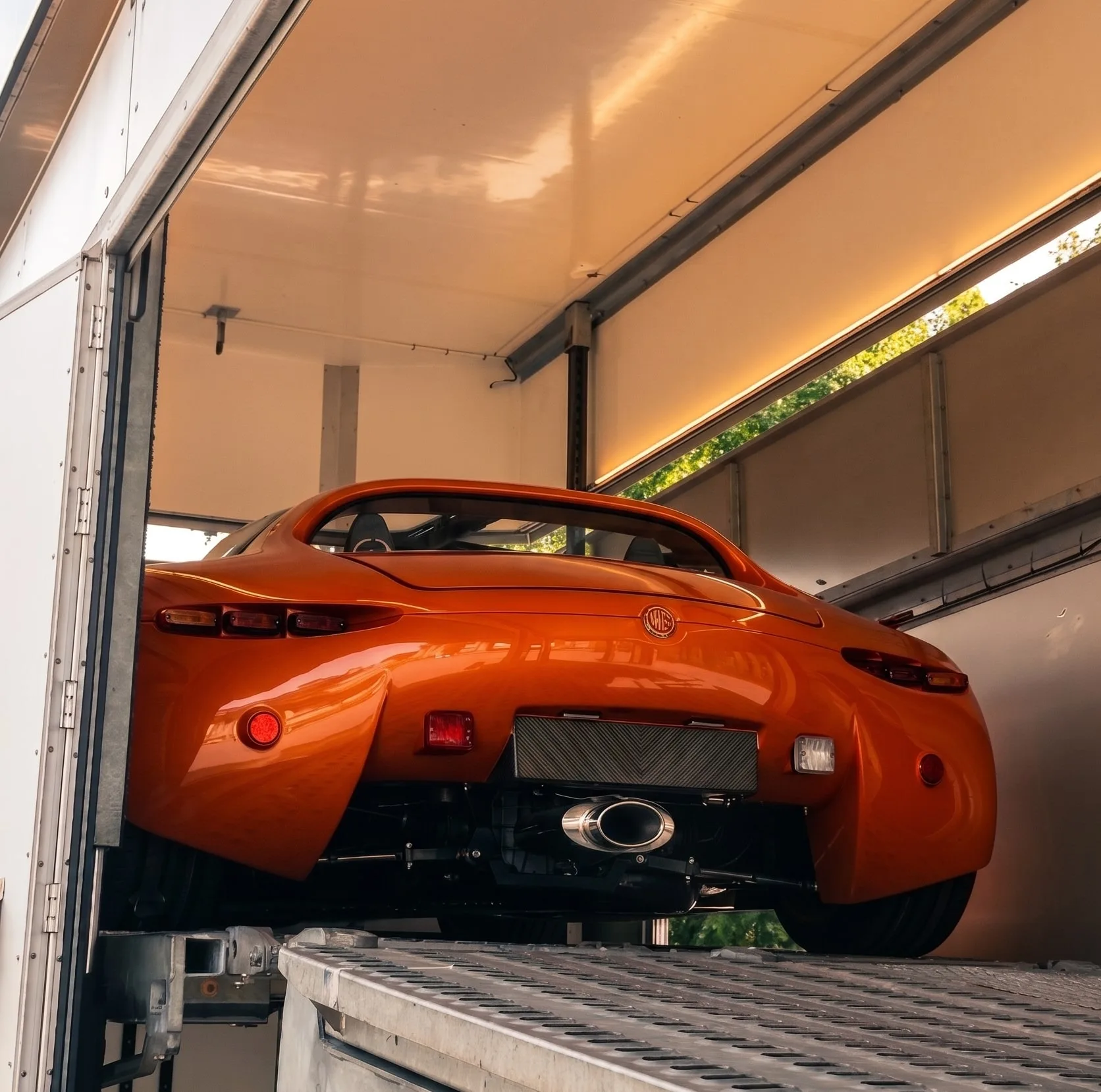
Roadster up top
A convertible travels with its roof up, or not at all.
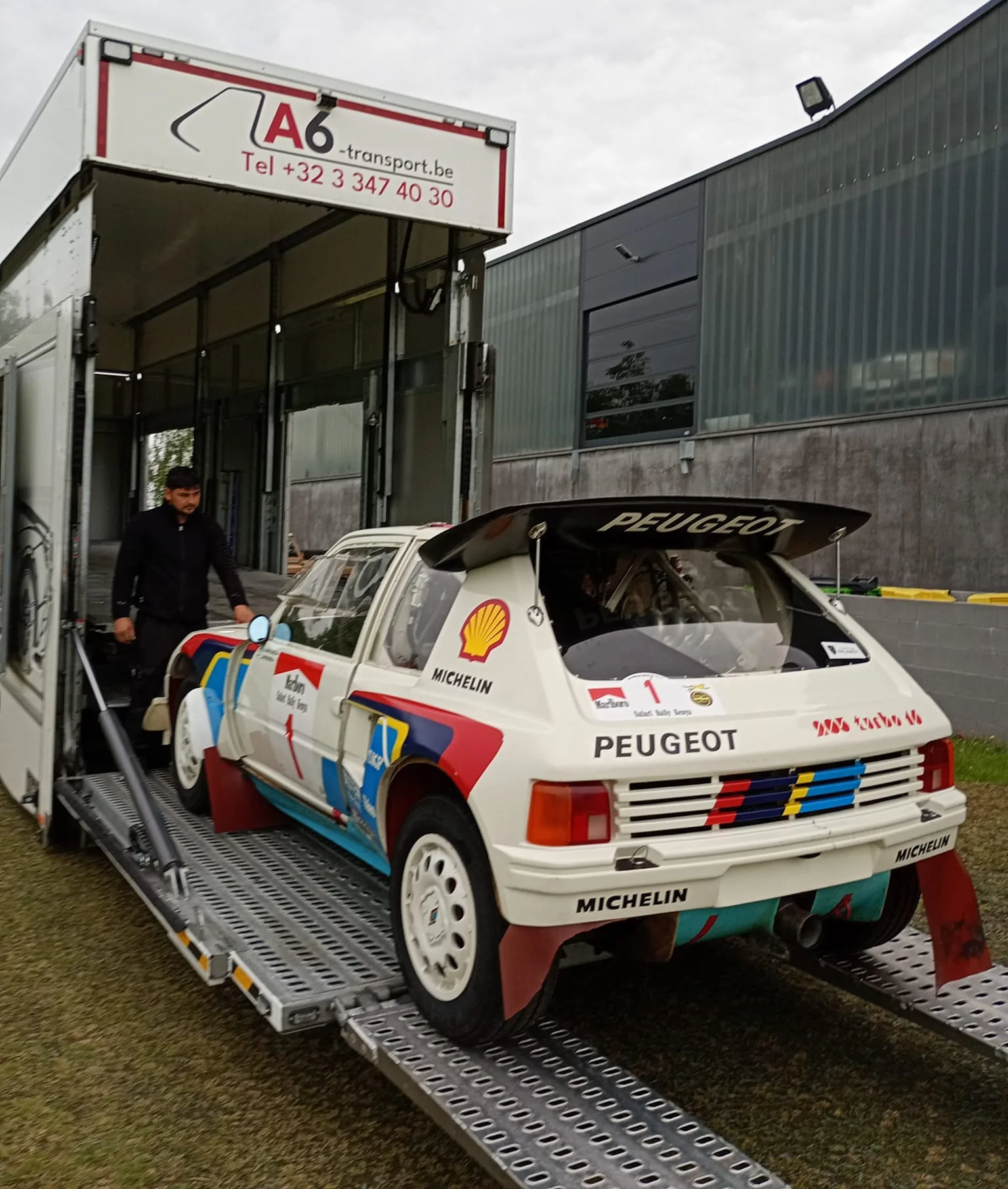
205 Turbo 16
A Group B works car loaded for a public exhibition.
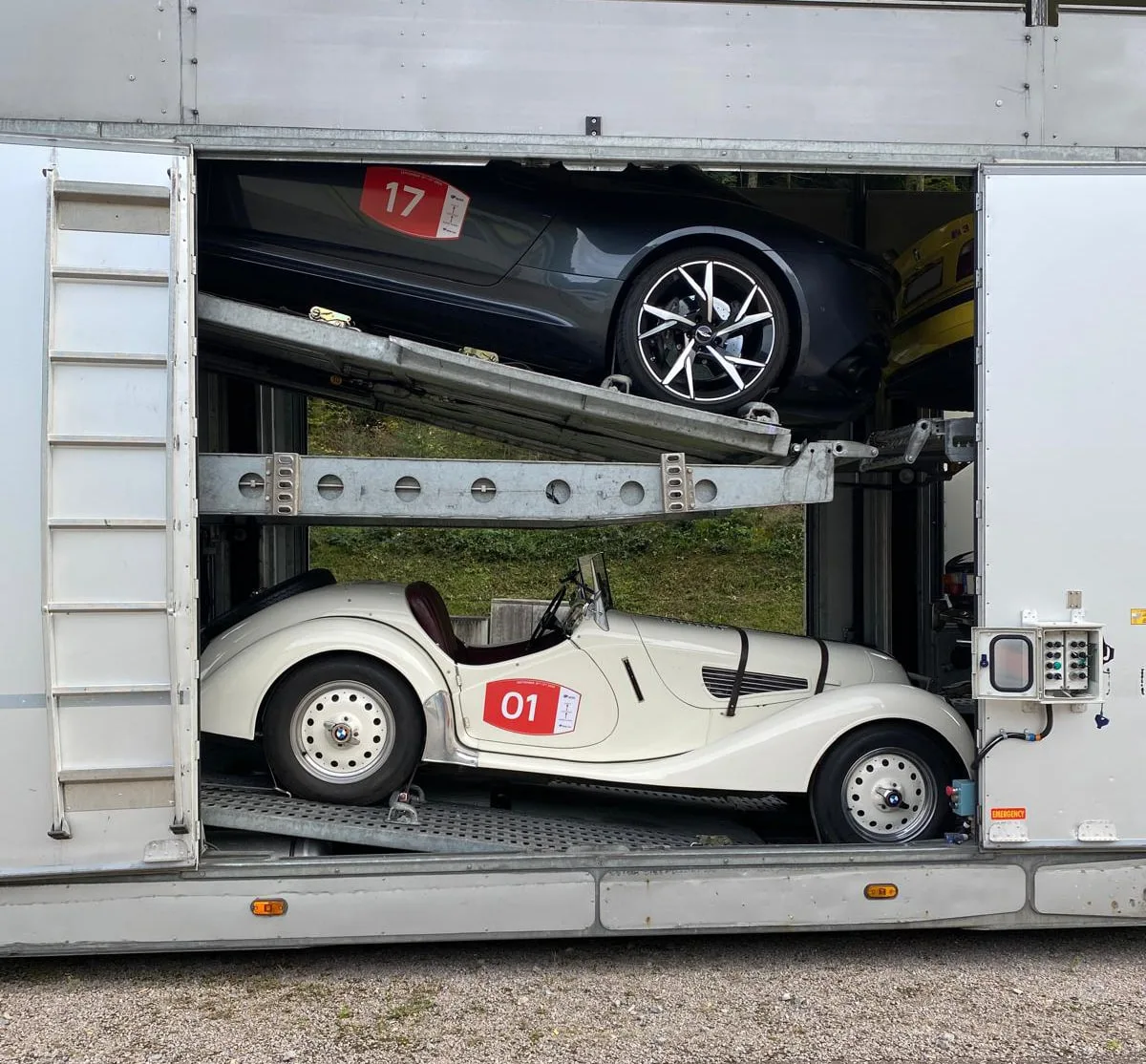
Ninety years apart
One deck for a prewar roadster, one for a modern coupé, on the same run.
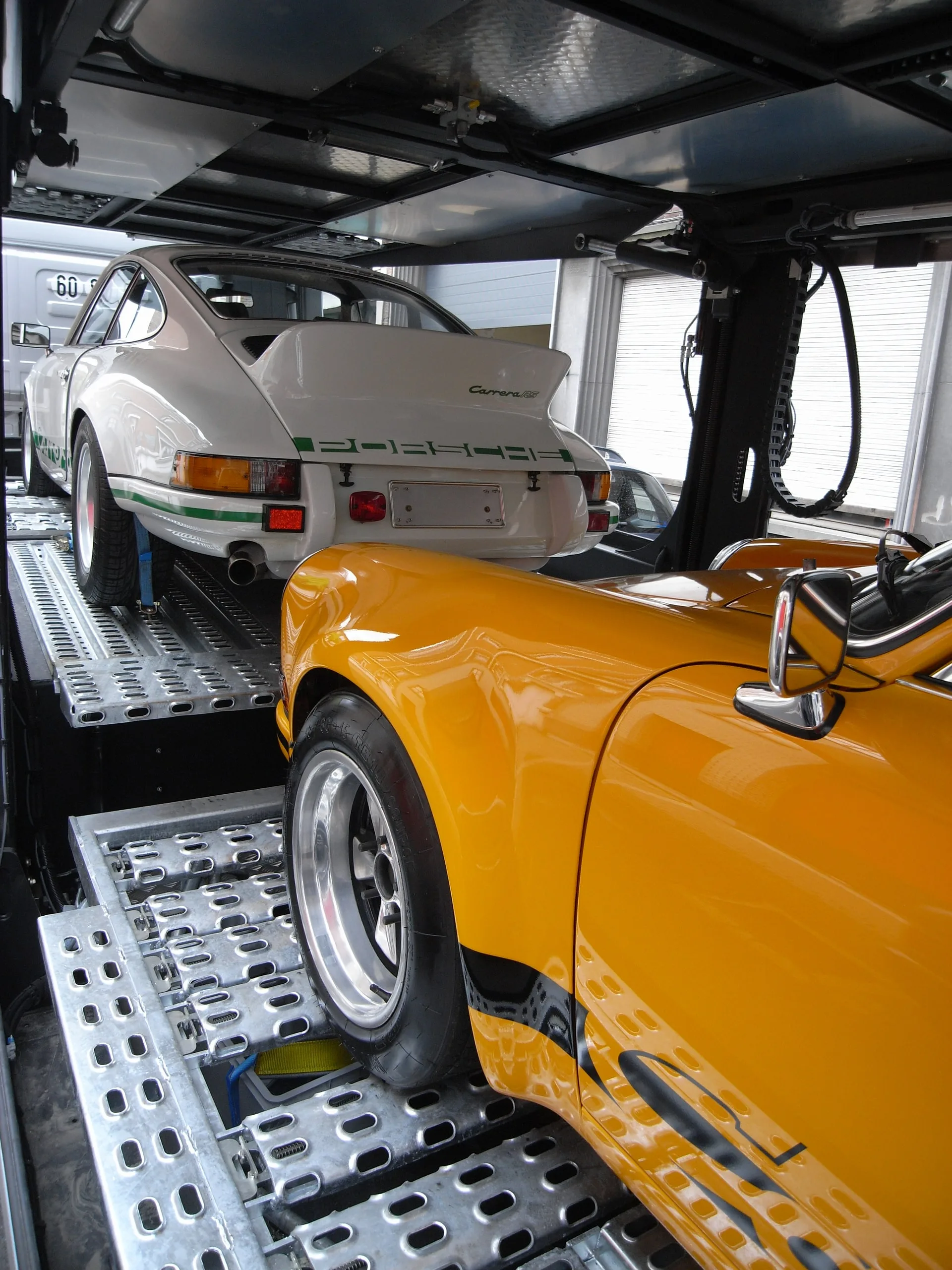
One above the other
Two decks means two cars in the space of one, and neither of them touches the other.
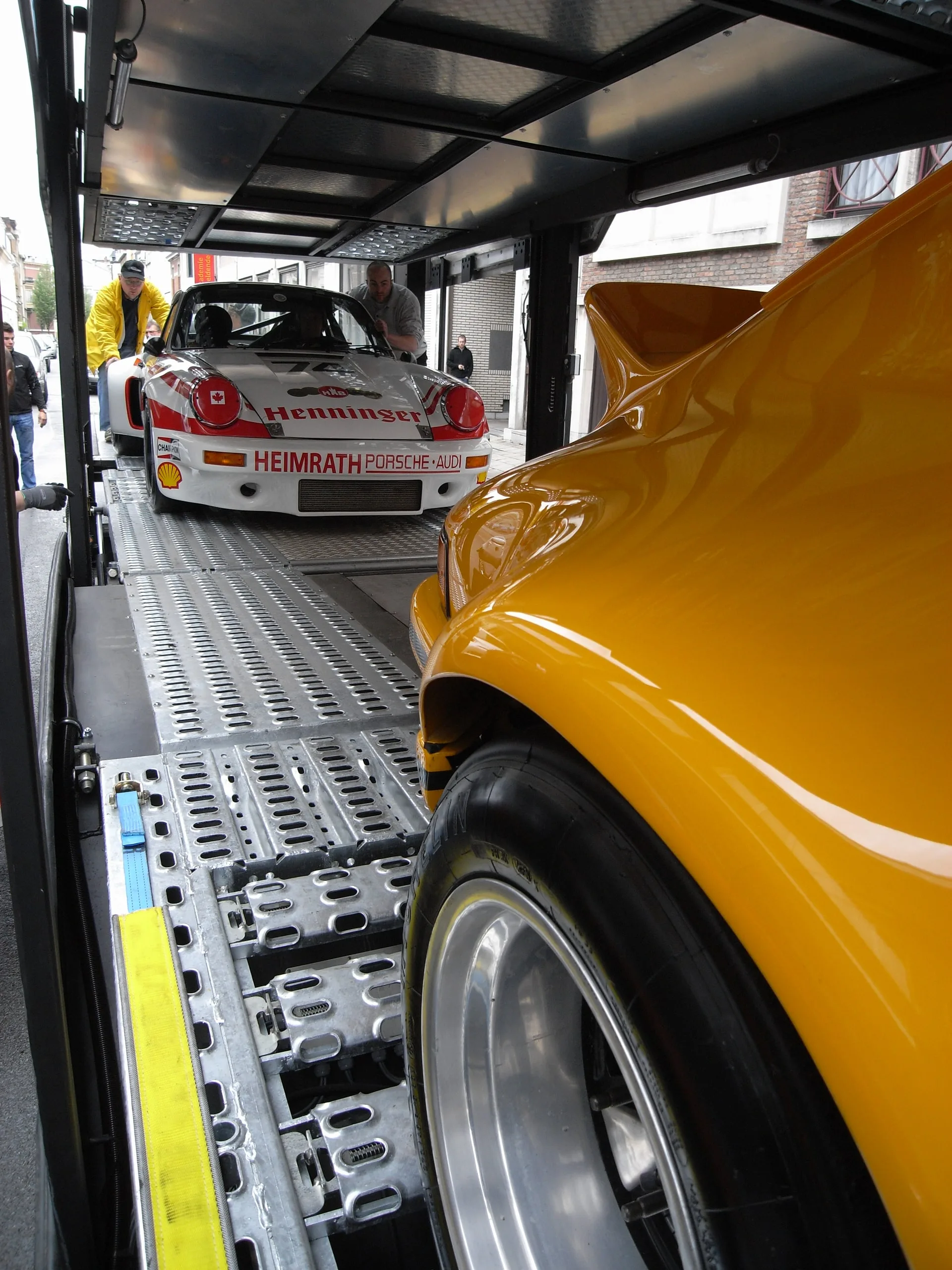
Down the deck
Four cars nose to tail. Each one has to come out without the others moving.
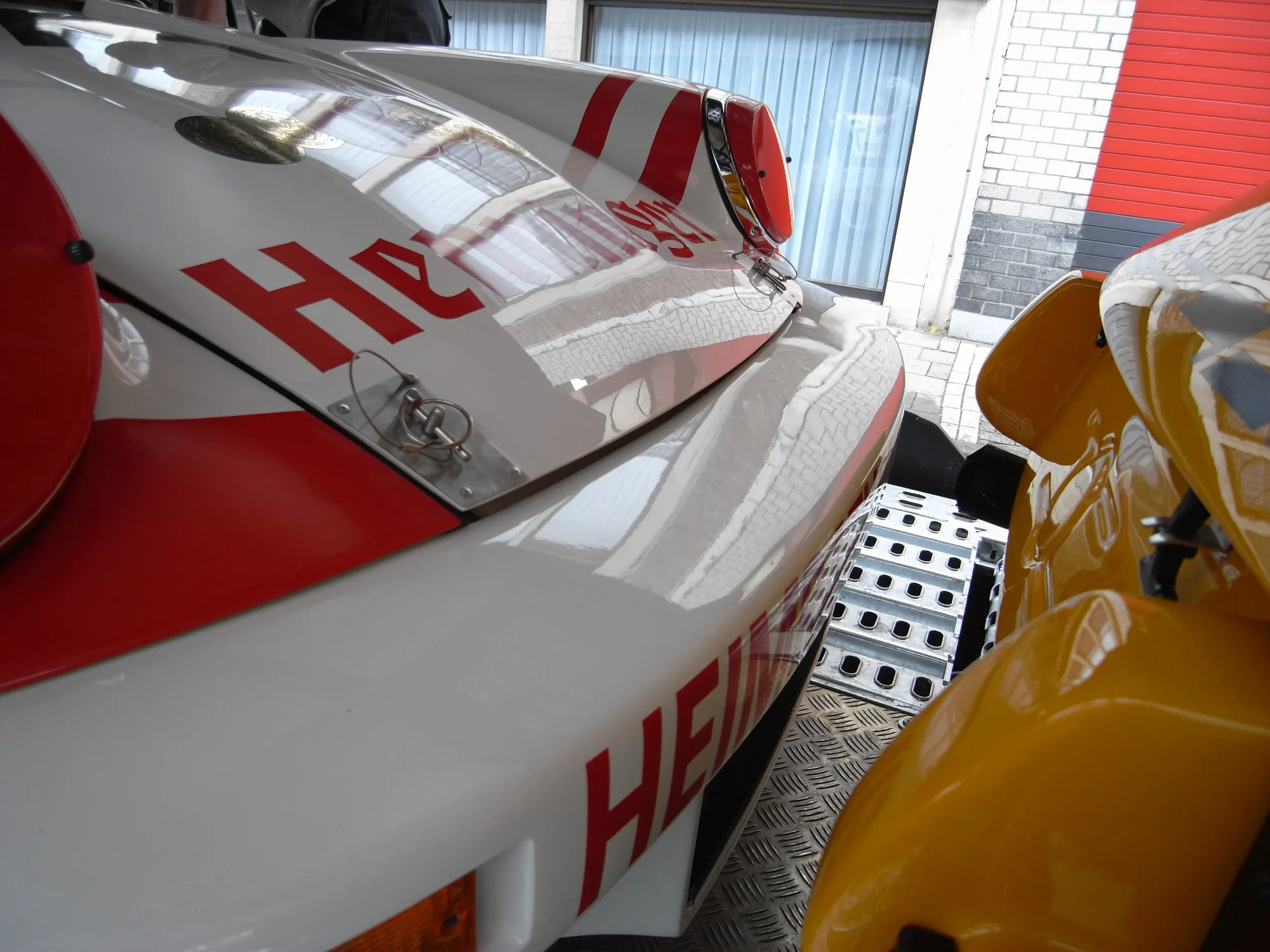
Race numbers aboard
Sponsor decals date a car precisely. They are also the first thing a strap would lift.
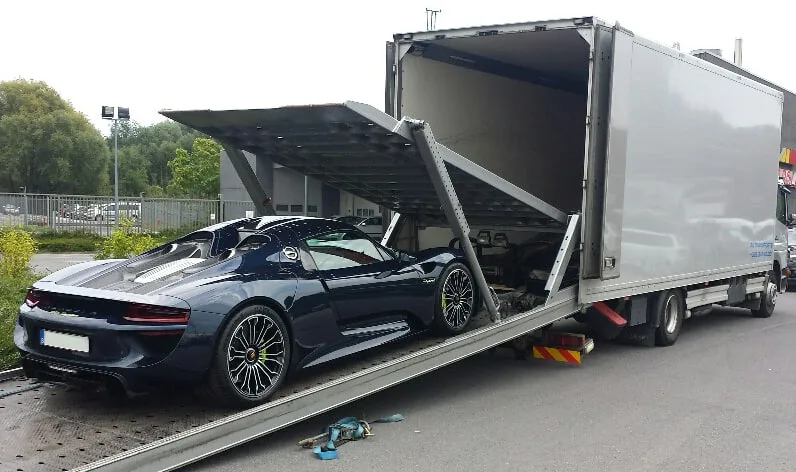
918 Spyder
A hybrid hypercar comes down on electric drive, in silence.
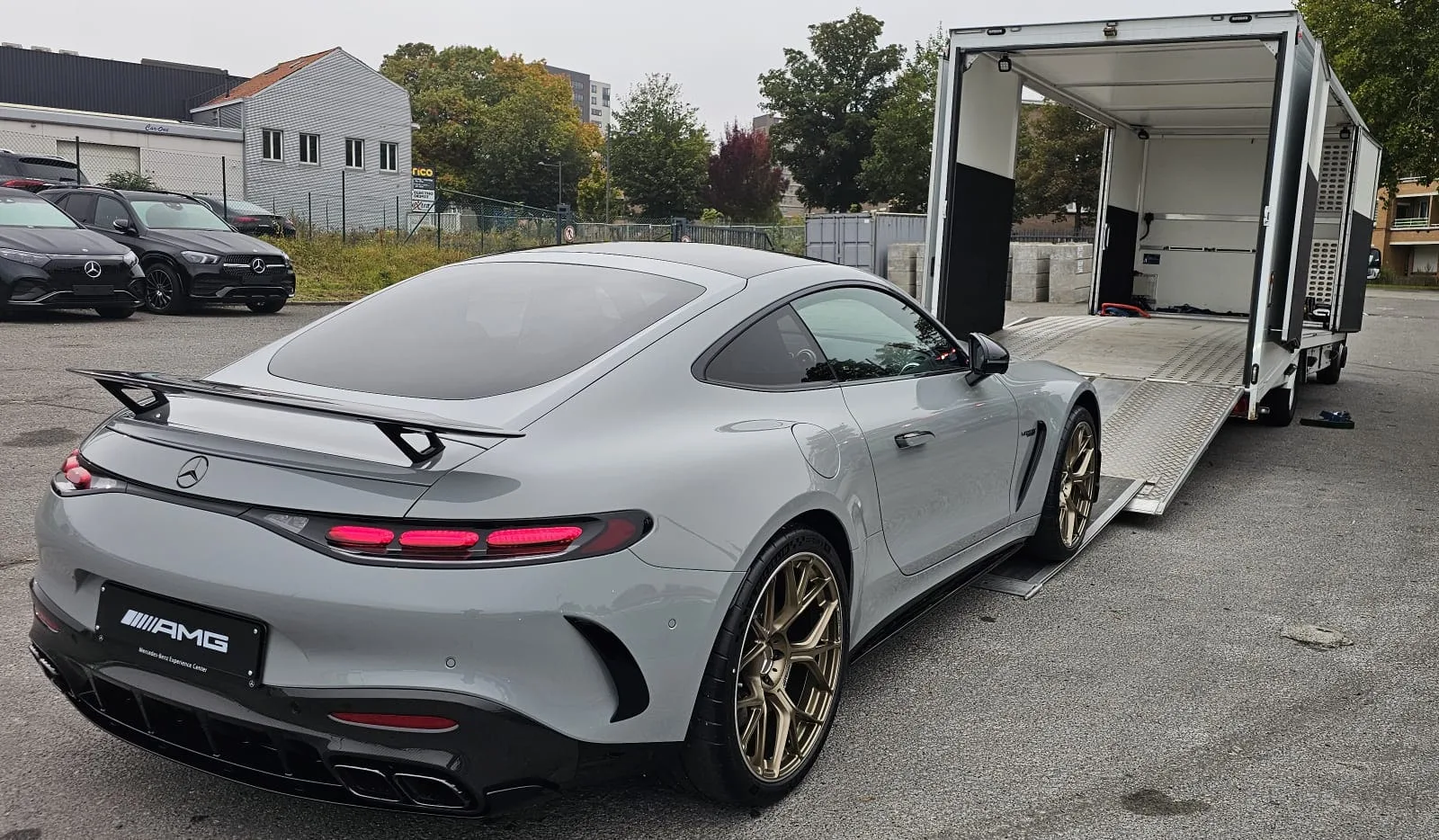
At the foot of the ramps
The ramps are set before the car moves, not while it is already rolling.
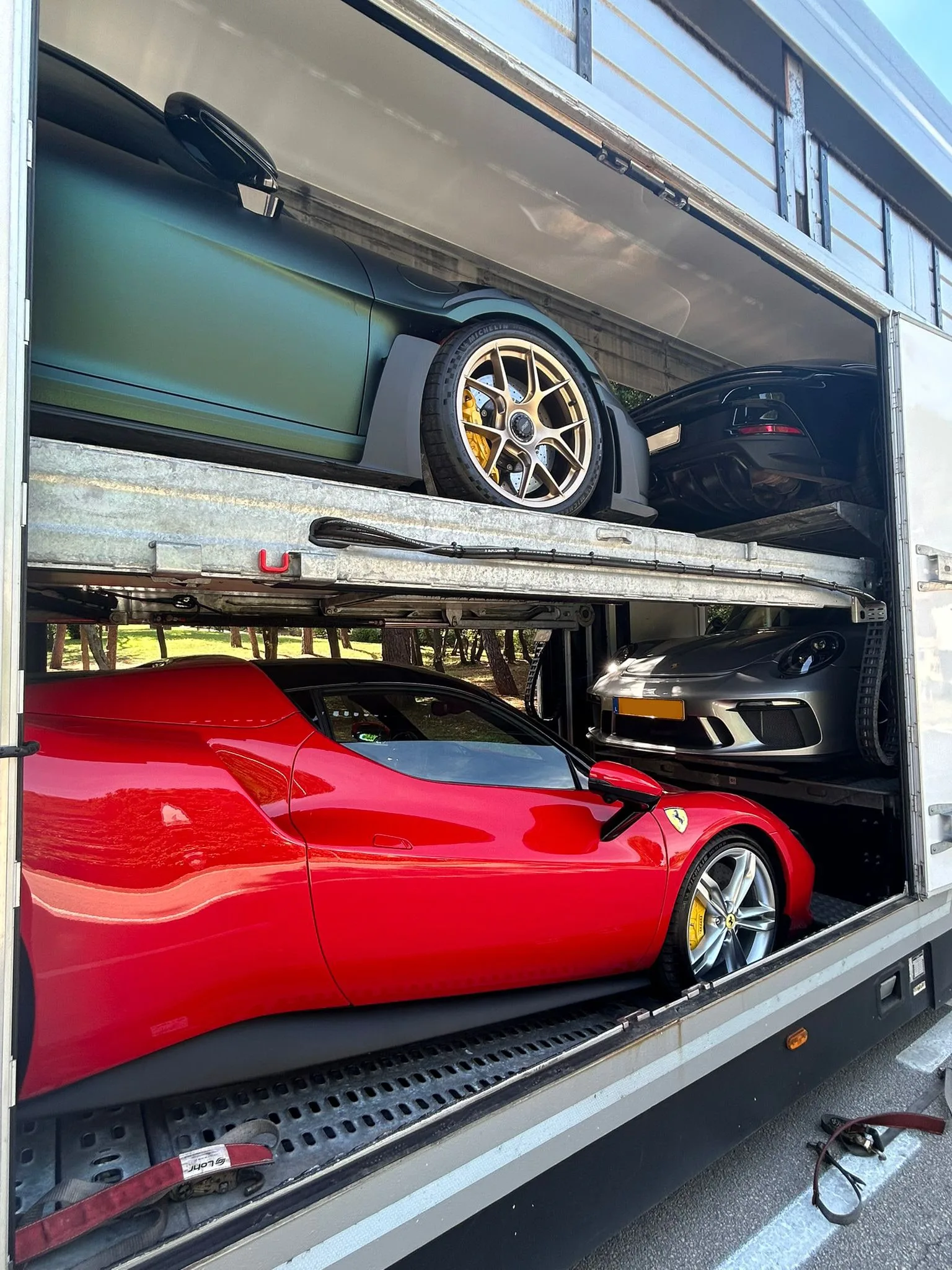
Both decks loaded
GT3 RS above, 296 below: loading order follows delivery order.
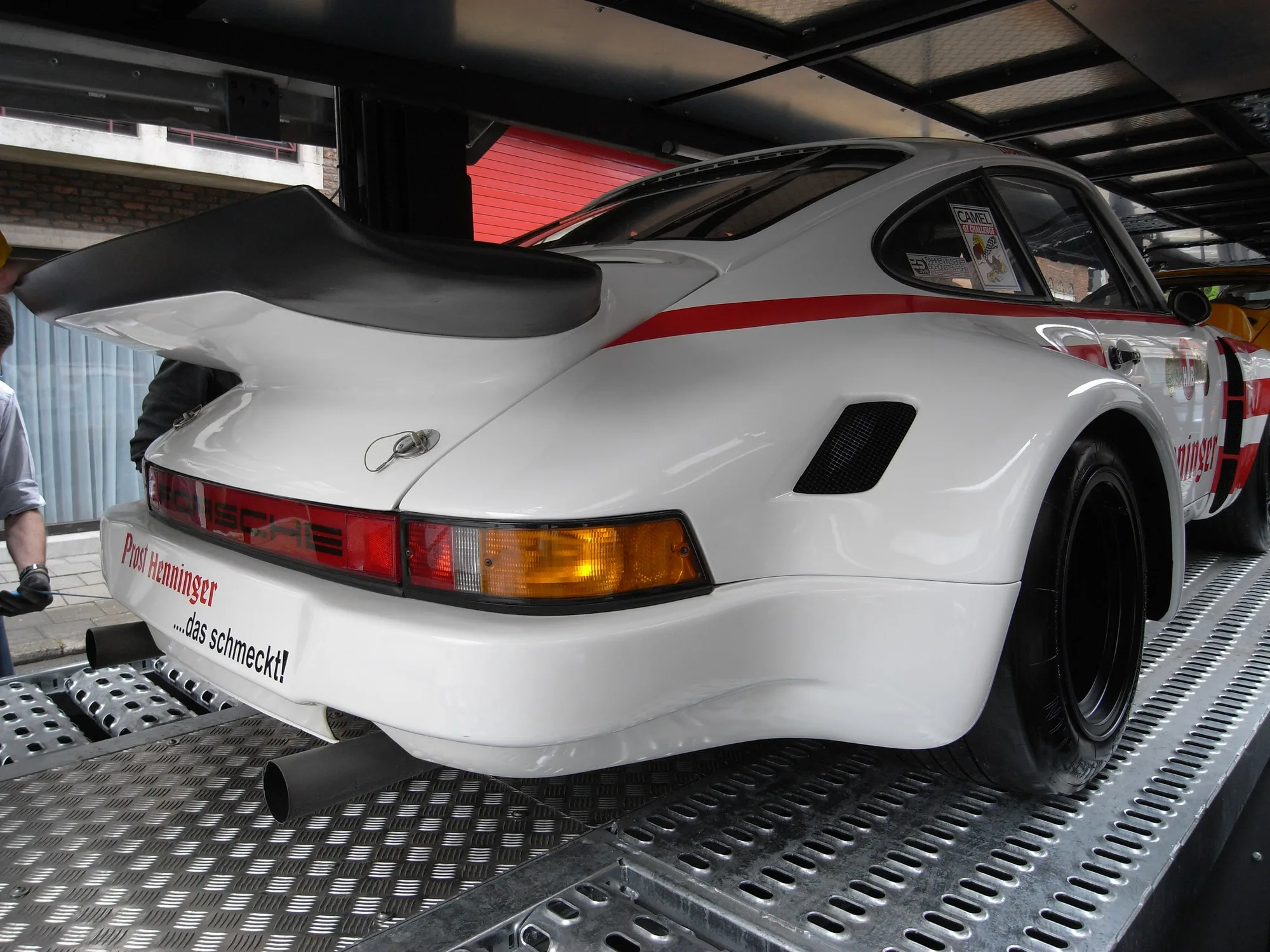
Wing and slicks
A car built for a circuit has no ground clearance to spare and no patience for a steep ramp.
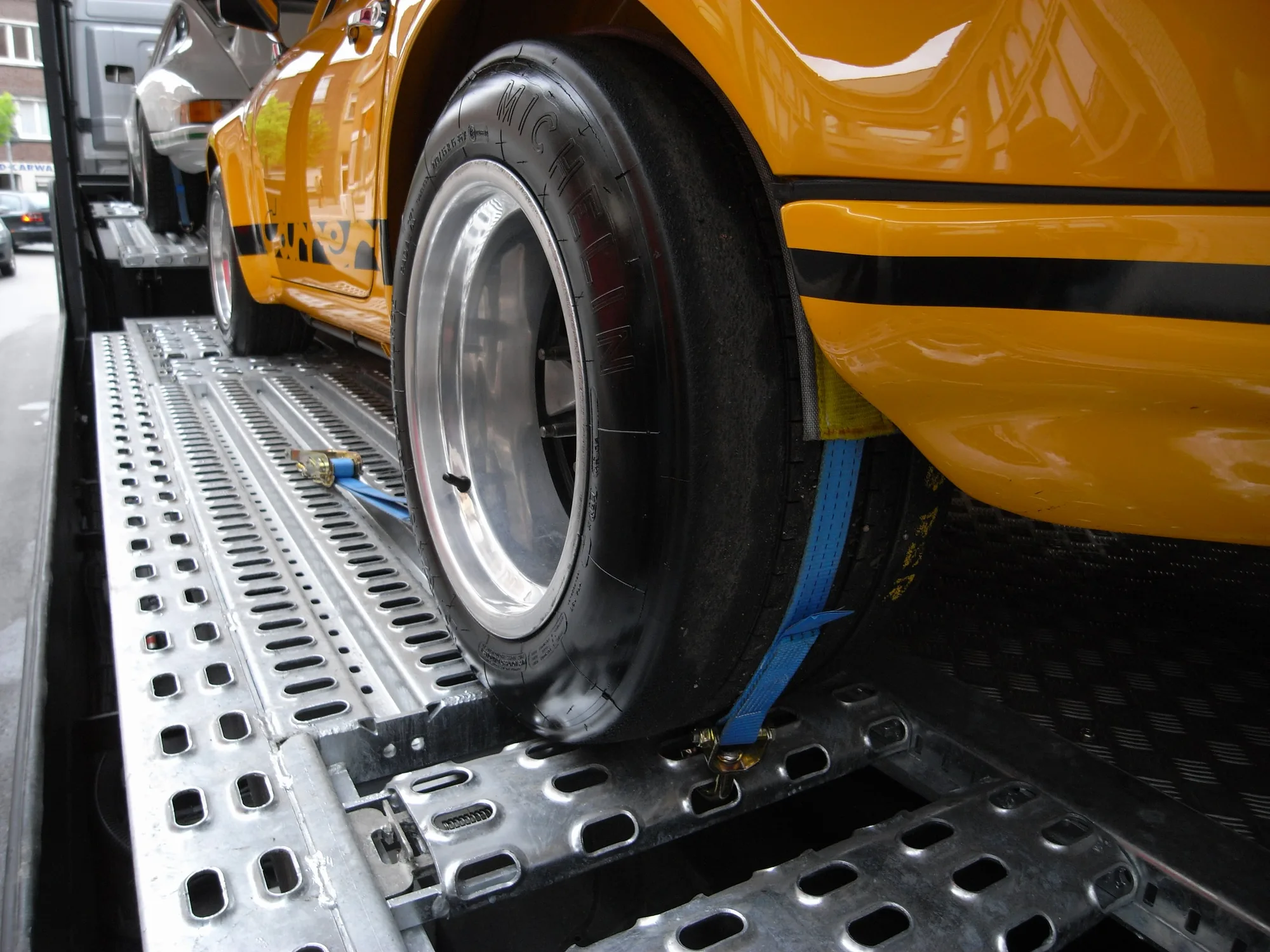
Where the strap goes
Around the tyre, over the tread, back to the deck. The bodywork is never part of the loop.
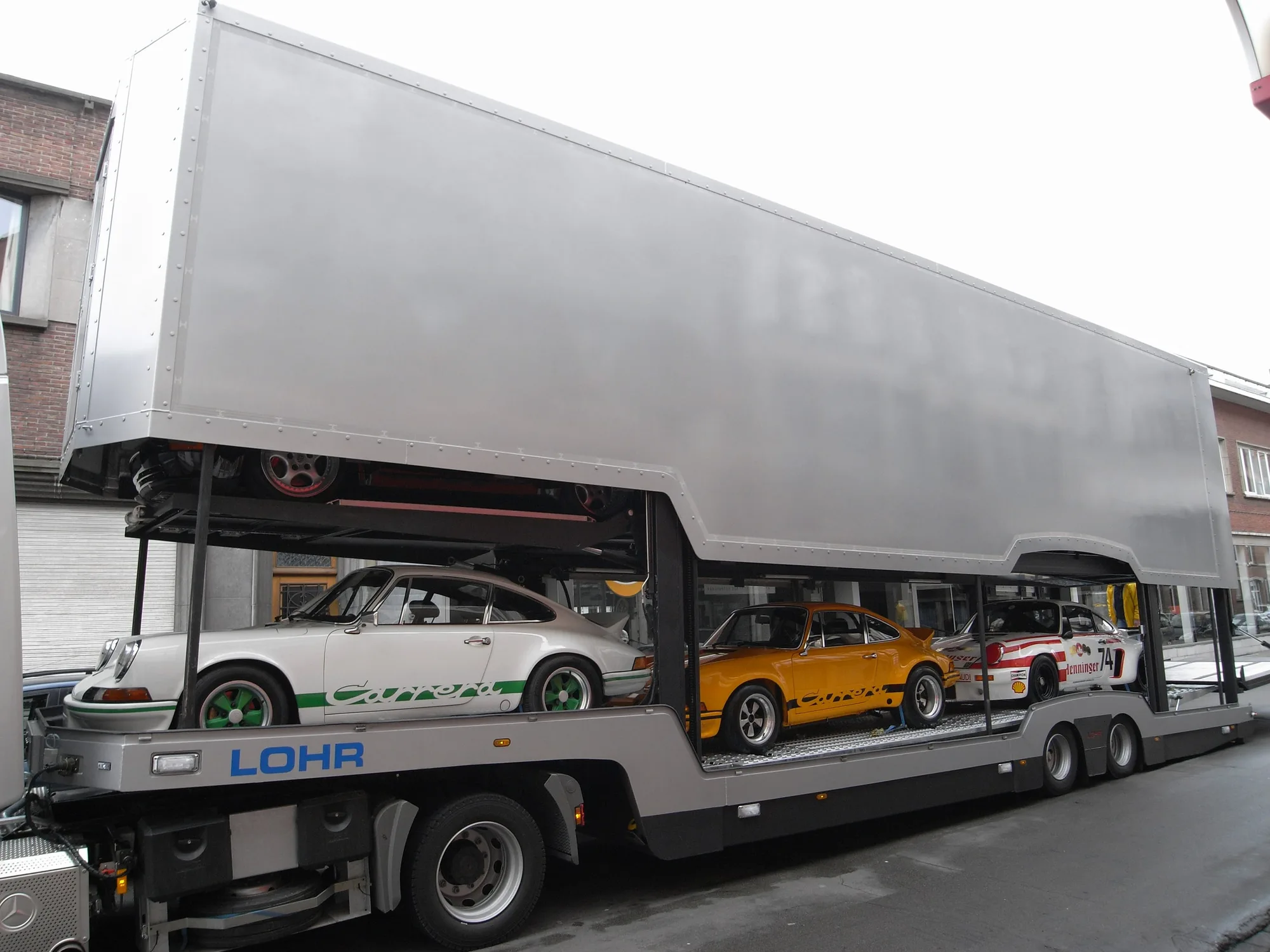
A street stop
The pick-up is where the cars are, not where the truck would prefer to be.
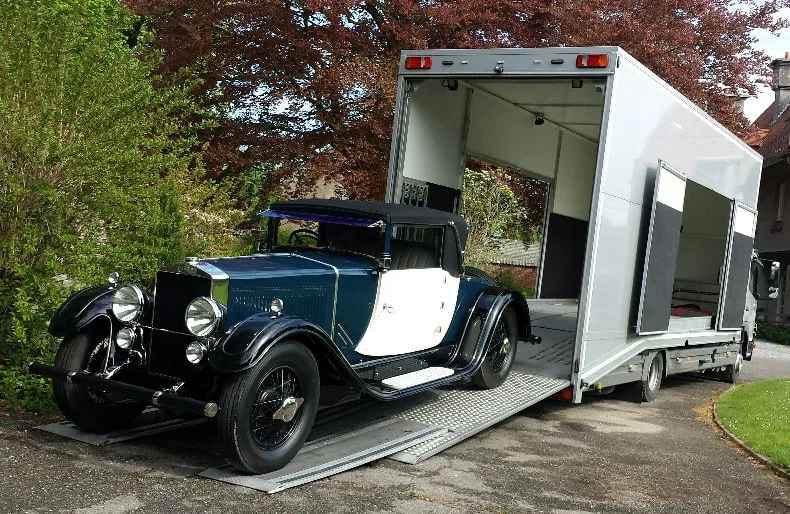
Collected at home
The truck comes up the driveway: the car never reaches the public road.
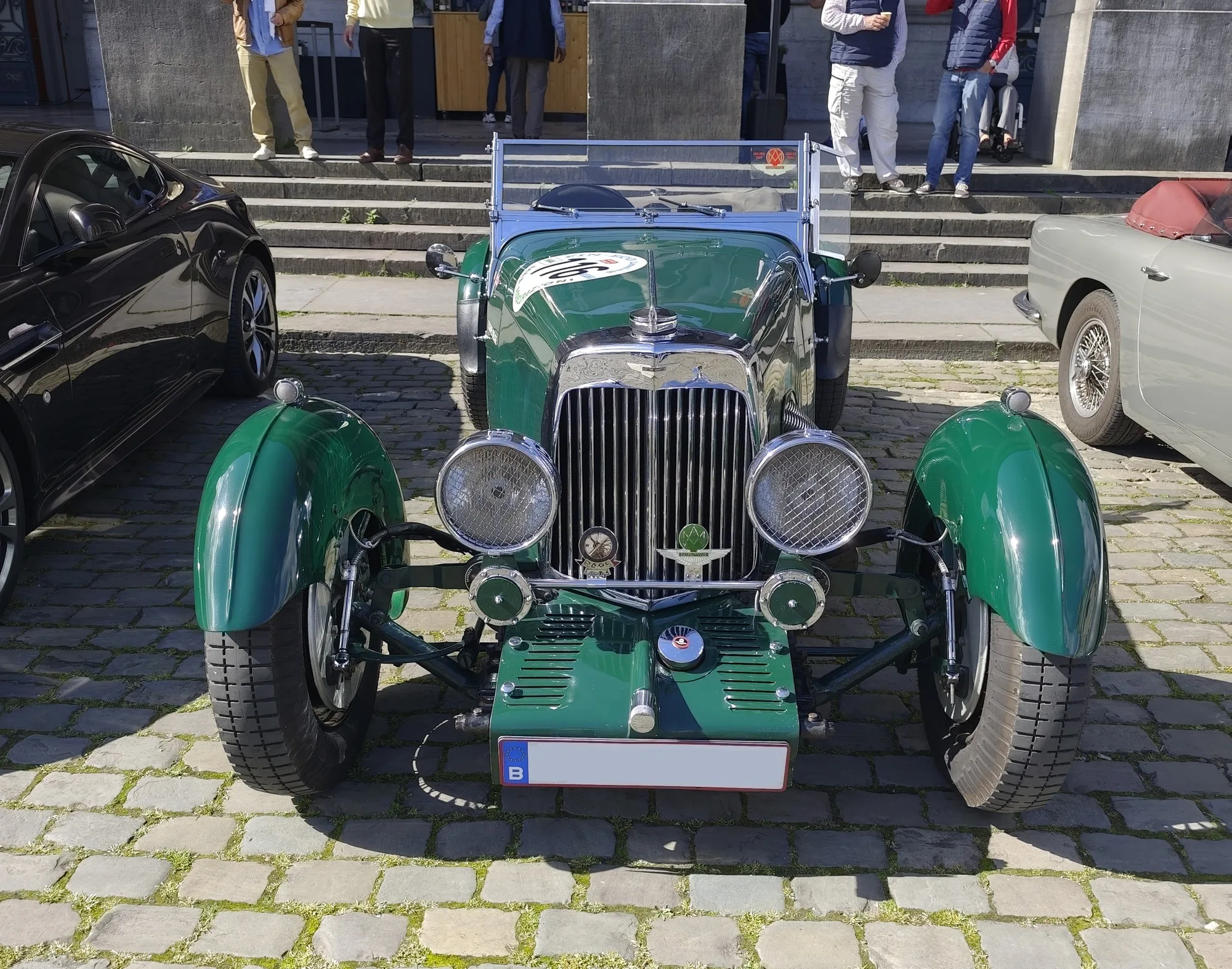
On the steps
Delivered outside the museum, in time for opening.
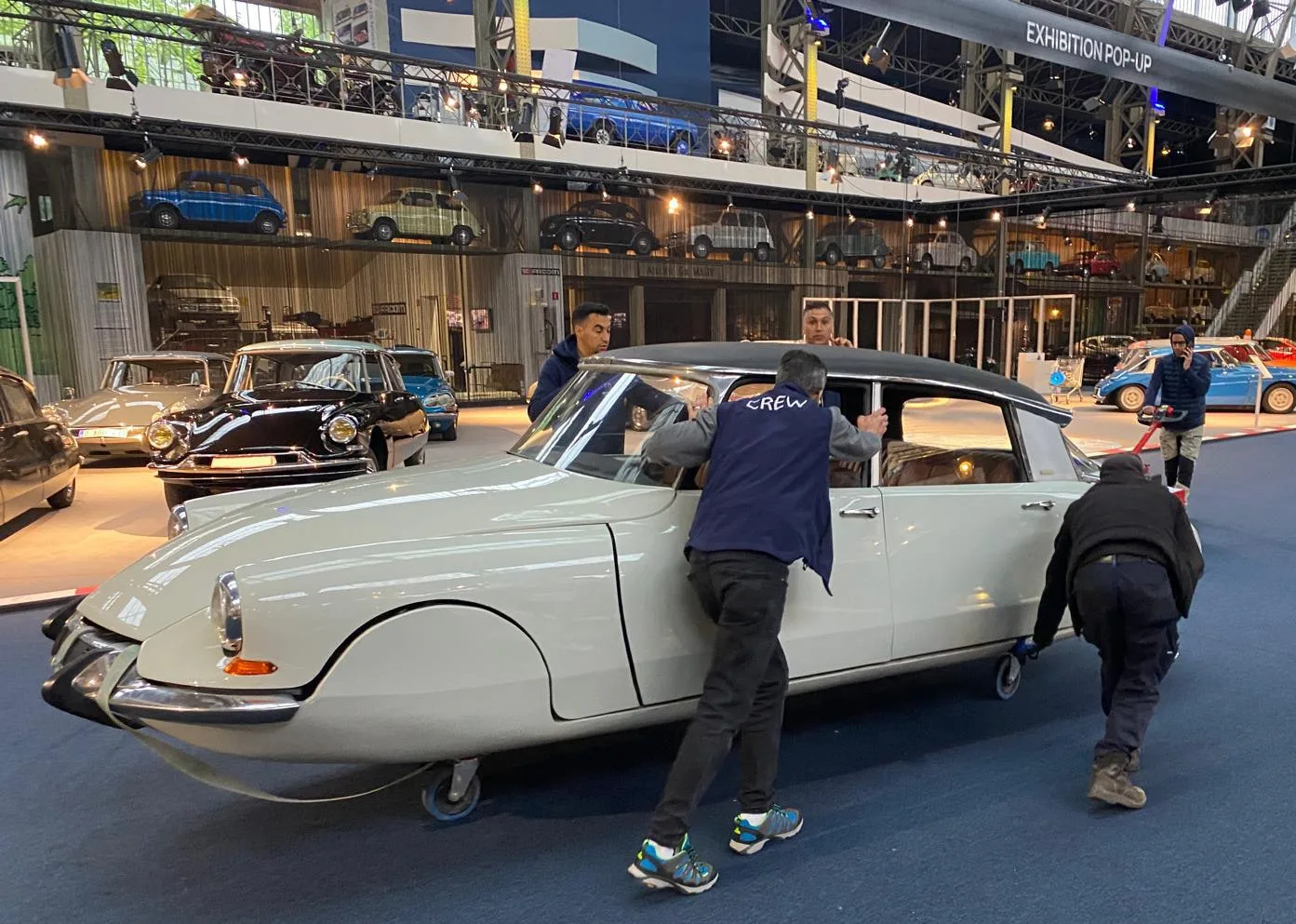
Pushed into place
The last twenty metres are done by hand, engine off, on the exhibition floor.
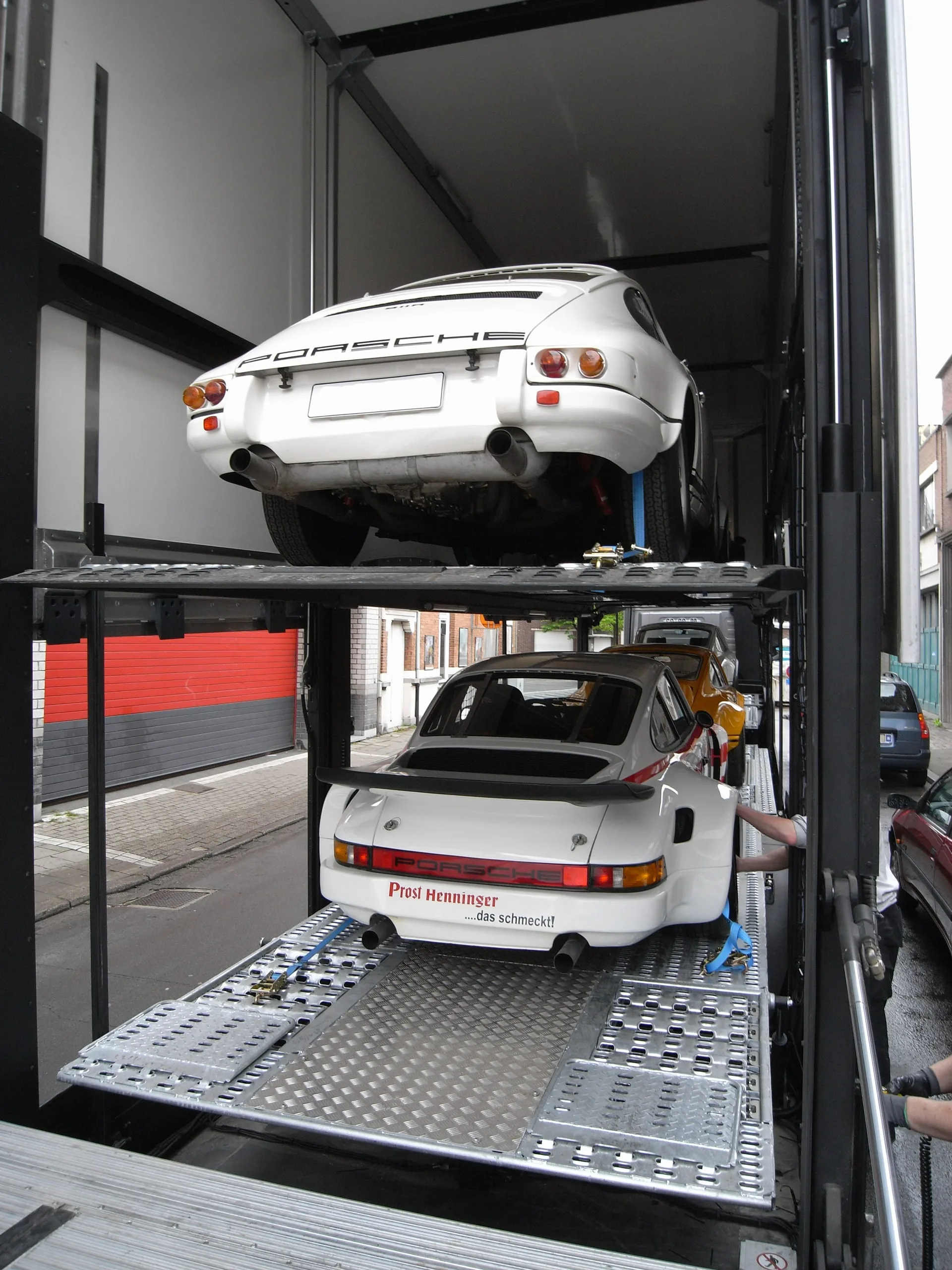
Stacked
The upper deck is loaded first and comes out last. The order is the plan.
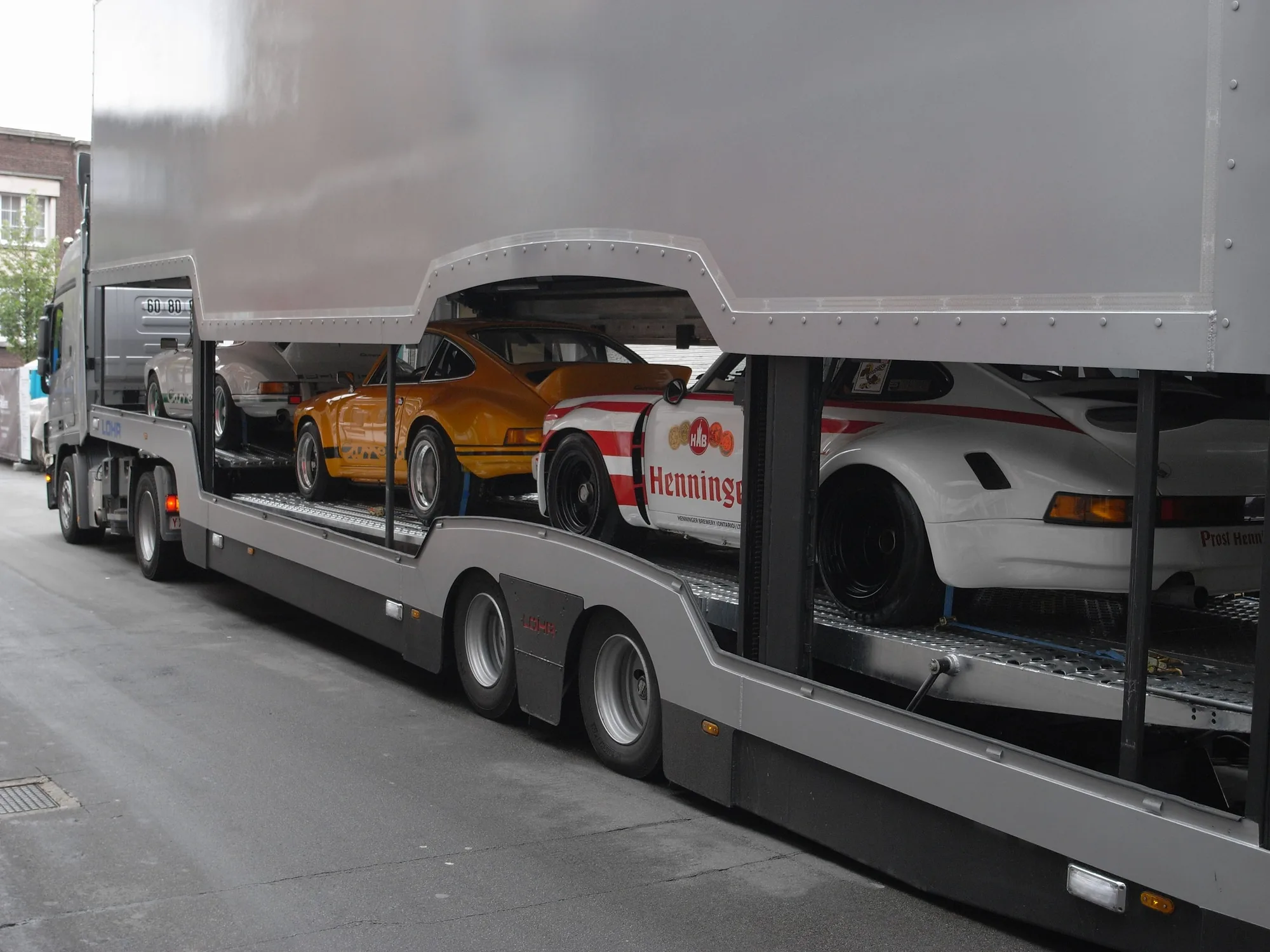
Four aboard
One truck for a whole collection means one route, one driver, one set of keys.
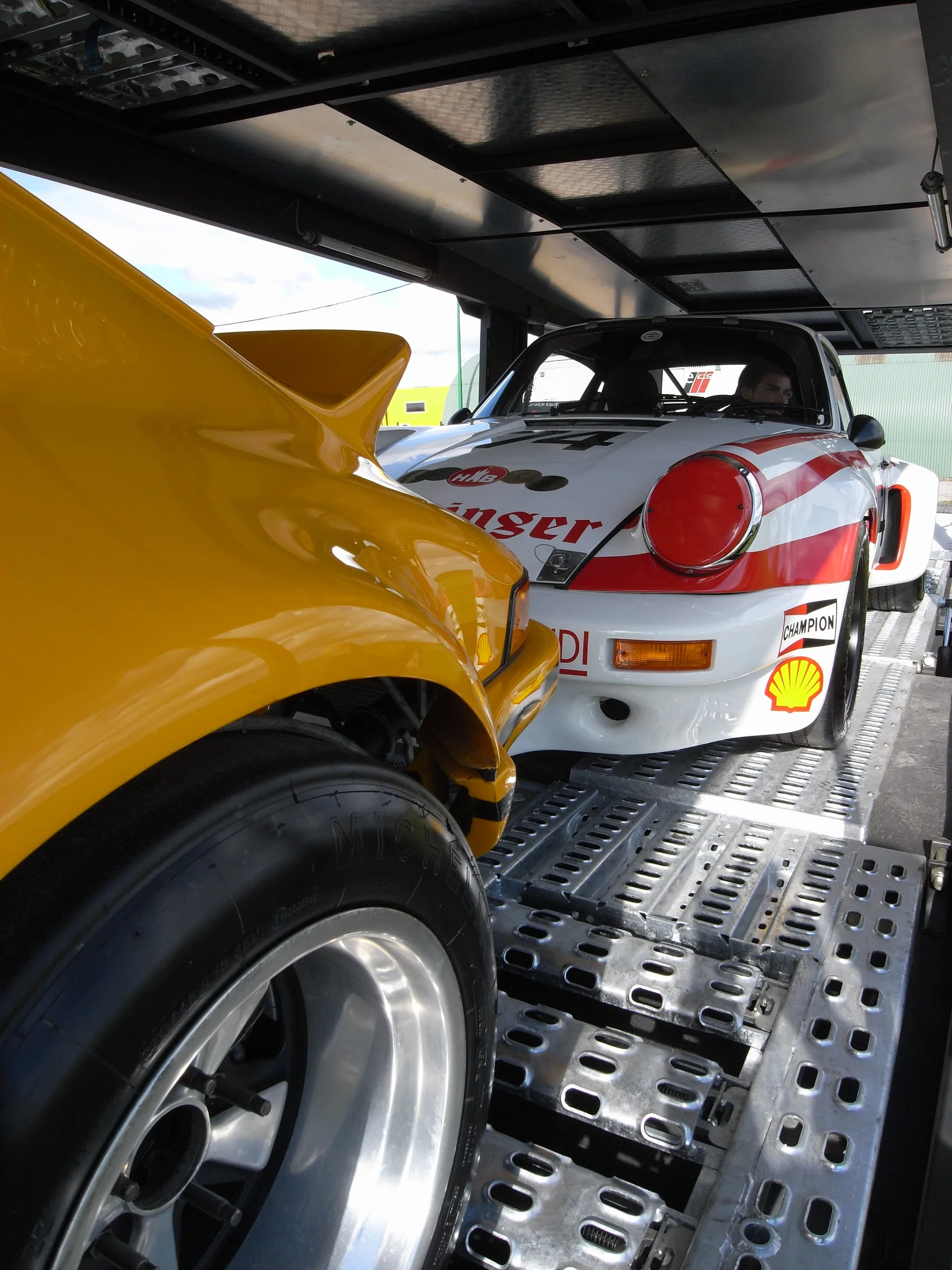
Road and track
One is registered, one is not. They travel the same way and for the same reason.
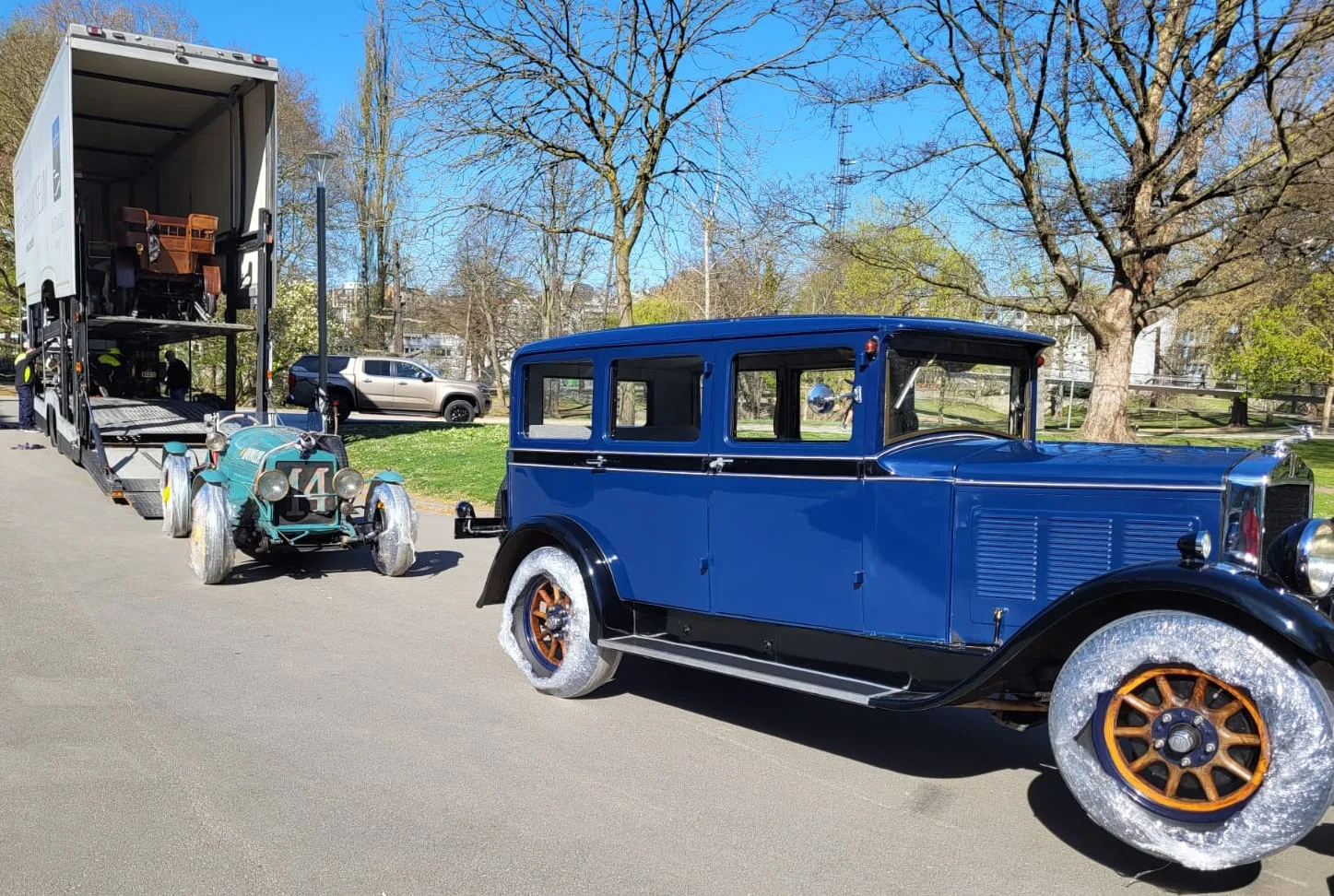
Two pre-war cars
A saloon and a racer unloaded together in the park.
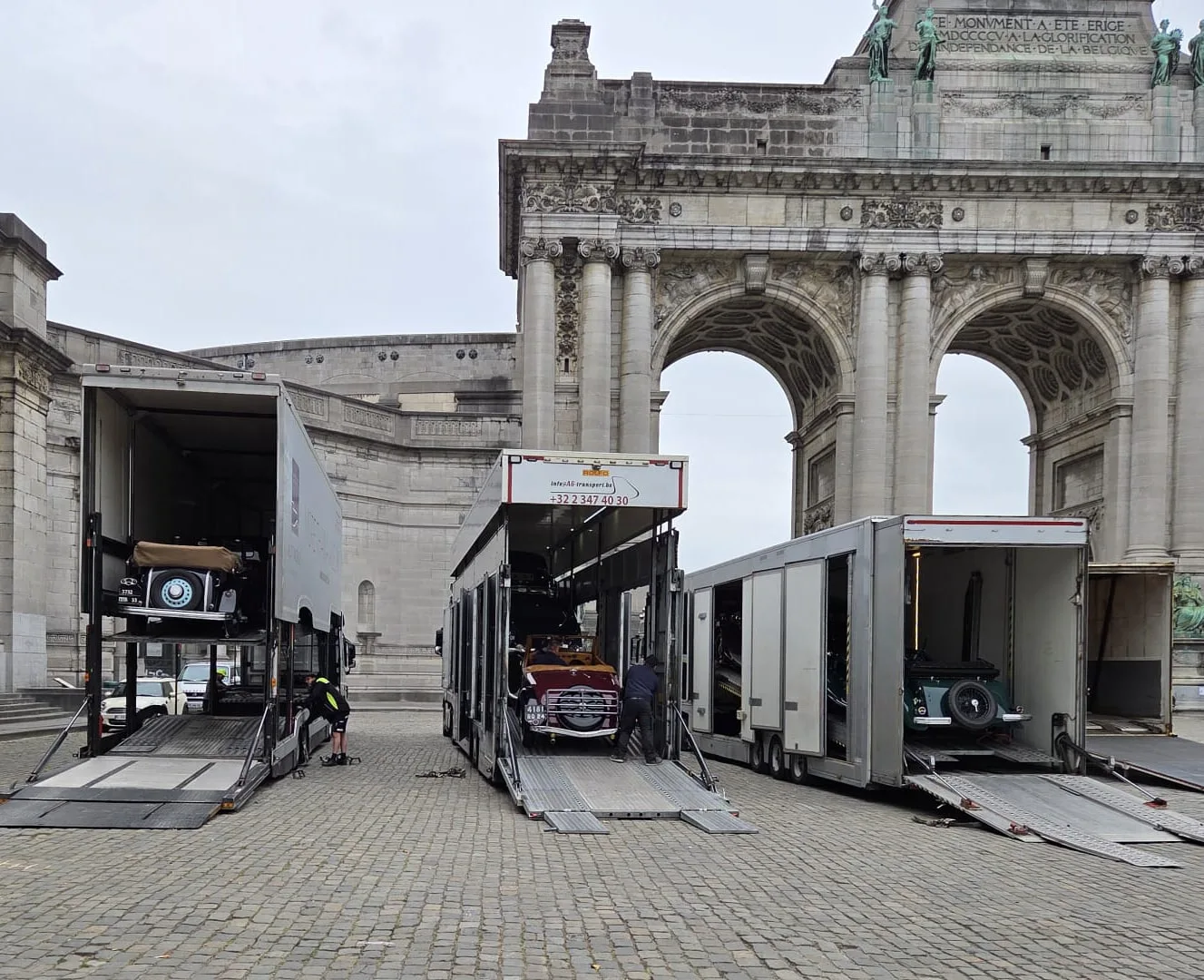
Three transporters
Read the articleAn exhibition is built from several trucks, unloaded in floor-plan order.
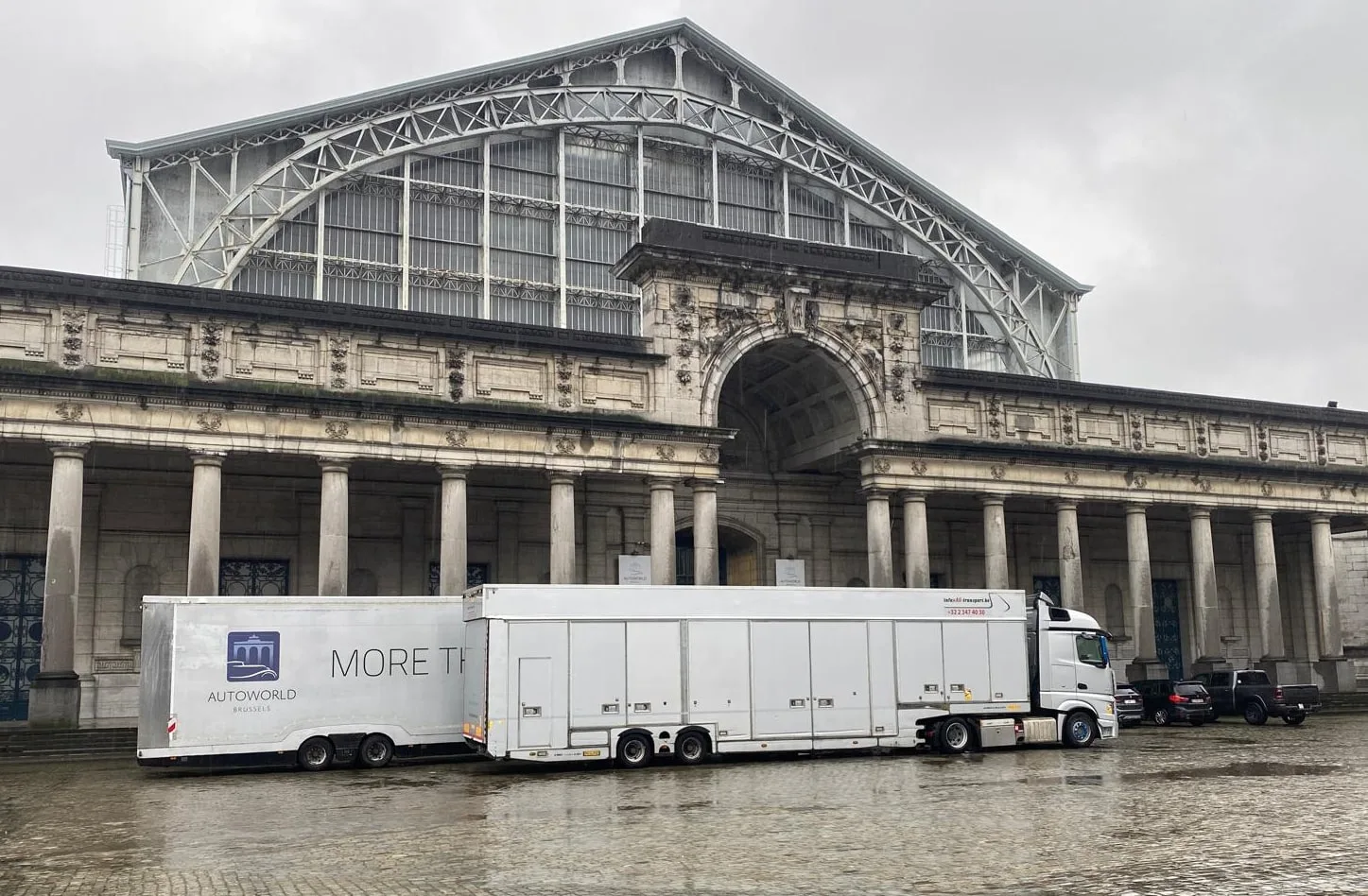
Two loads, one exhibition
Read the articleAn exhibition is not one delivery. It is a schedule, held to the half-hour.
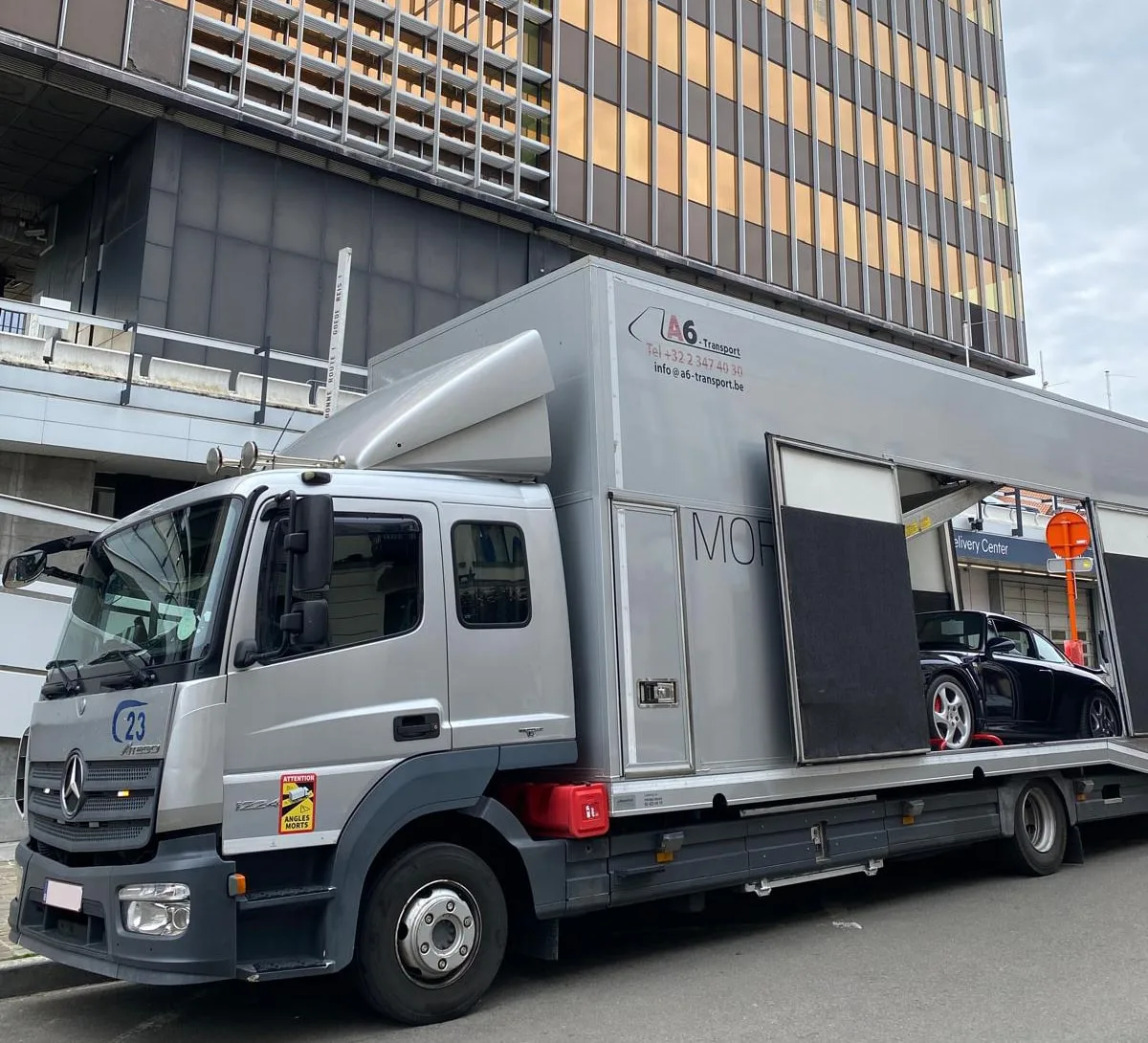
Brussels street
A short rigid goes where an articulated truck cannot.
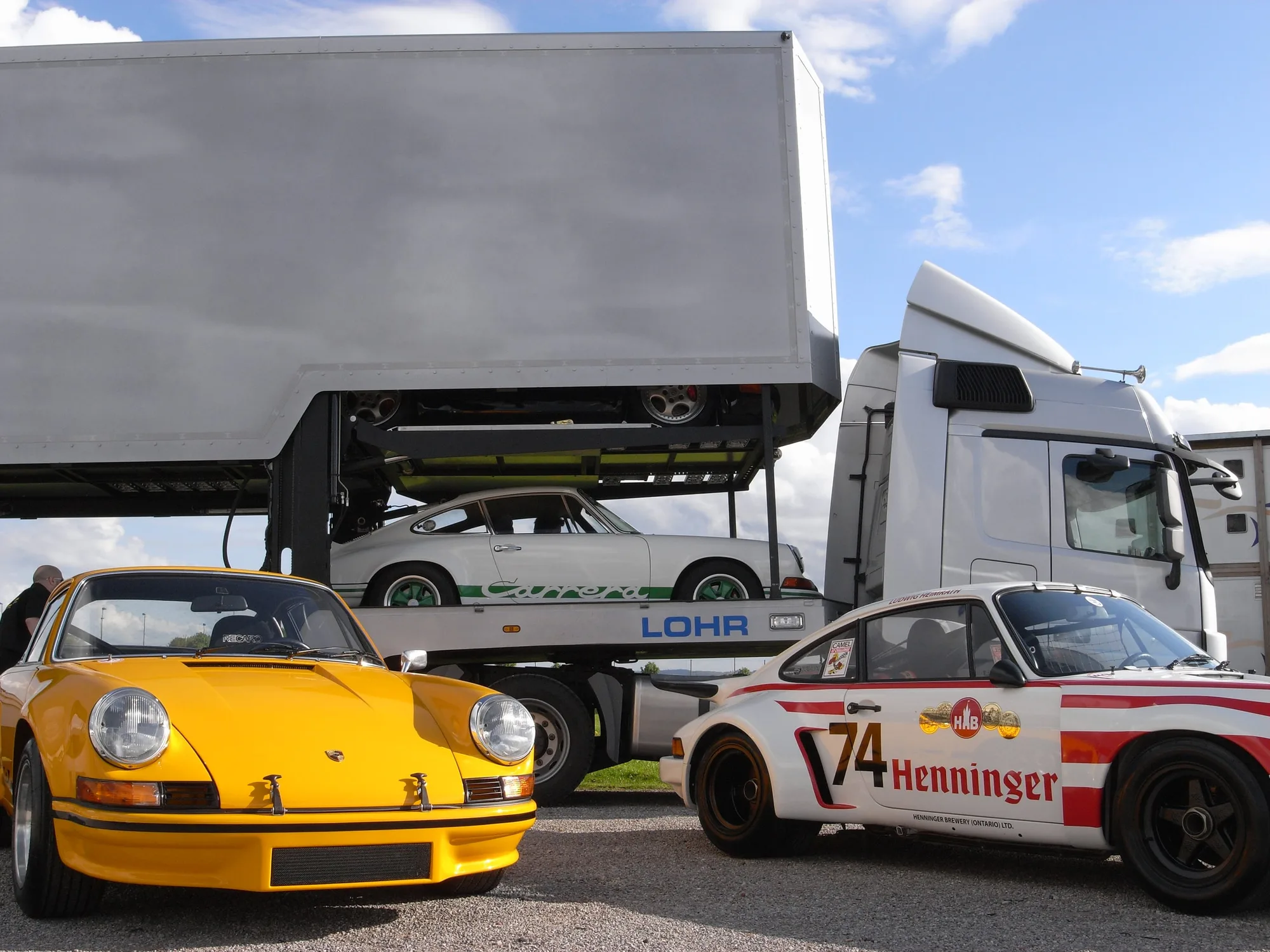
Waiting to load
Cars are staged in the order they go up the ramps. Nothing is decided at the ramp.
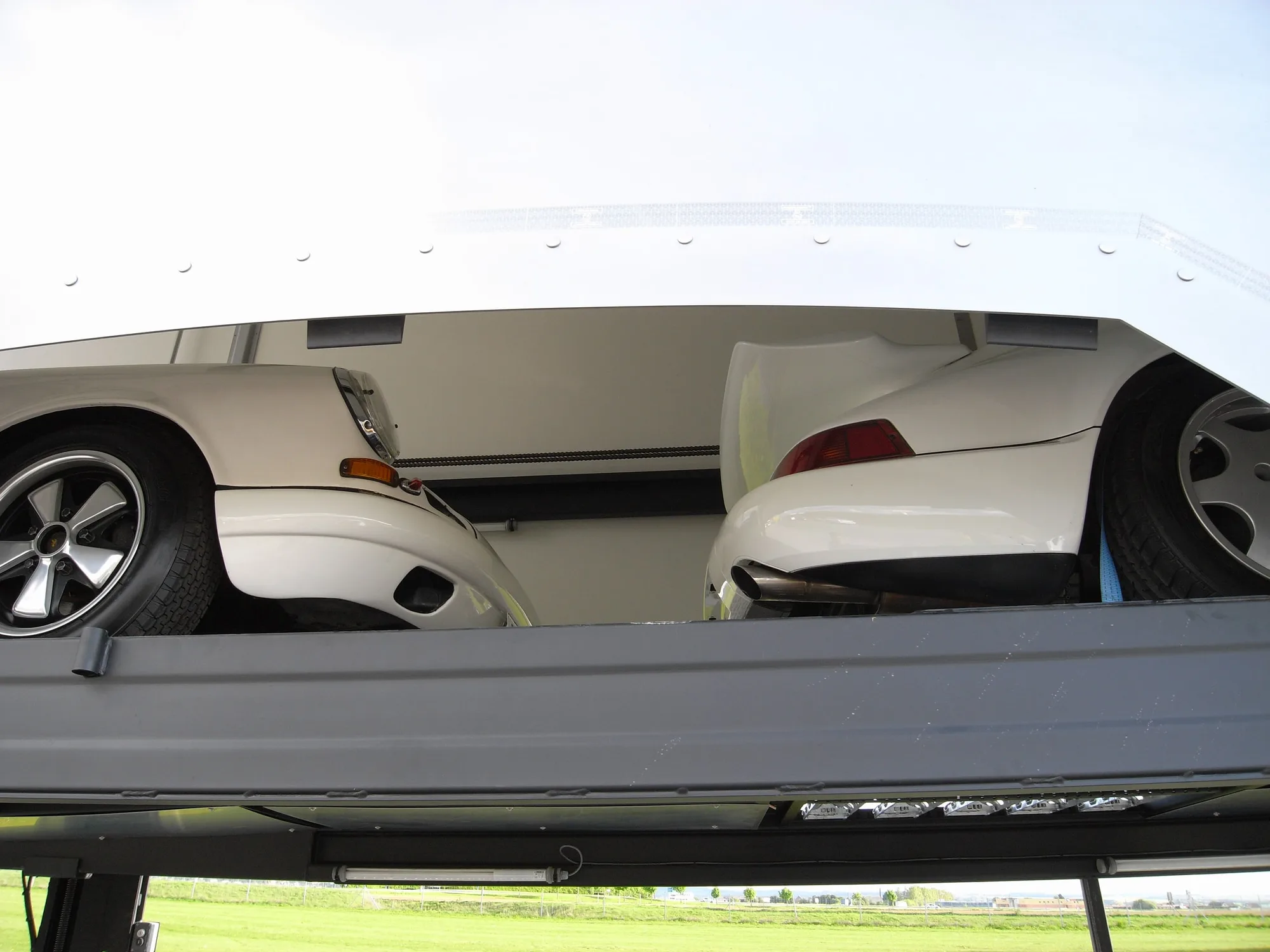
Under the deck
Centimetres above the roofs. The deck is set once the cars are in, never before.
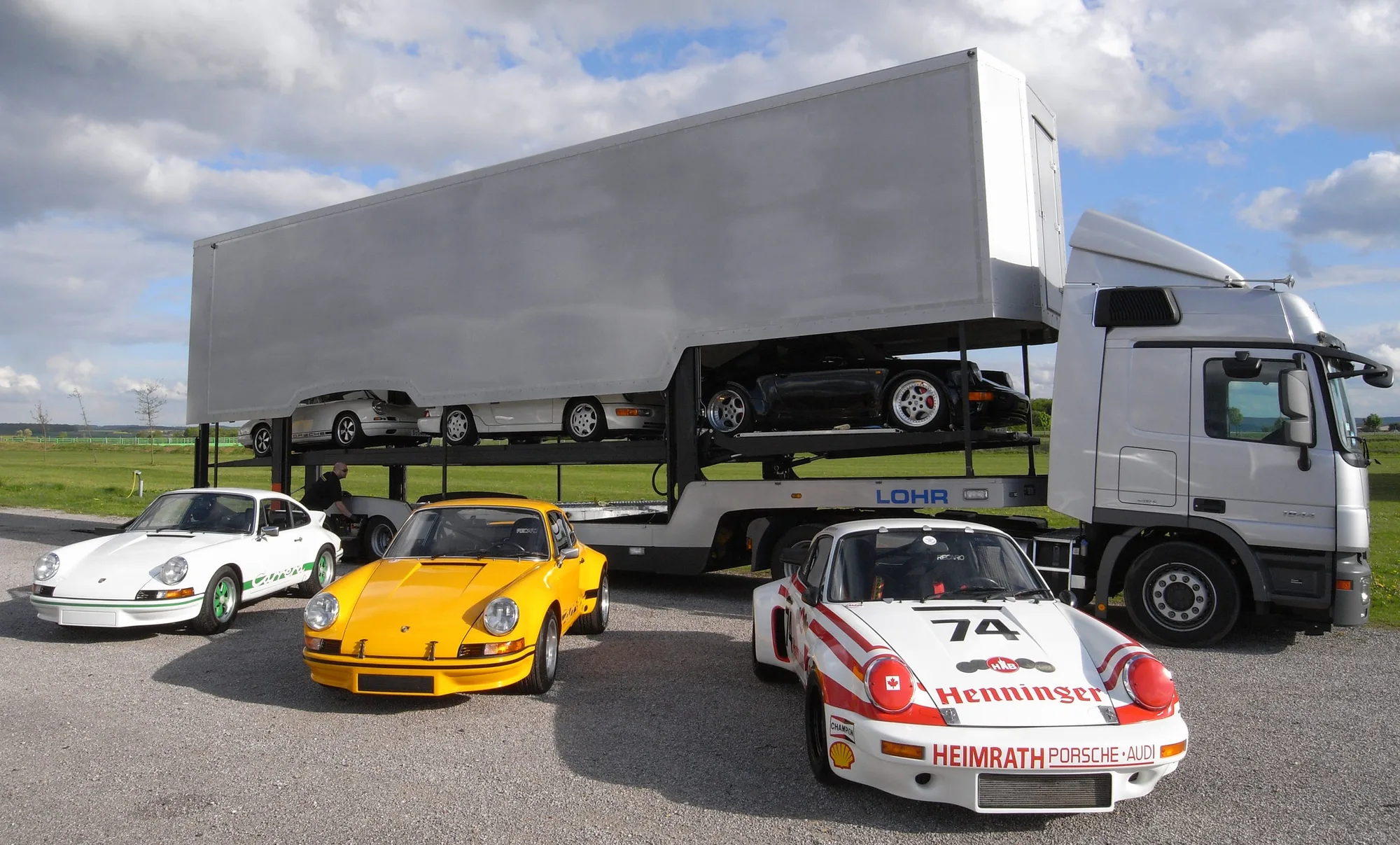
Lined up
White, yellow, race livery. The three that came by road, in front of the ones that came by truck.
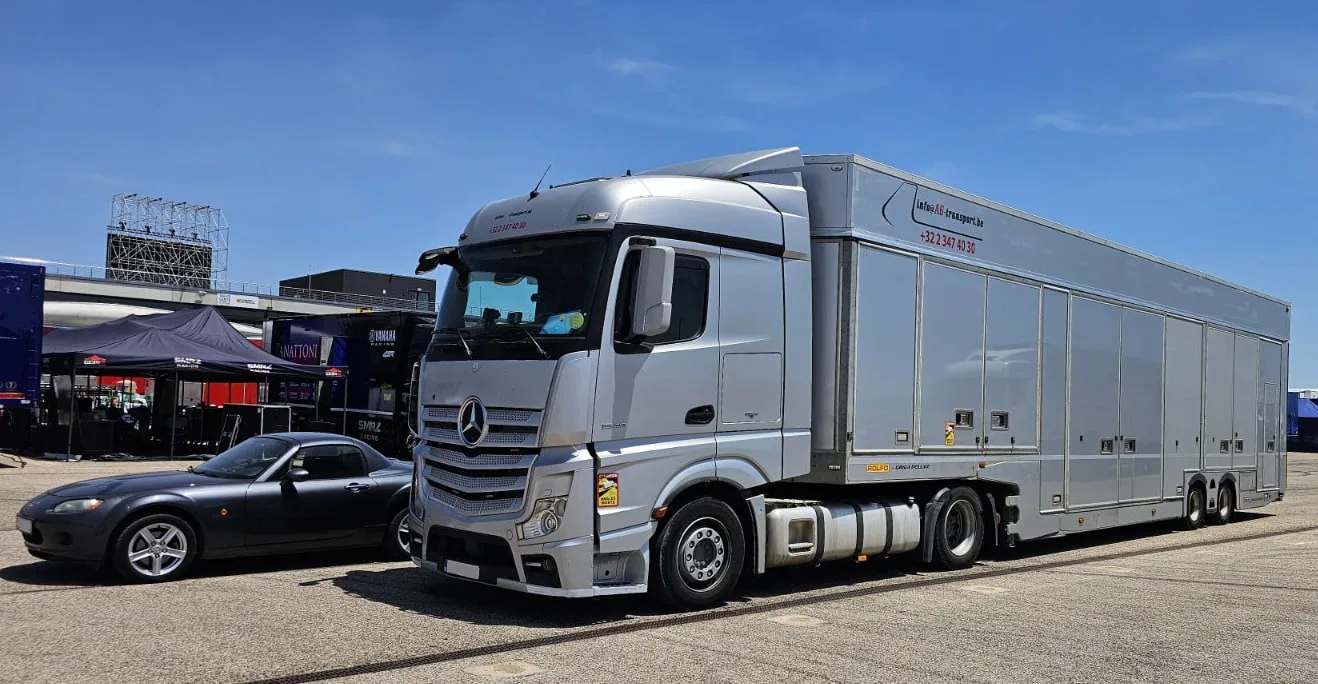
In the paddock
The truck stays on site all weekend: the car goes back in between sessions.
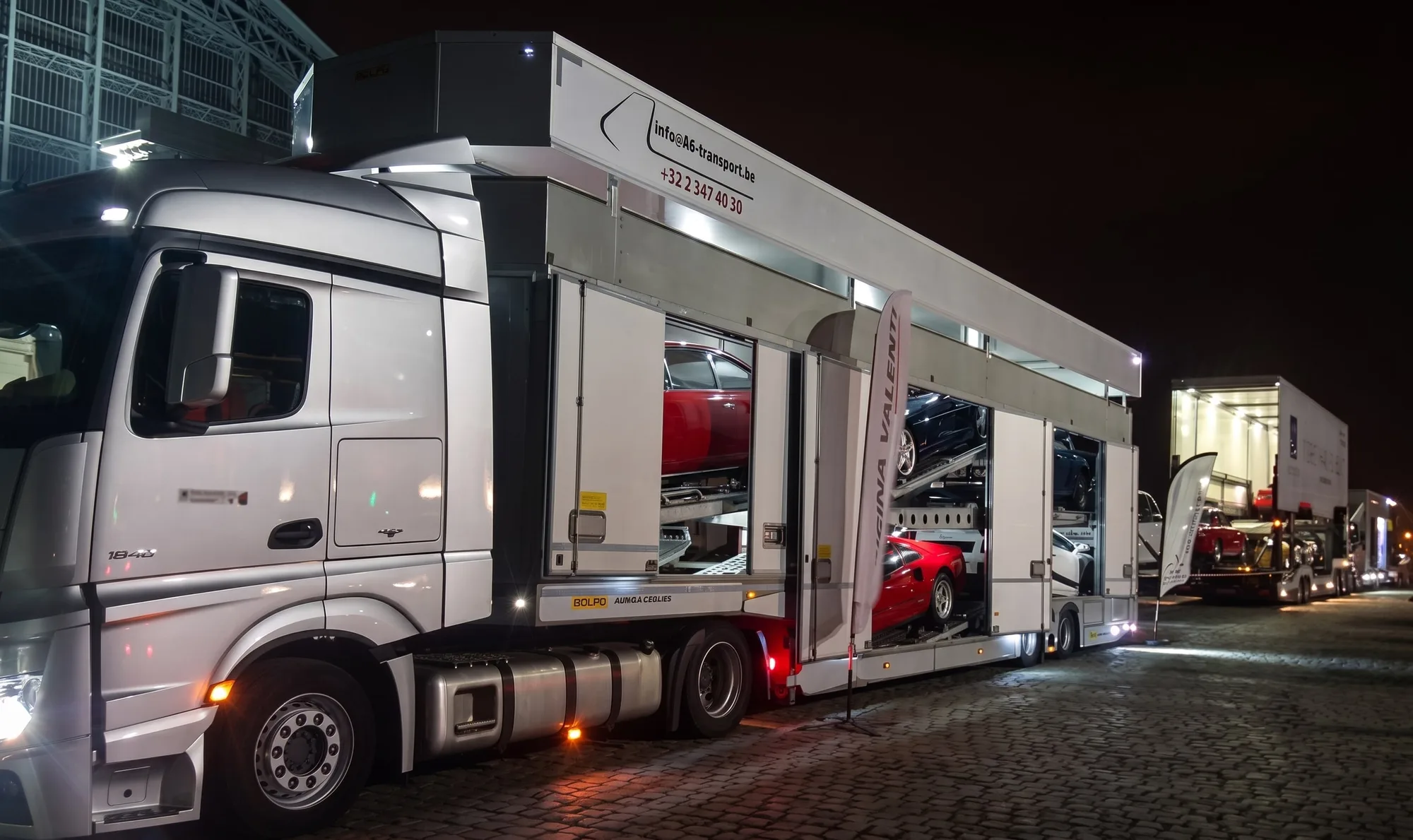
Loading at night
Events finish late; the return trip is not postponed to the morning.
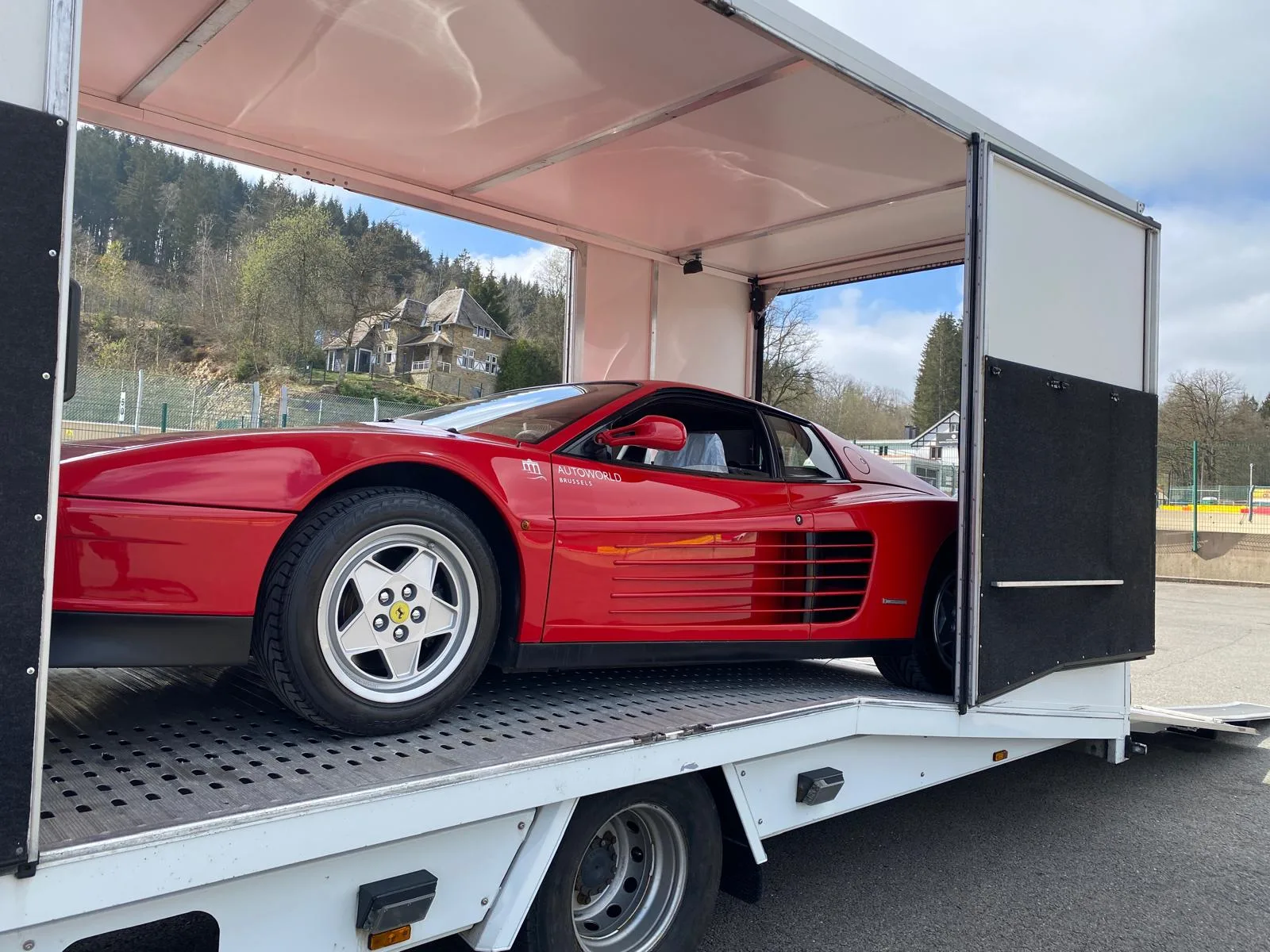
Arrived at the circuit
Side doors open, straps still on: nothing moves before the ramps are down.
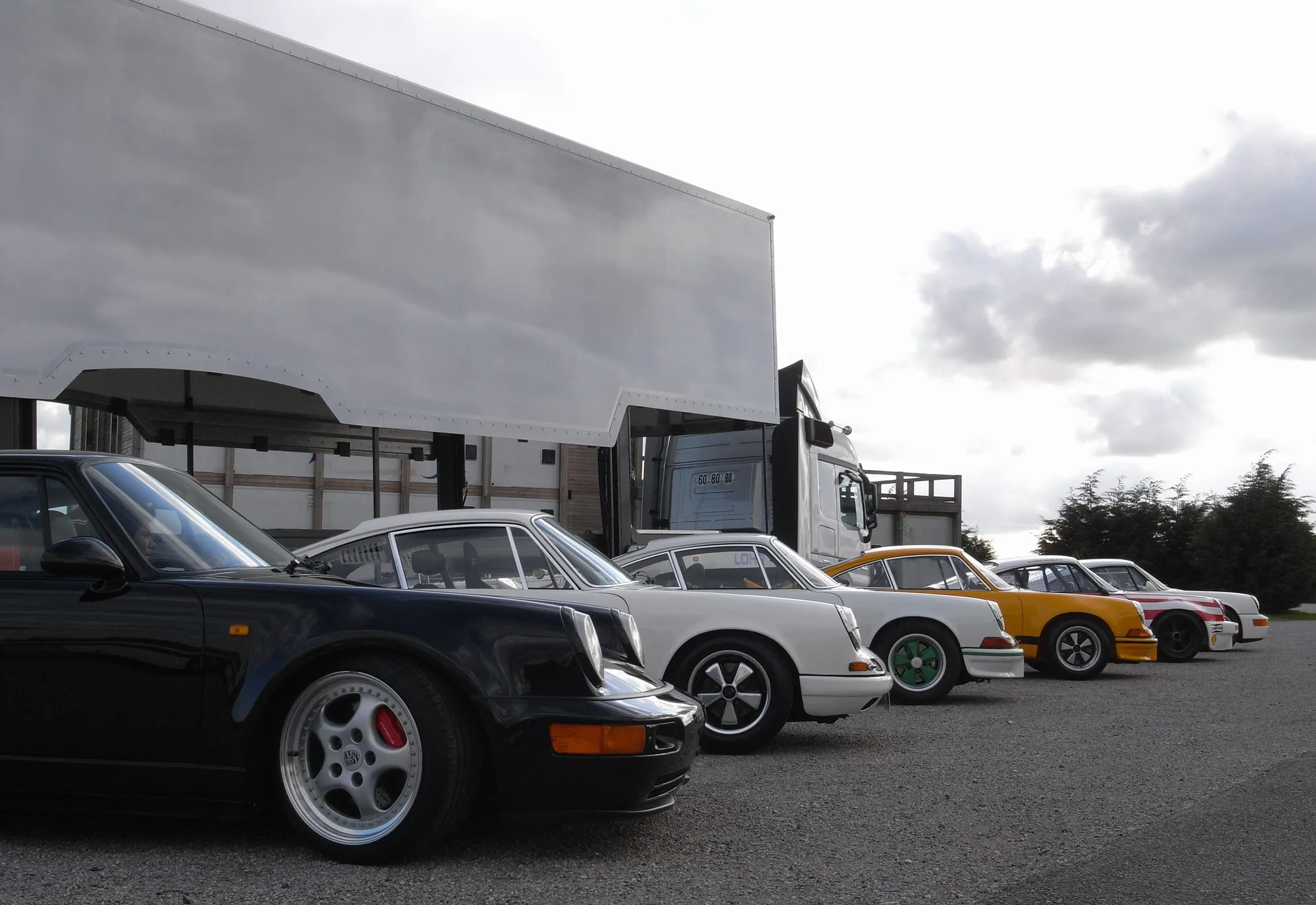
The whole line
A day like this ends with a loading plan, not a queue.
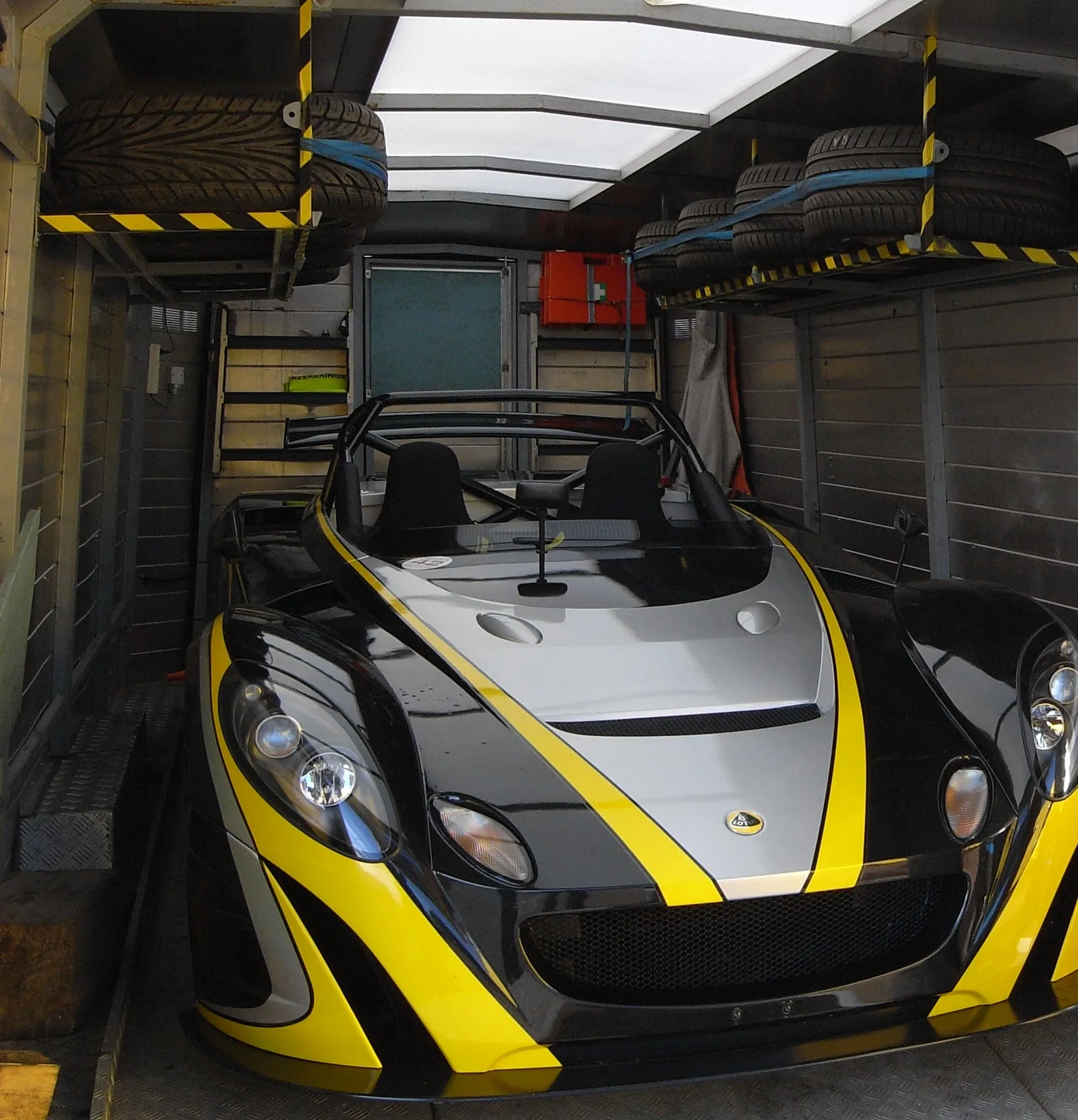
Track car, no windscreen
No roof, no glass, no doors. Everything the weather could reach is a reason to travel enclosed.
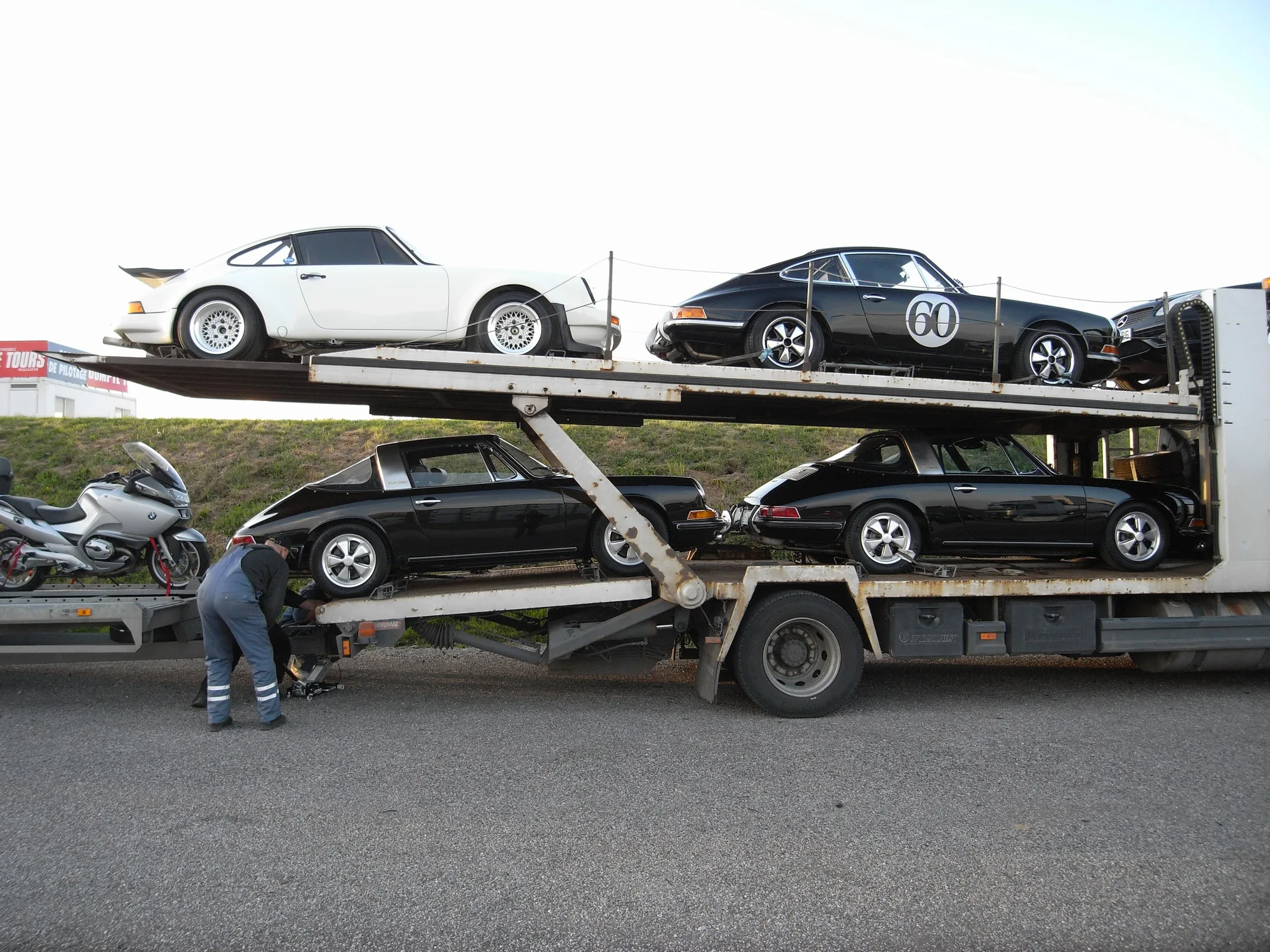
End of the day
Hot brakes, warm tyres, tired drivers. Loading is the part that cannot be rushed.
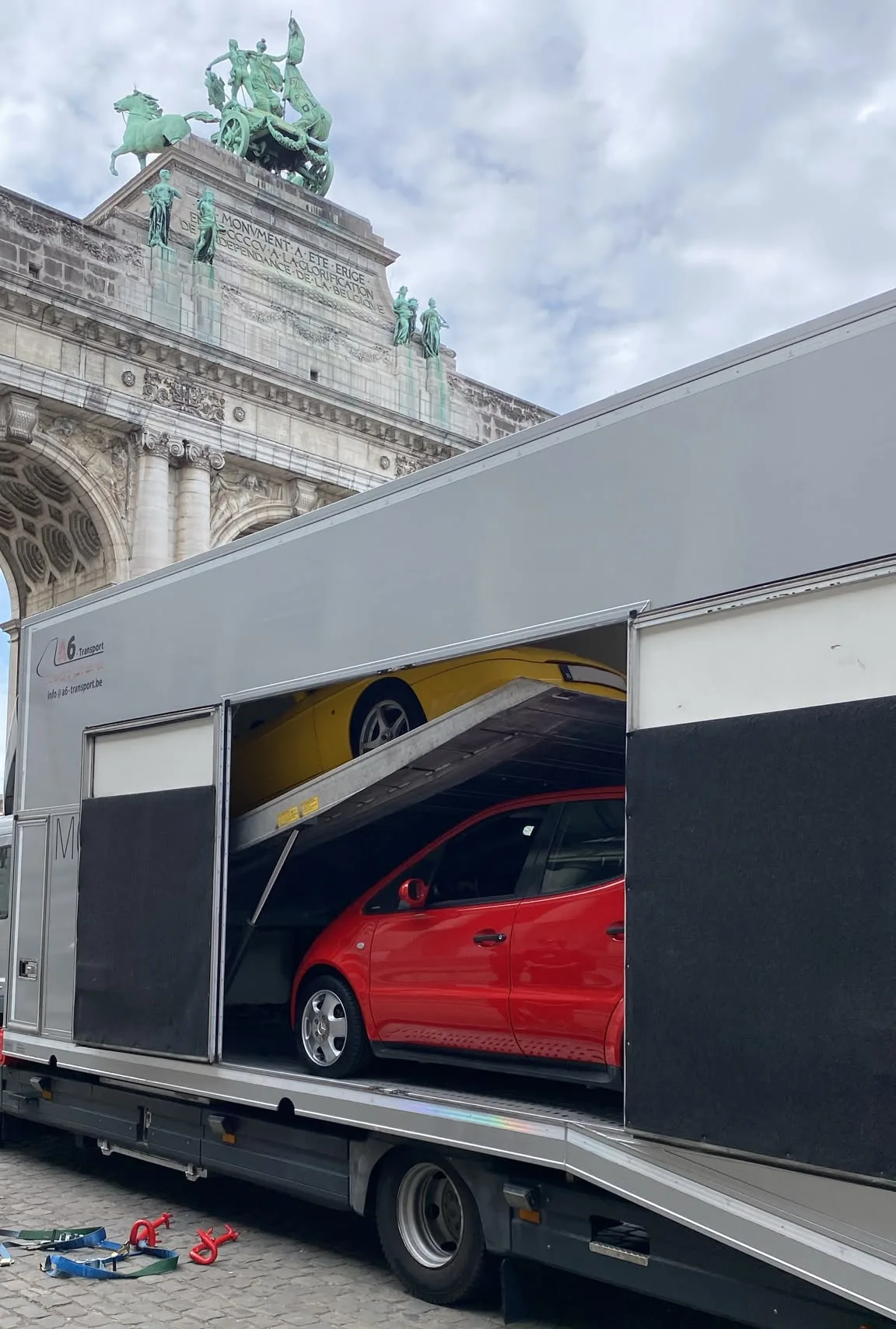
Loaded under the arch
Read the articleEnd of the exhibition: the cars leave the way they came.
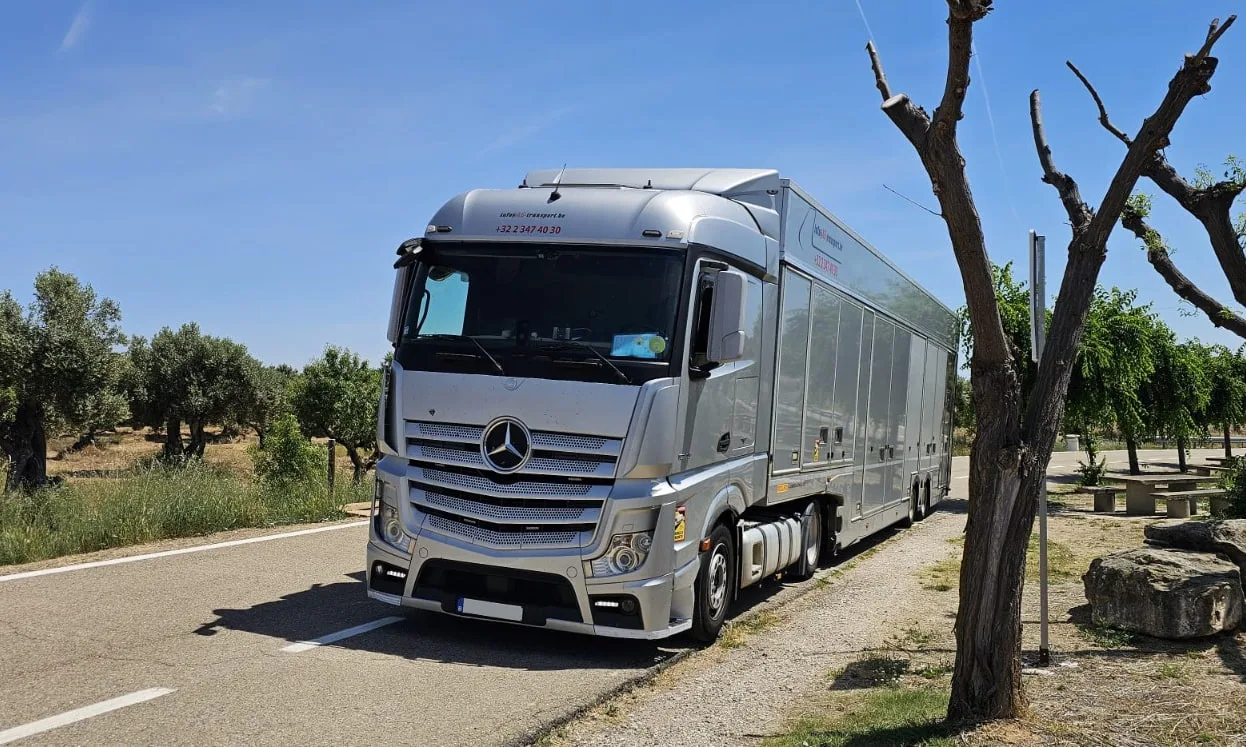
Southern Europe
From one point in Europe to another: the olive groves are part of the route.
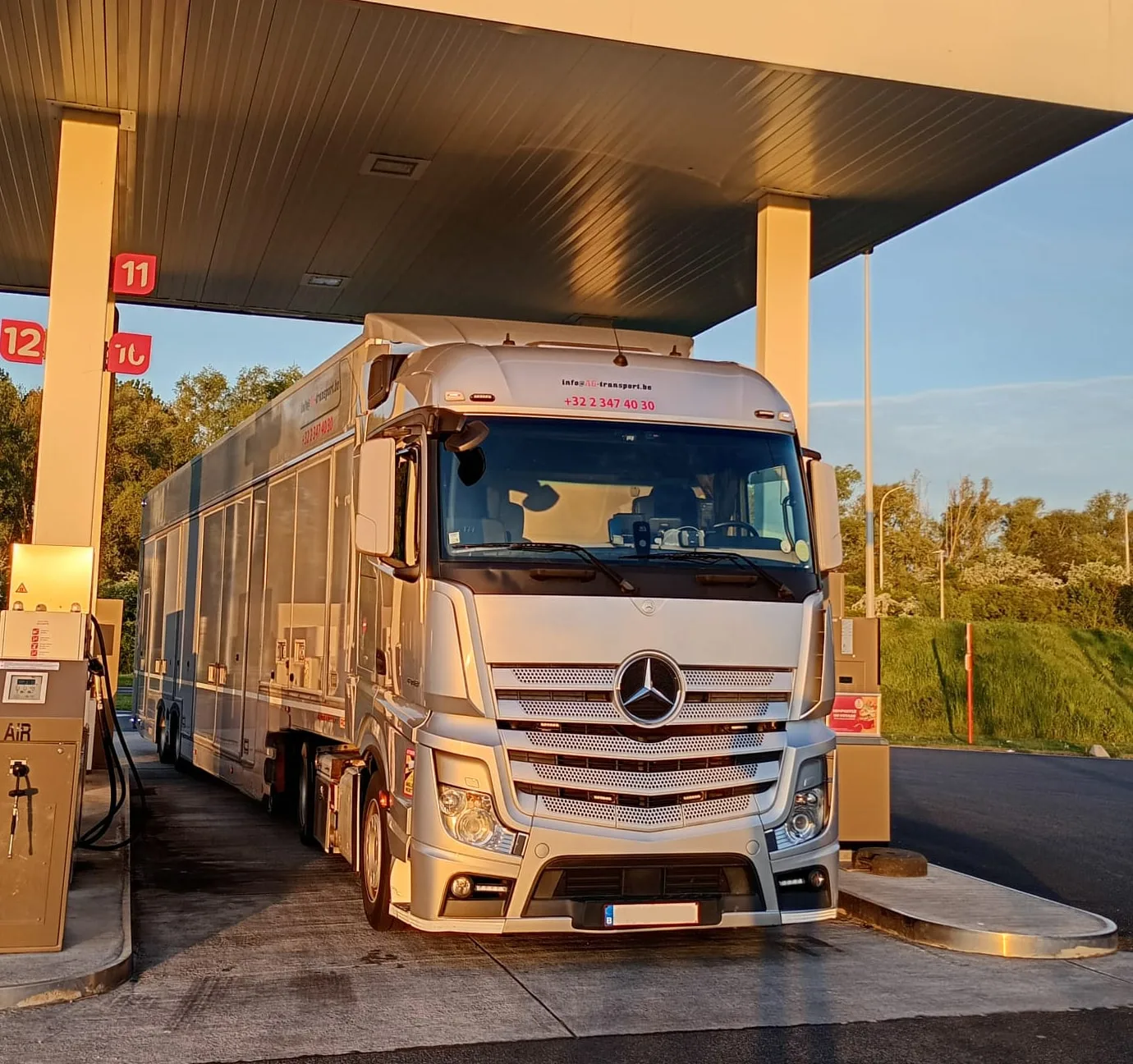
Refuelling at day's end
Stops are chosen: lit forecourt, truck in view, car never left alone.
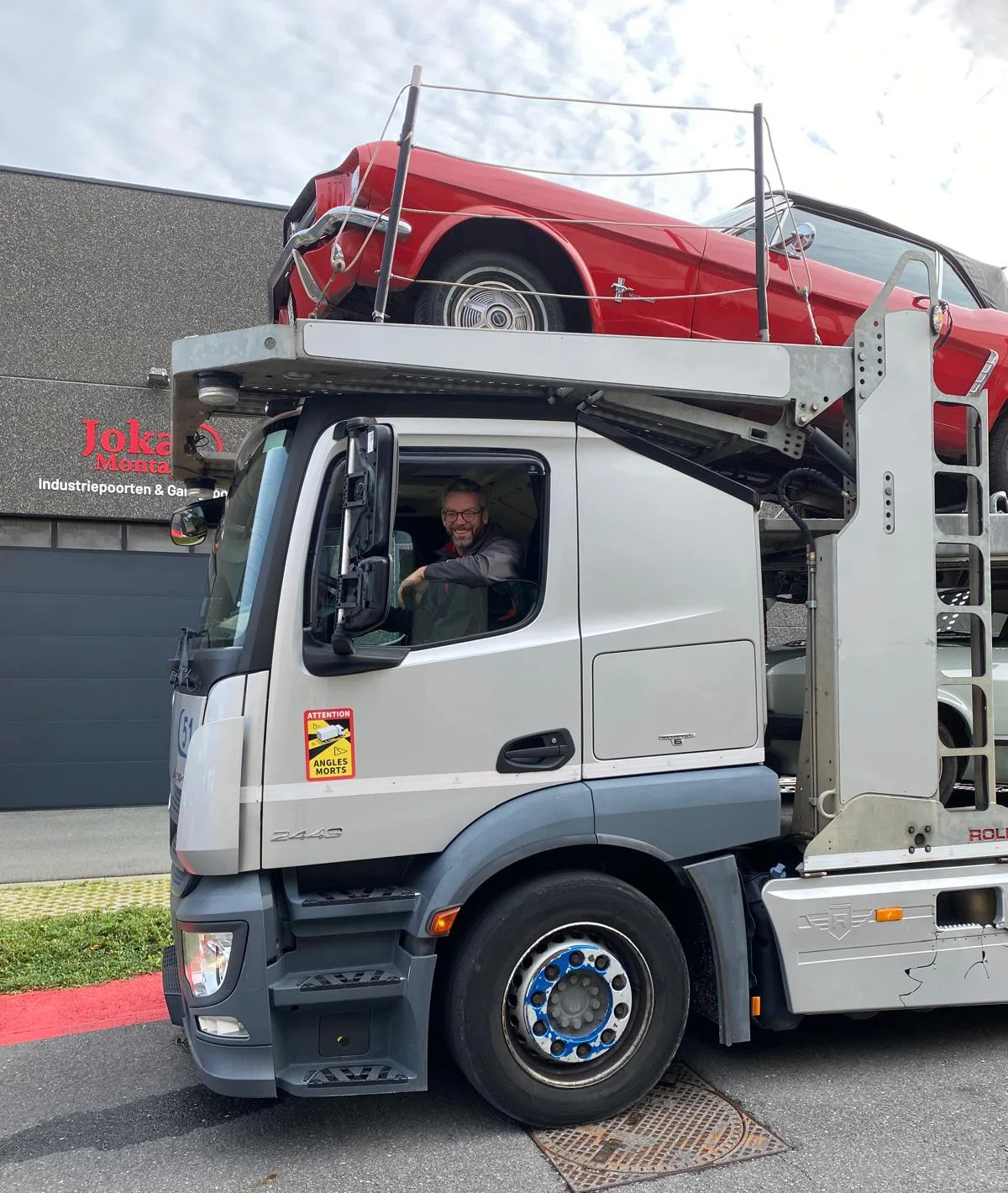
The driver stays the same
Same crew from loading to delivery. Nothing is handed over on the way.
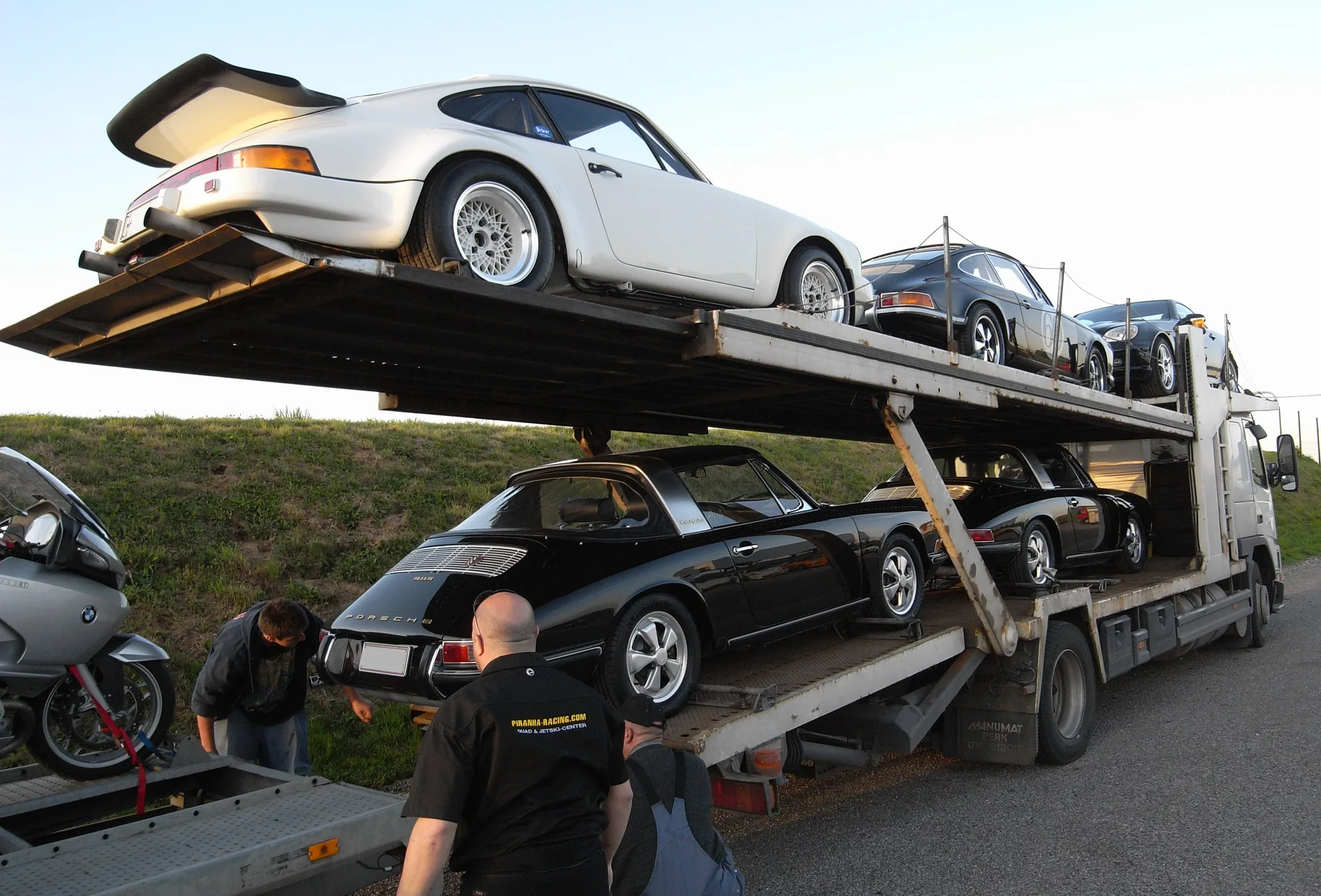
Two on the job
One drives, one watches the clearances. Never one person alone with somebody else's car.
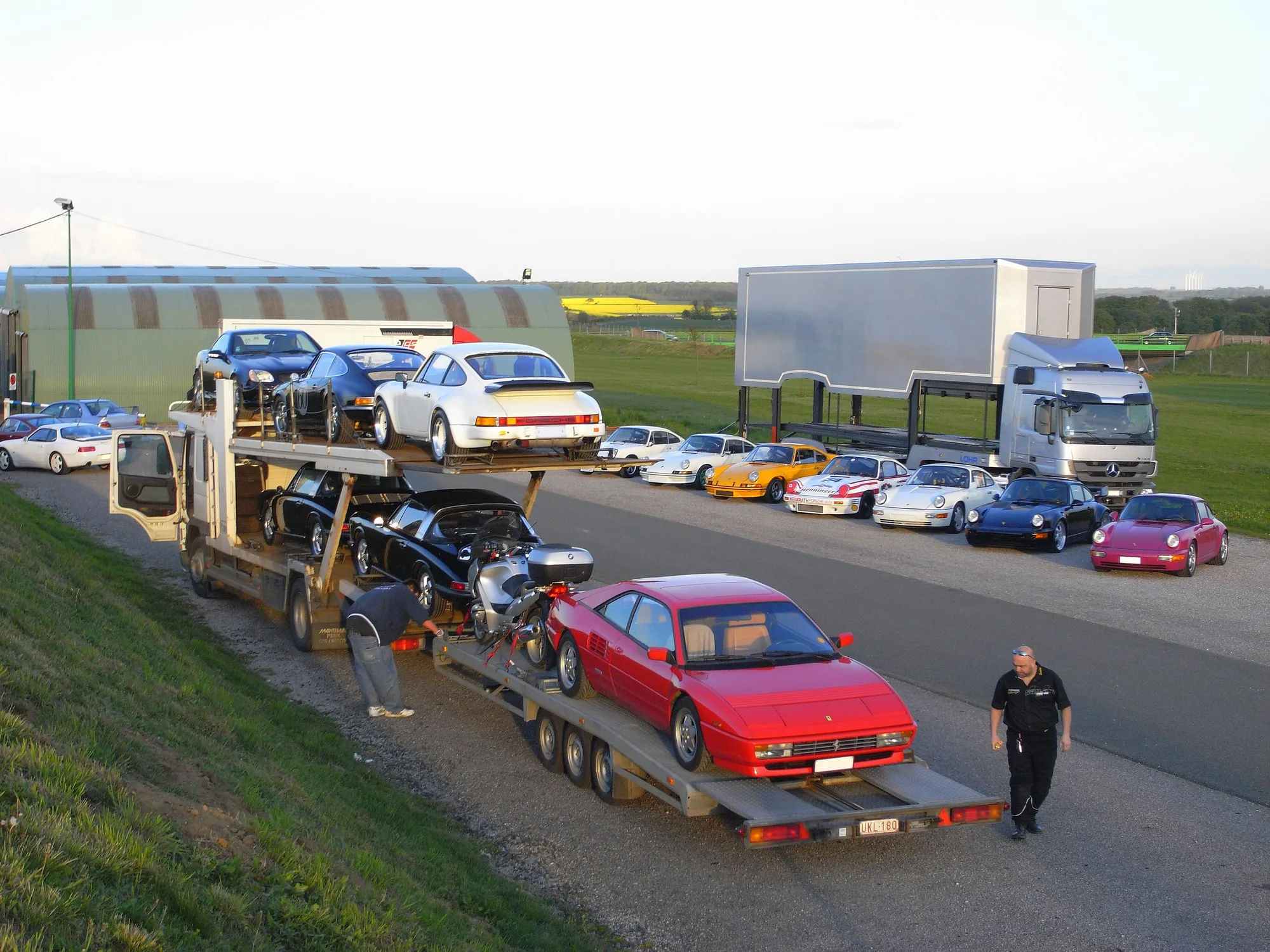
Still to come
A collection does not move in one load. It moves in the number of loads it takes.
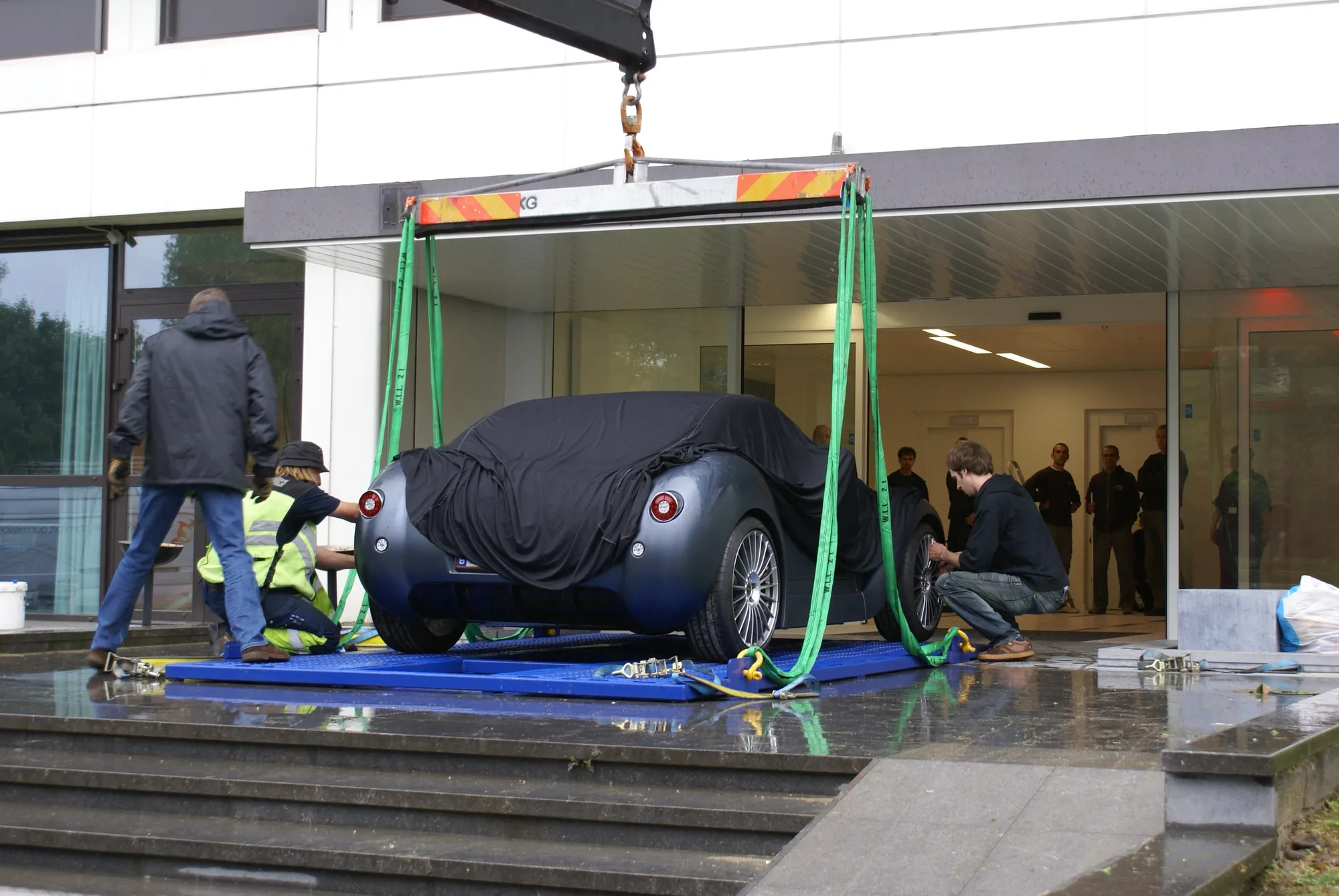
In through the front
The showroom has no door wide enough. The car goes in over the sill, on a spreader frame.
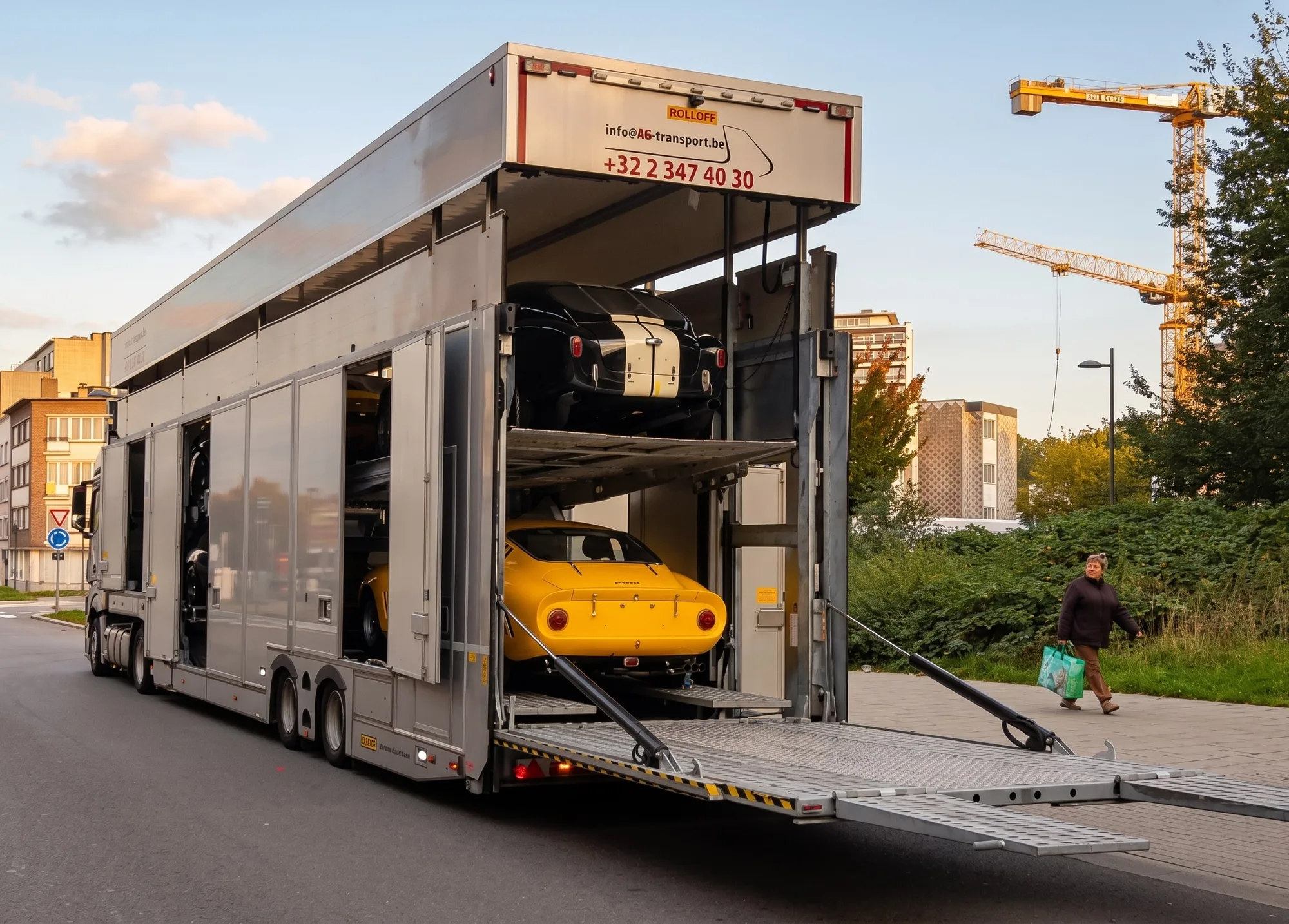
Urban manoeuvre
Ramps down in the middle of the street, for the time one car takes.
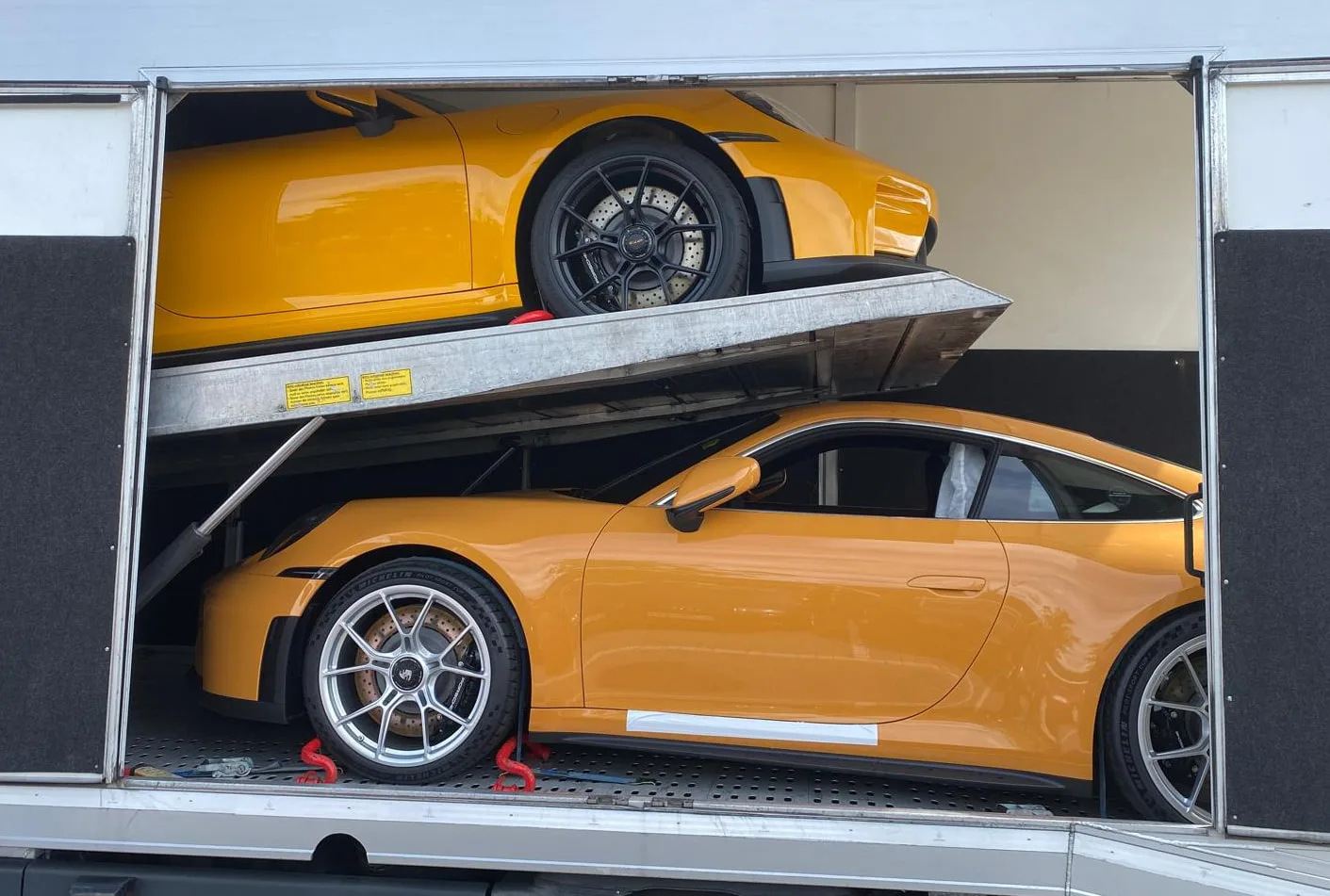
Two 911 GT3s
Same model, same colour, two decks: neither one touches the other.
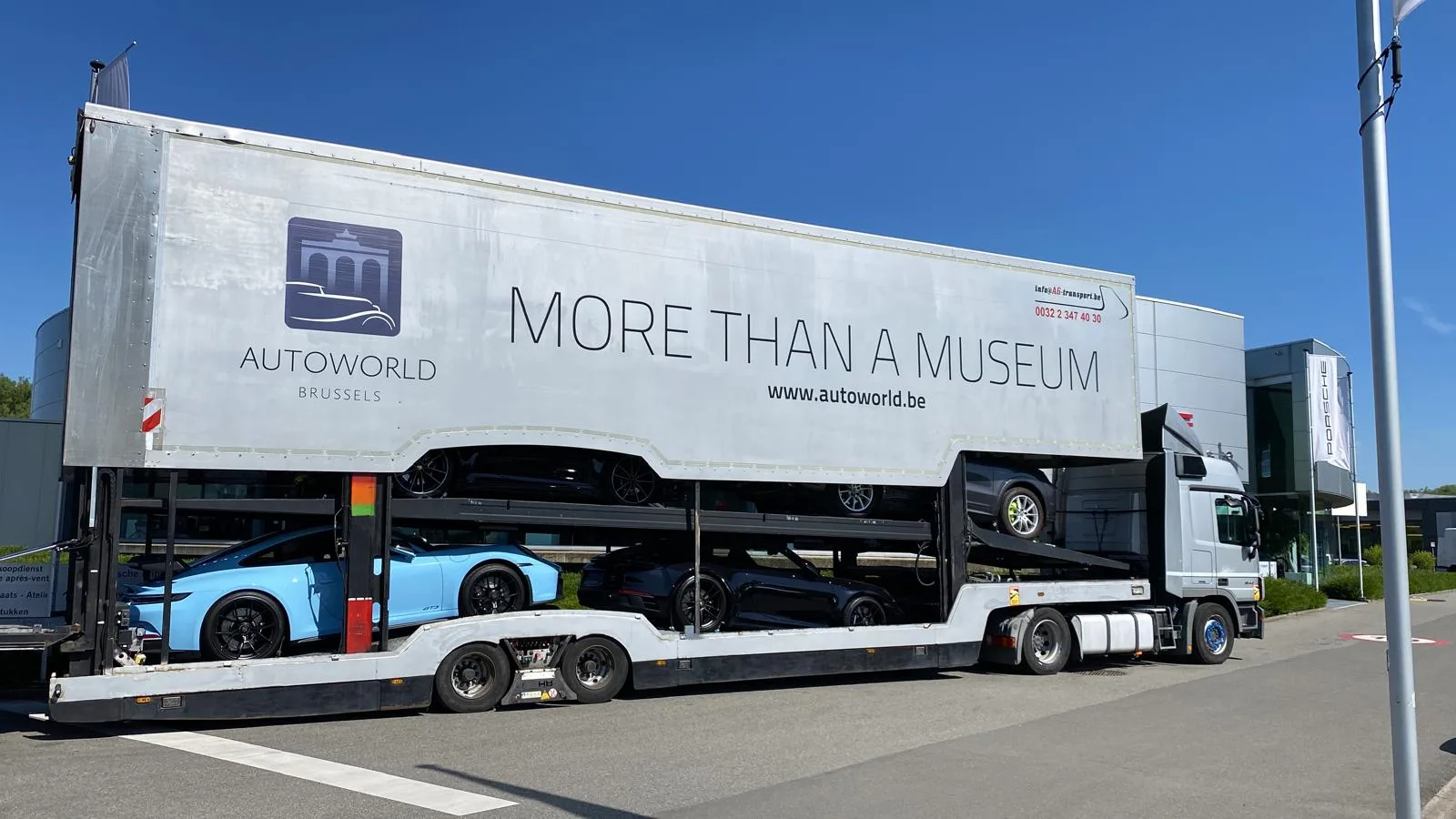
Blue on the lower deck
Four Porsches in one trailer, each on its own deck and its own straps.
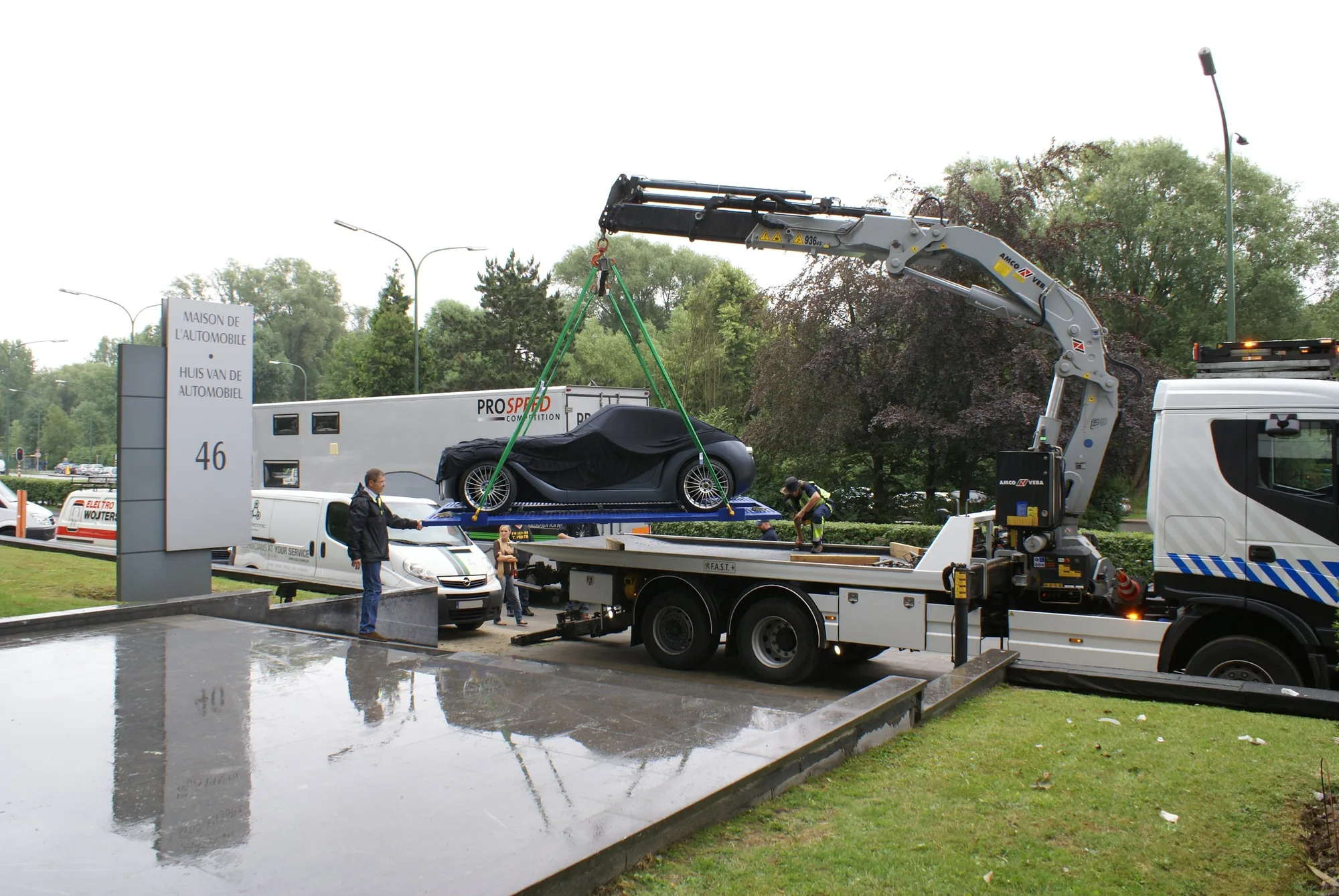
Over the lawn
No hard standing between the road and the door. The arm covers what the wheels cannot.
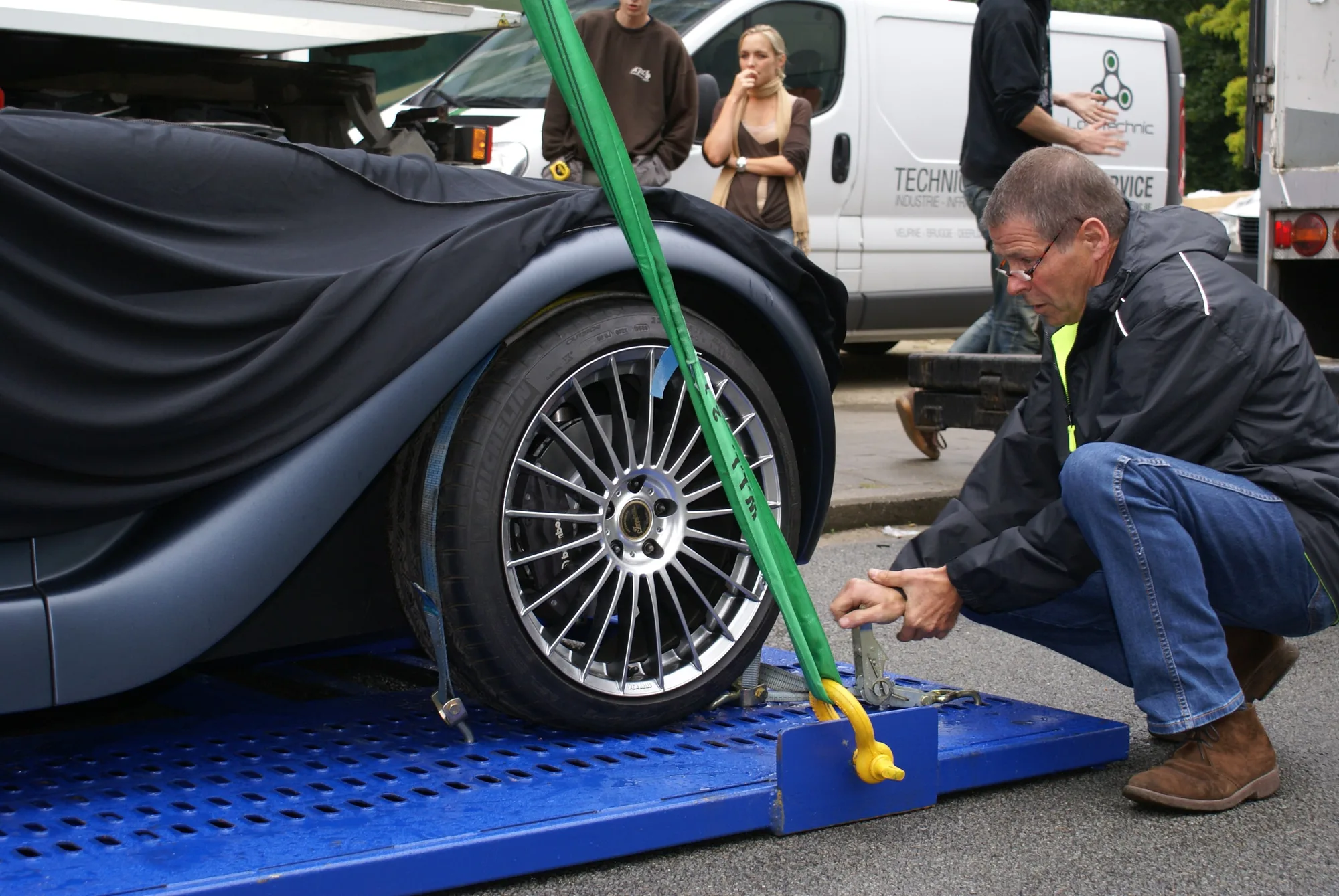
Tensioning by hand
Four points, checked one by one. A lift is only as good as the least tight of them.
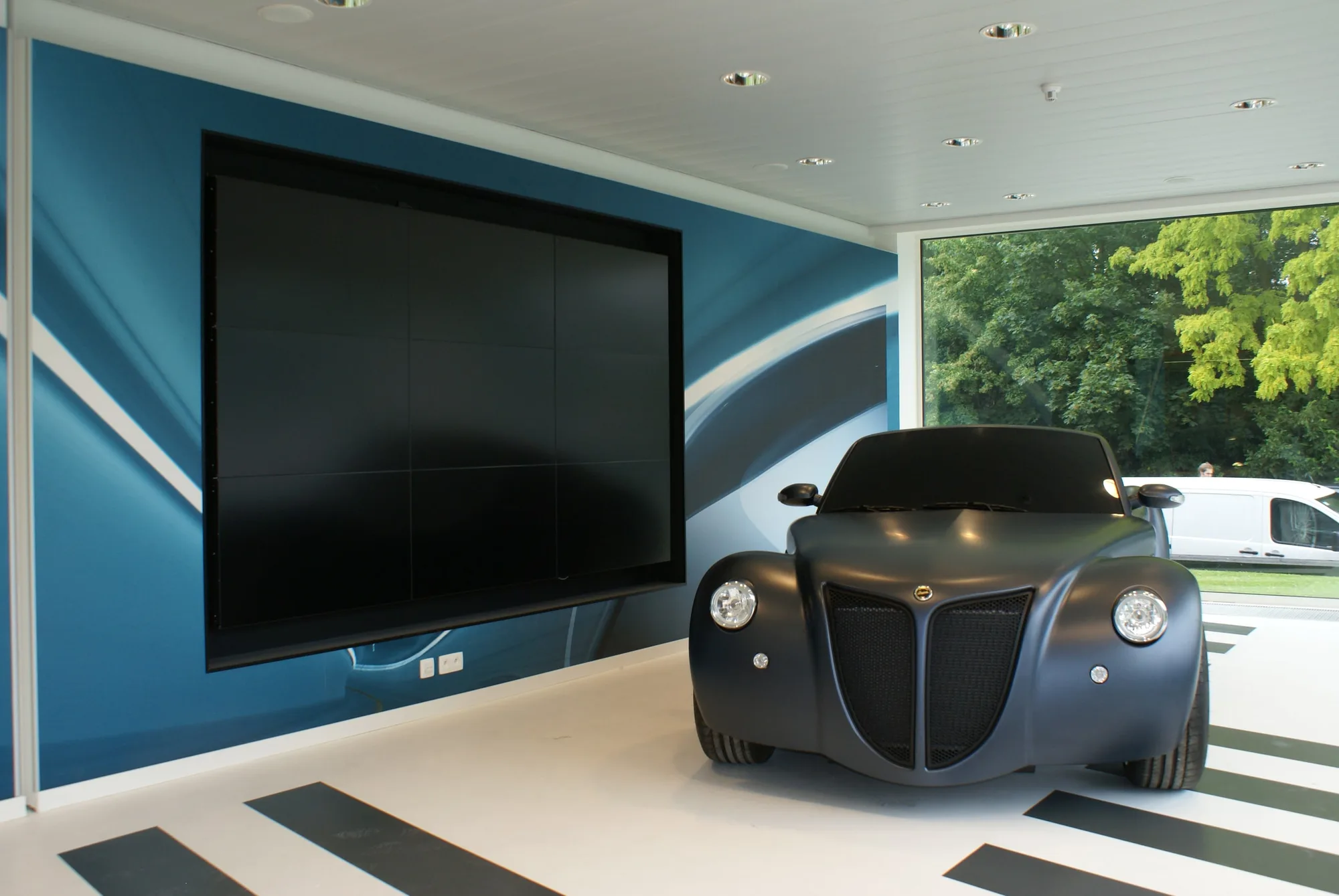
In position
Delivery ends when the car is where the visitors will see it, not at the loading bay.
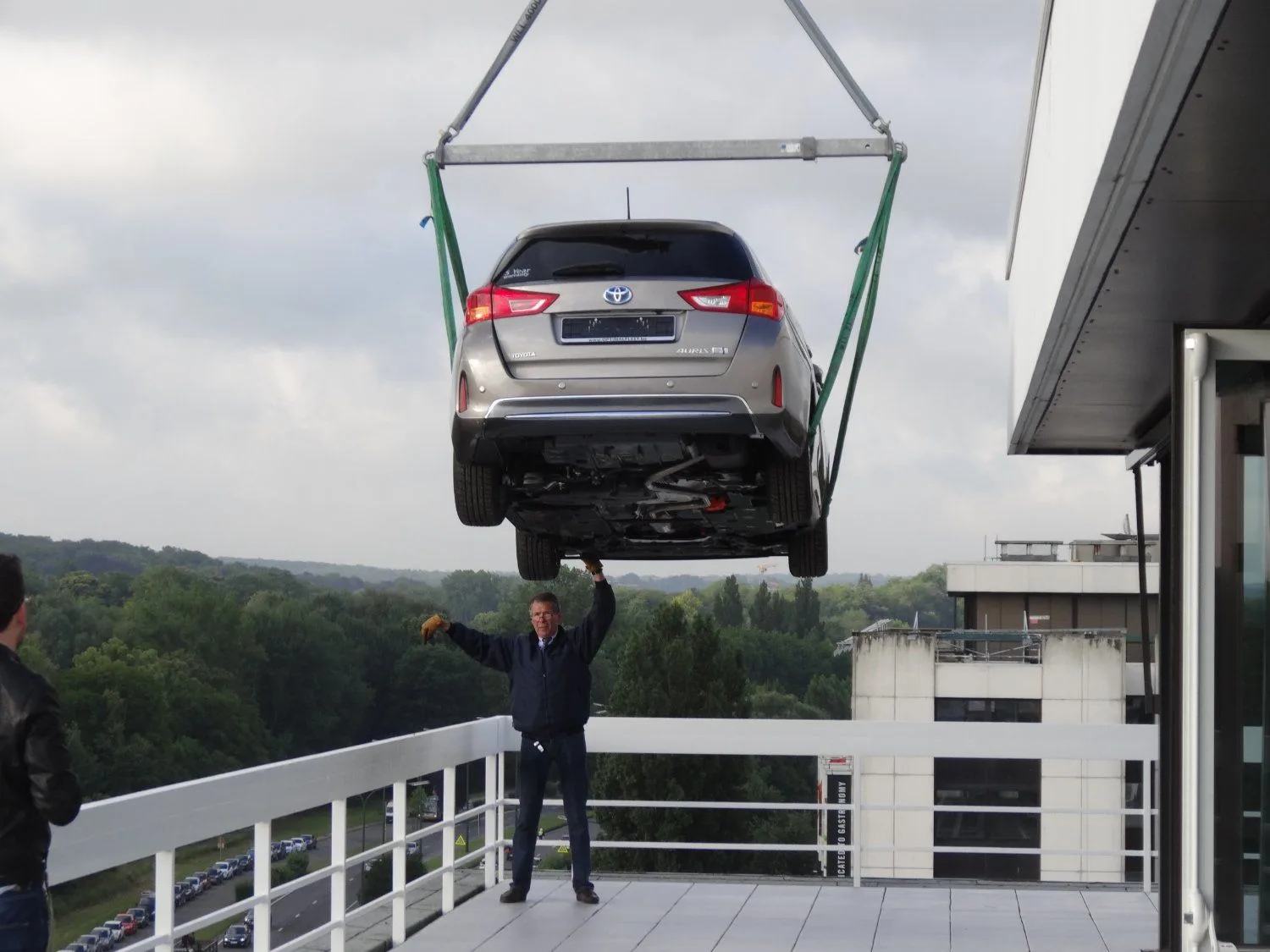
Delivered by crane
No ramp reaches a rooftop. The last few metres are flown, on straps and hand signals.
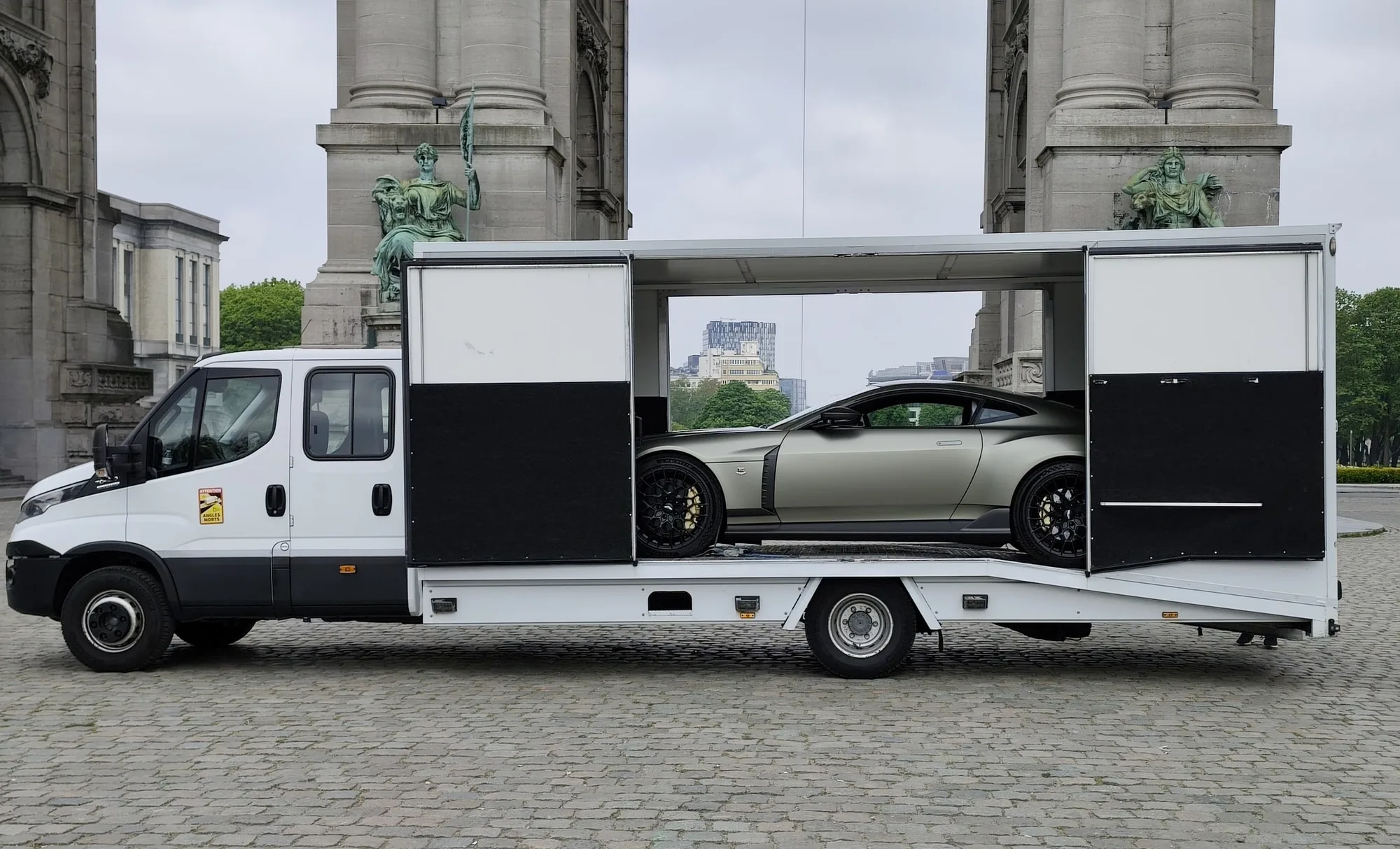
At the Cinquantenaire
Open esplanade, car brought out under the arches: the place is part of the delivery.
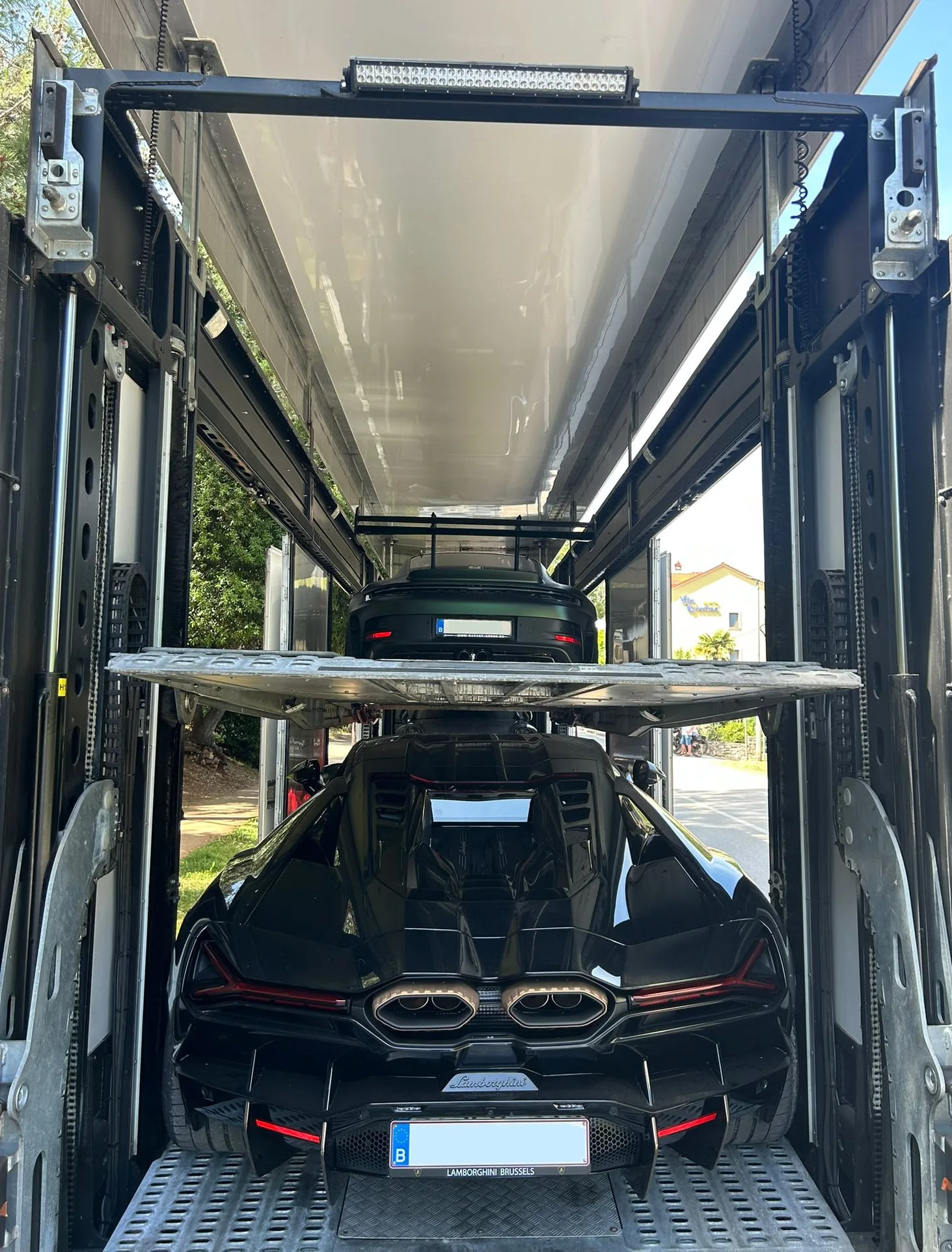
Straight through
The lower deck seen from the rear doors: one car, the full width.
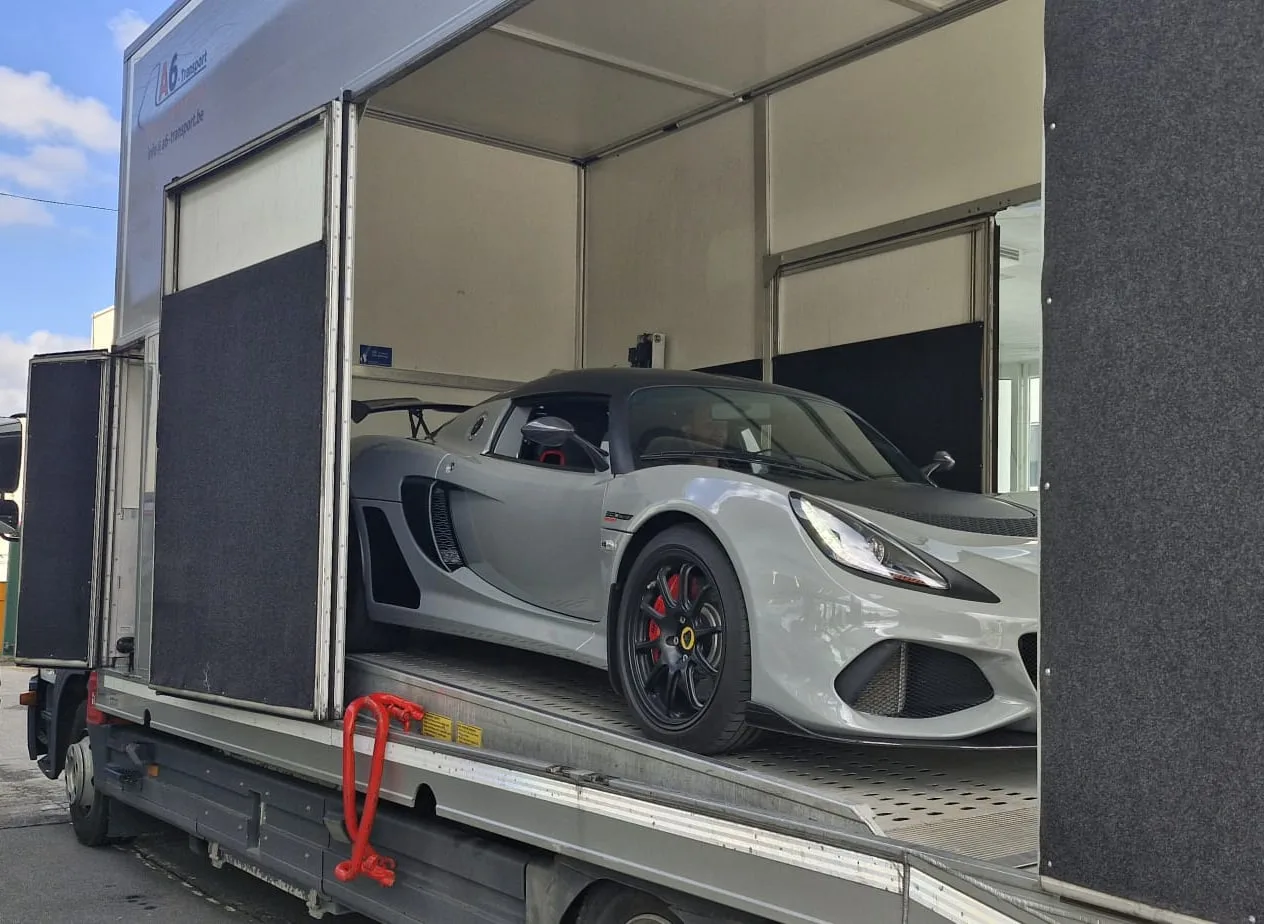
A track car travels
Low front, no ground clearance: the flat ramps exist for cars like this.
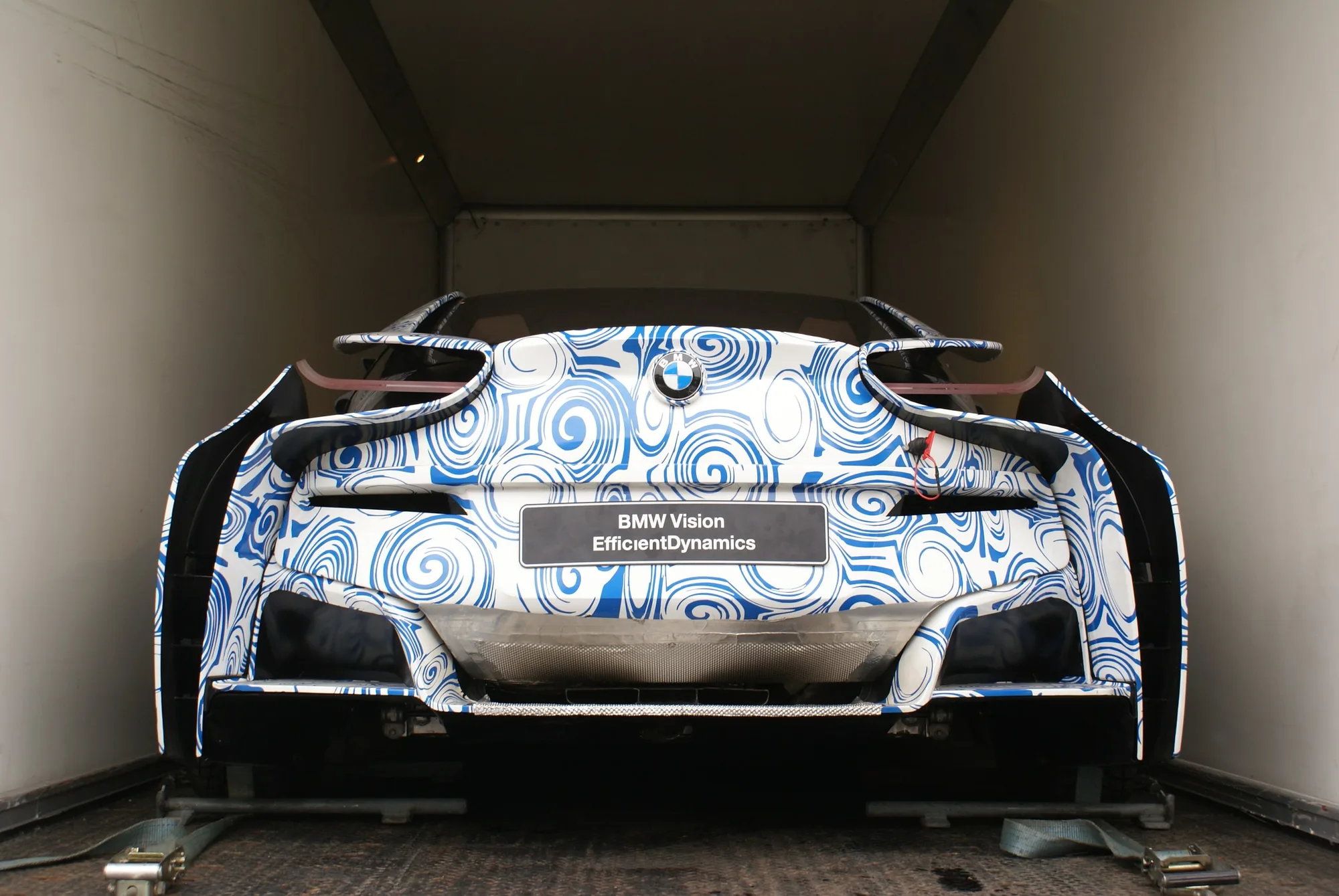
Under camouflage
A car that is not supposed to be photographed travels in a box with no windows.
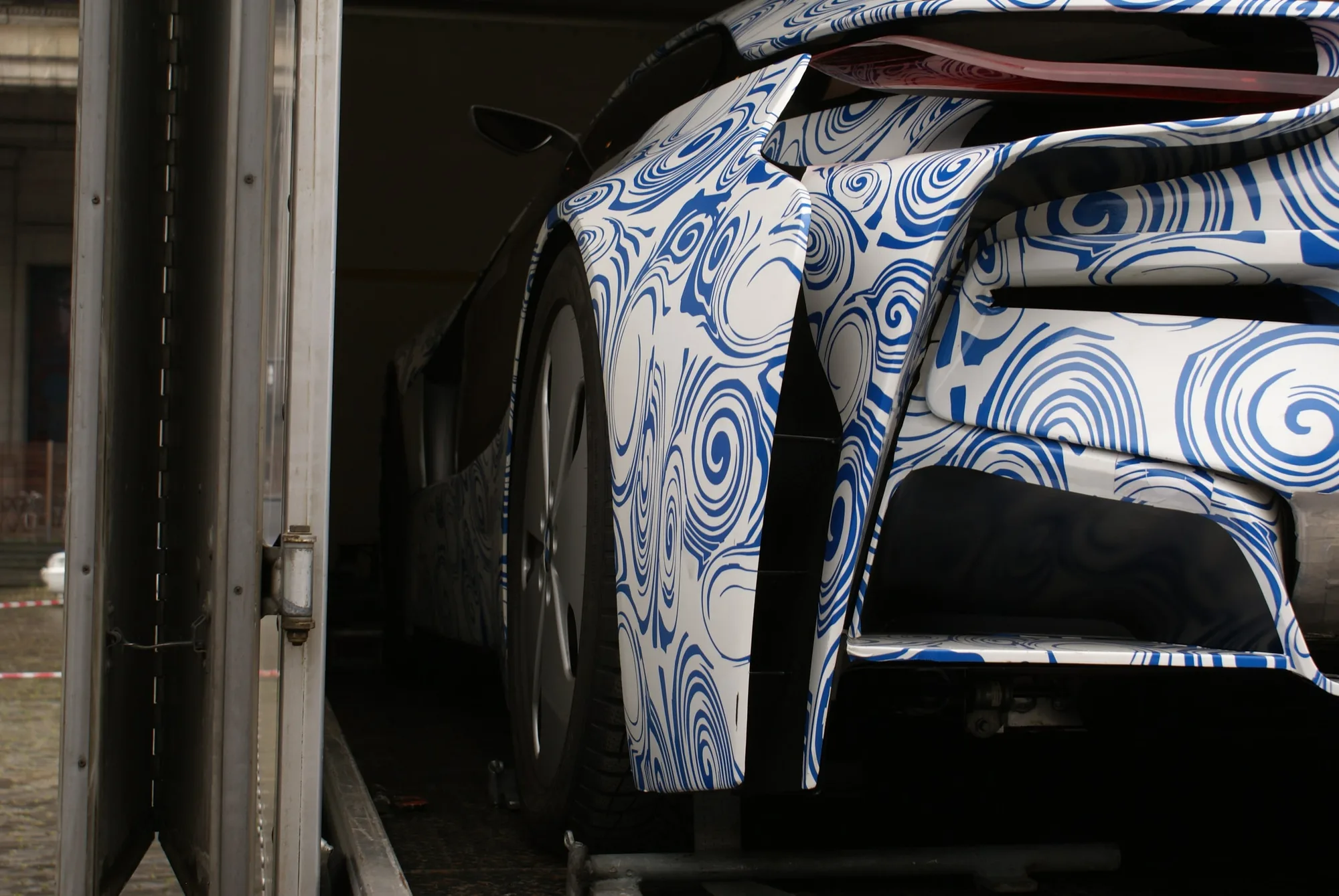
Kept out of sight
The wrap hides the shape. The closed body hides the wrap.
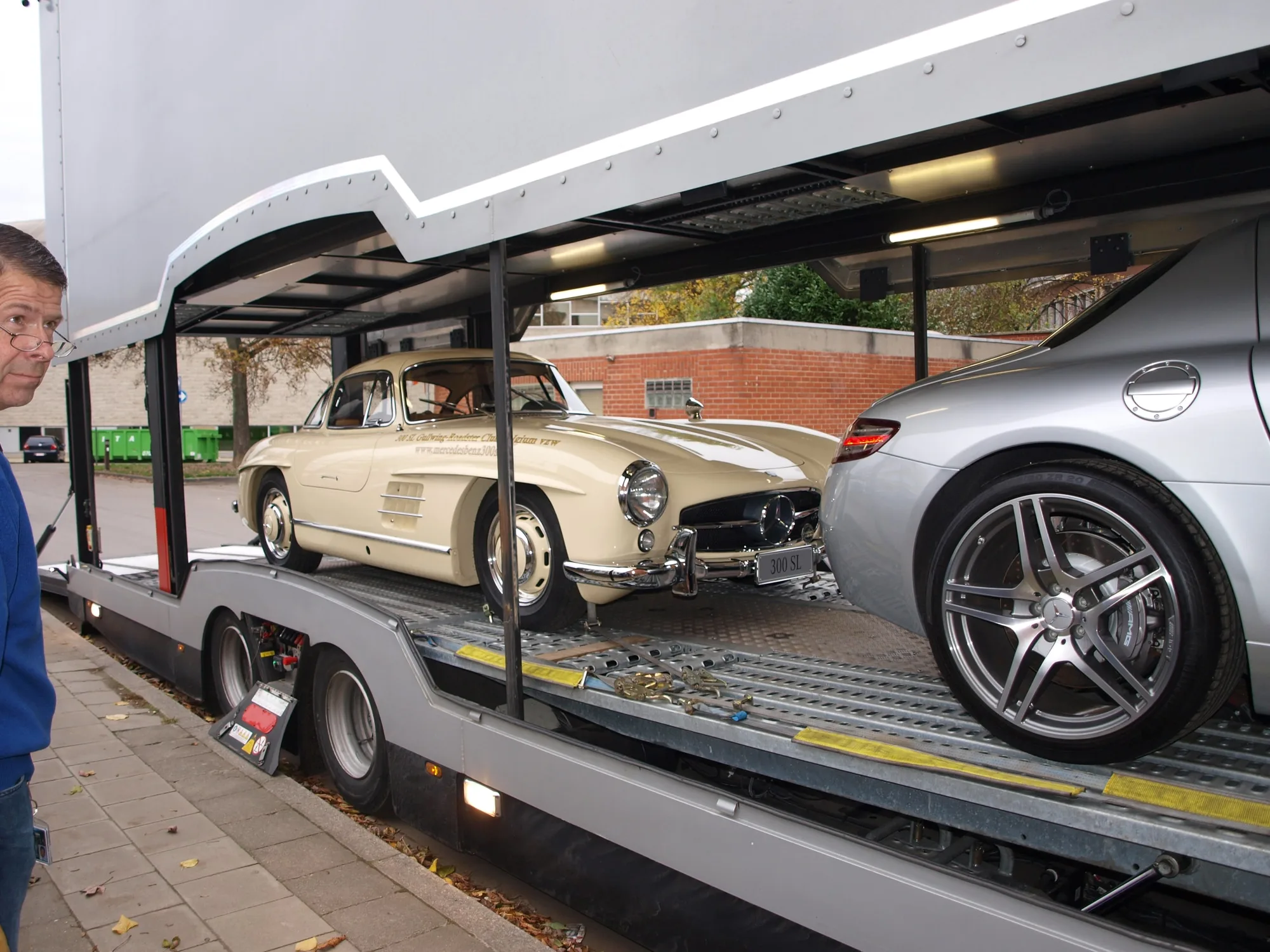
Both with gullwing doors
Half a century between them and the same doors. Both need the ceiling height to open.
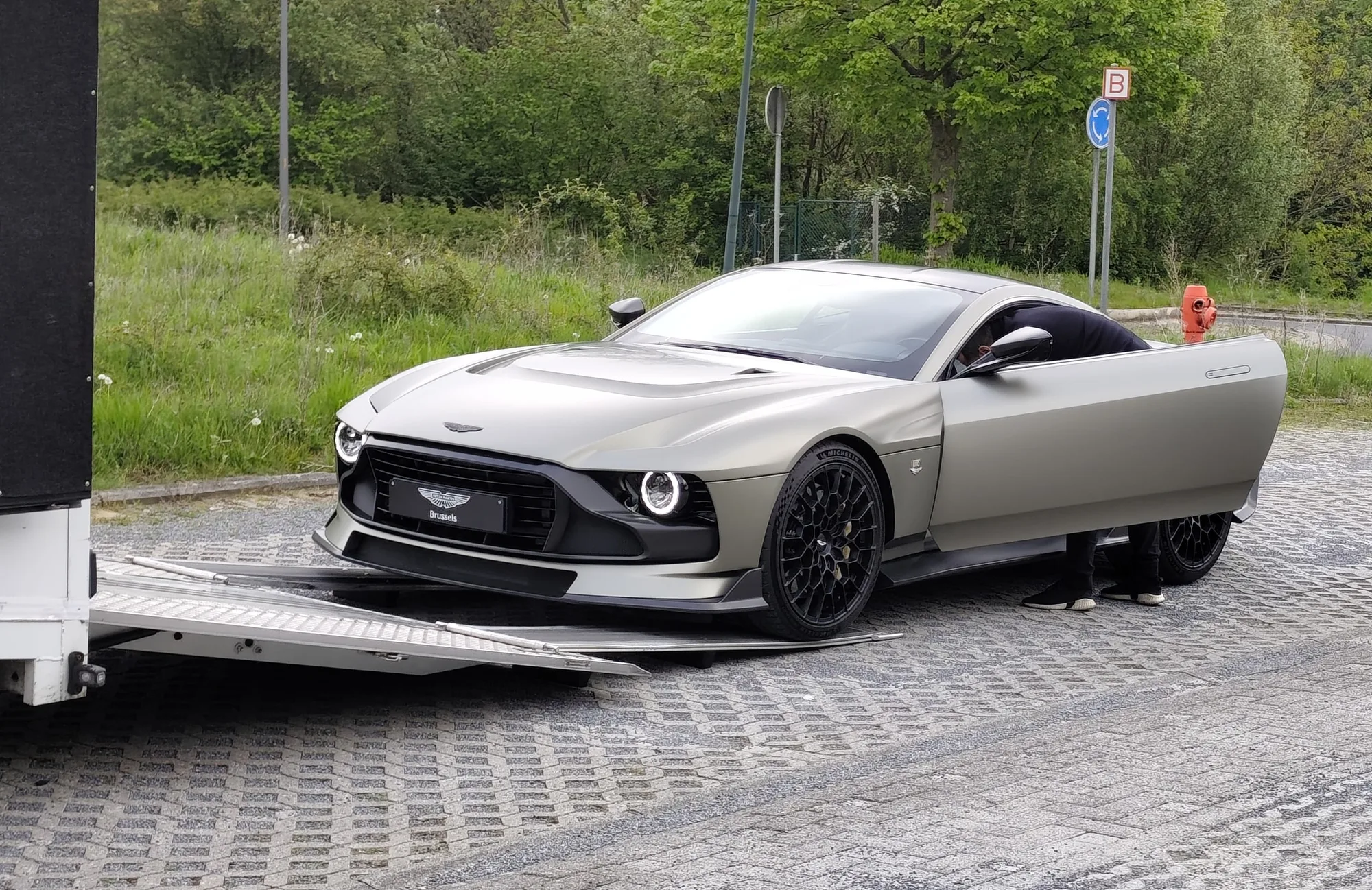
Front three-quarter
A modern collectible handed back to its owner, wheels on the ground.
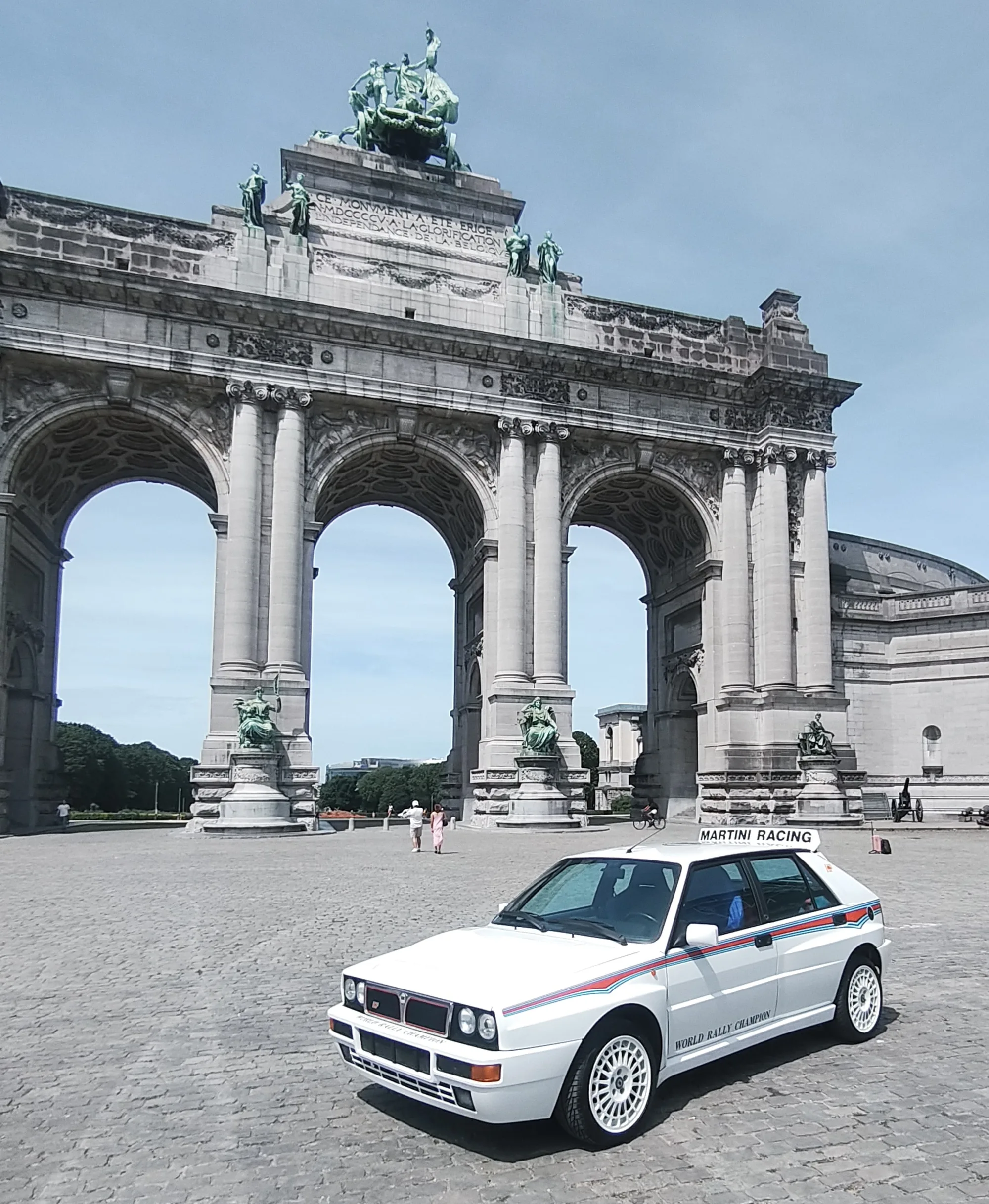
Under the arch
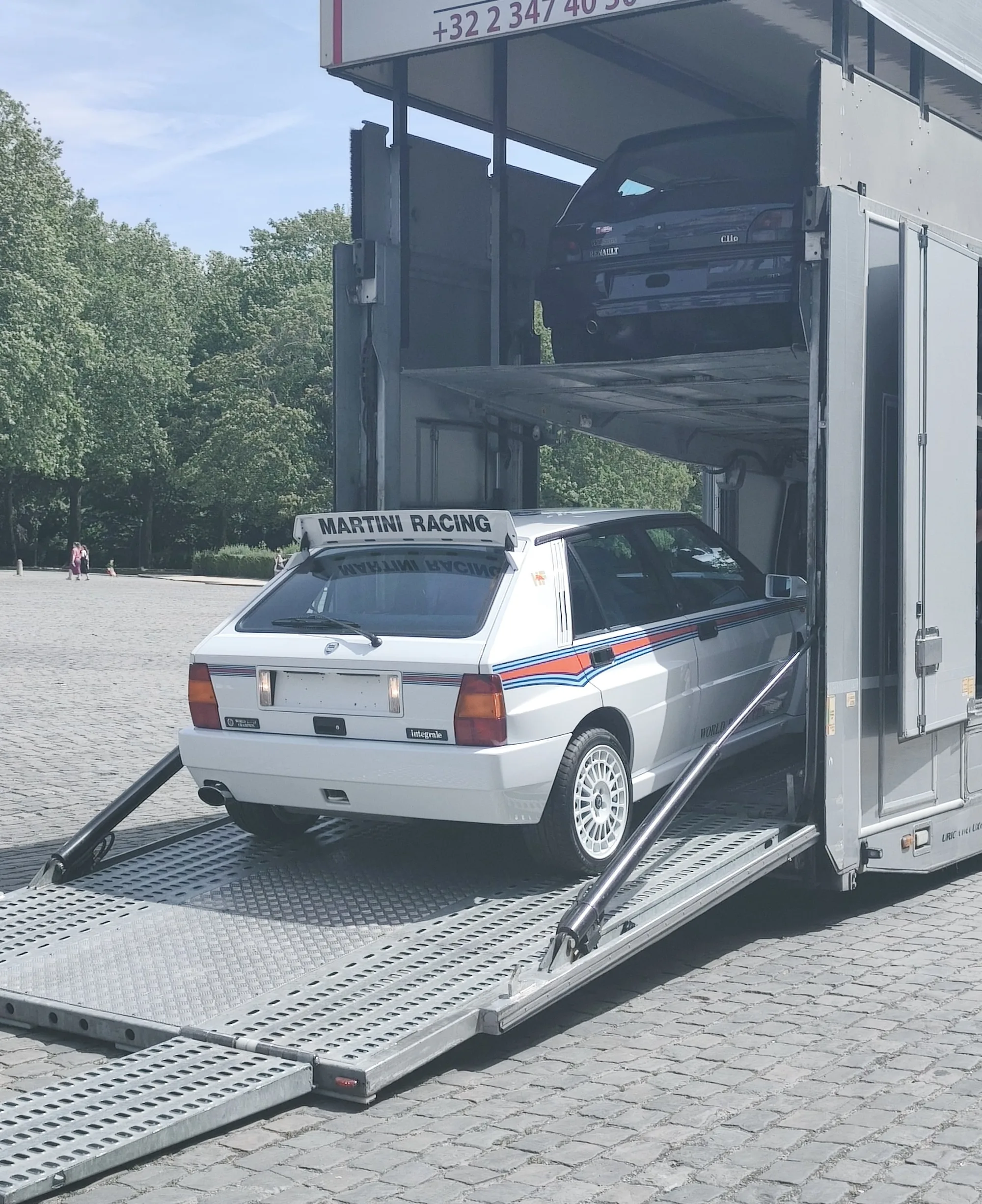
Martini livery at the foot of the arch: it arrived by road, not on its own wheels.
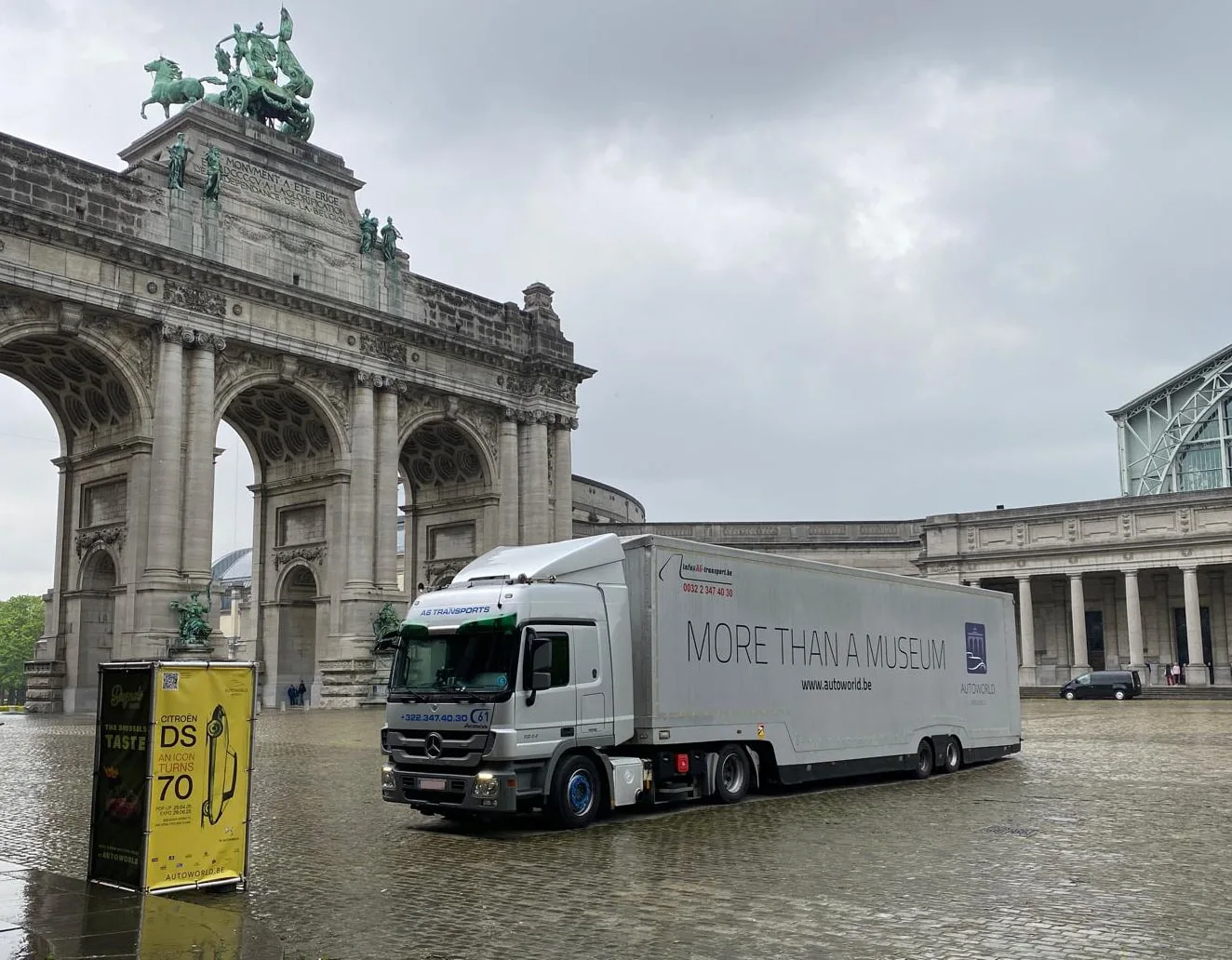
Under the arch, in the rain
Read the articleThe cars stay dry inside; the crew does not. That is the arrangement.
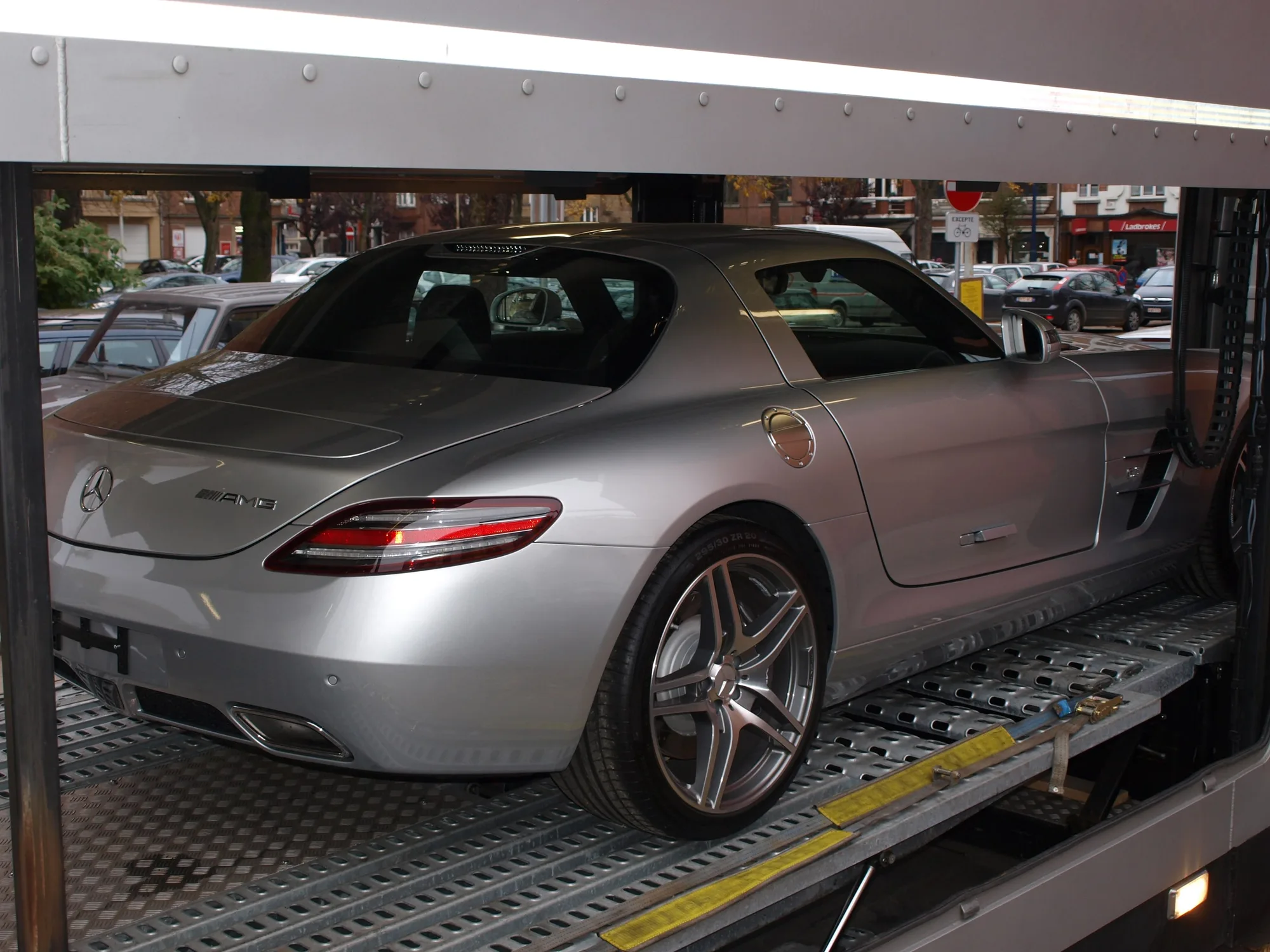
The long bonnet
Front-mid engine, and a nose that arrives well before the driver does.
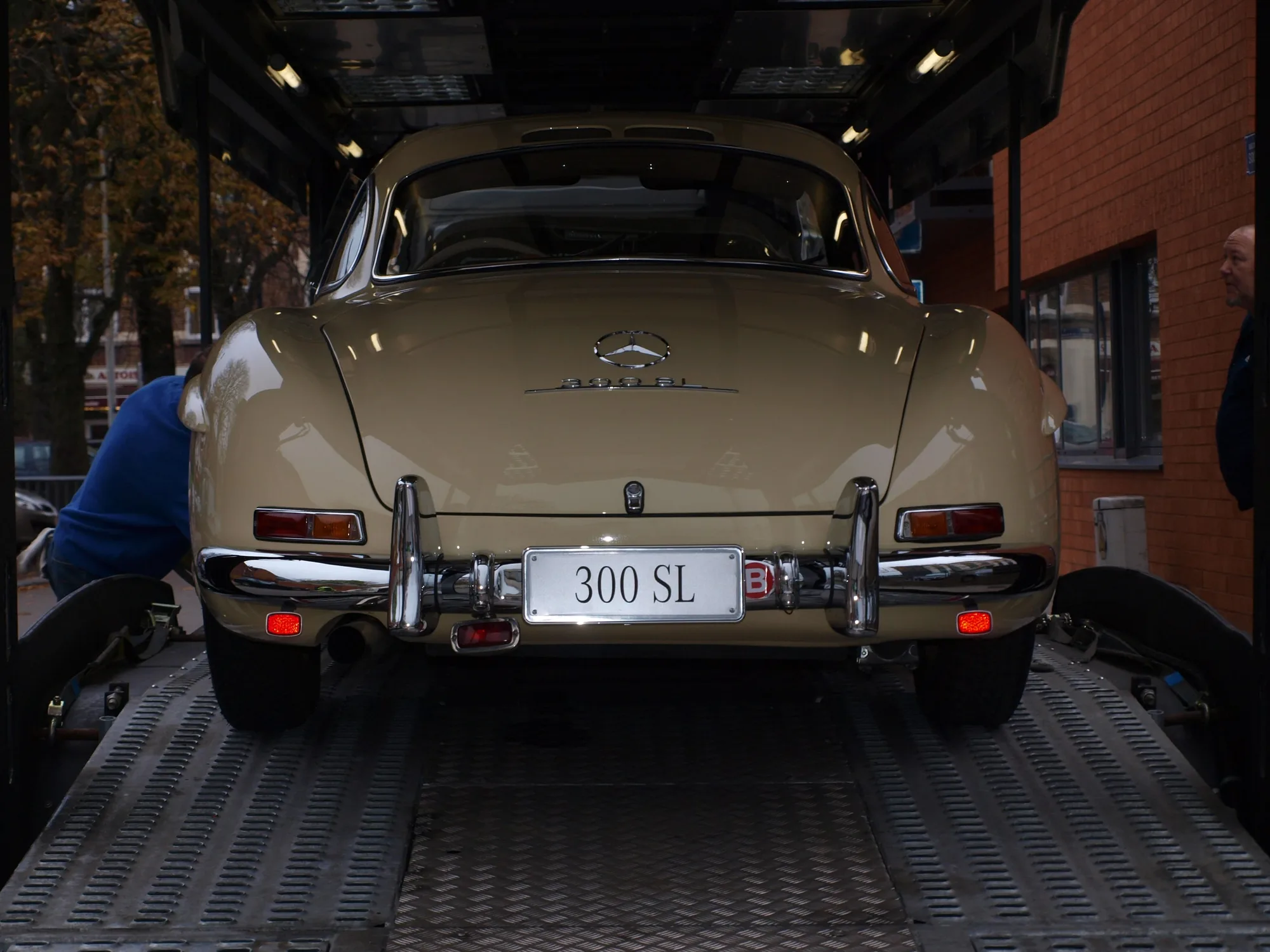
300 SL
The badge on the tail is the whole description. Nothing else needs saying.
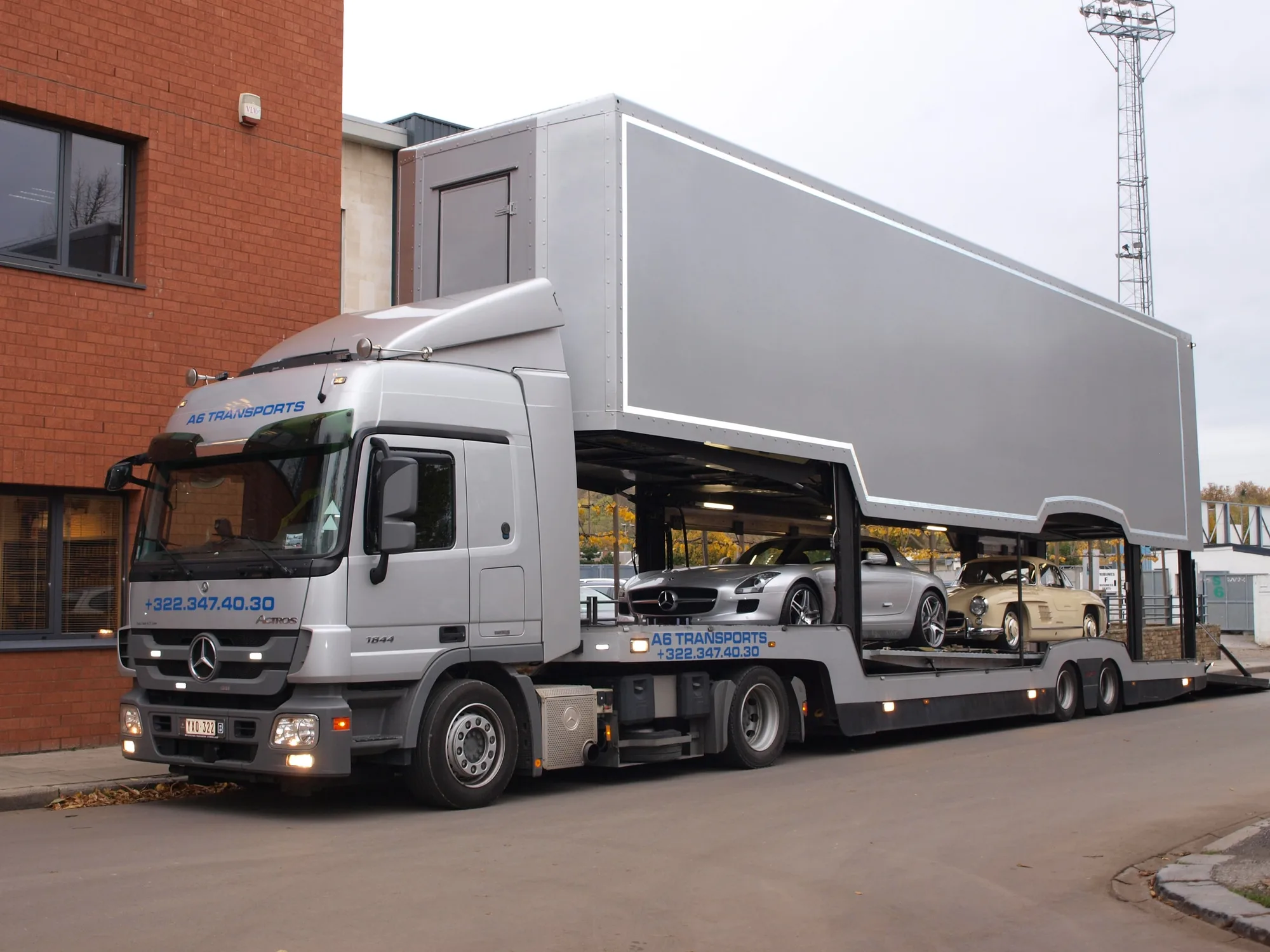
Loaded for the show
Three cars, one truck, one arrival slot. Exhibitions do not hold a bay open.
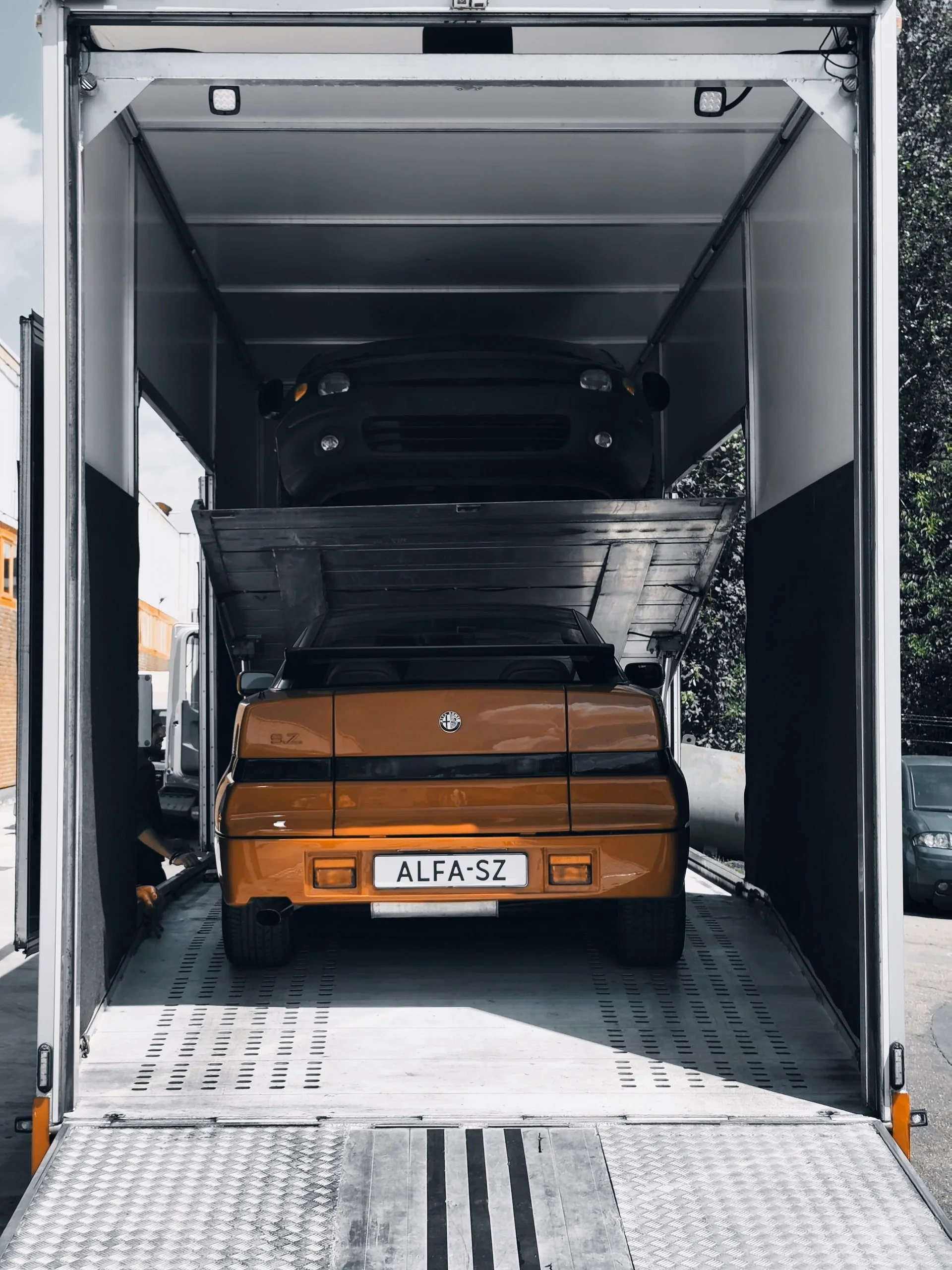
Strapped aboard
An SZ tied to the floor, ramps up, doors ready to close.
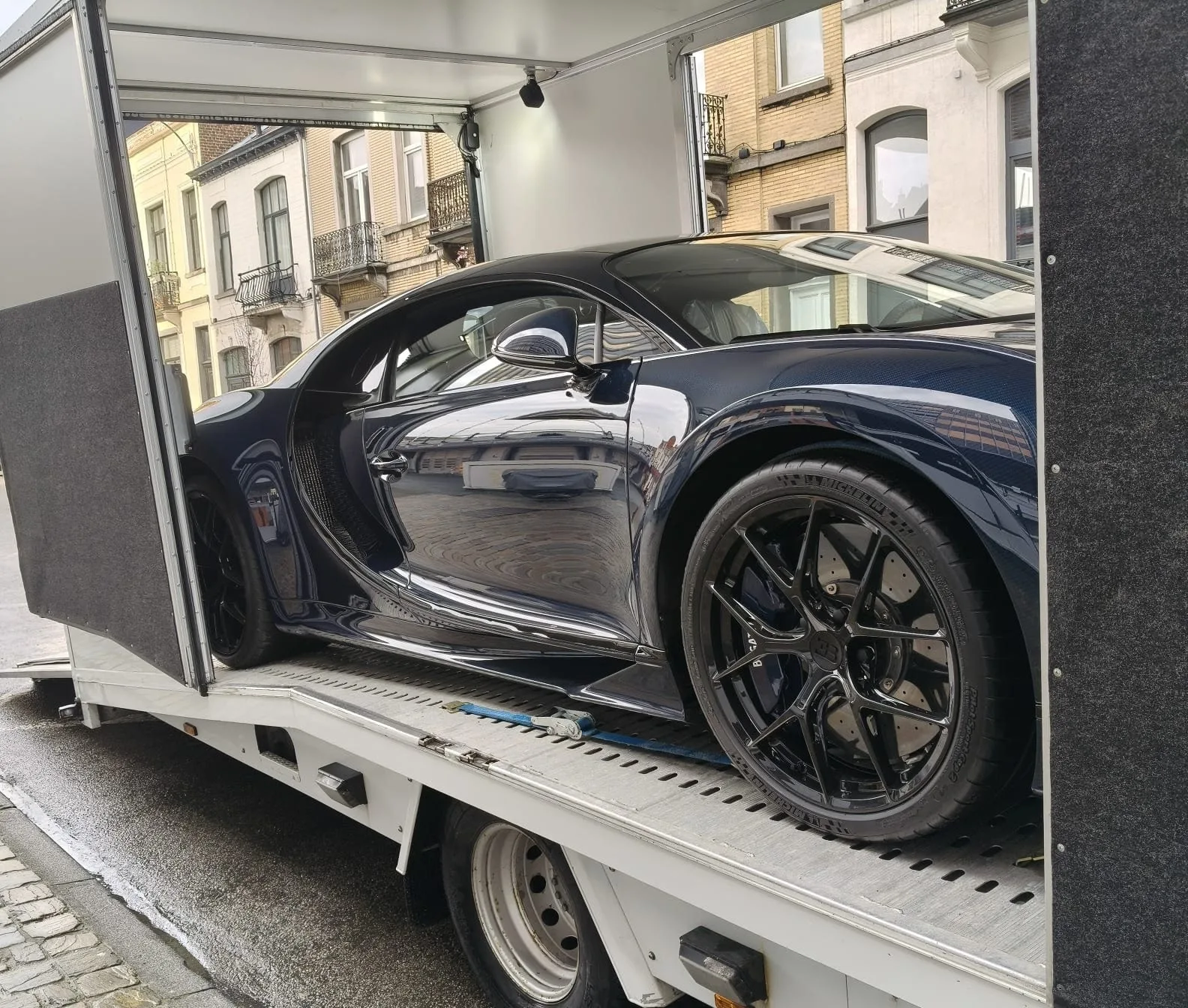
On the deck
A million euros aboard, and four soft straps for its only contact.
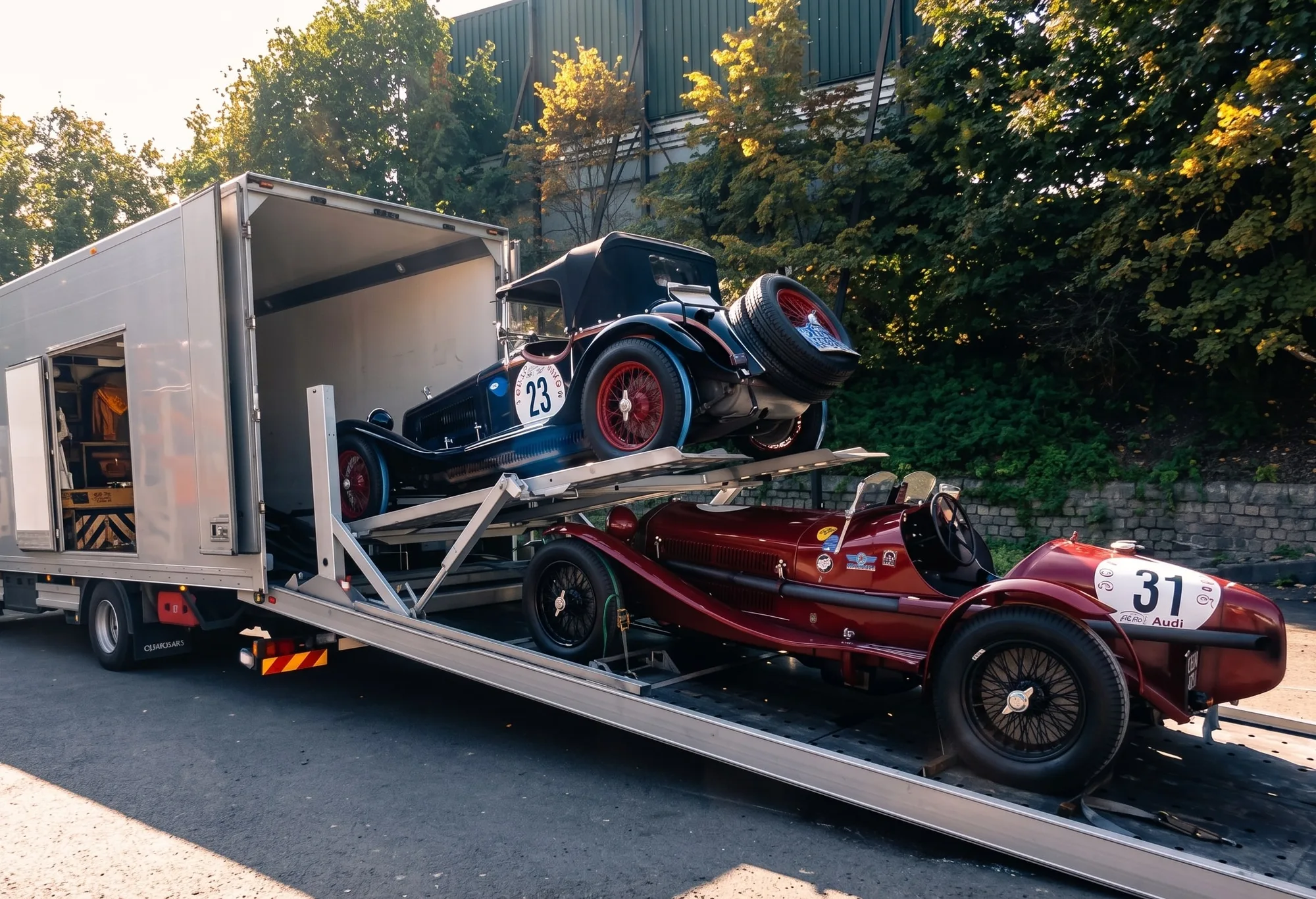
Two prewar racers
Race numbers still on the bodywork: they leave one event for the next.
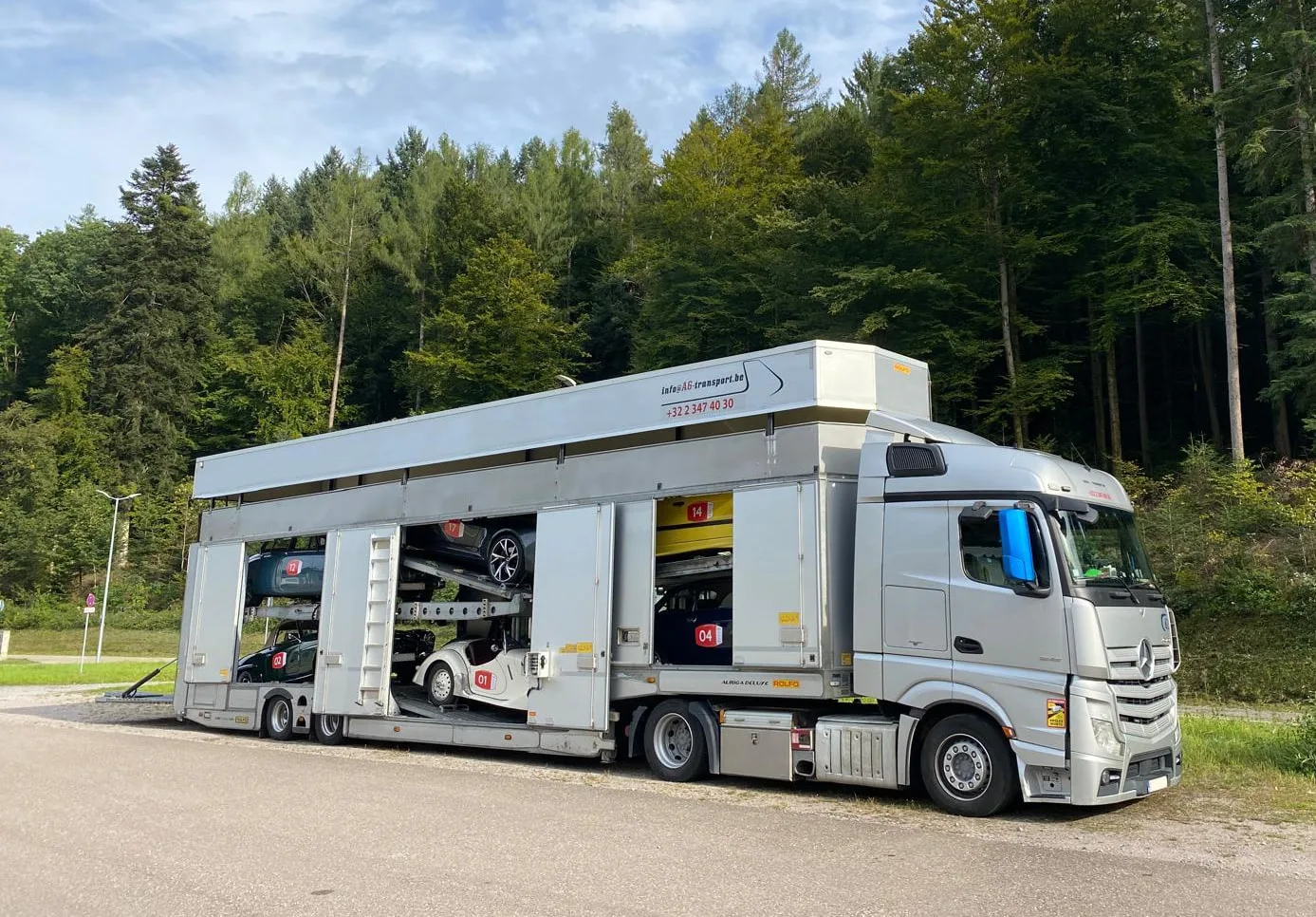
Both decks open
Every car on board has its own deck, its own straps and its own number.
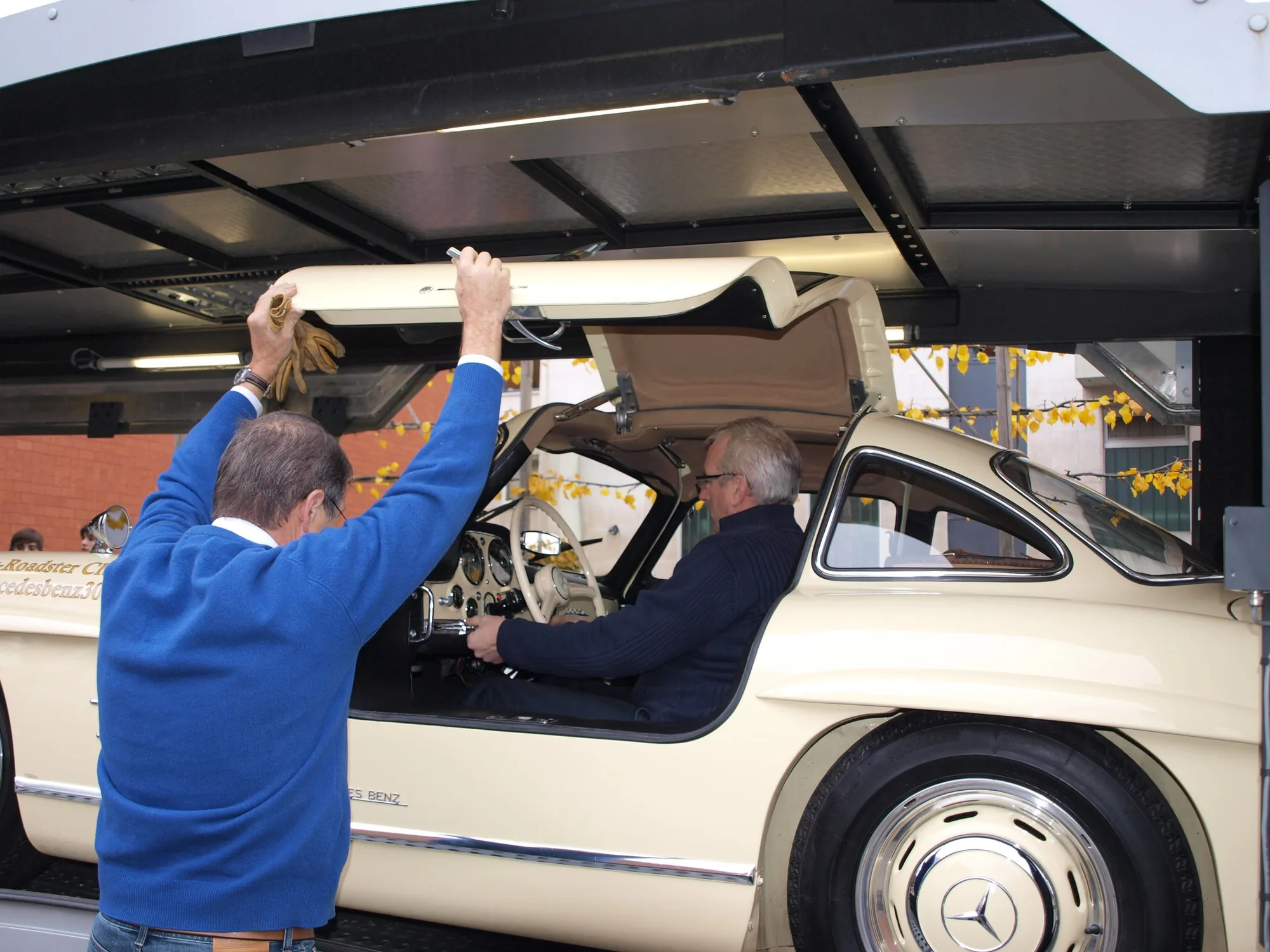
Closing the door
A gullwing door is heavy and hinges at the roof. Two people close it, one holds the frame.
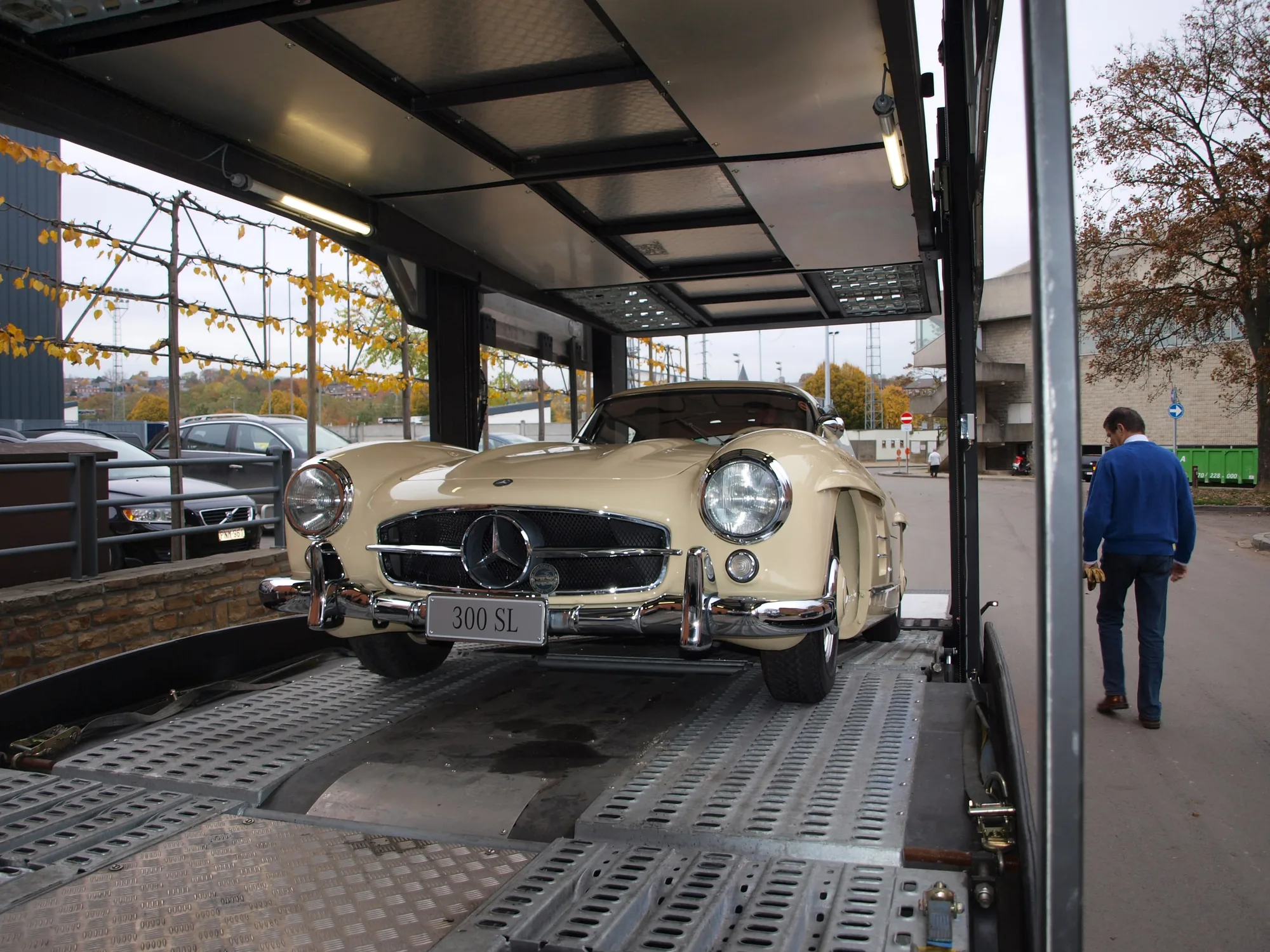
Cream on the lower deck
Painted the colour it left the factory. Everything about the loading assumes that stays true.
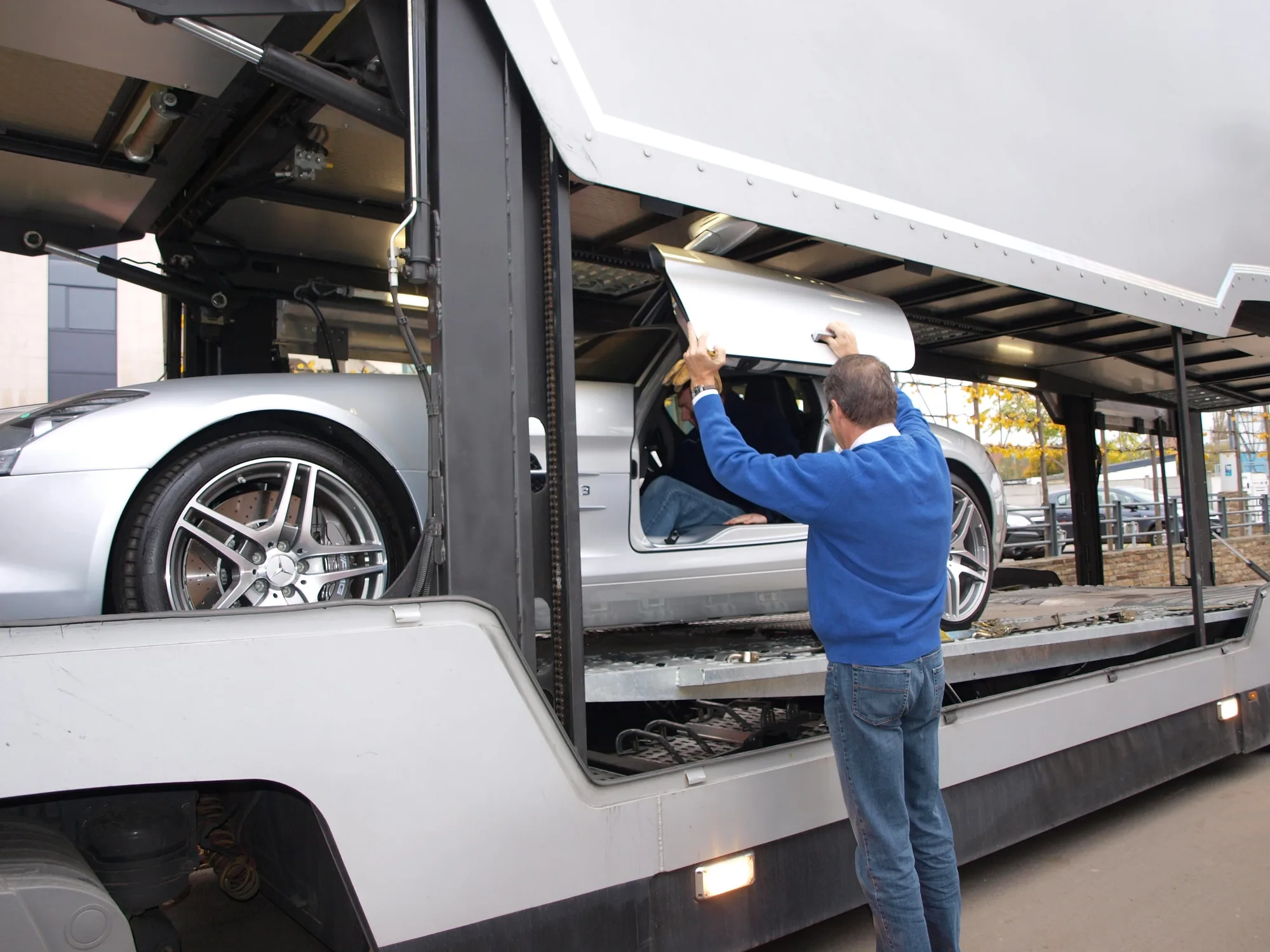
Photographed on arrival
The state of the car is recorded before it moves. It is the only version everyone agrees on.
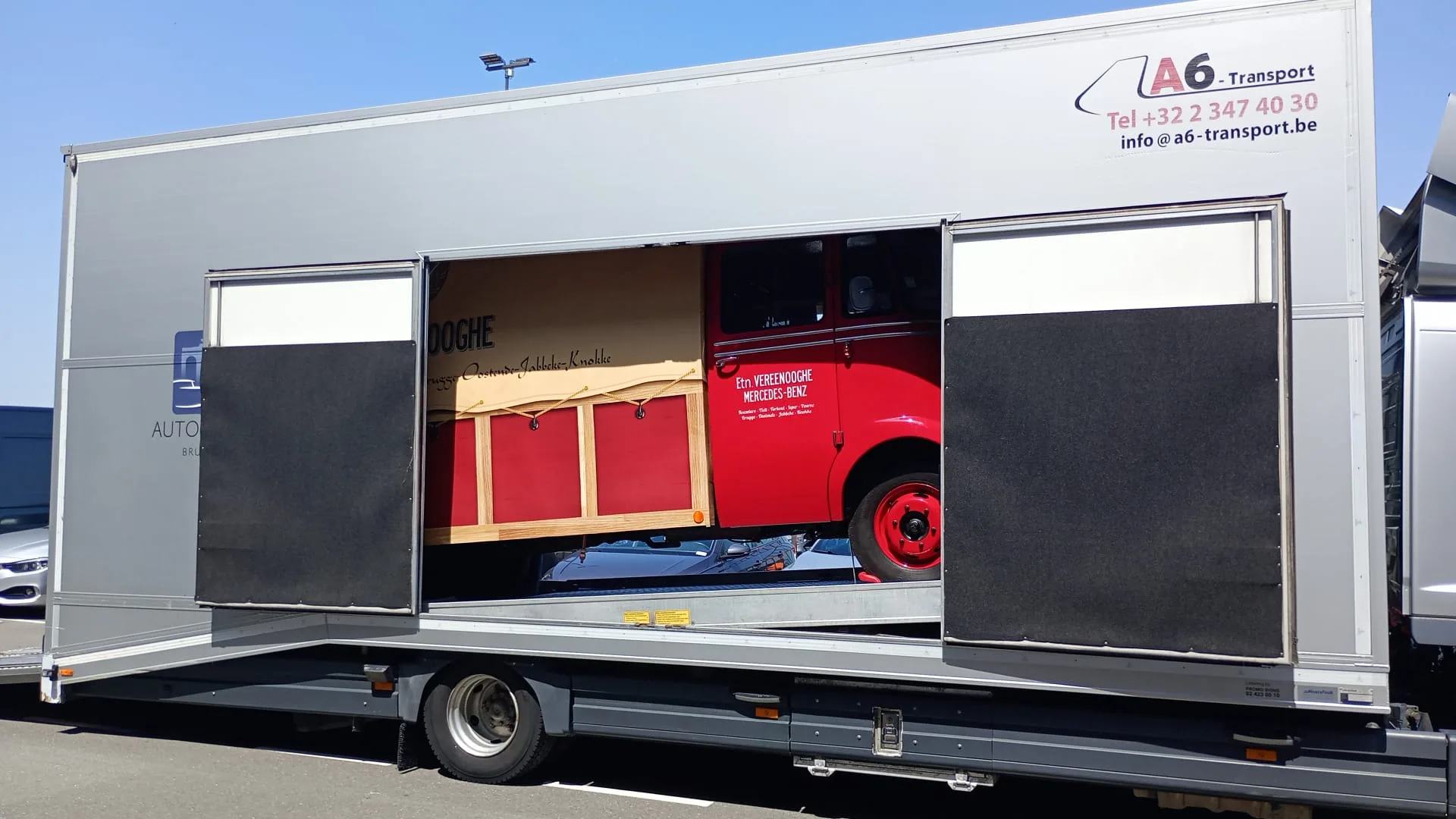
Period van
A vintage commercial gets the same lashing as a sports saloon.
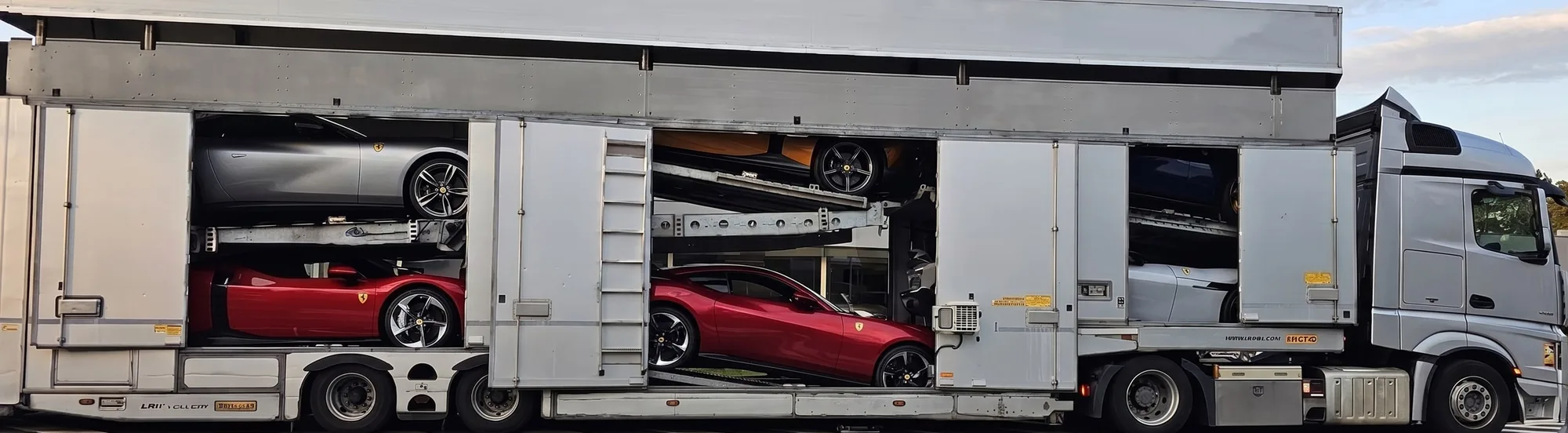
Side doors
Side access saves pulling cars out to reach the one at the back.
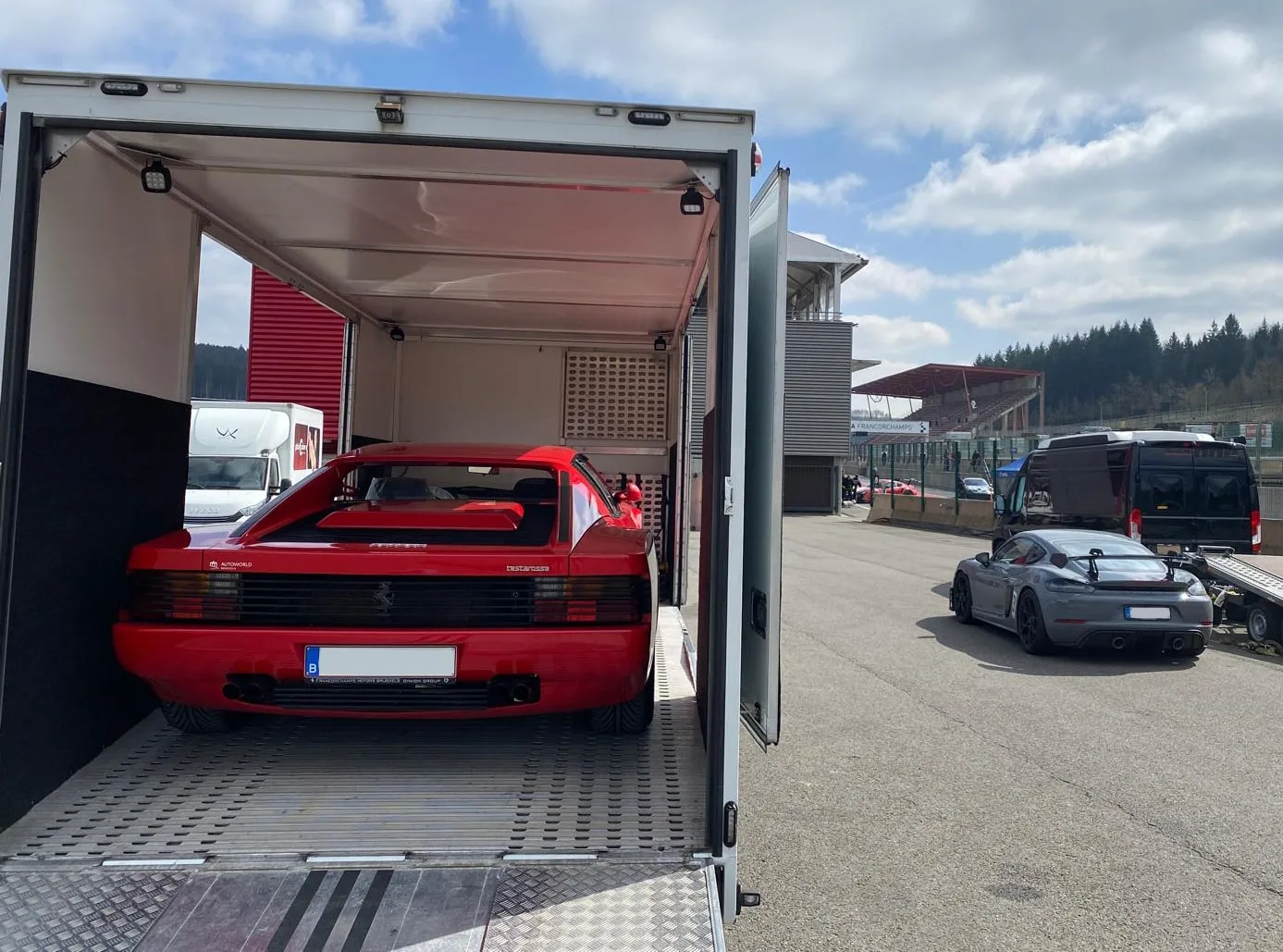
Still on board
Between two sessions the car goes back inside rather than sit in the paddock.
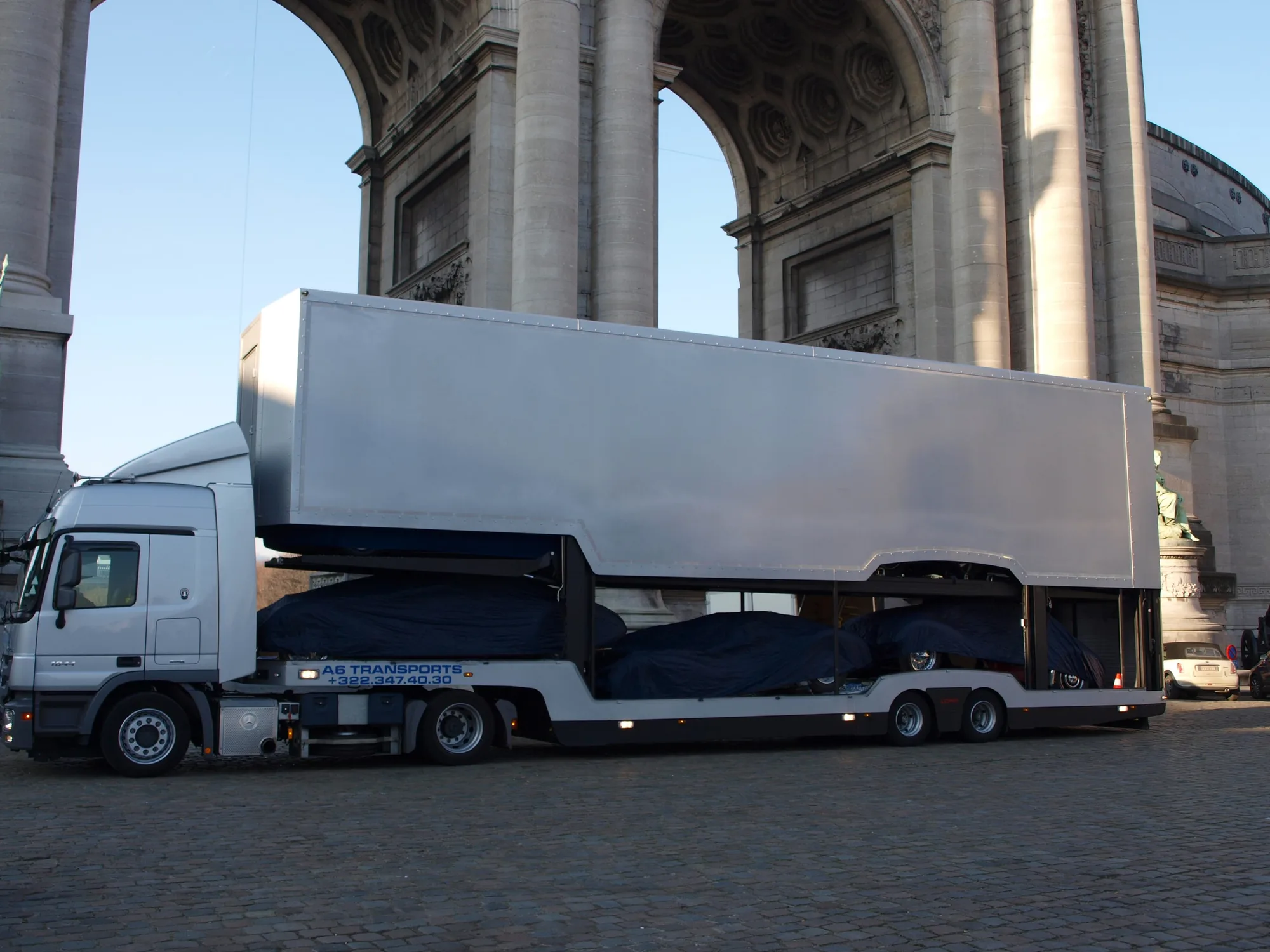
Under the arch
Read the articleClosed on arrival. What is inside is not announced to the square.
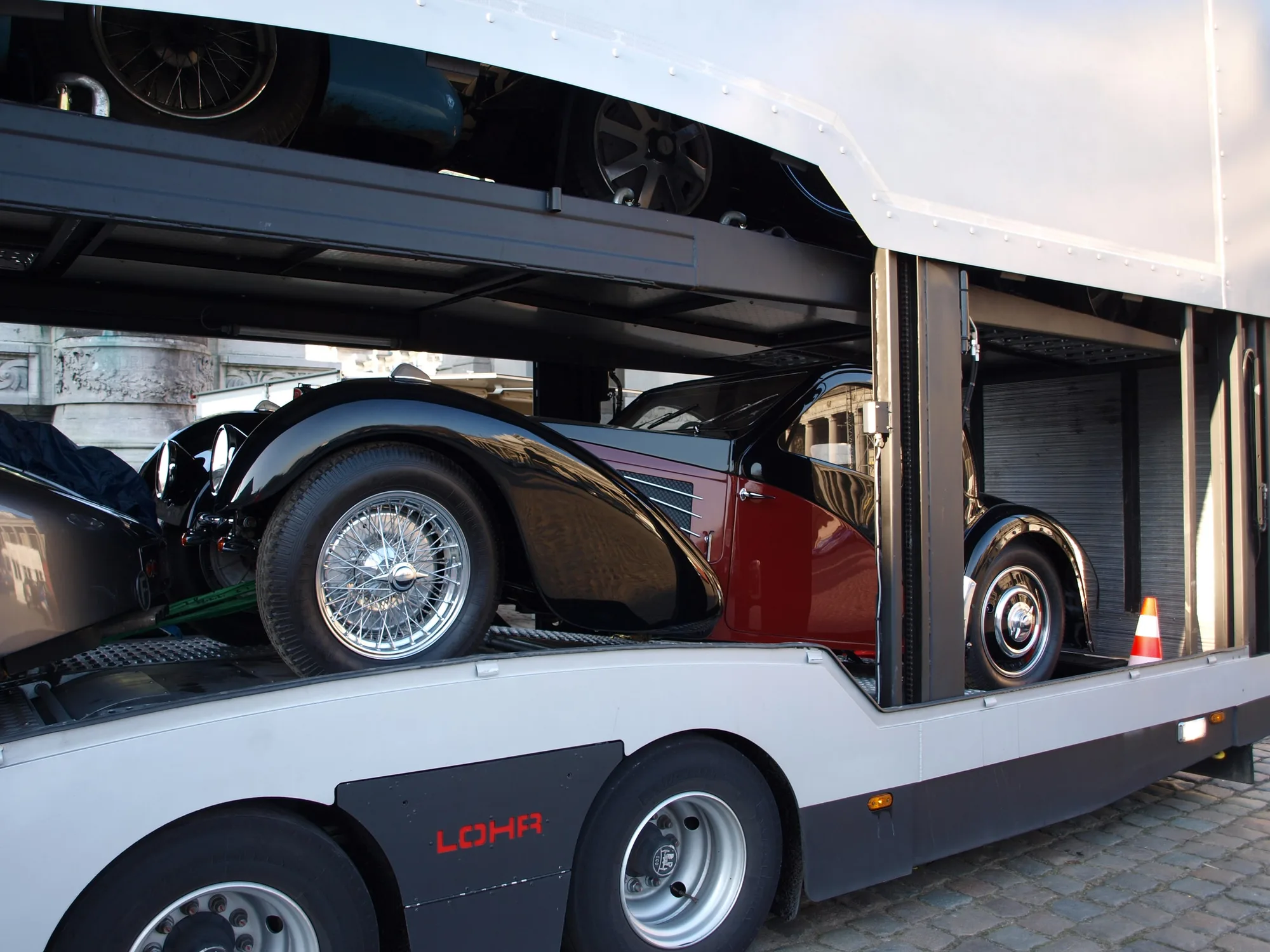
Bugatti under the arch
A car of this rarity is unloaded where it will be shown, and nowhere in between.
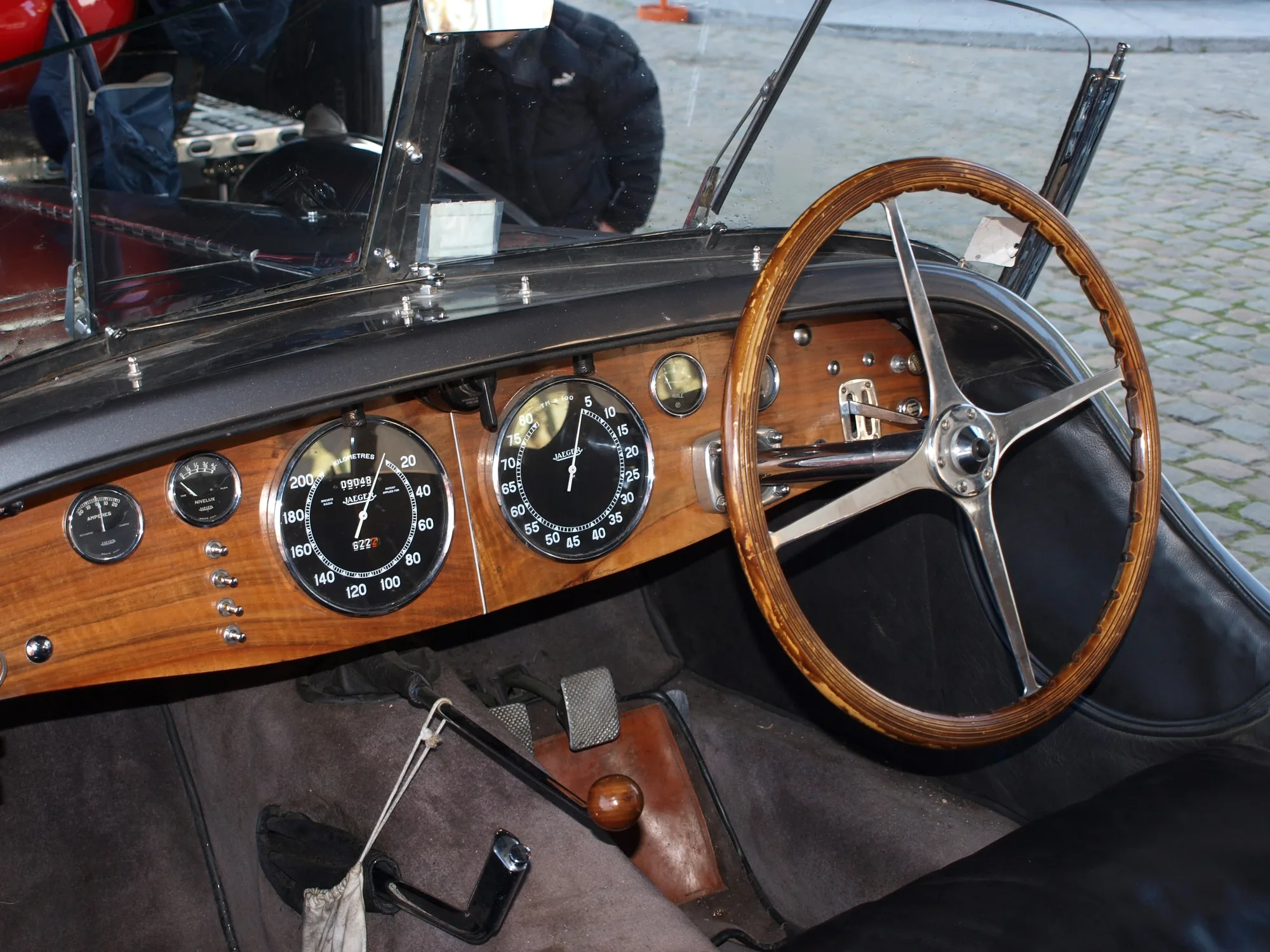
Wood and dials
No servo, no synchromesh, a handbrake outside the body. Driving it aboard is a skill of its own.
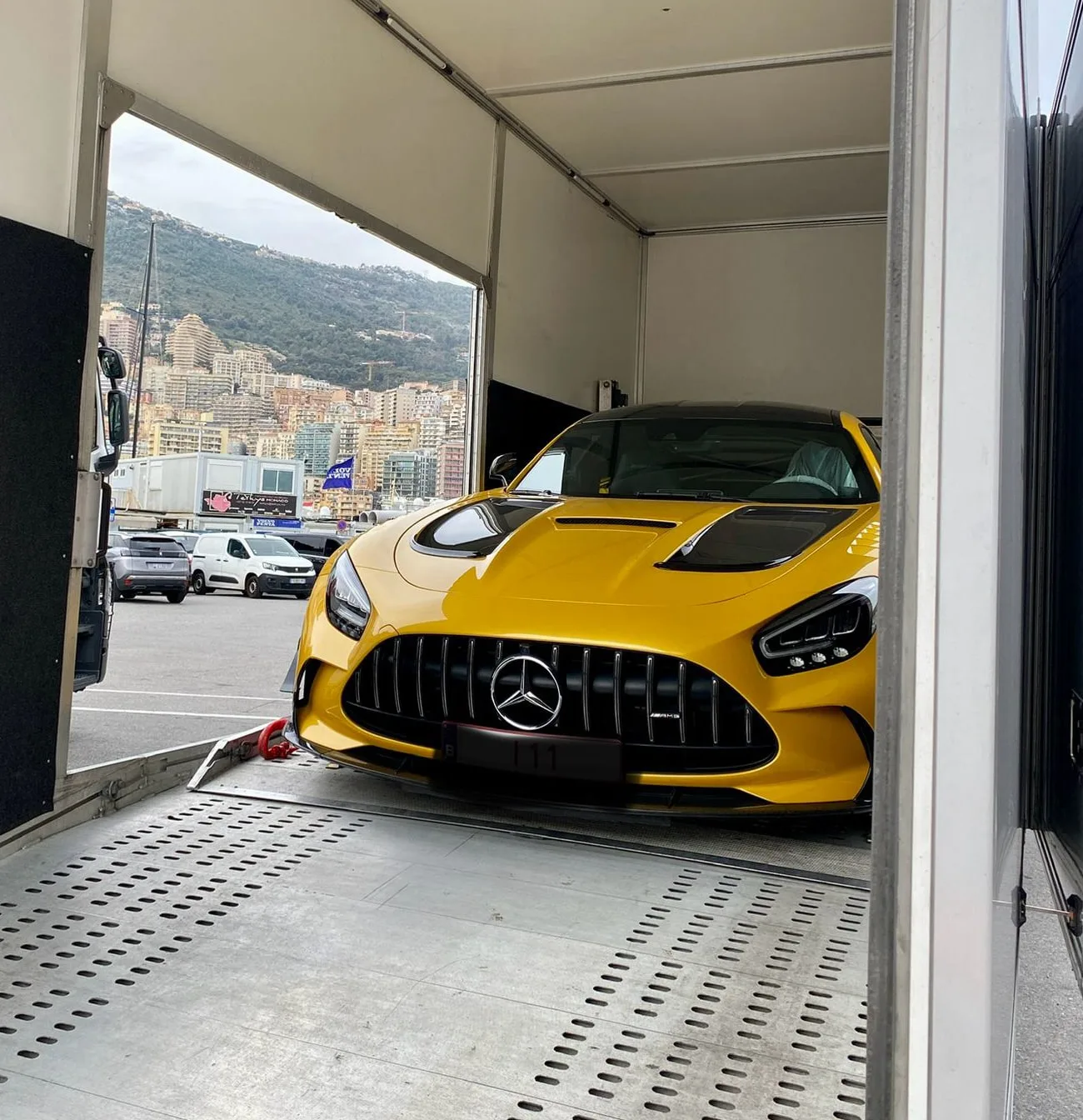
Before closing up
A last look inside: one car, four straps, nothing else aboard.
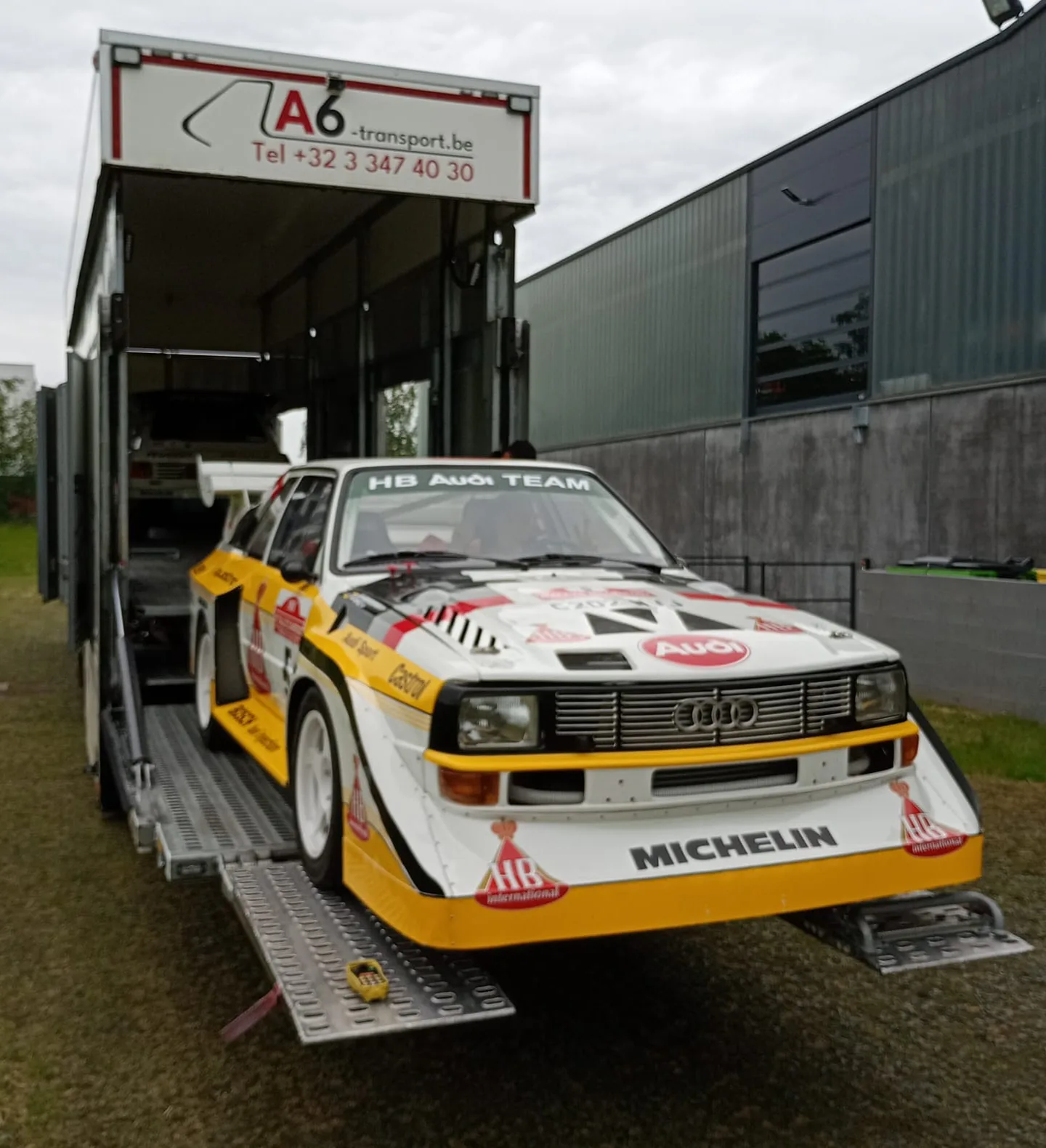
On the ramps
Low ground clearance, calculated gradient: the S1 comes out without touching.
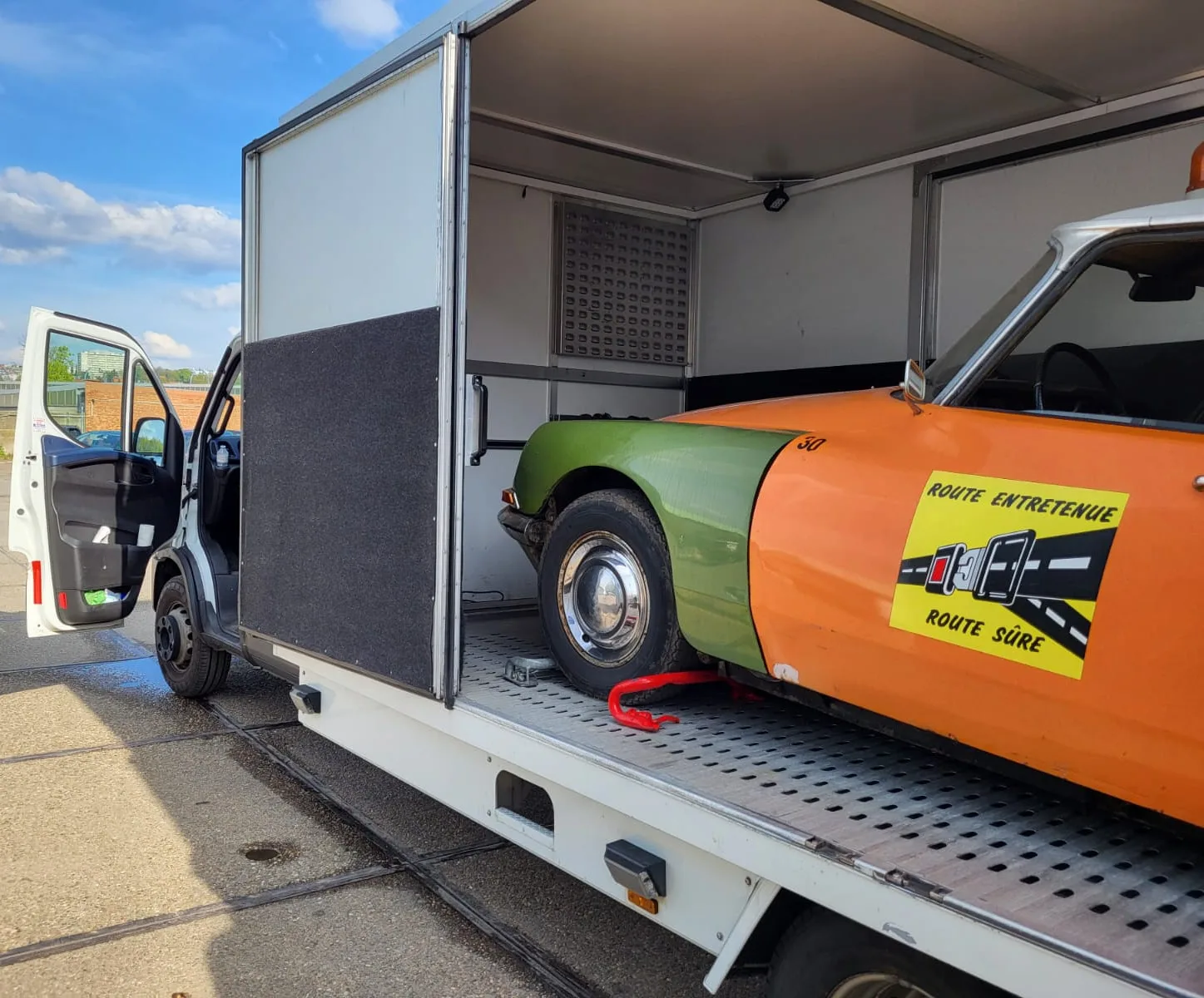
Original livery
A road-safety DS on its way to an exhibition, decals intact.
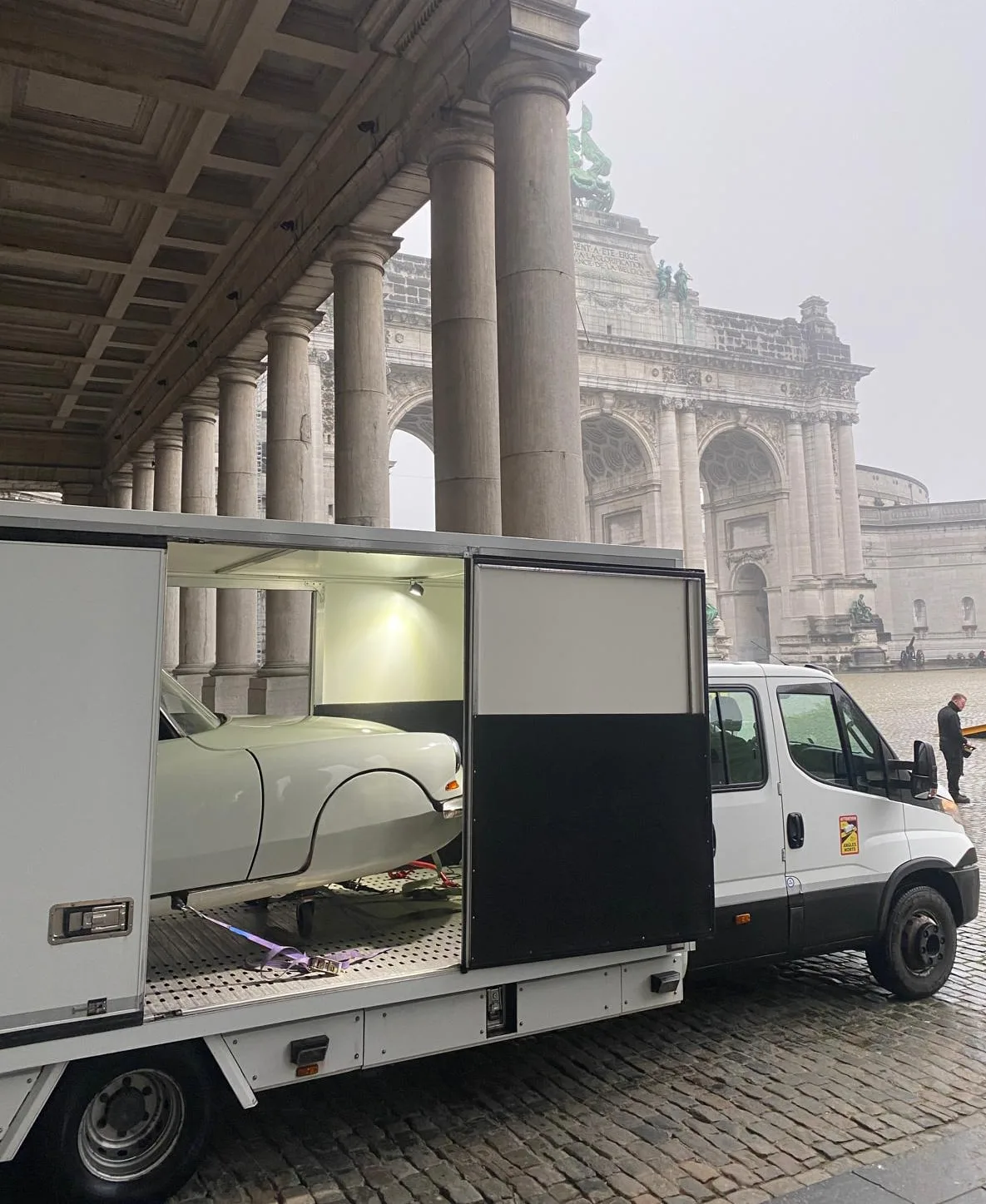
Under the colonnade
Read the articleA small enclosed truck parks where a semi-trailer would never be allowed.
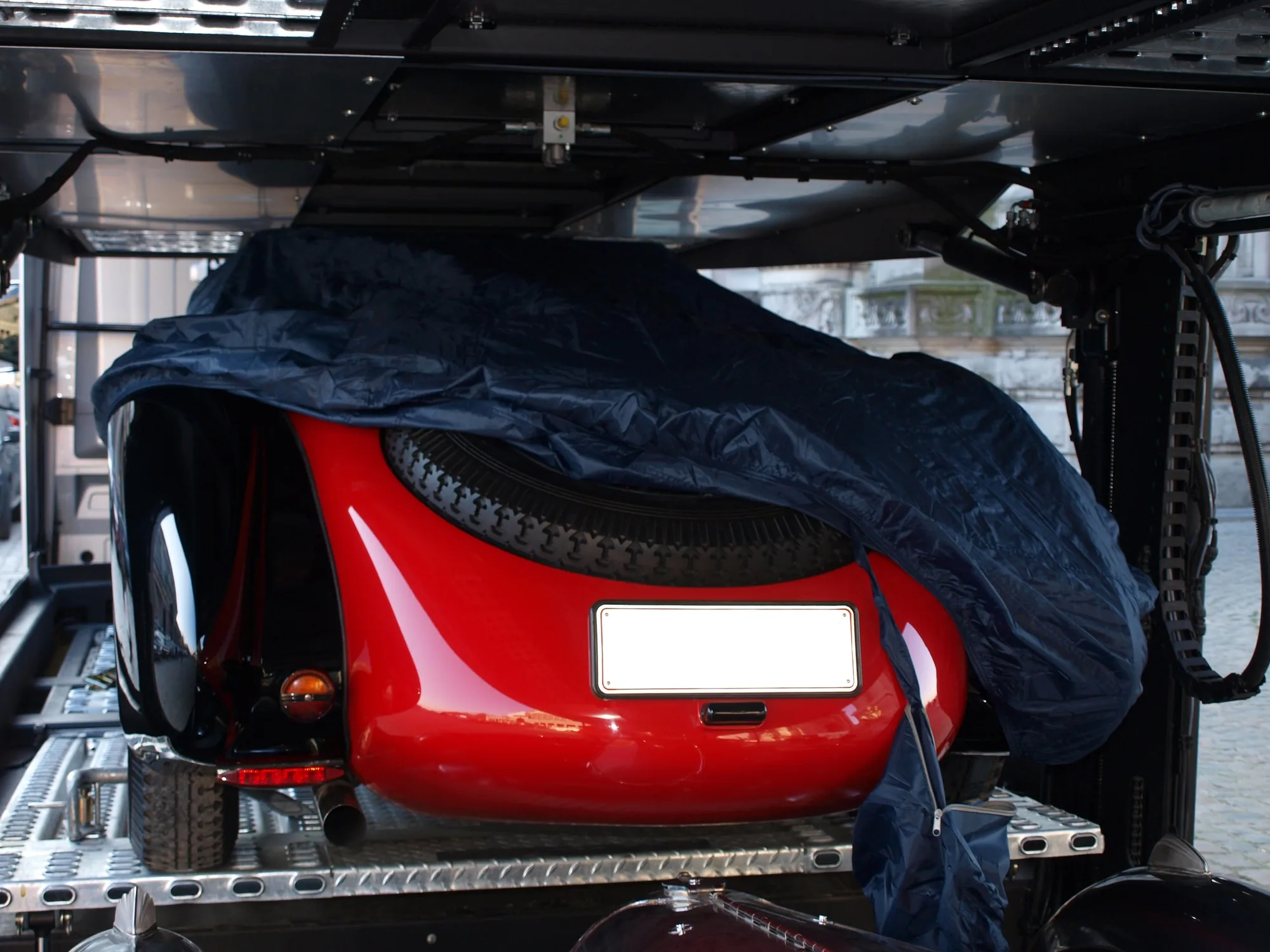
Half covered
An open car keeps its cover until the last minute, even inside a closed truck.
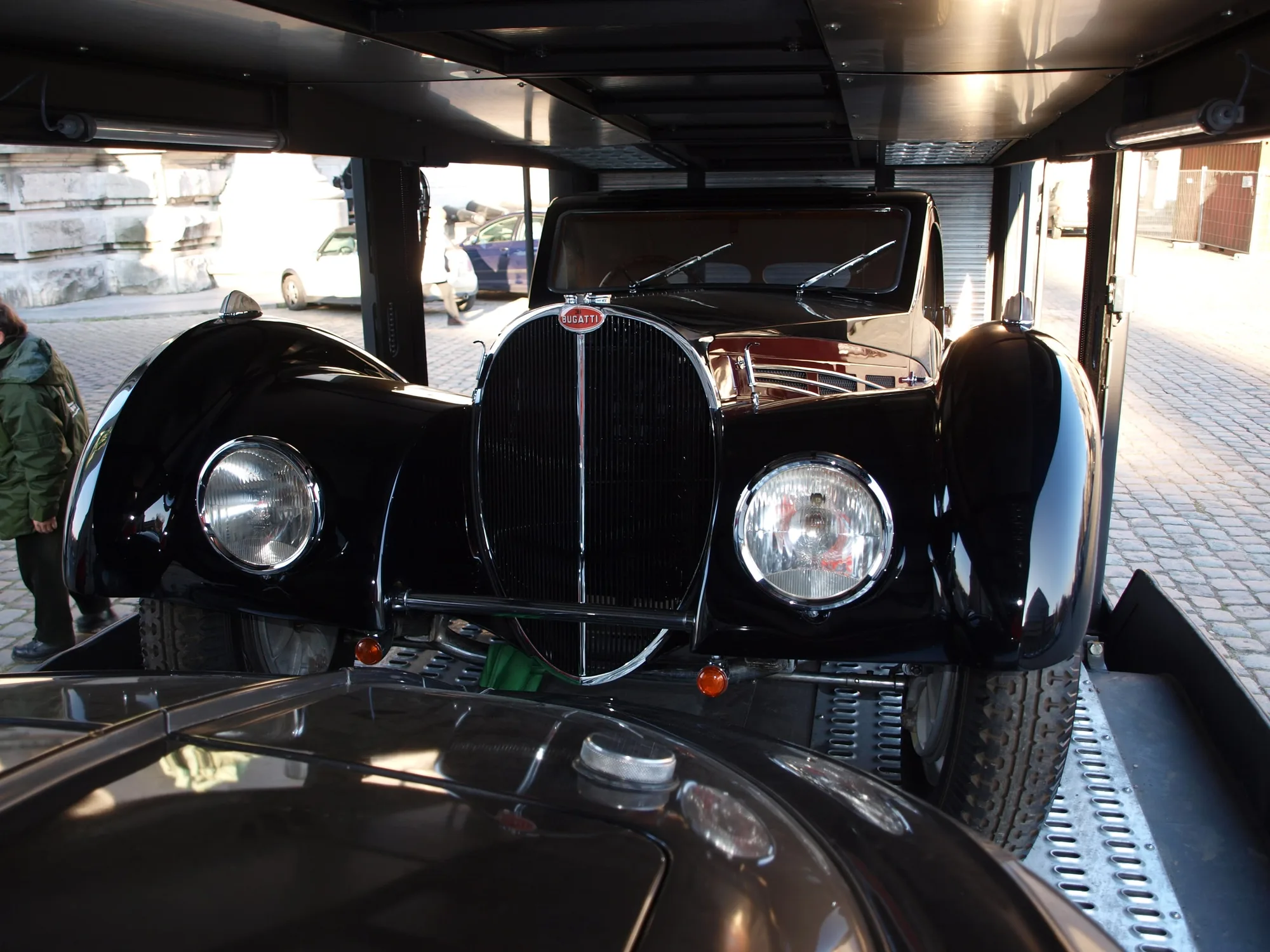
The horseshoe grille
Every panel on this car was beaten by hand. There is no supplier for a replacement.
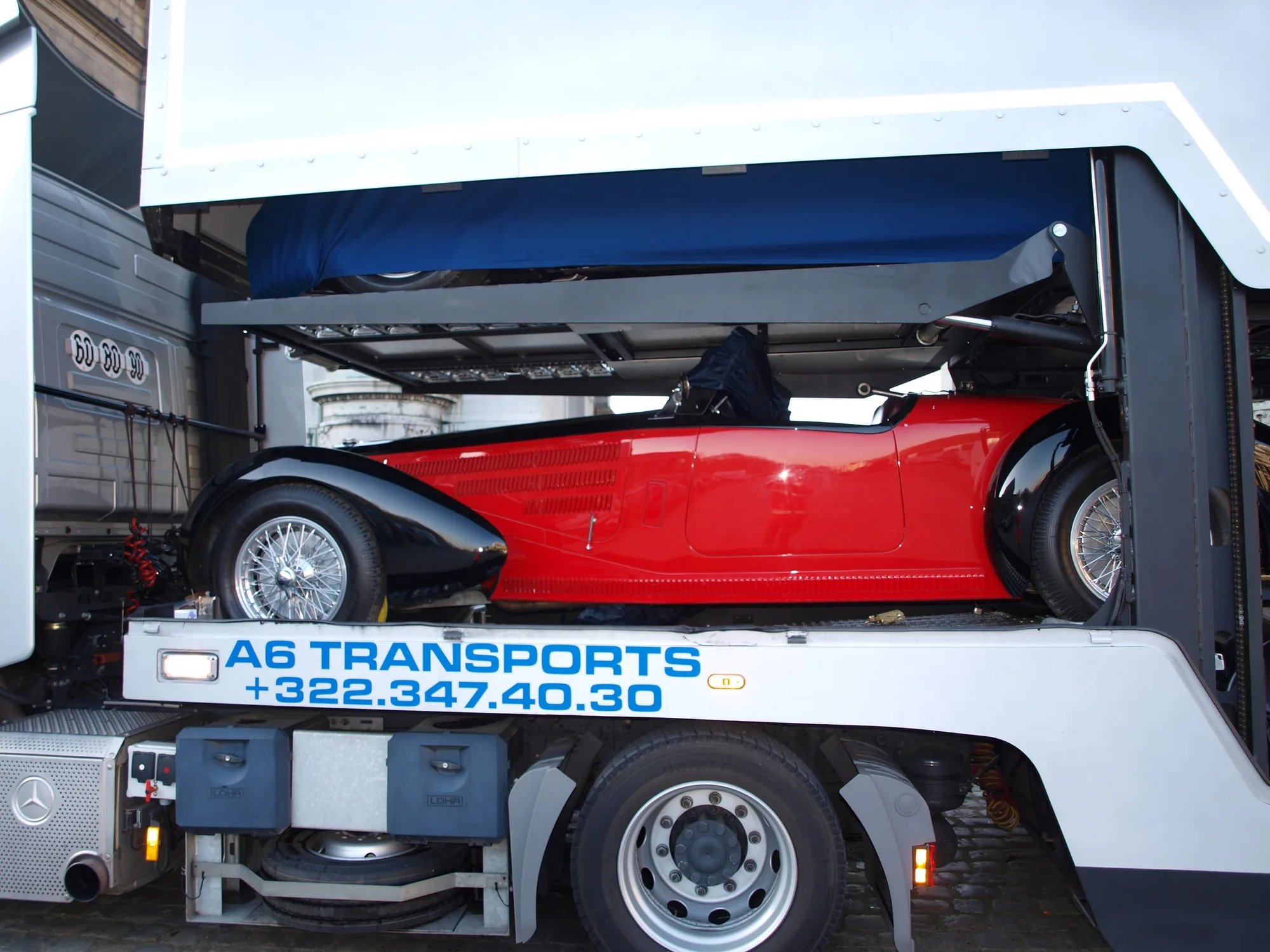
Upper deck
Up top, out of reach and out of the way. It comes down last, when the square is clear.
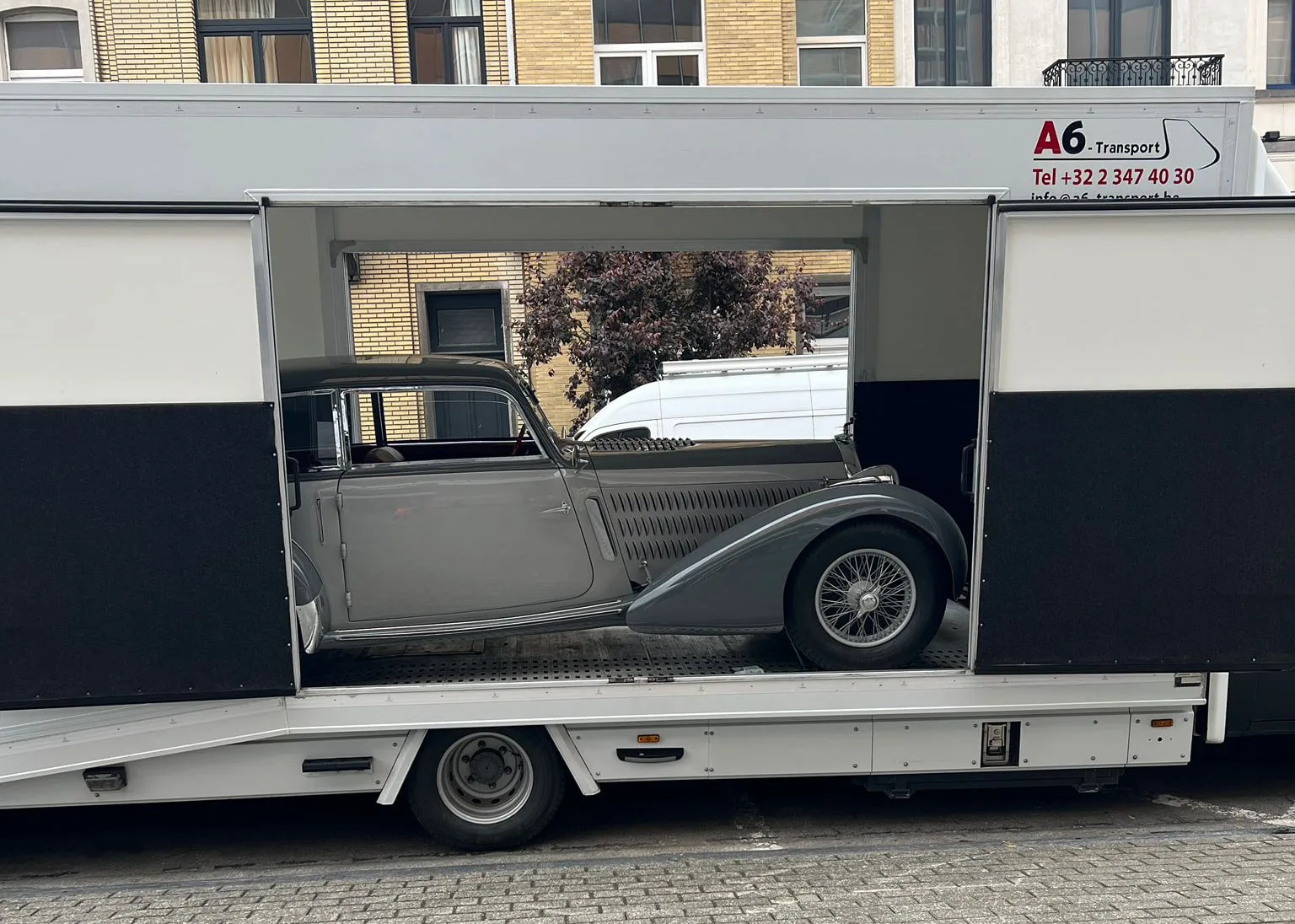
Under cover
An eighty-year-old body sees daylight again only on arrival.
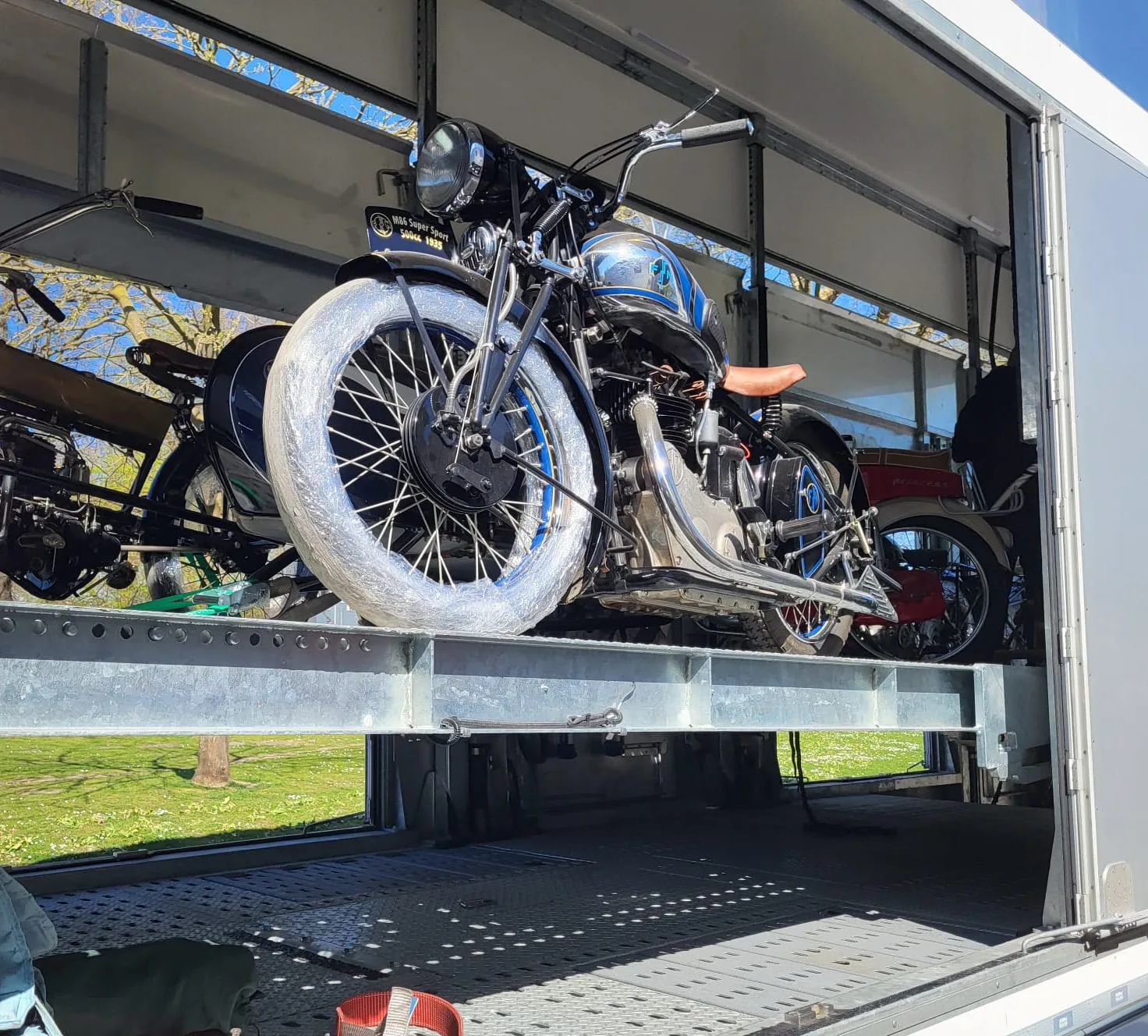
Top deck
A motorcycle does not travel lying down: it stands, wheels chocked.
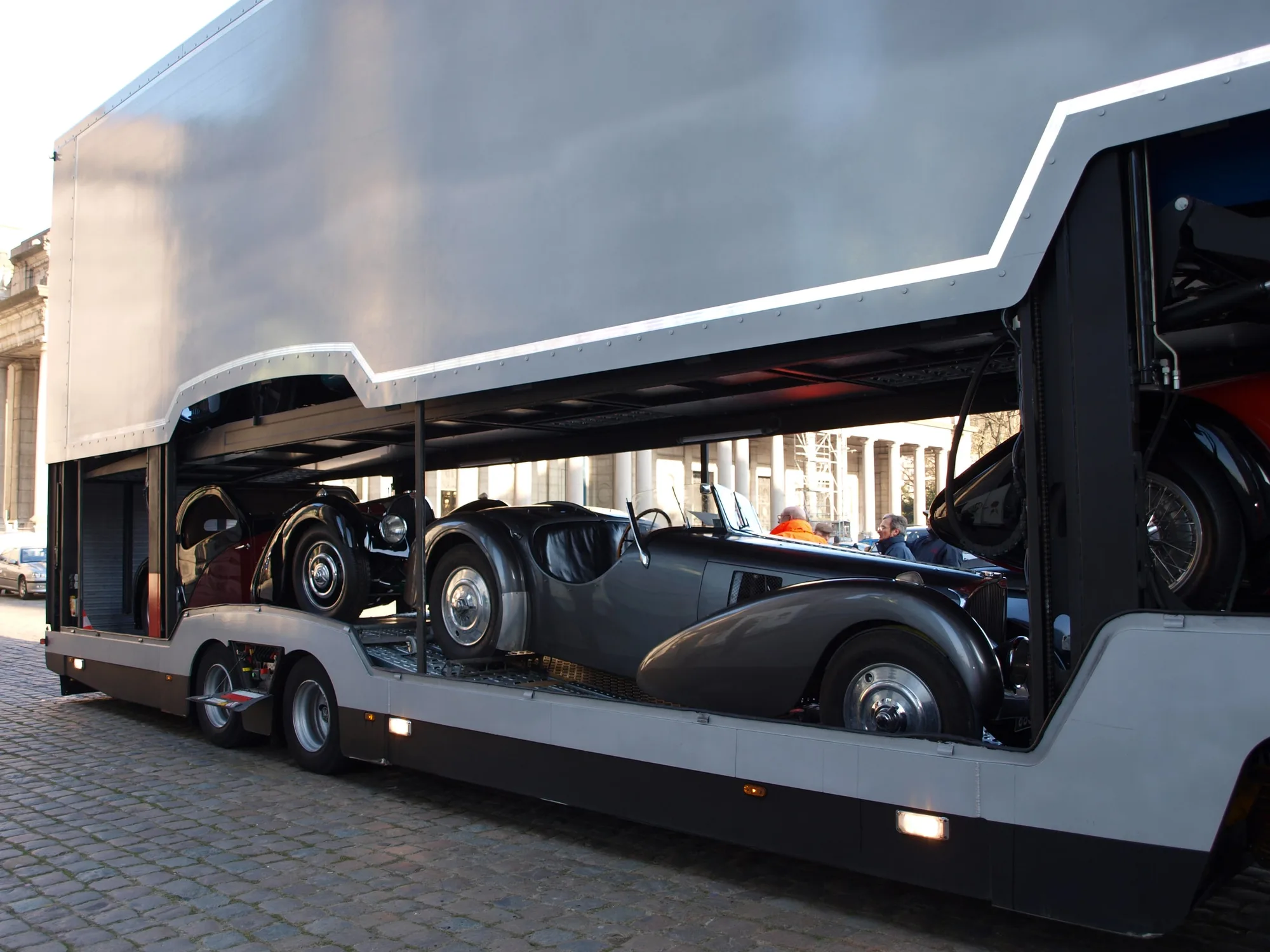
Streamlined body
Bodywork drawn for speed in the nineteen thirties, on a deck drawn for it seventy years later.
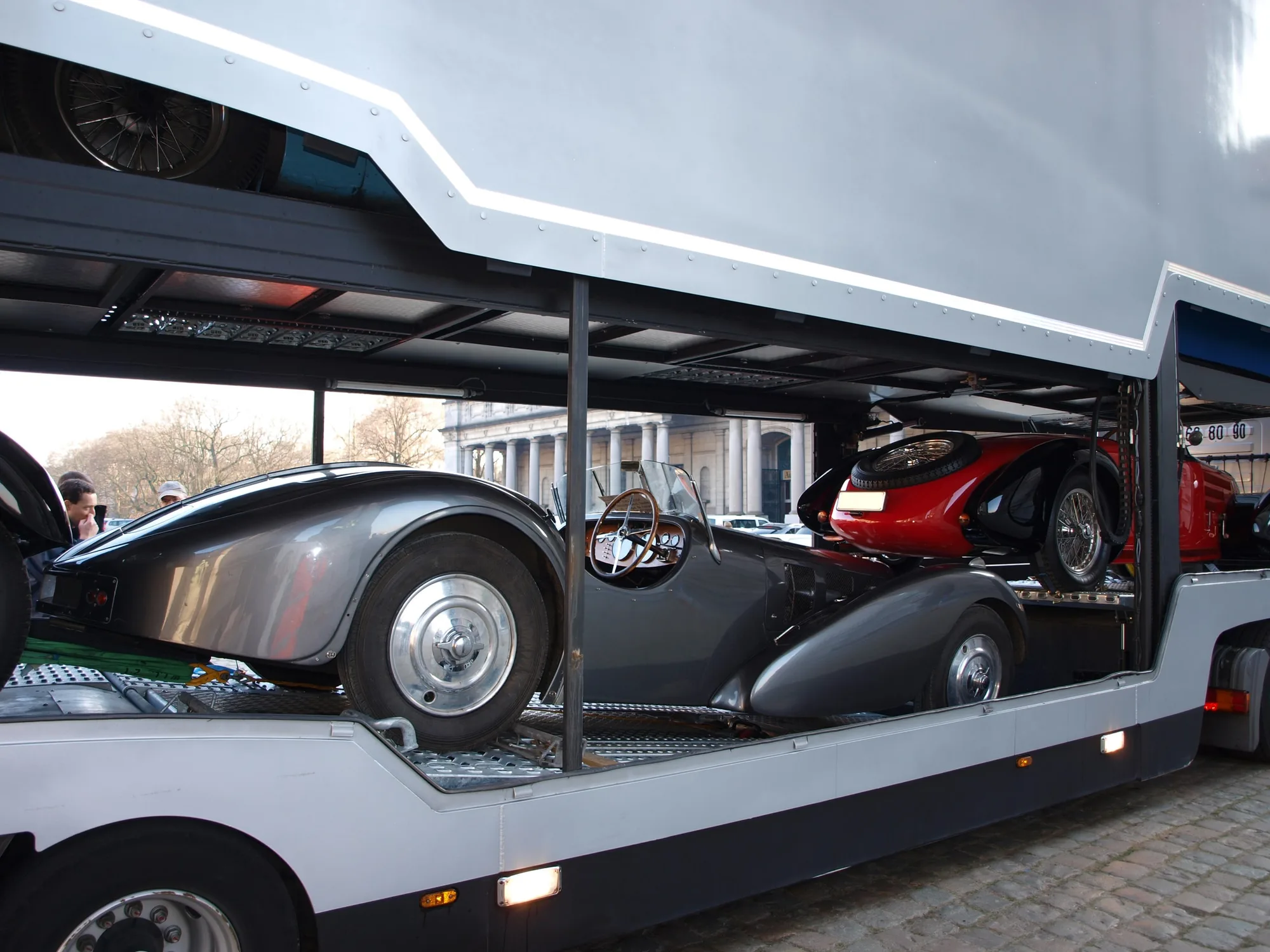
Two on board
The side opens along the whole length, so a car can be reached without moving its neighbour.
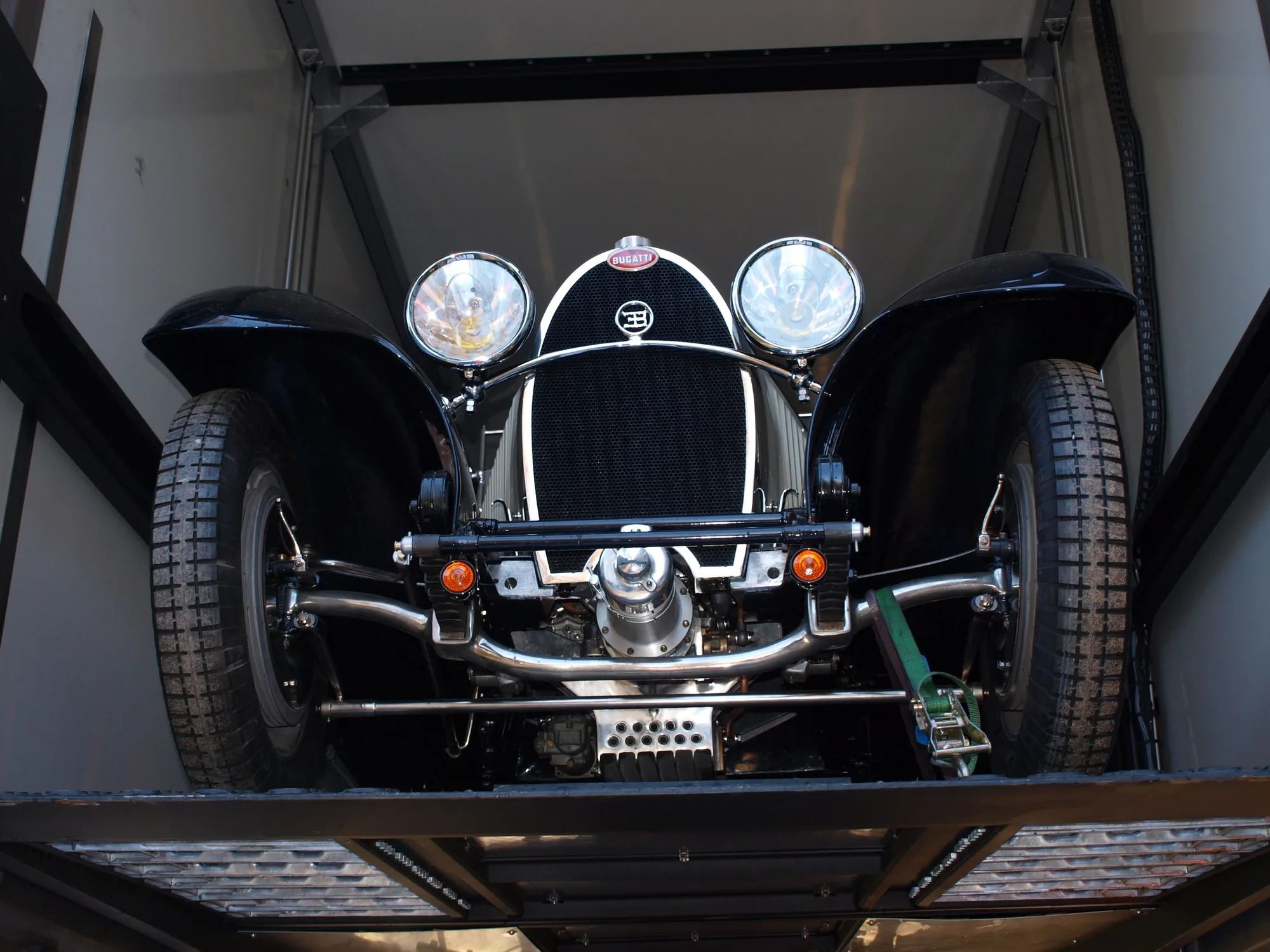
Grand prix car
Cable brakes, a bolster tank, almost no bodywork. Strapped by the tyres, like the rest.
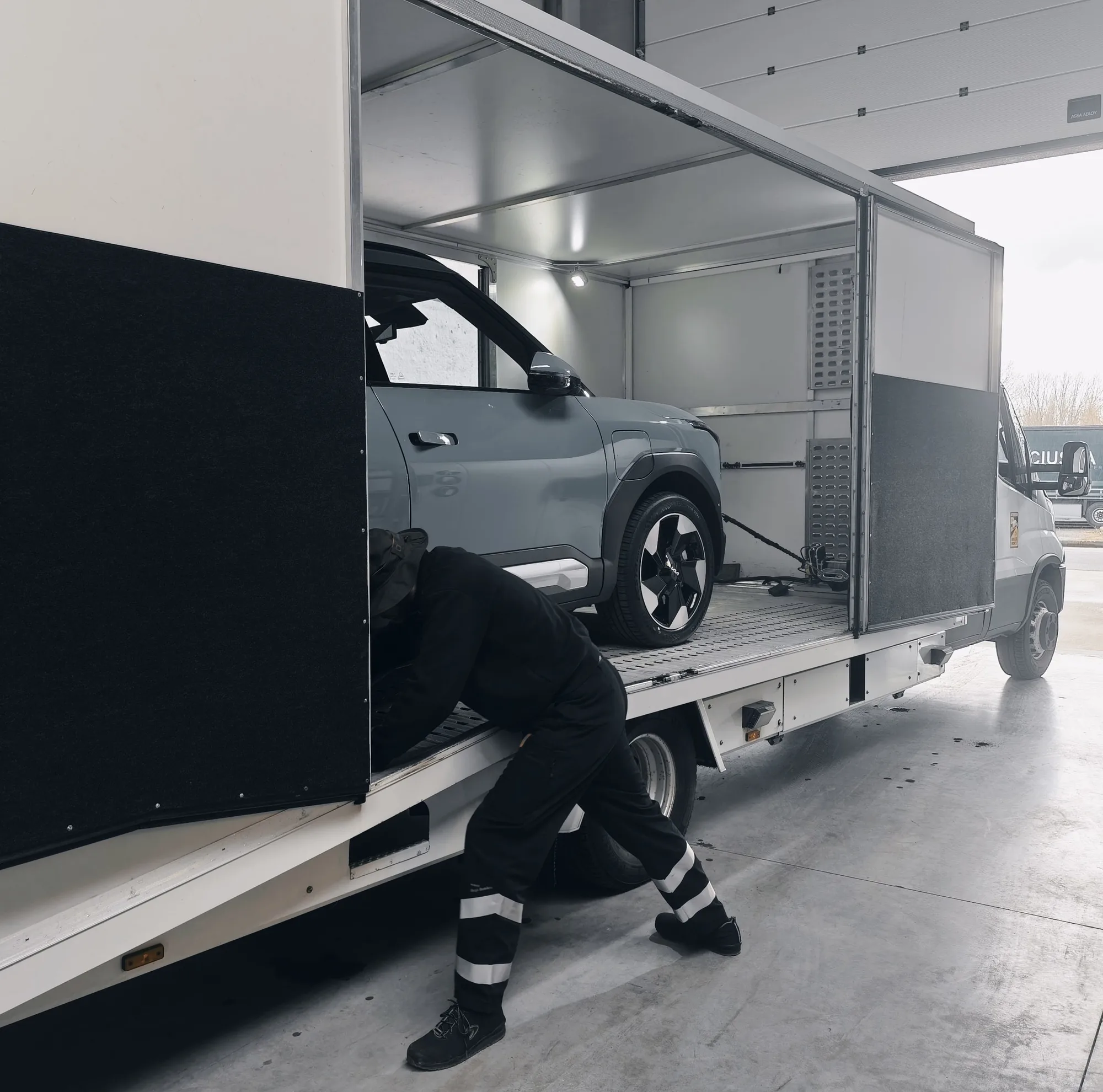
Electric SUV
A new car gets the same precautions as an old one.
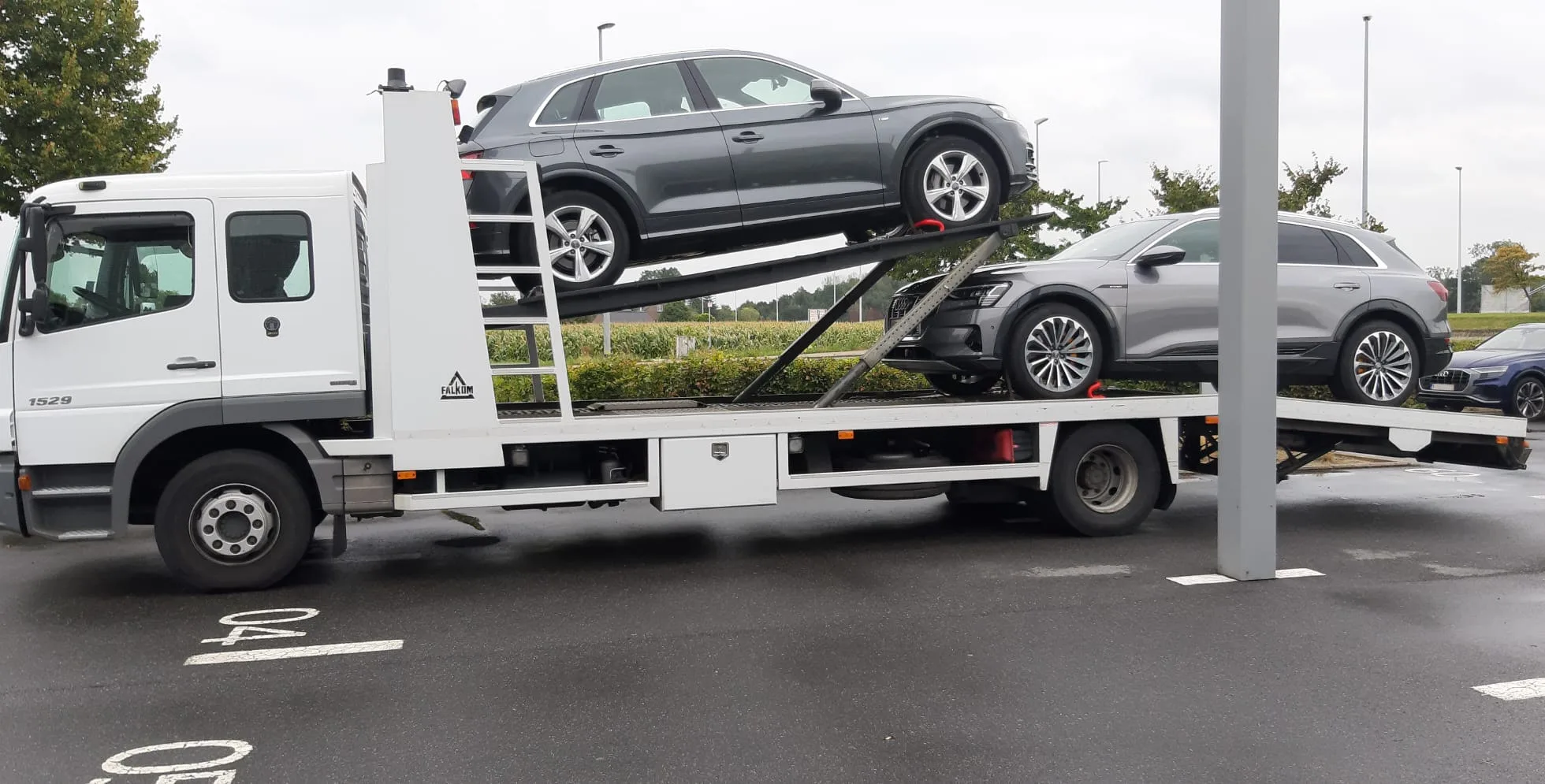
Two SUVs, one run
For a current car on a short run, open transport is the sensible choice.
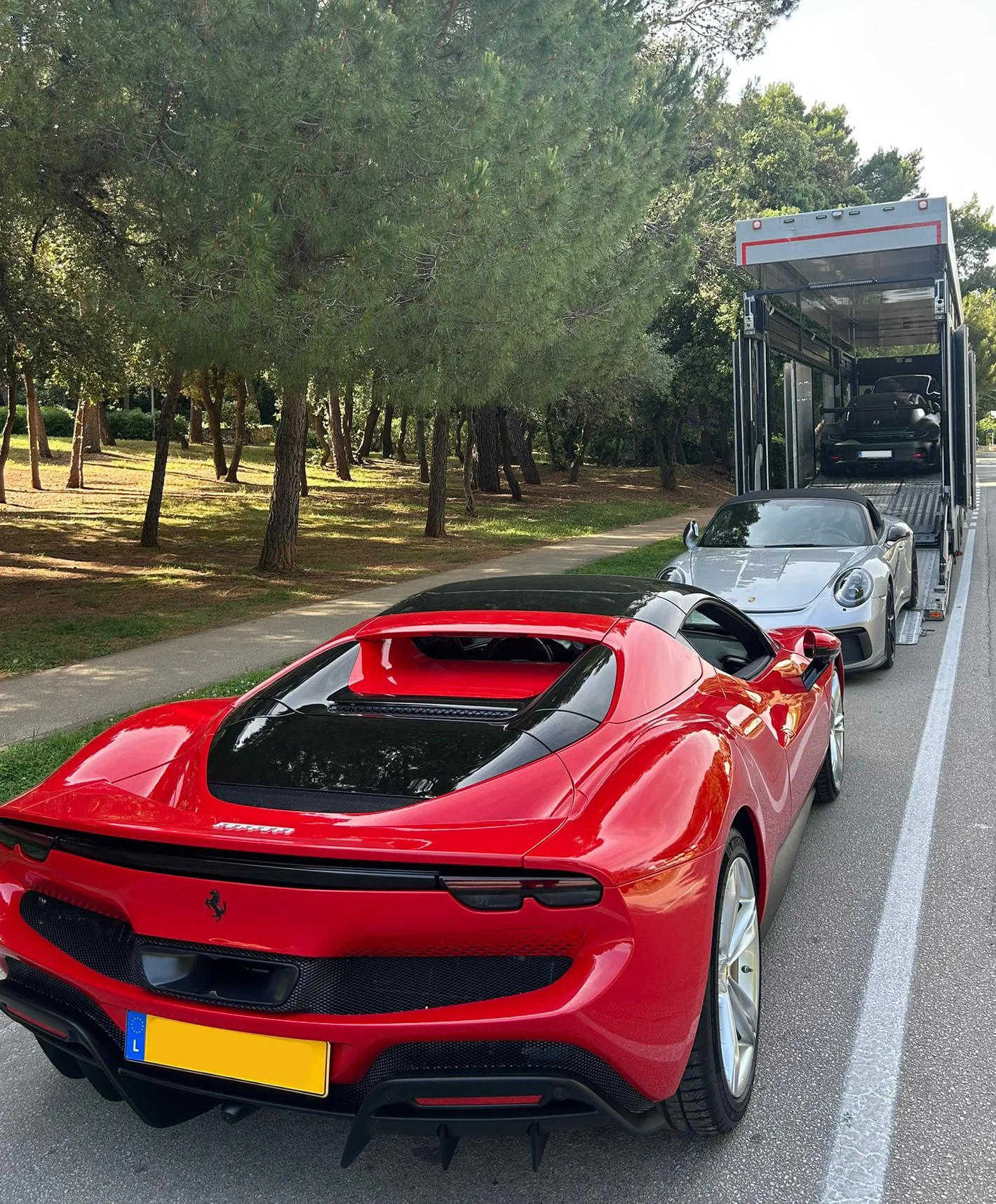
Unloaded en route
A 296 GTS and a 911 handed back at the roadside, engines cold.
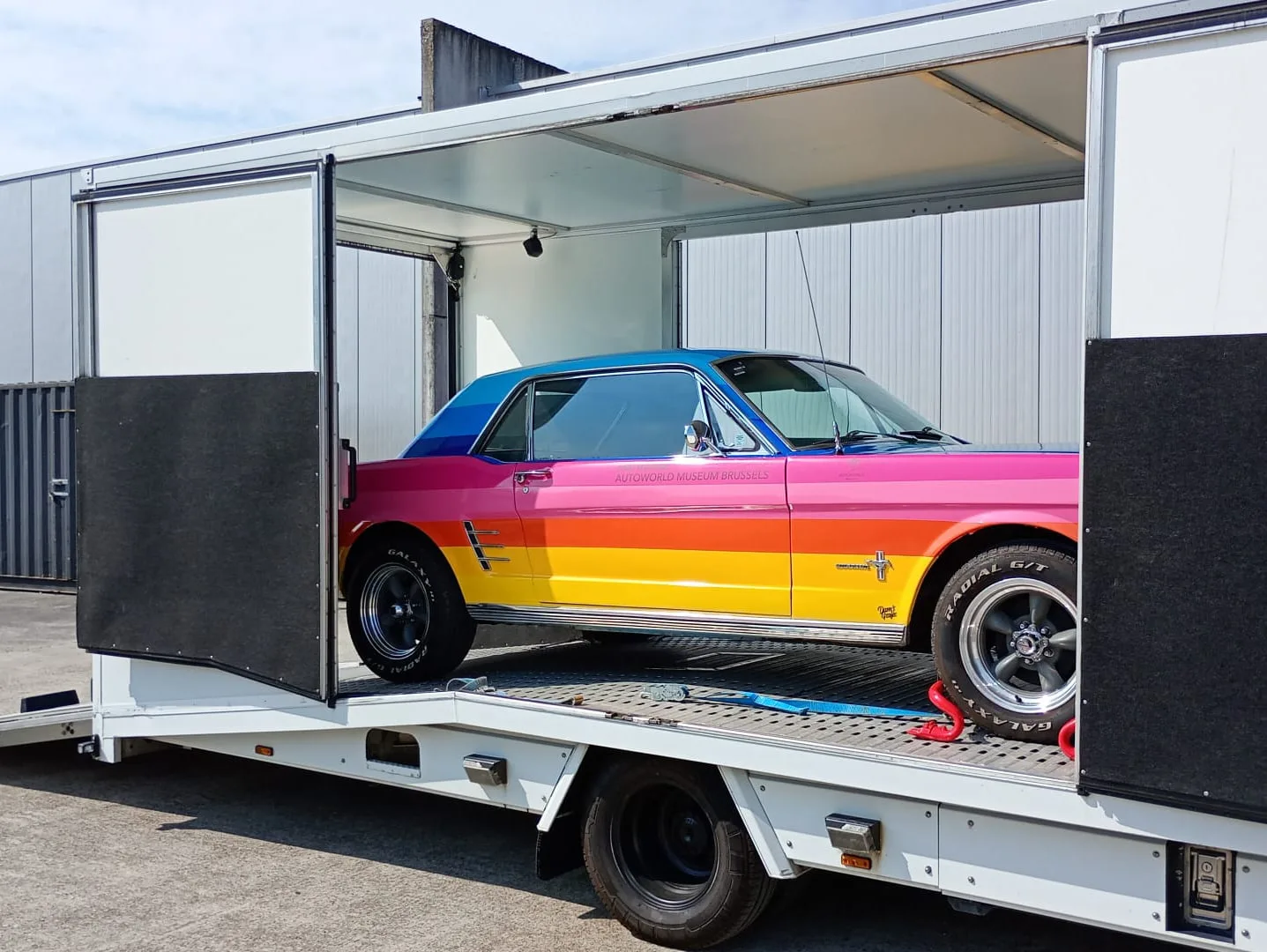
A rolling artwork
Carried like an exhibition piece, because that is what it is.
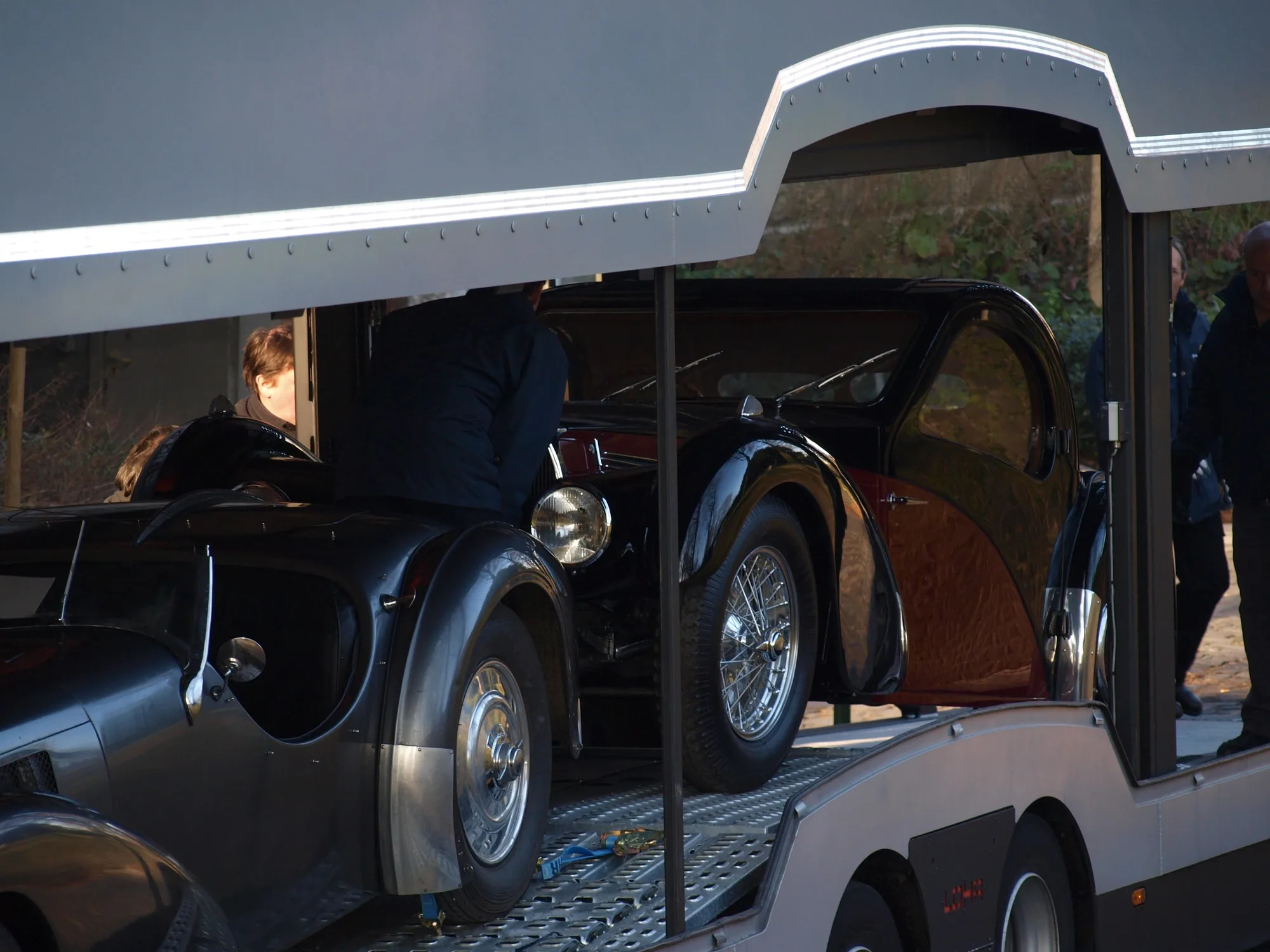
An audience at the ramp
Unloading in public is part of the job. It changes nothing about how it is done.
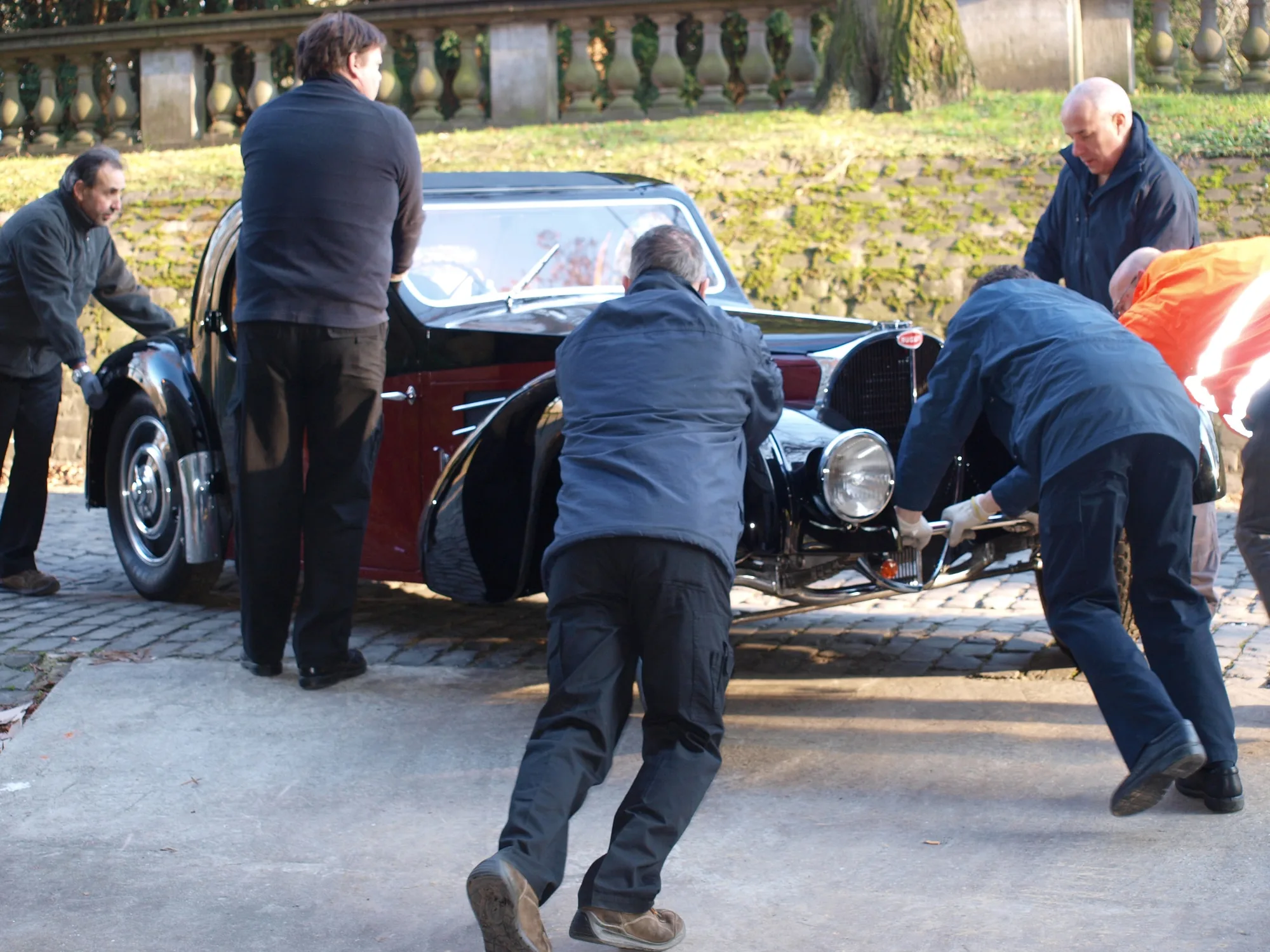
Pushed, not driven
Starting a cold prewar engine for thirty metres is a risk. Four backs are cheaper.
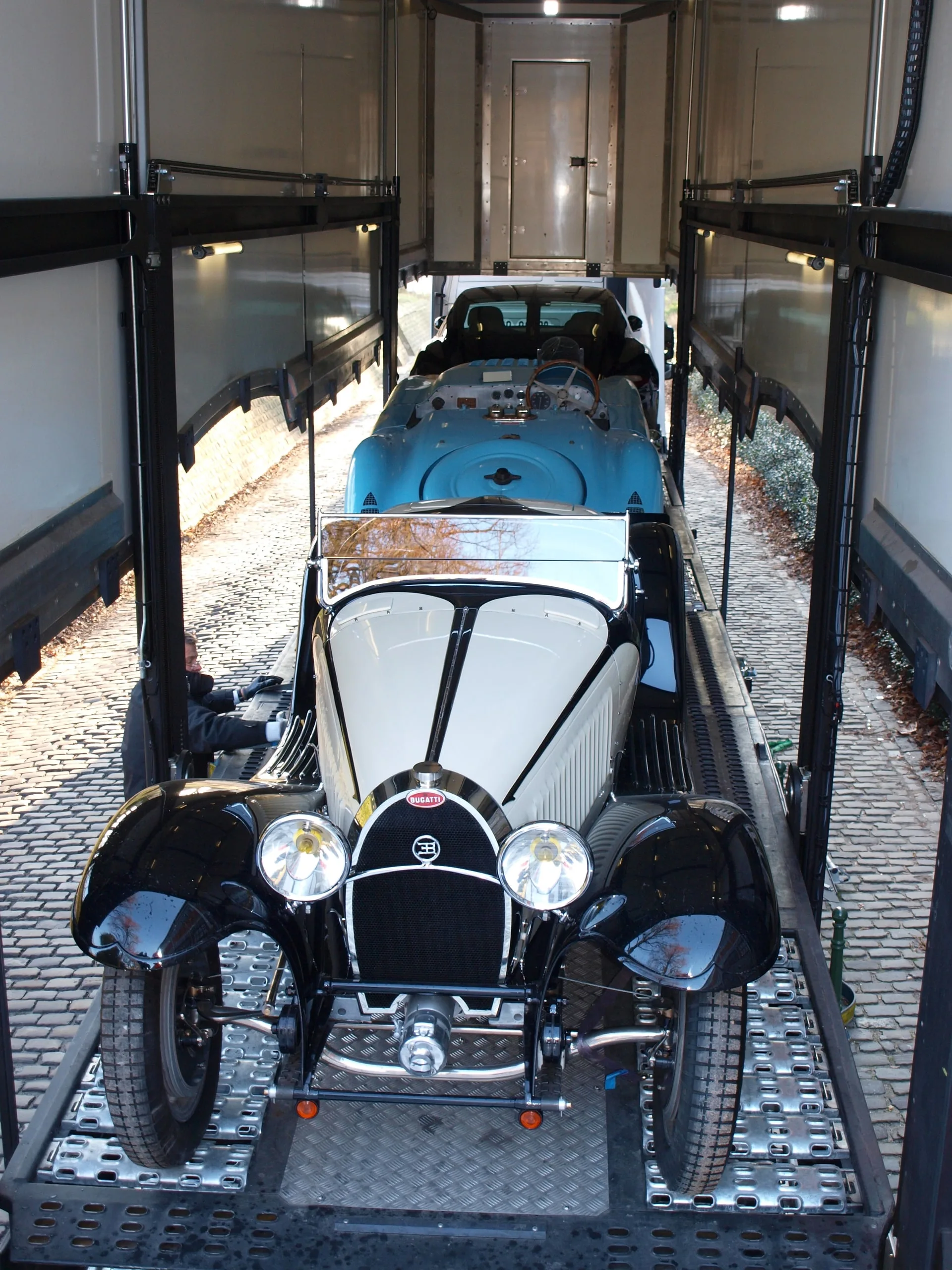
Two racing Bugattis
One open, one enclosed, both built to race. They travel in the order they will be unloaded.
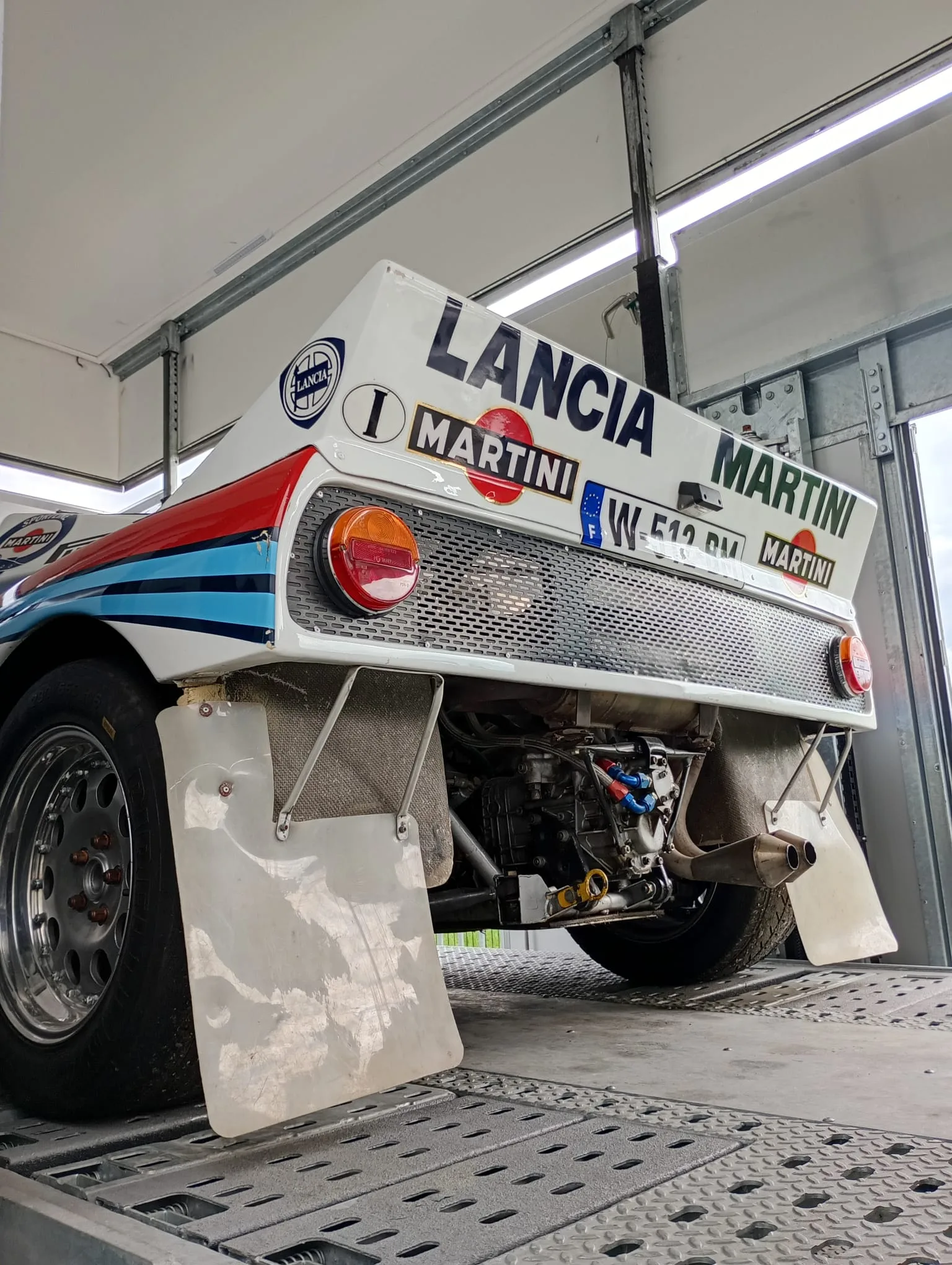
Martini wing
An original racing part: it travels under cover, the way it is kept.
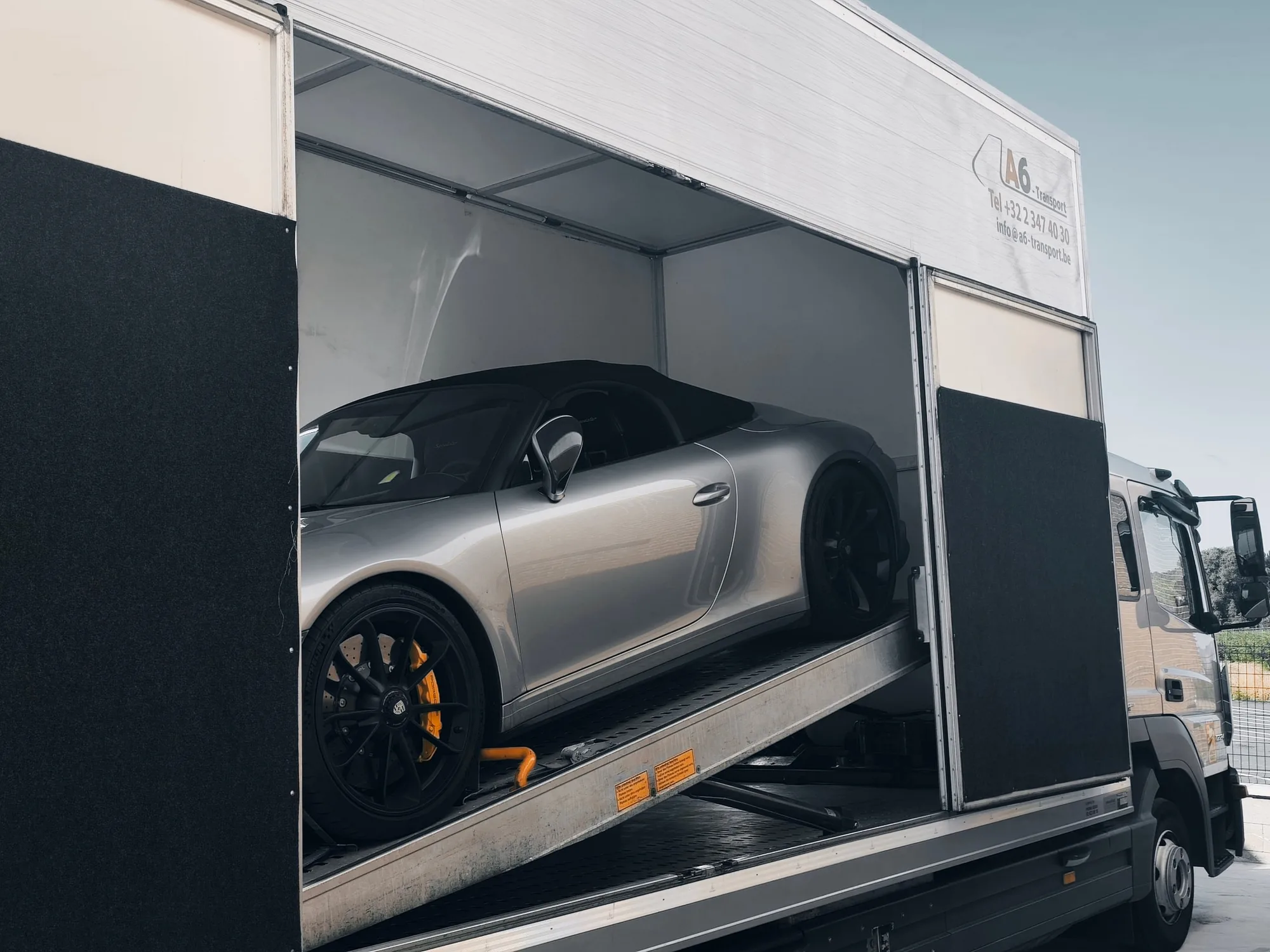
911 Speedster
A limited-run convertible carried behind closed doors, roof in place.
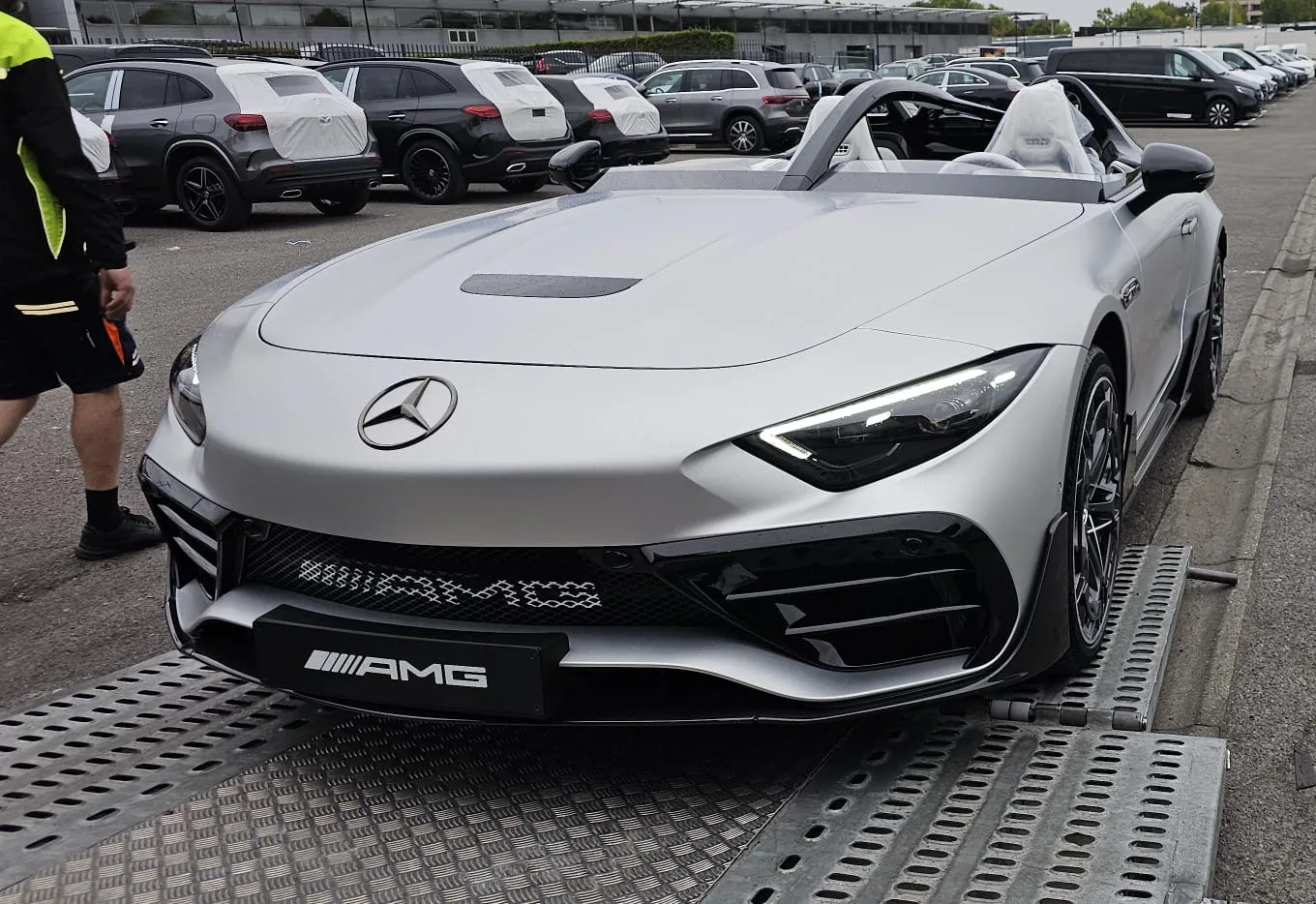
Onto the ramps
No roof, no windscreen: the trailer is the only shelter it will get.
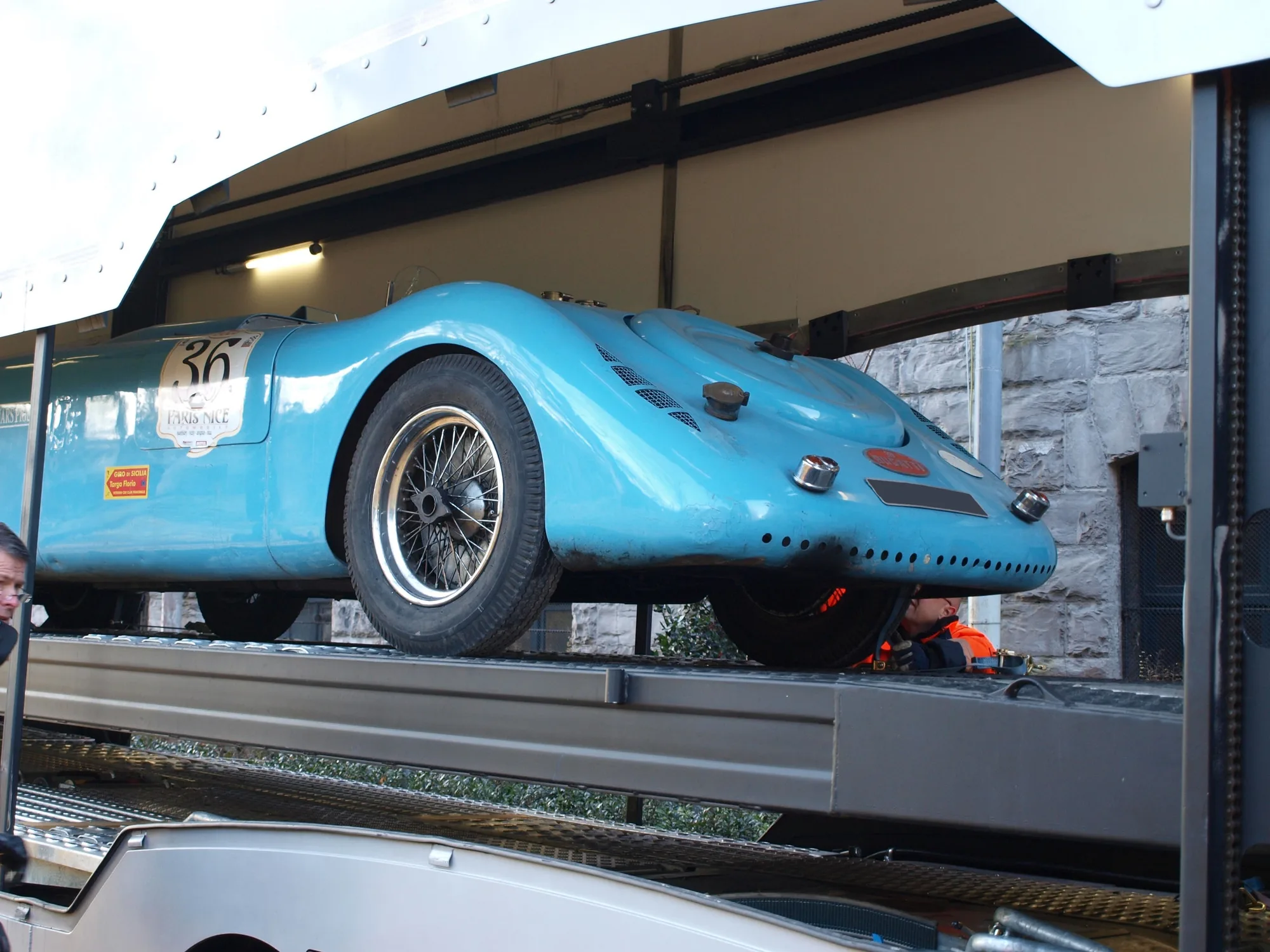
French racing blue
Enclosed bodywork, wire wheels, a number on the flank. Loaded with the ramps at their flattest.
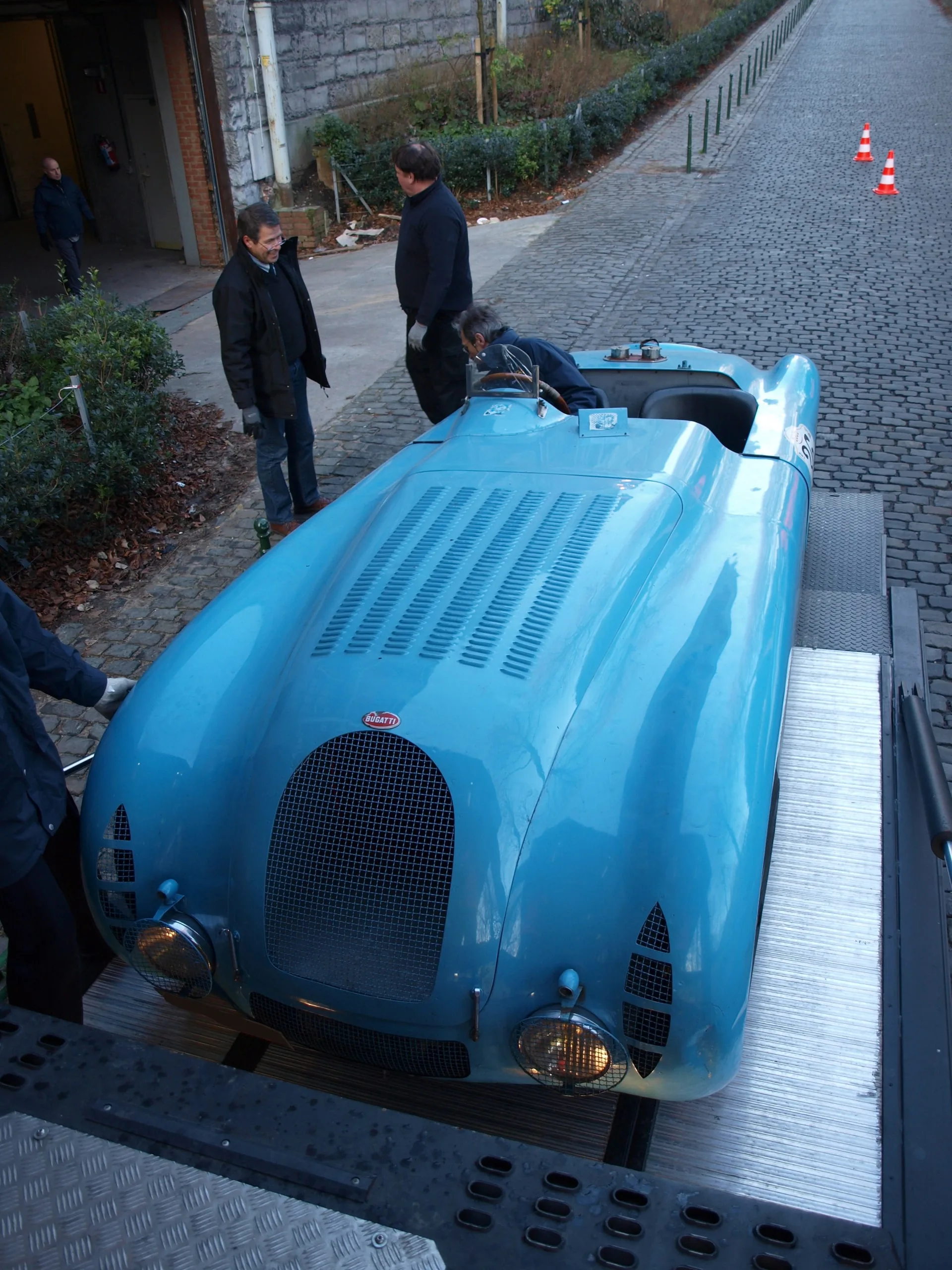
Down the ramps
Cobbles, a slope and a car with no clearance. Somebody walks each wheel down.
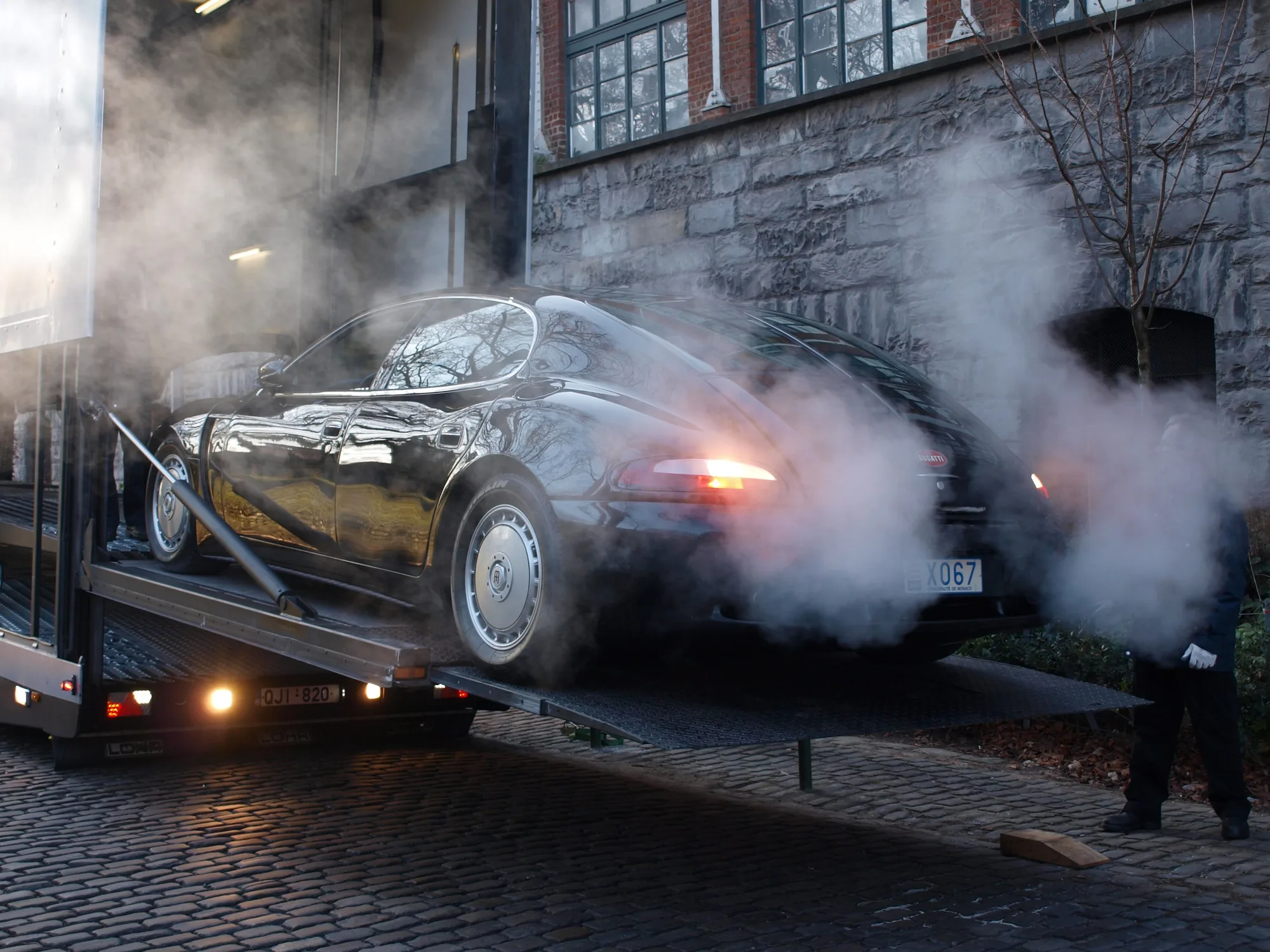
Warming up
An engine of this age is warmed before it is asked for anything. The smoke clears.
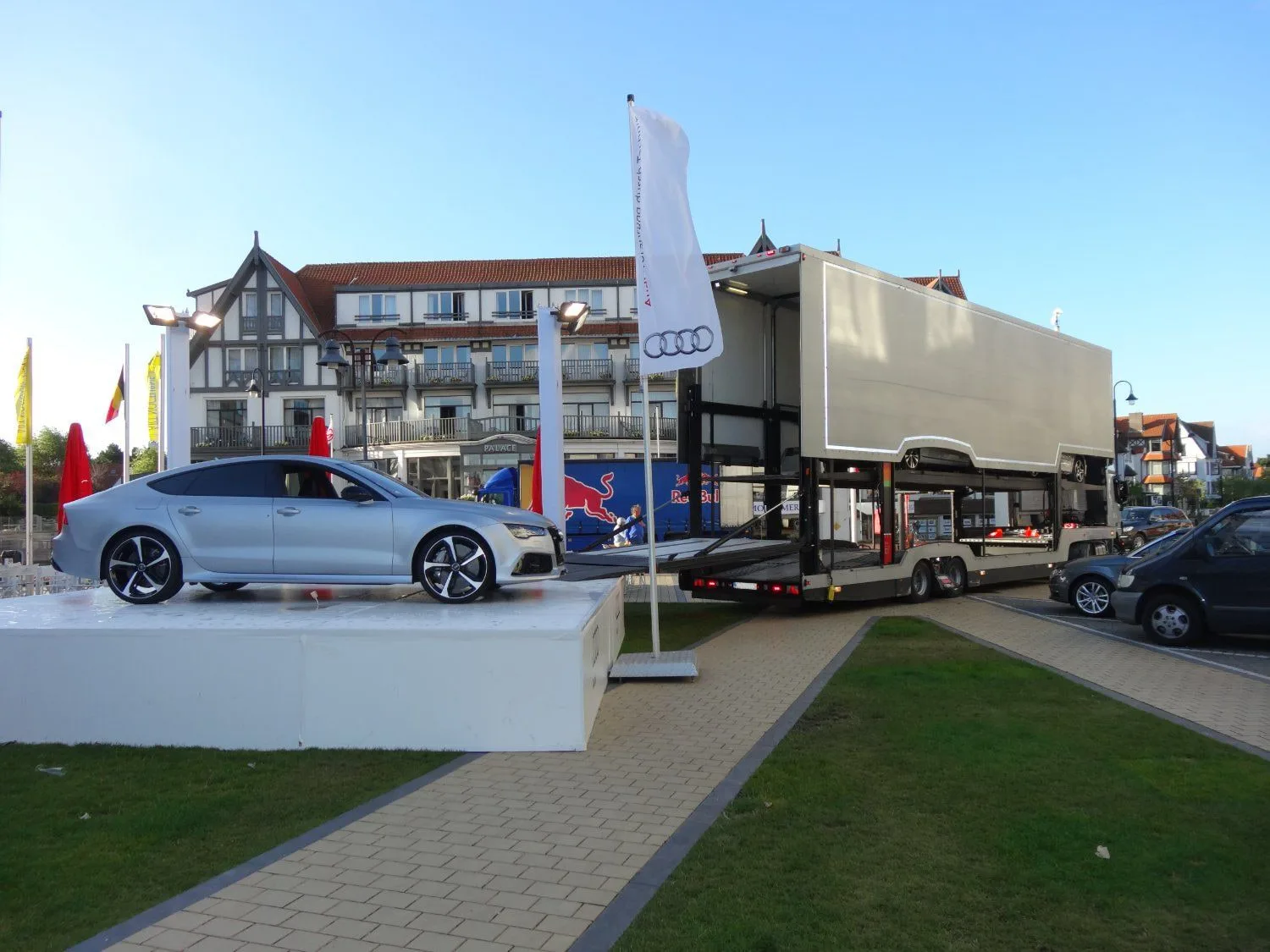
Straight onto the plinth
The delivery ends on the stand, not in a car park behind it.
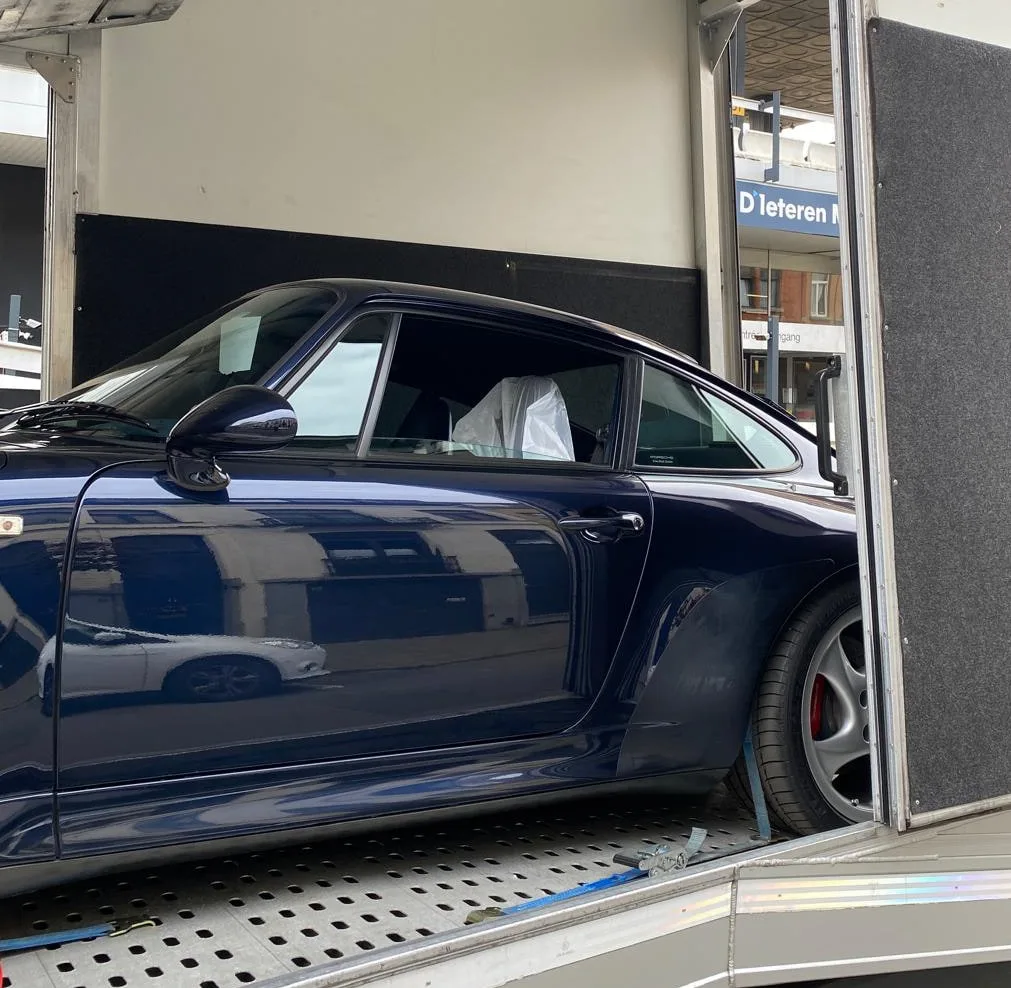
Side check
One look through the flank is enough to confirm nothing has shifted.
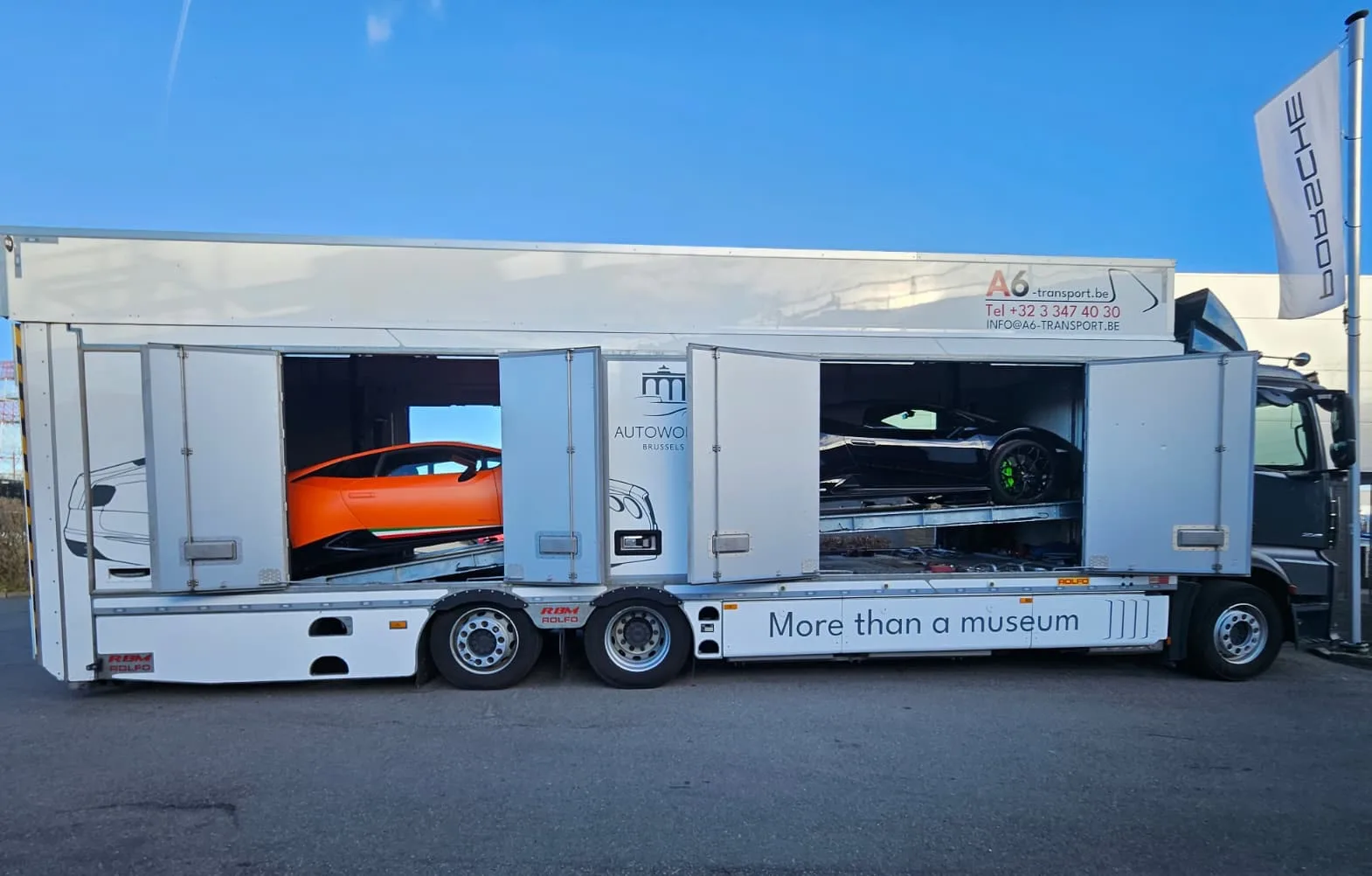
Open flank
Full side opening lets us load from the side when the rear is blocked.
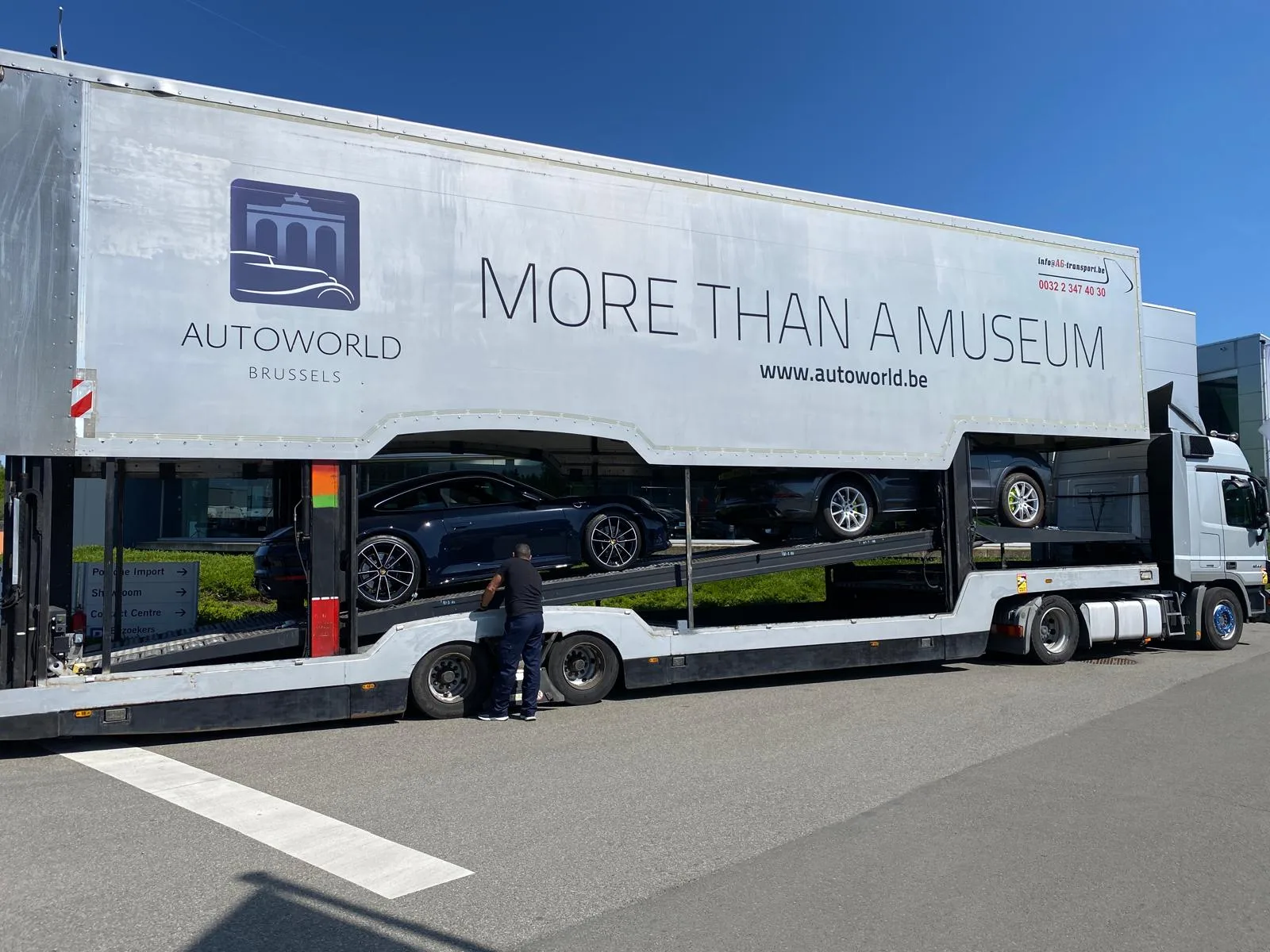
Final check
Nothing leaves until someone has walked the length of the trailer once more.
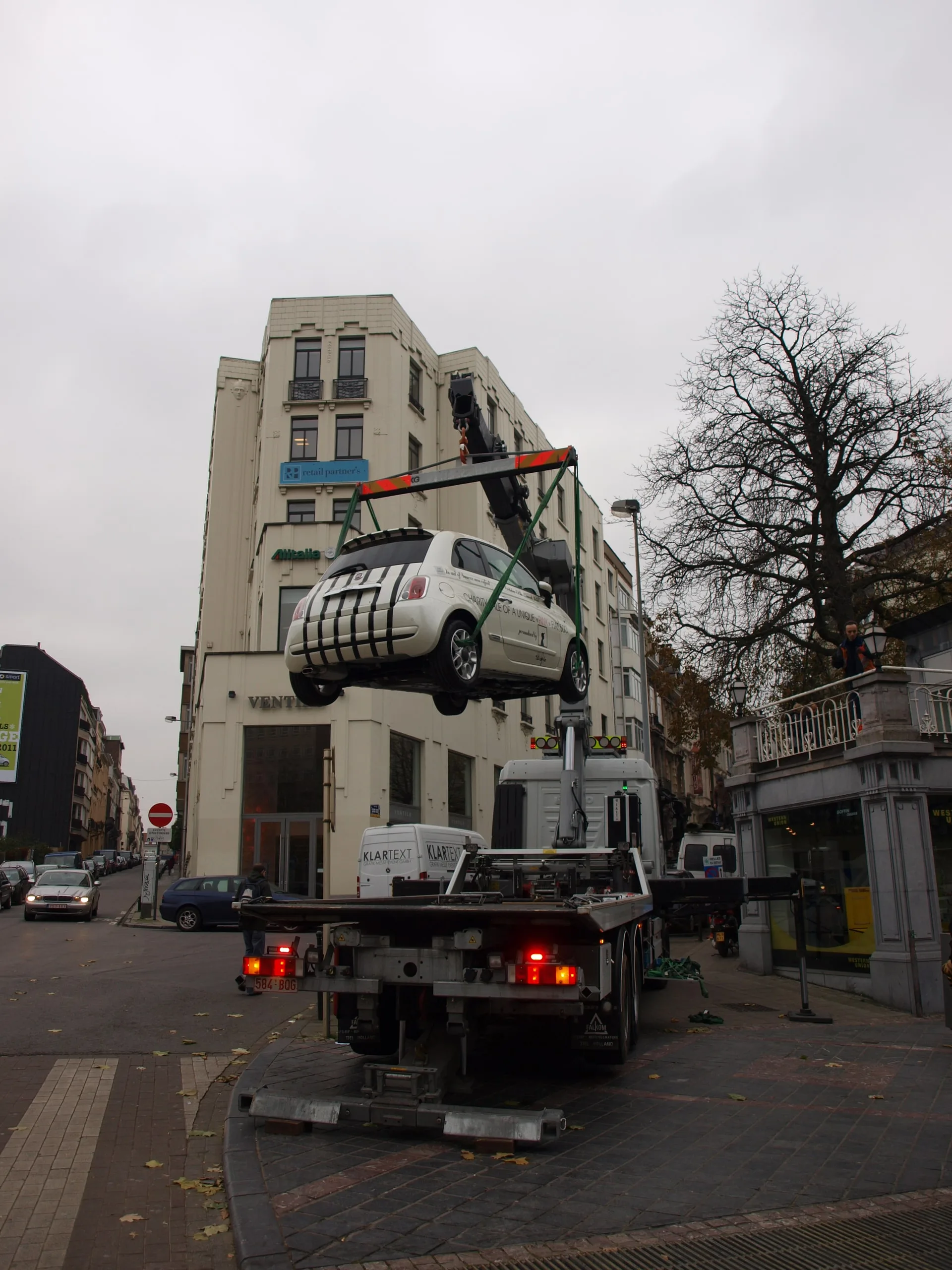
Above the avenue
A shop window is not a loading bay. The car reaches it the only way left.
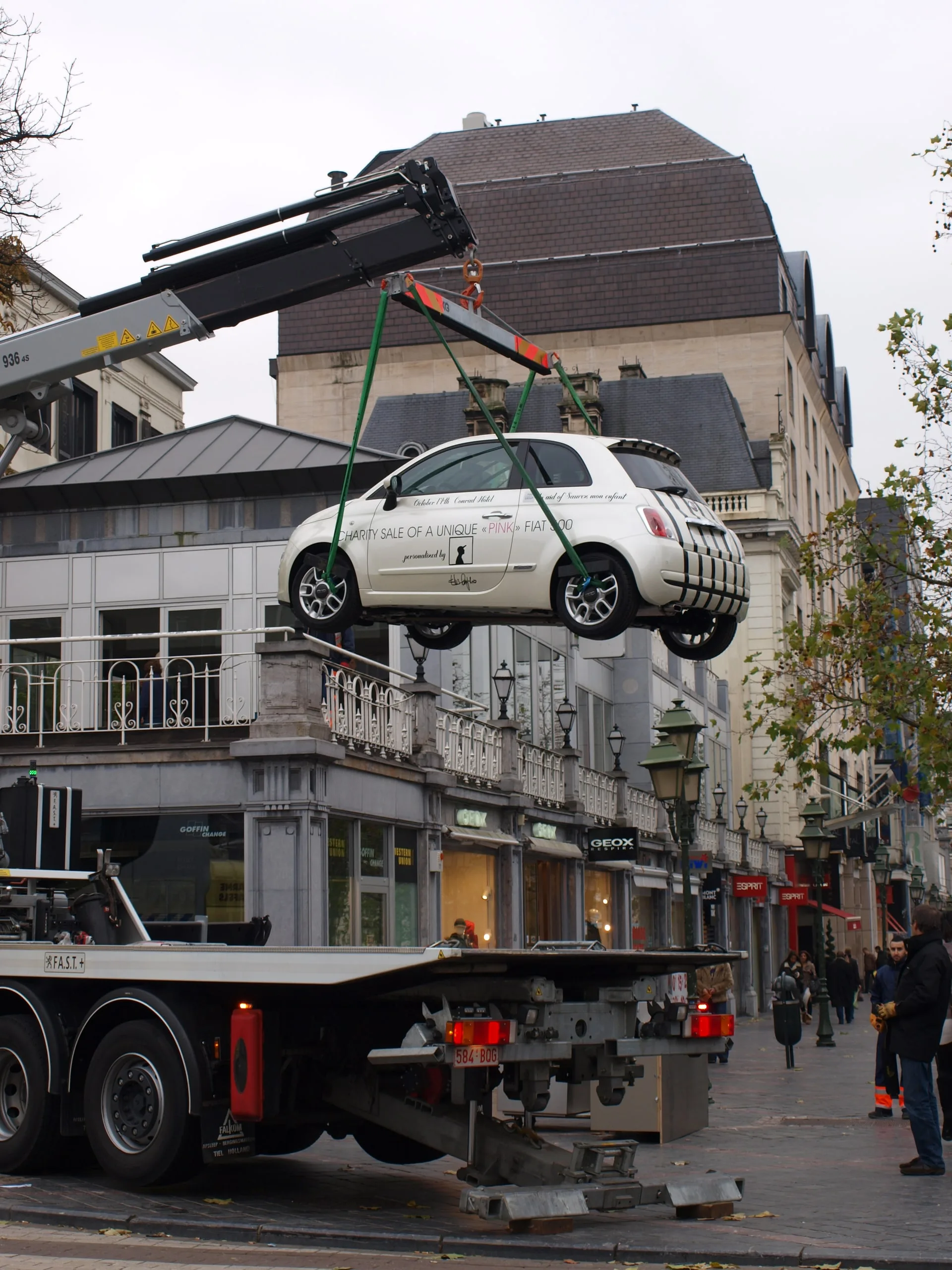
Between the façades
The arm has one clear line between the wires and the balconies. It is found before the lift starts.
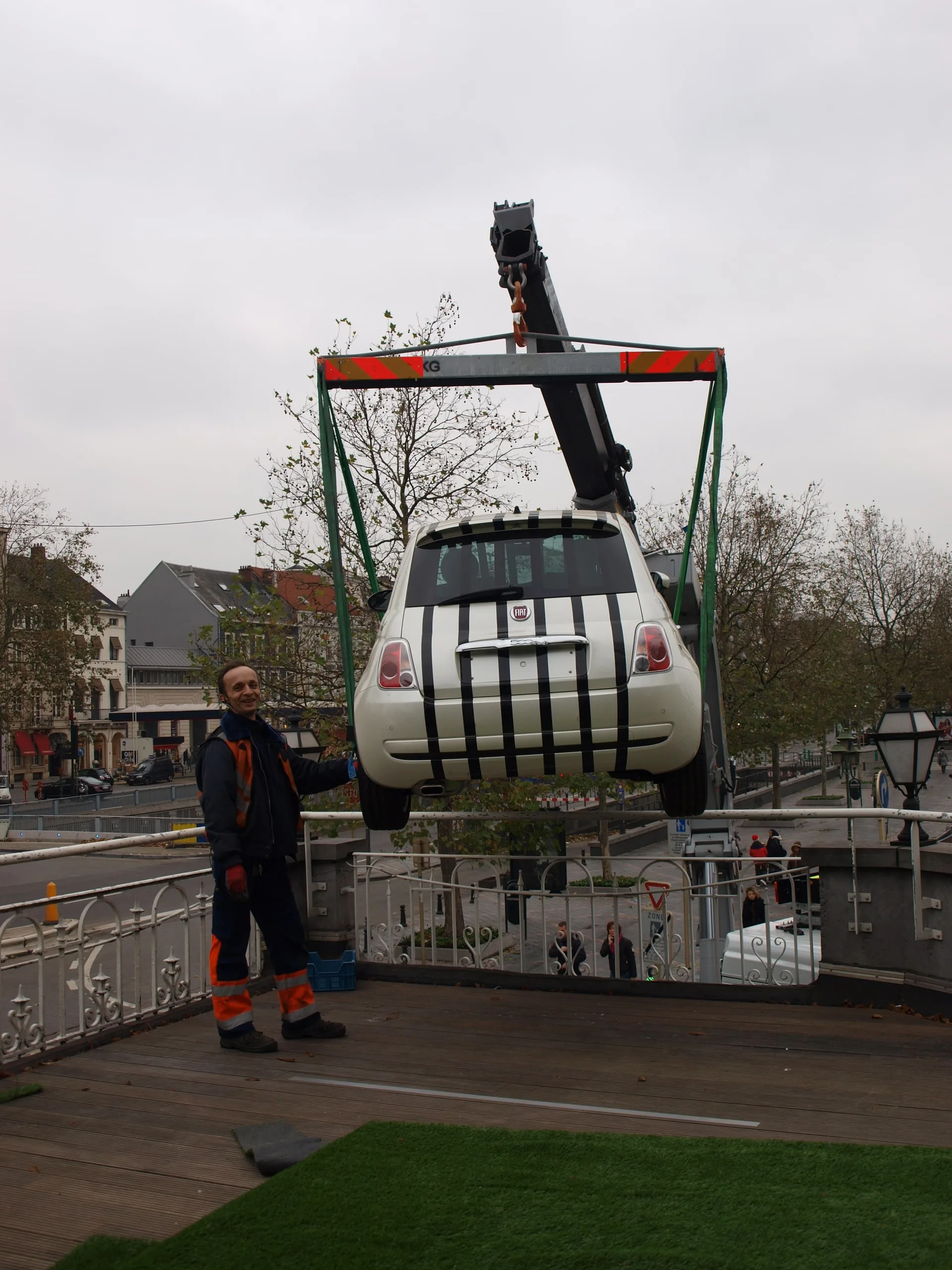
In the slings
Four slings under the sills, spread by a frame so nothing pulls inward on the body.
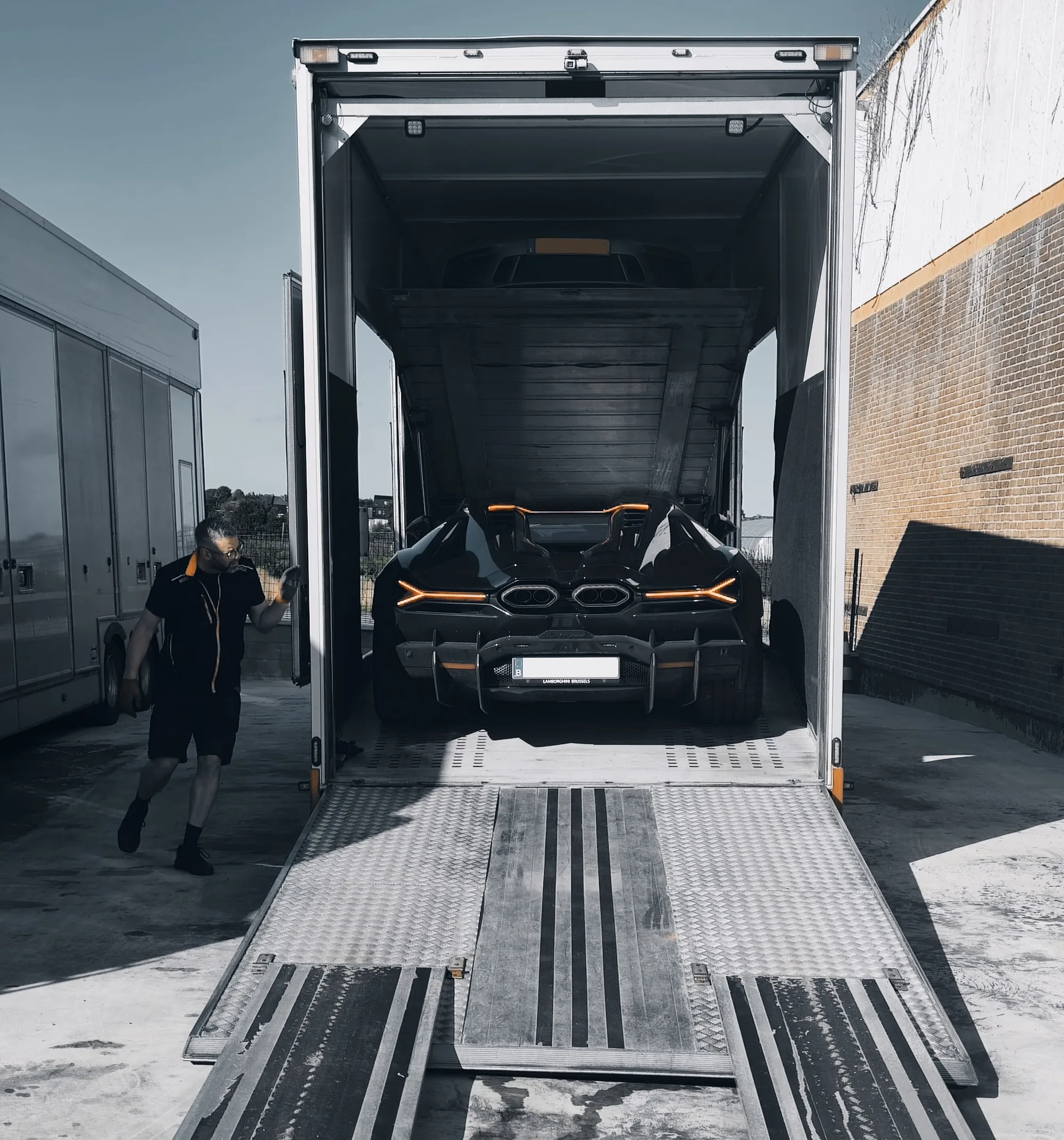
Ready to come down
Ramps chocked, crew in position: the car only moves afterwards.
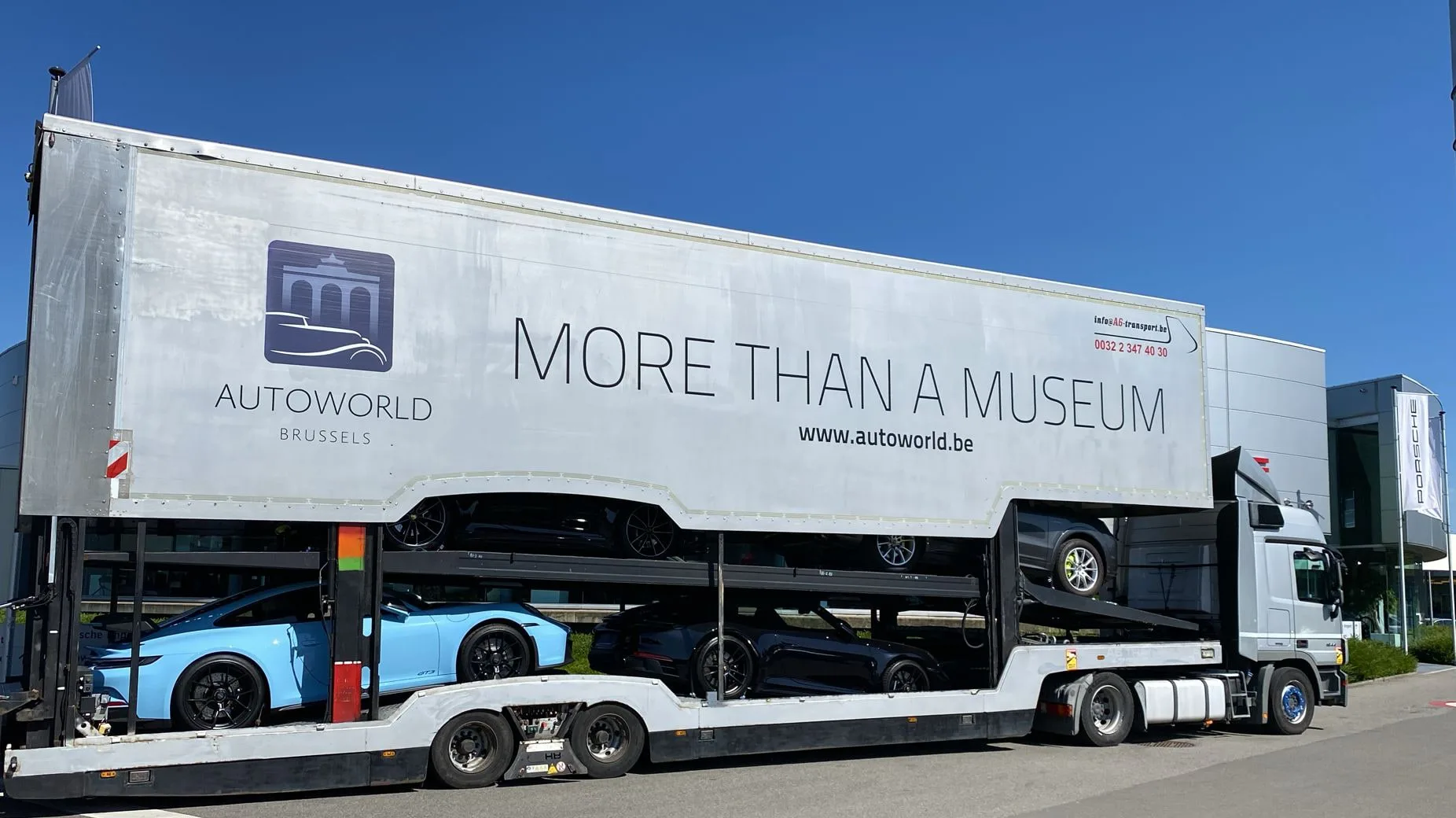
Loaded at the door
Two decks, two cars, one manoeuvre: the upper deck loads first.
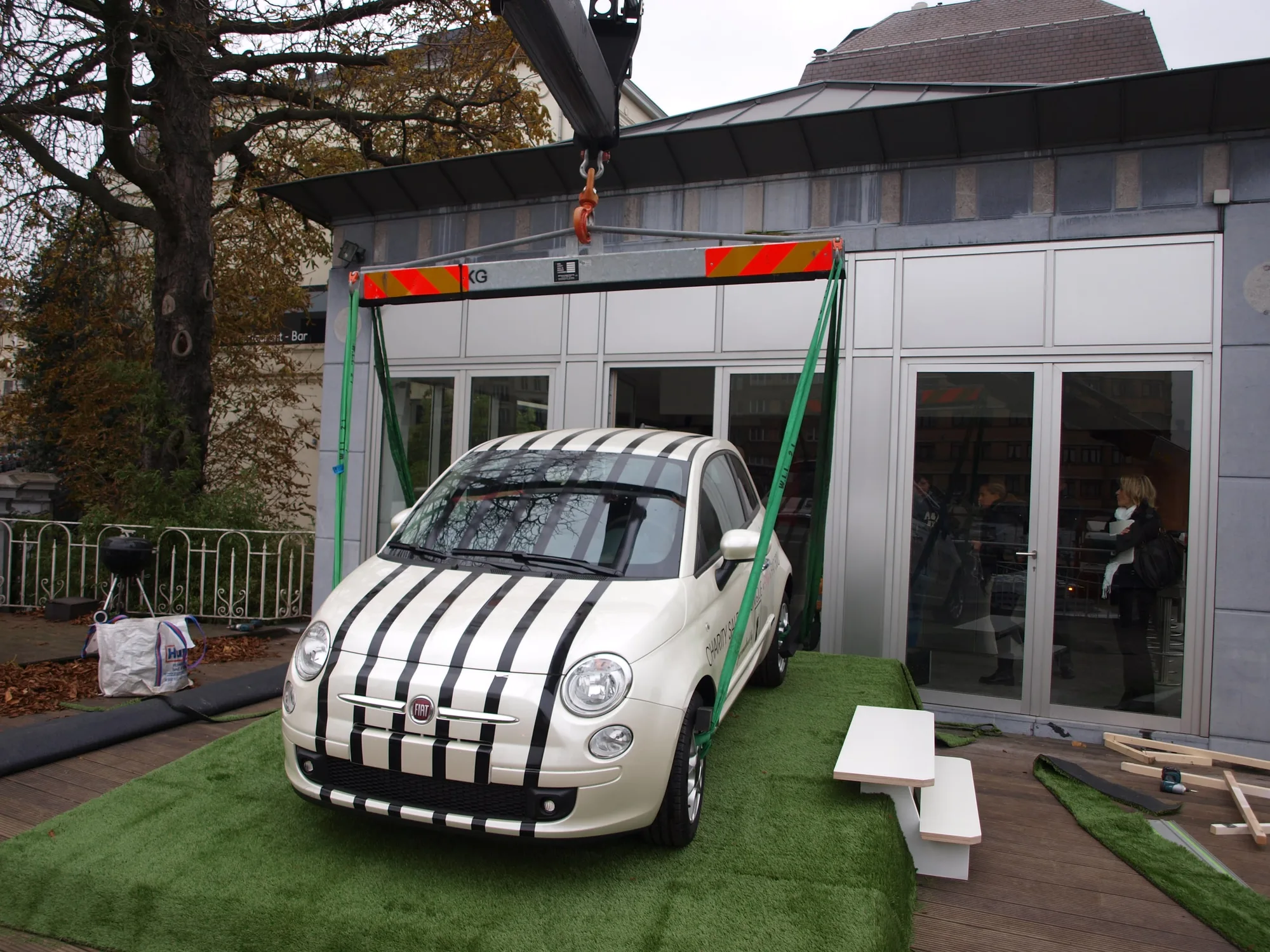
On the display
Set down on the display itself, not beside it. The crane leaves before the shop opens.
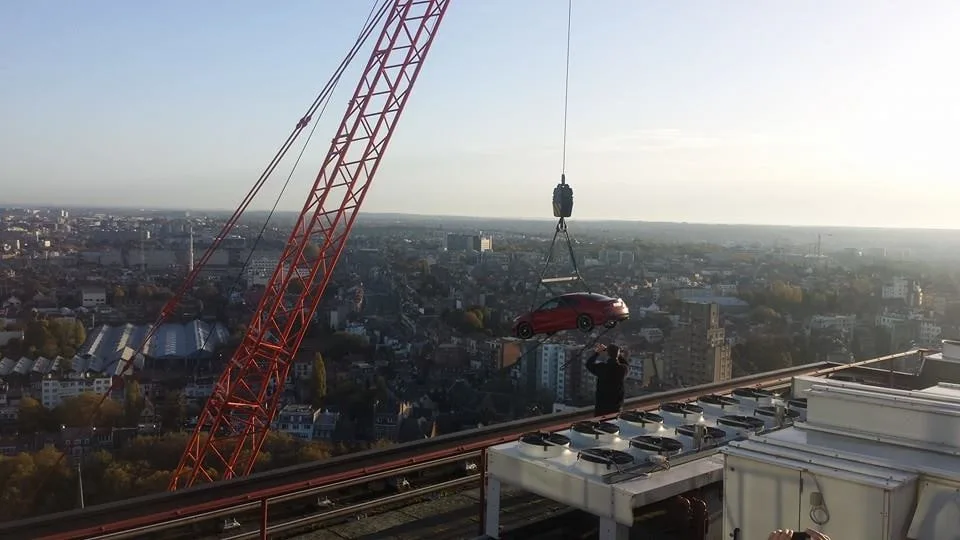
On the tower crane
Above a certain height a truck crane runs out of arm. The site crane takes over.
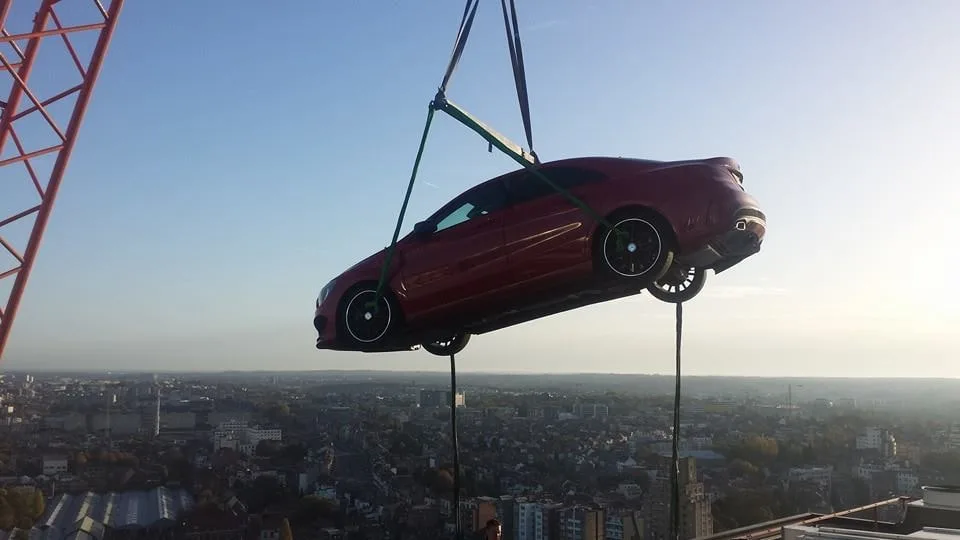
Over the city
Nothing below the car for the length of the lift. The street is closed for the duration.
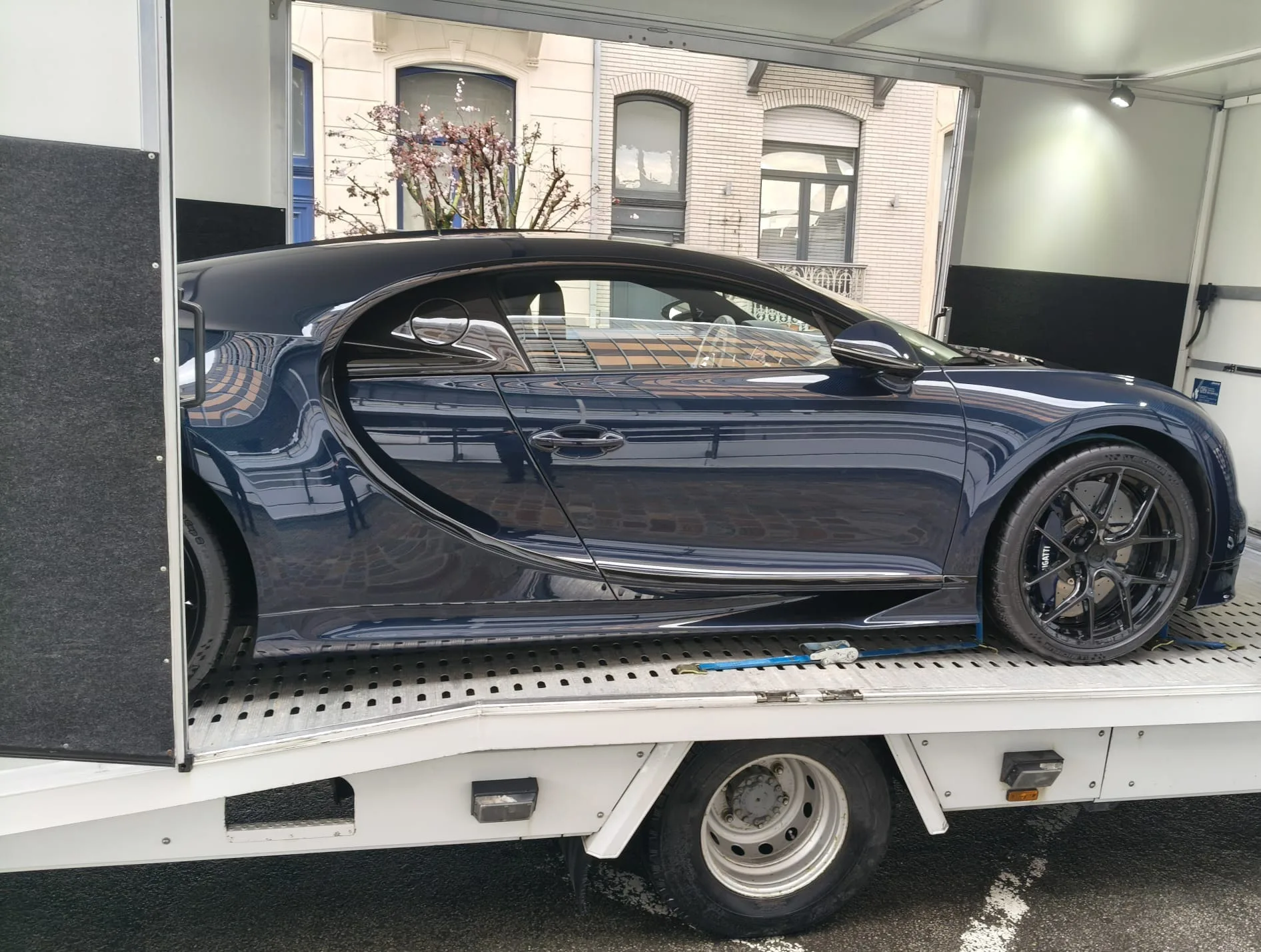
Doors closed
What the car sees for the whole journey: nothing.
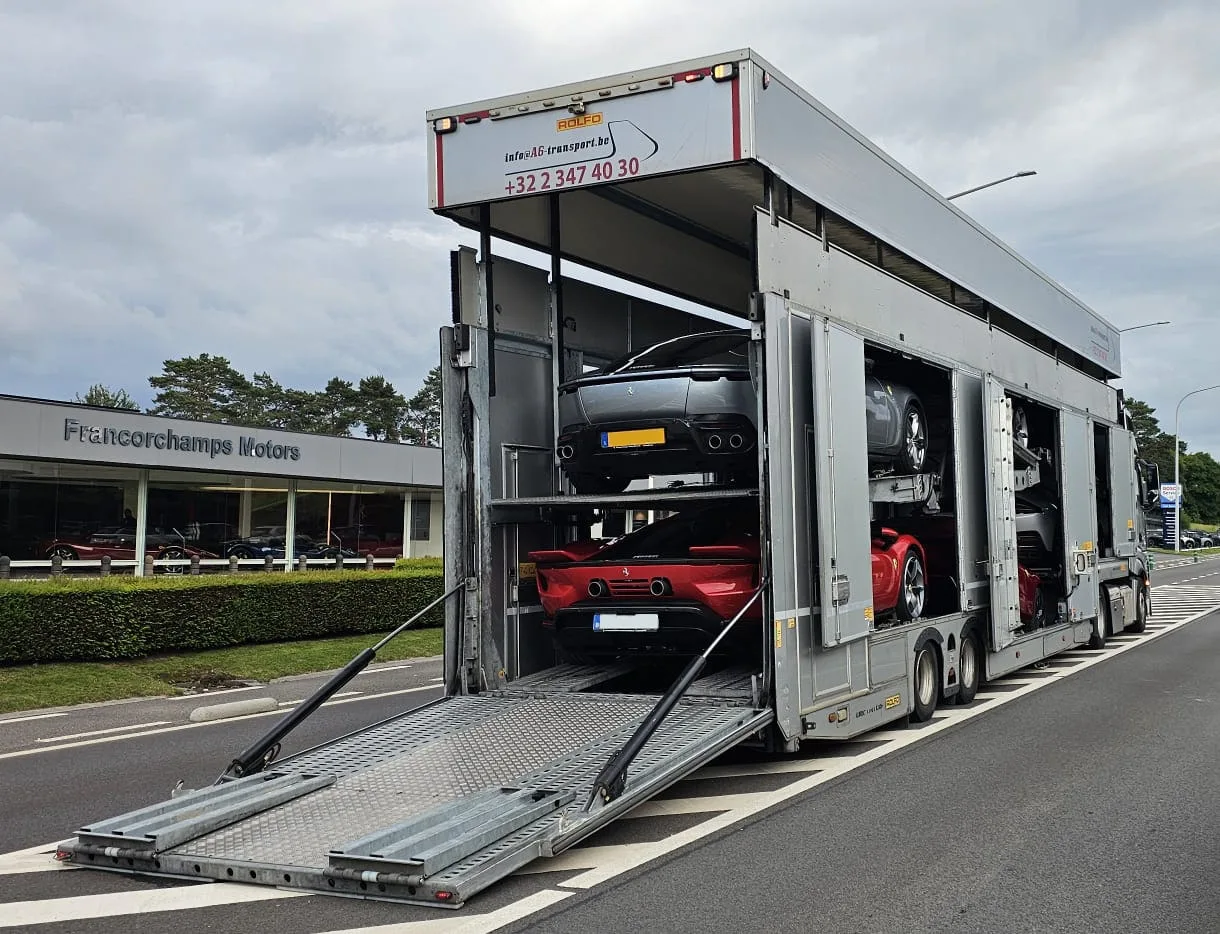
Roadside stop
Ramps down on the hard shoulder: the delivery happens where it has to happen.
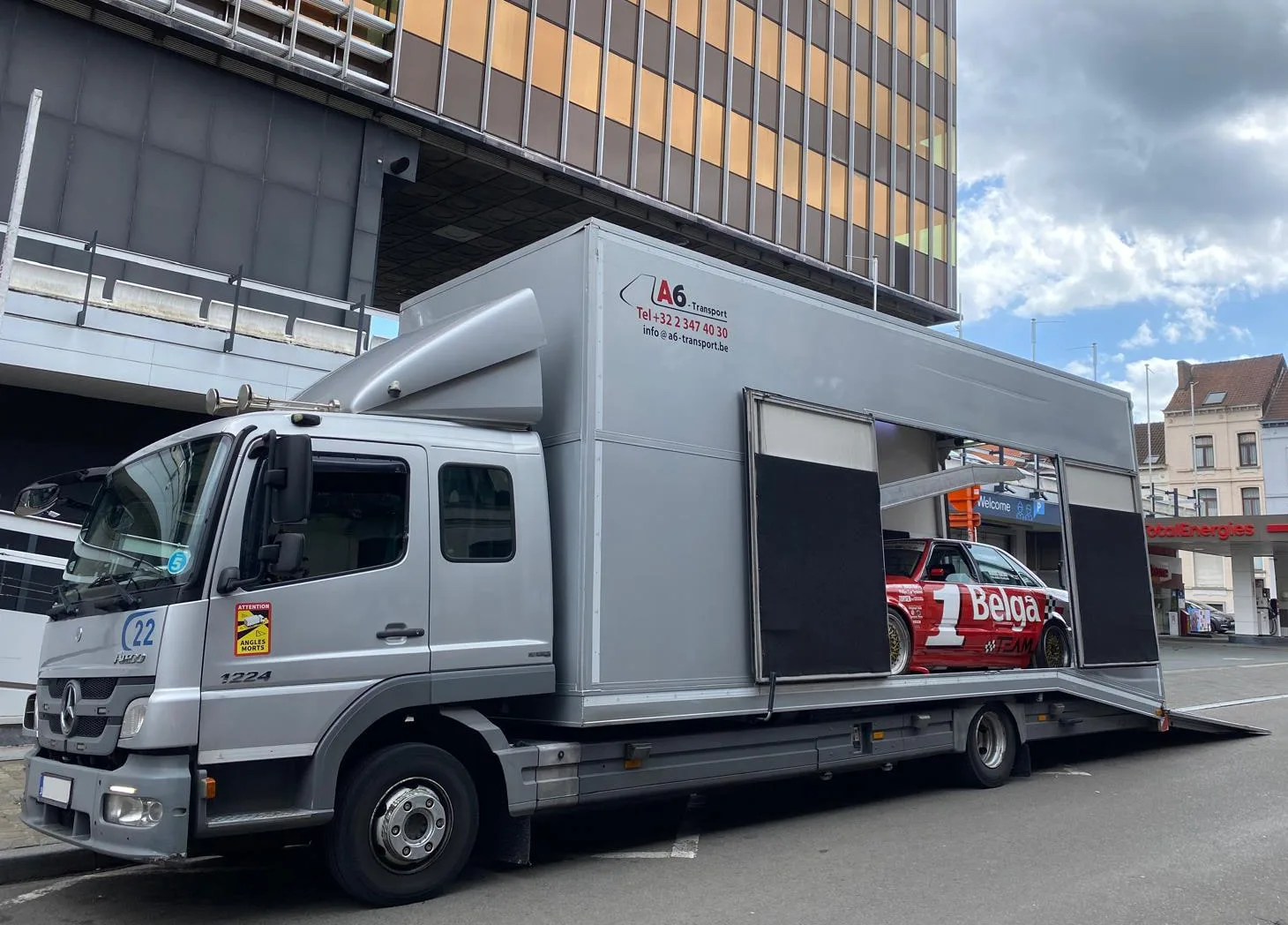
A racer downtown
A rigid truck goes where an articulated one cannot: into the street itself.
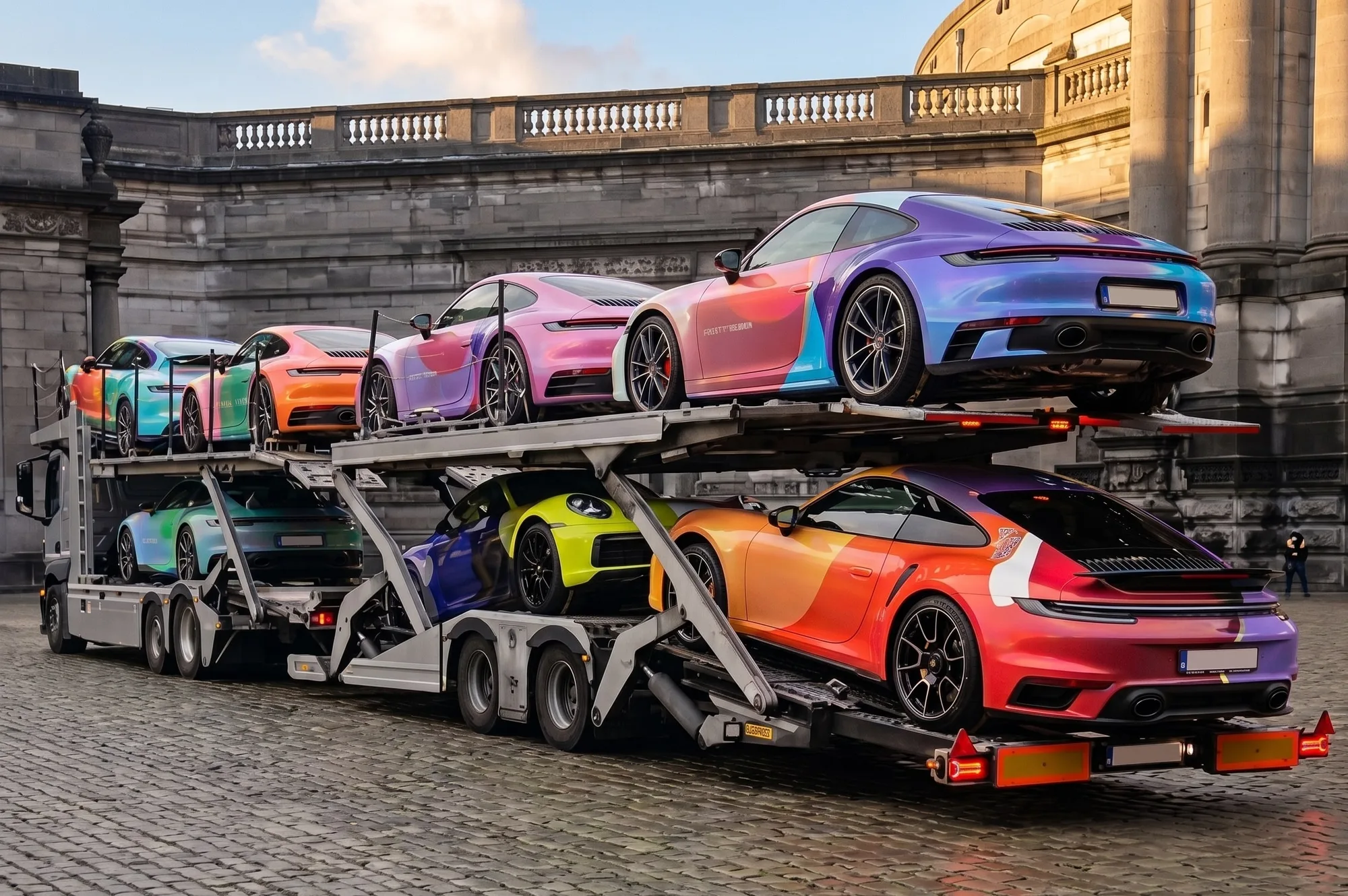
Two full decks
A full load for a single exhibition: one truck, one delivery window.
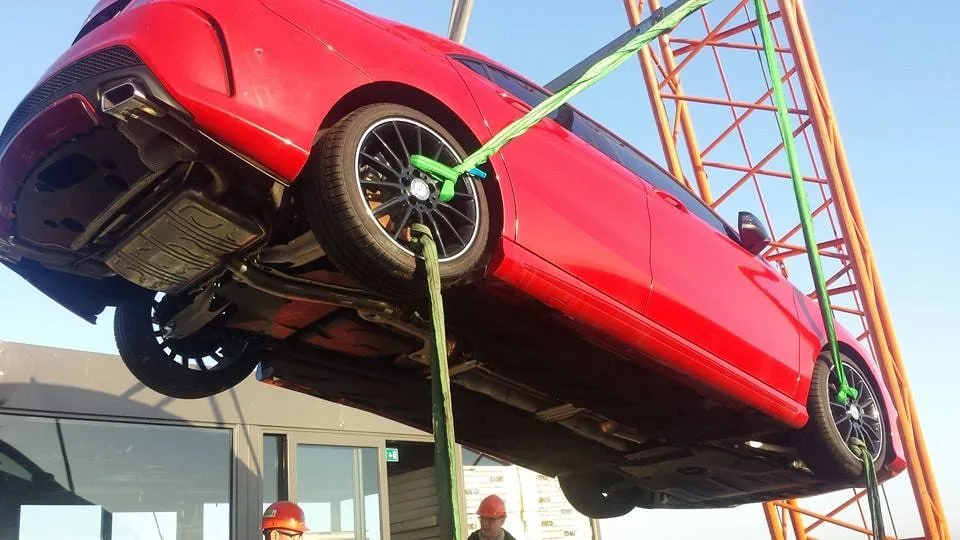
Coming down
The last metre is the slow one. Hands on the tyres, nobody under the load.
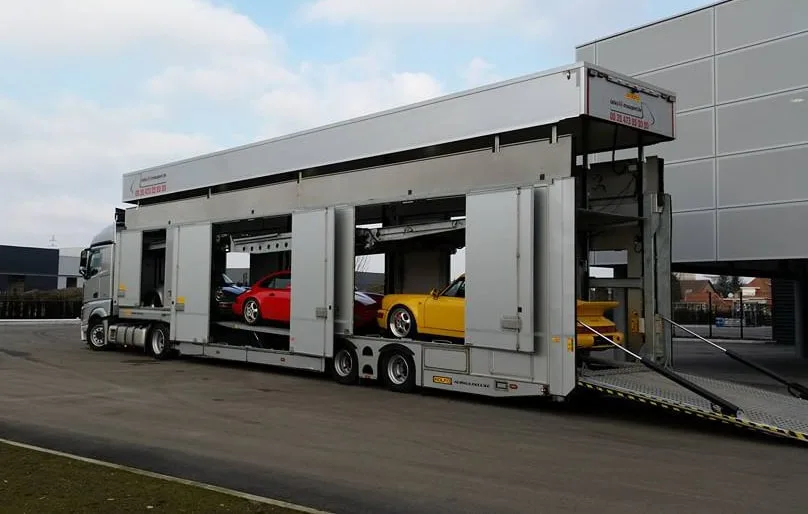
Open along the side
Doors along the whole length: a car is reached where it stands, not after moving three others.
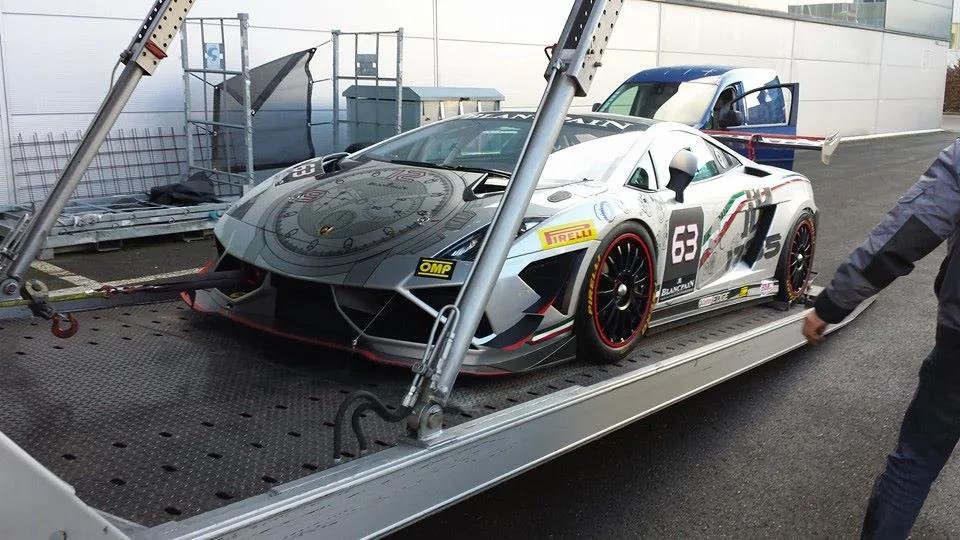
Loaded in the wet
A racing car has slicks and no wipers. The weather decides nothing except how slowly it is done.
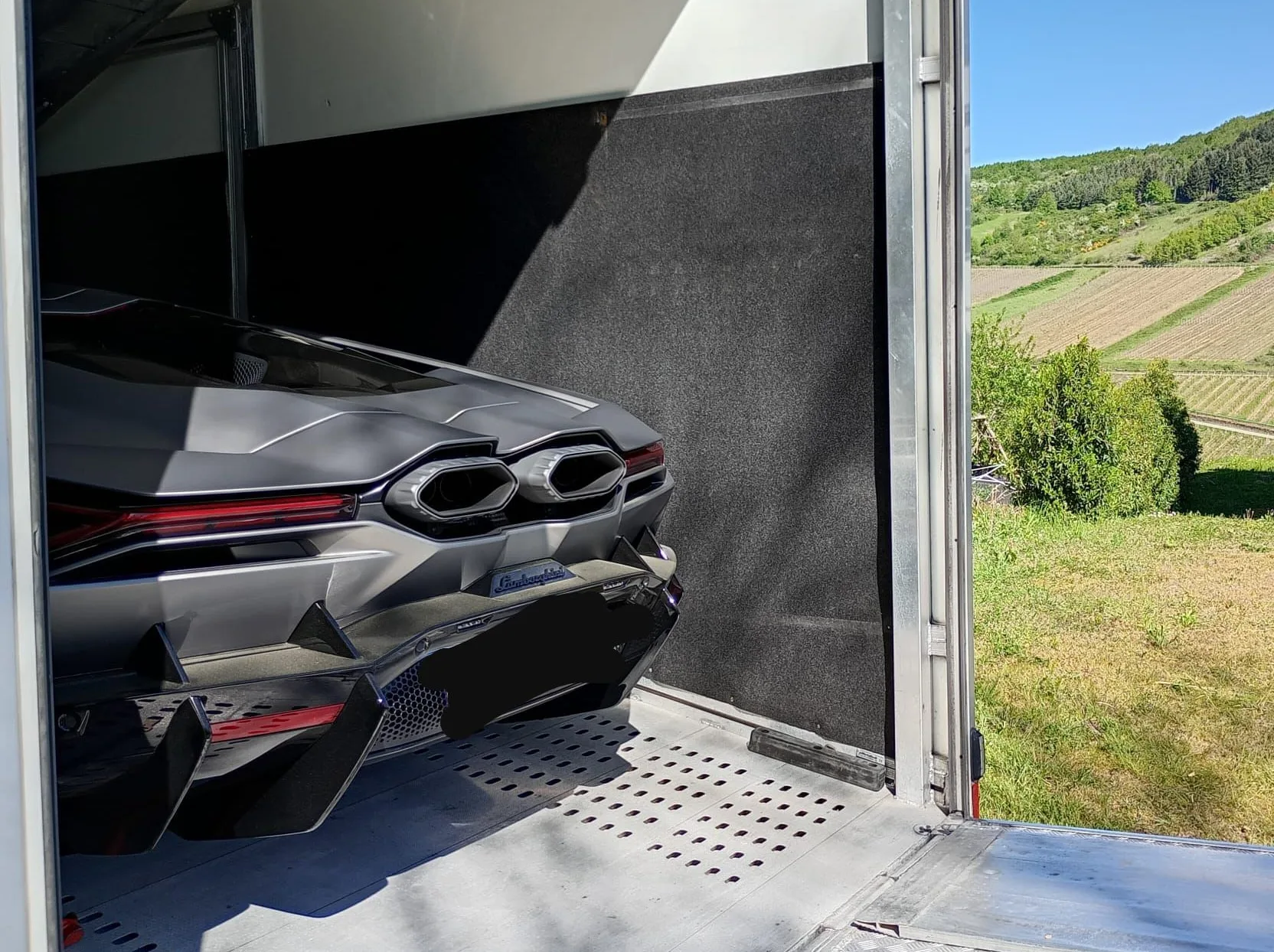
Arrival at the estate
Doors opening onto vines: the delivery address is not always a city.
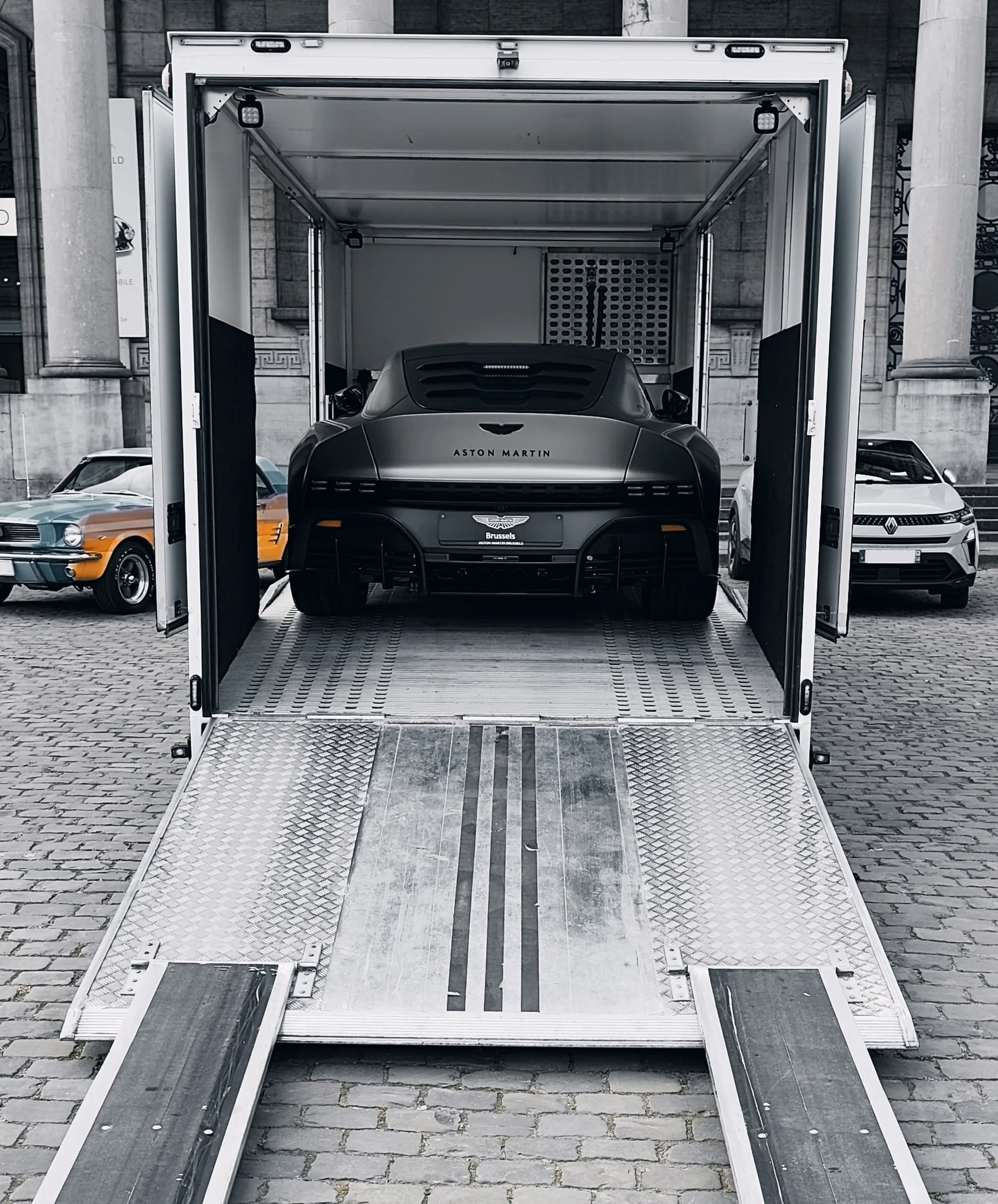
Delivered in Brussels
Ramps laid on cobbles: the ground is prepared before the car moves.
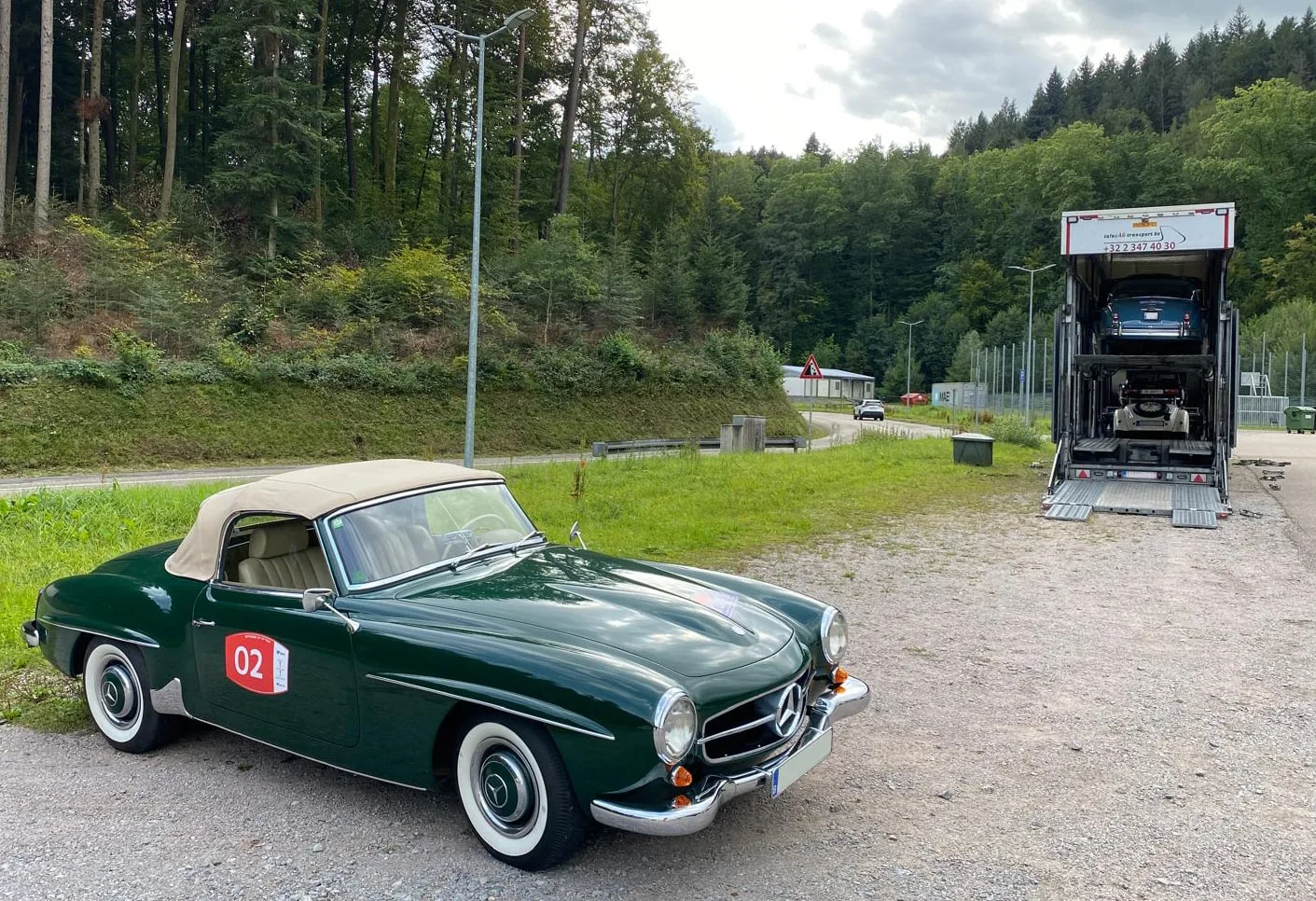
First one off
Unloaded and parked before the next one comes down the ramps.
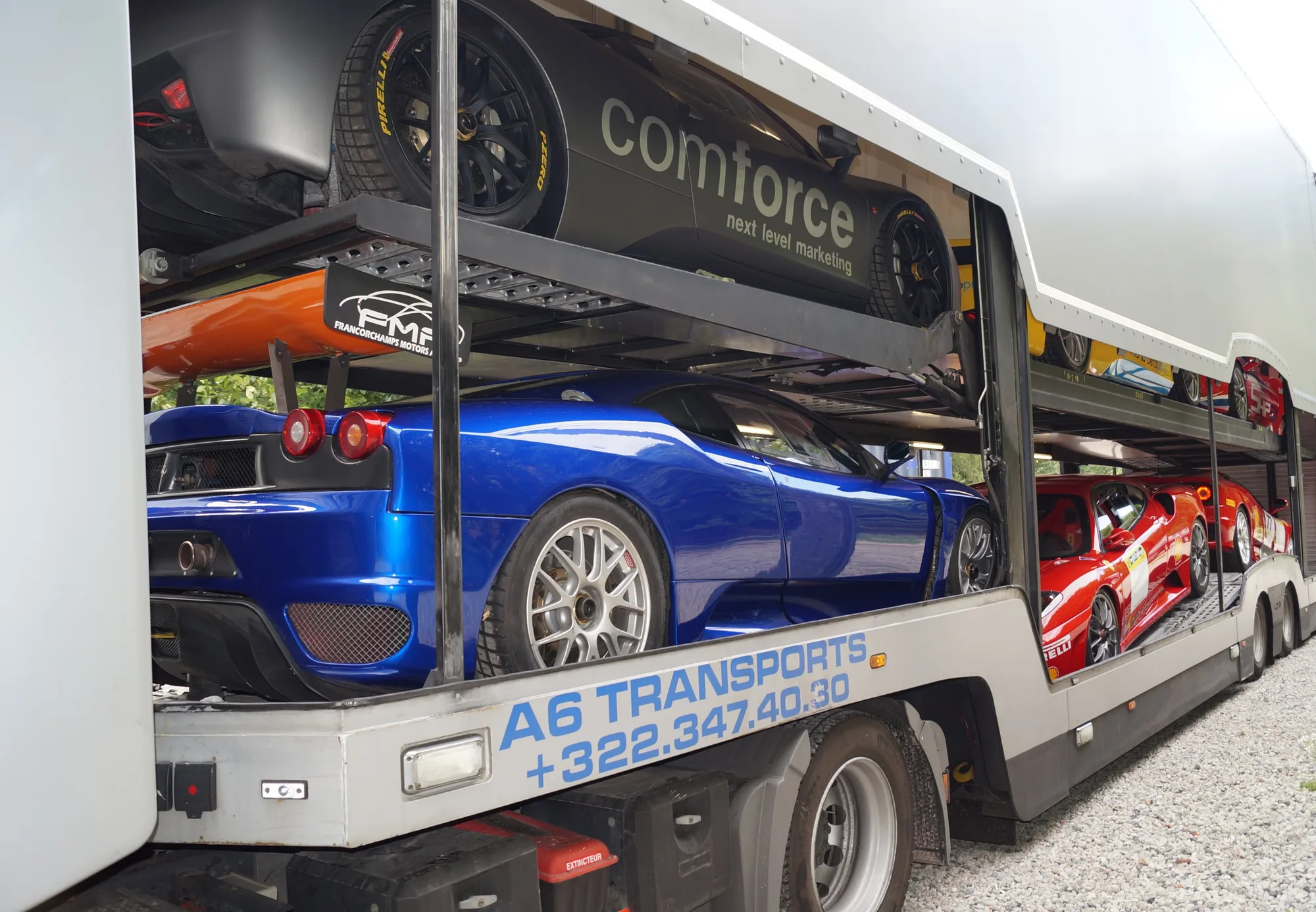
A full load
Closed, it keeps the cars under cover. Open, it loads from the side, deck by deck.
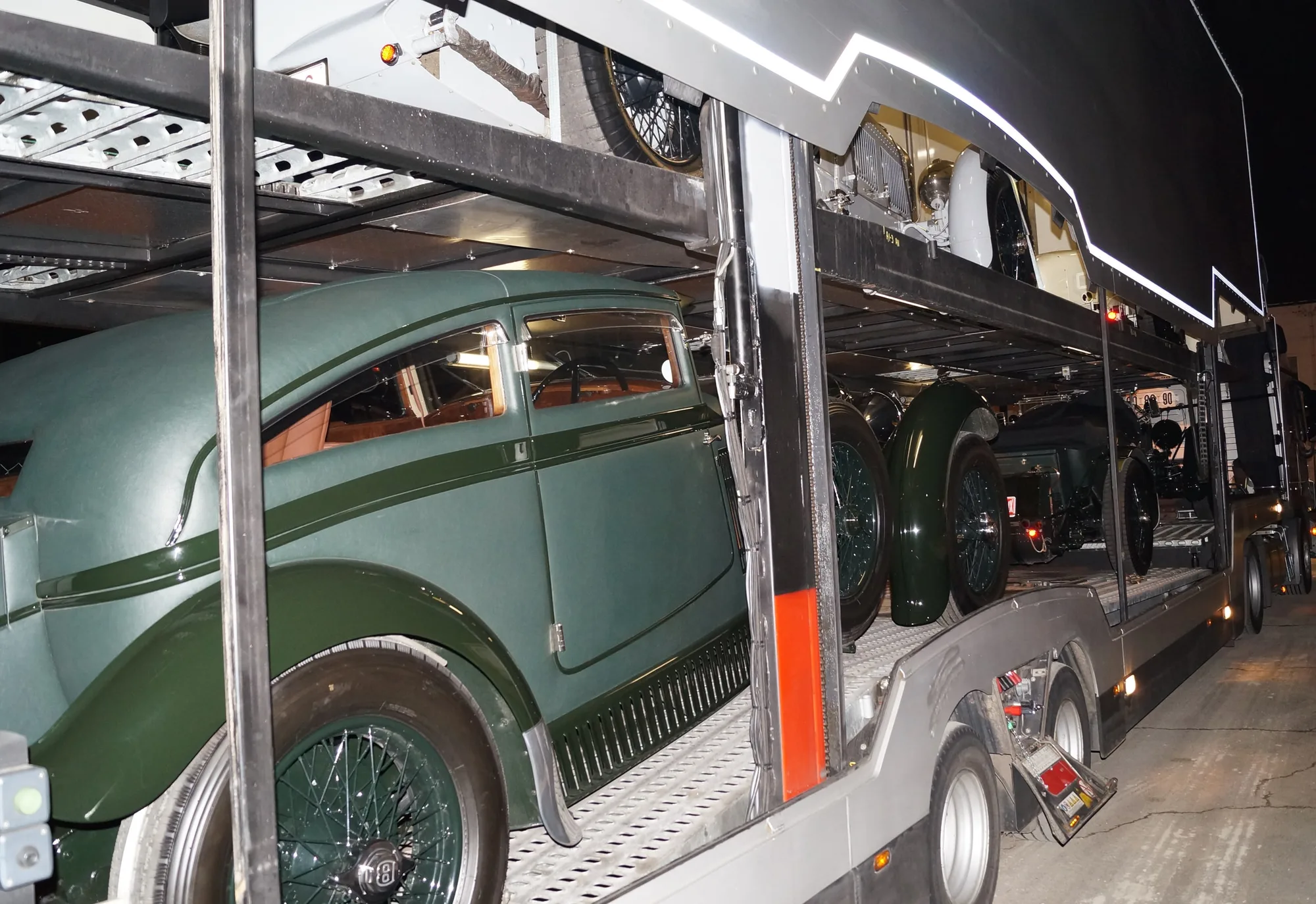
Wire wheels
Spokes and knock-off hubs. The strap goes over the tyre and nowhere near the rim.
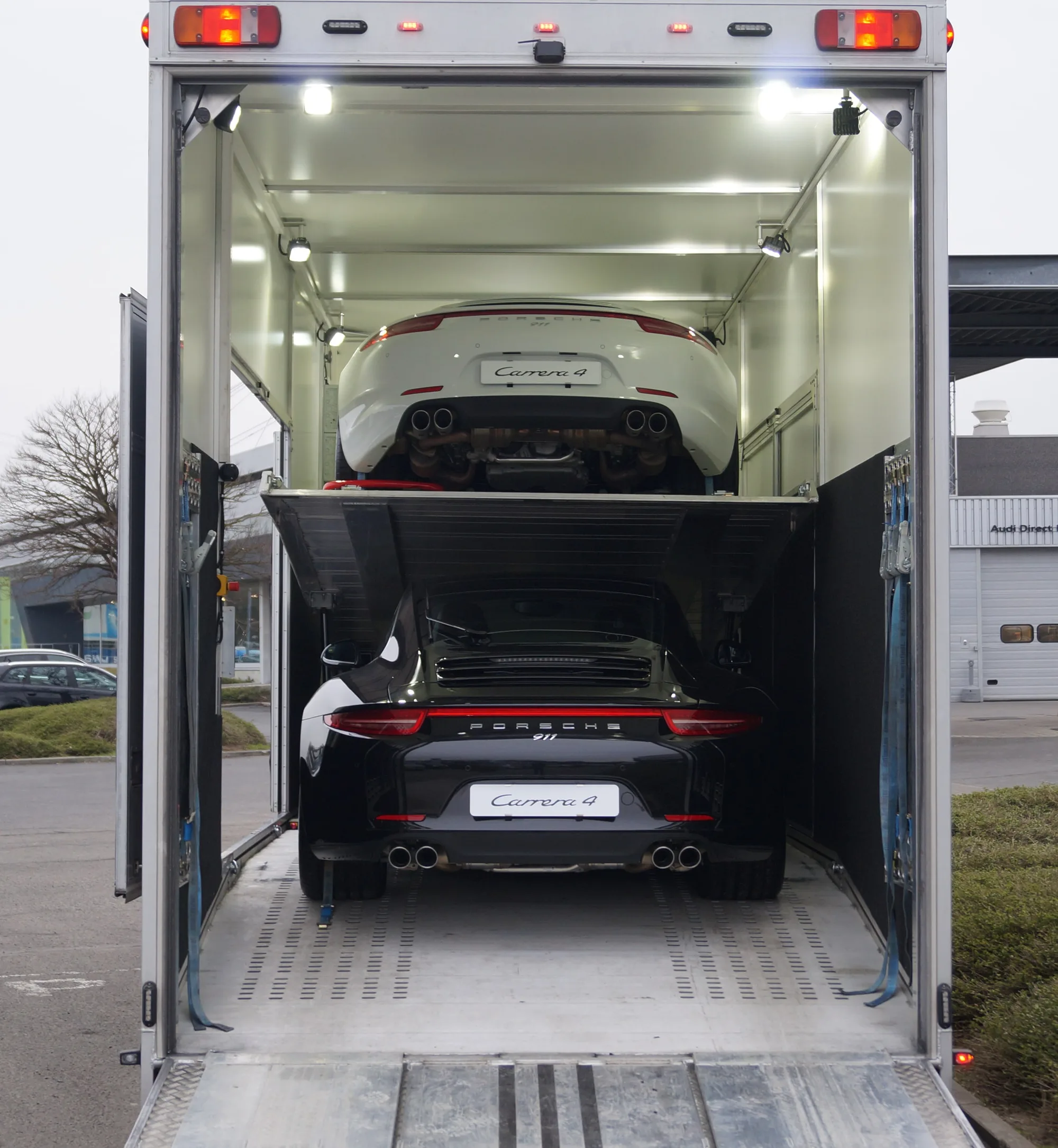
Loaded at night
Lit for the work, not for the photograph. Loading at night is loading like any other.
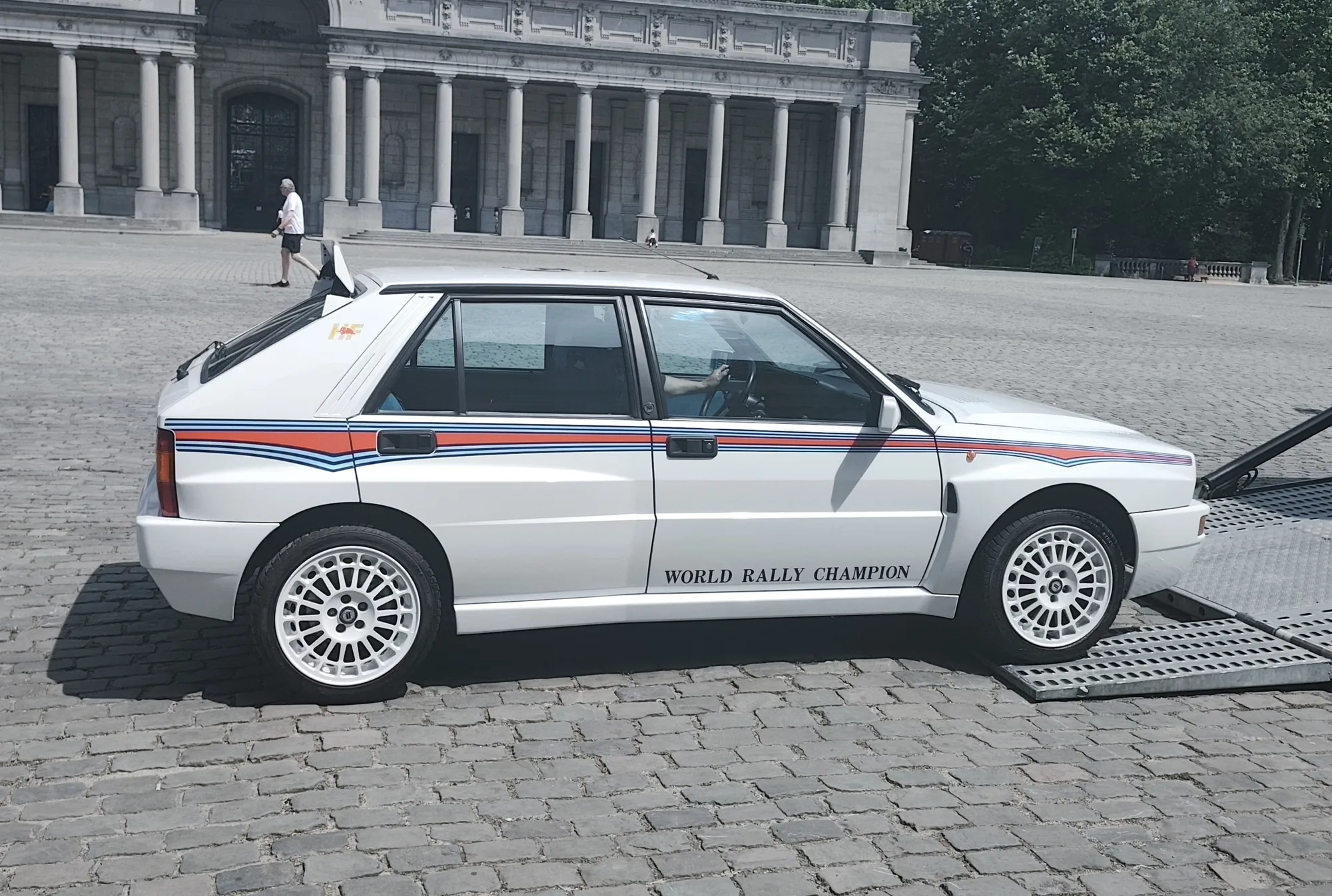
Integrale in profile
Set down outside the museum, ramps still in place behind it.
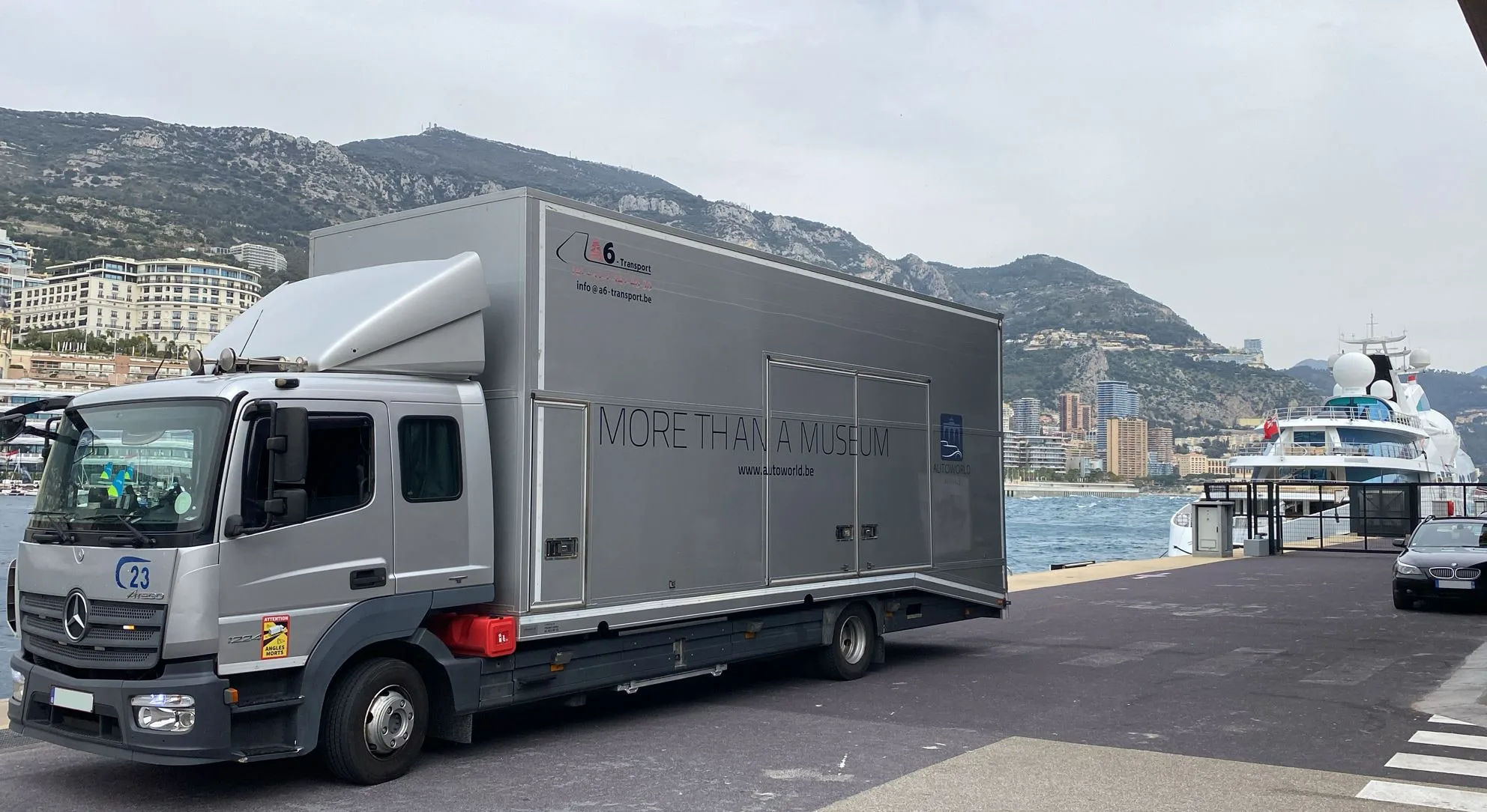
On the quay
Port of Monaco: the delivery ends where the car will be seen.
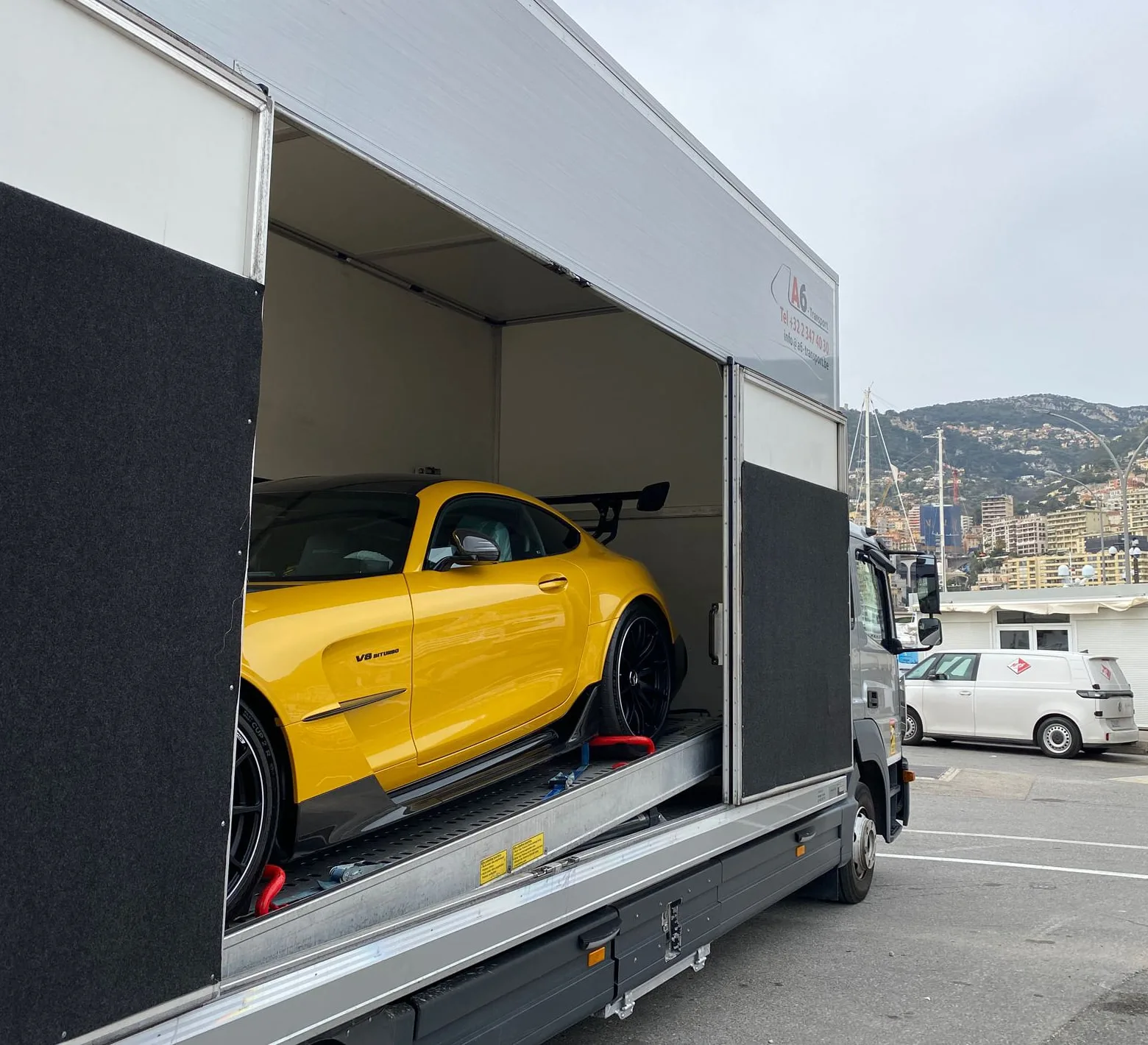
Monaco harbour
Aboard to the last metre, doors opening onto the water.
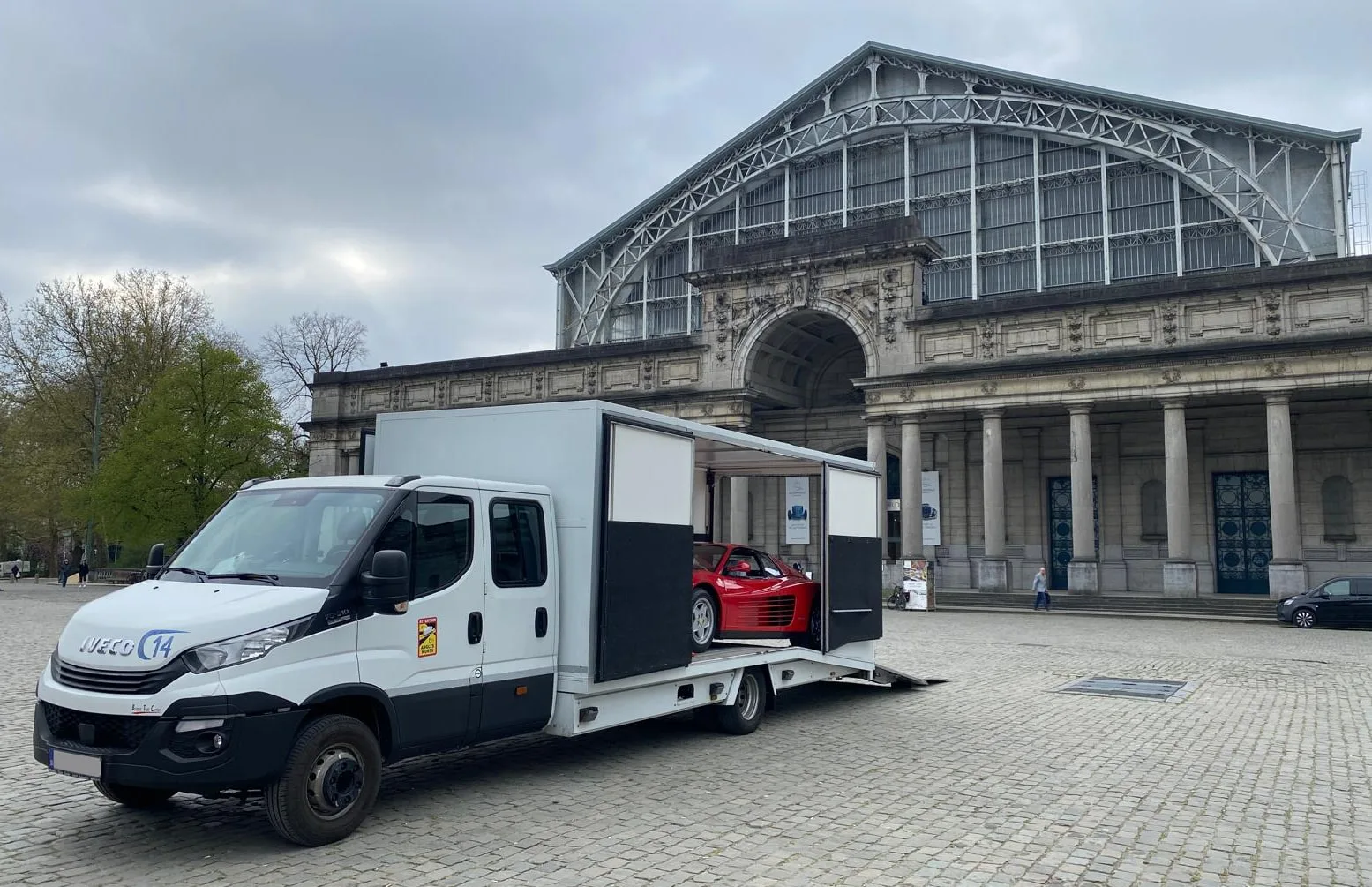
In front of the halls
One car, one truck: the size of the load decides the size of the vehicle.
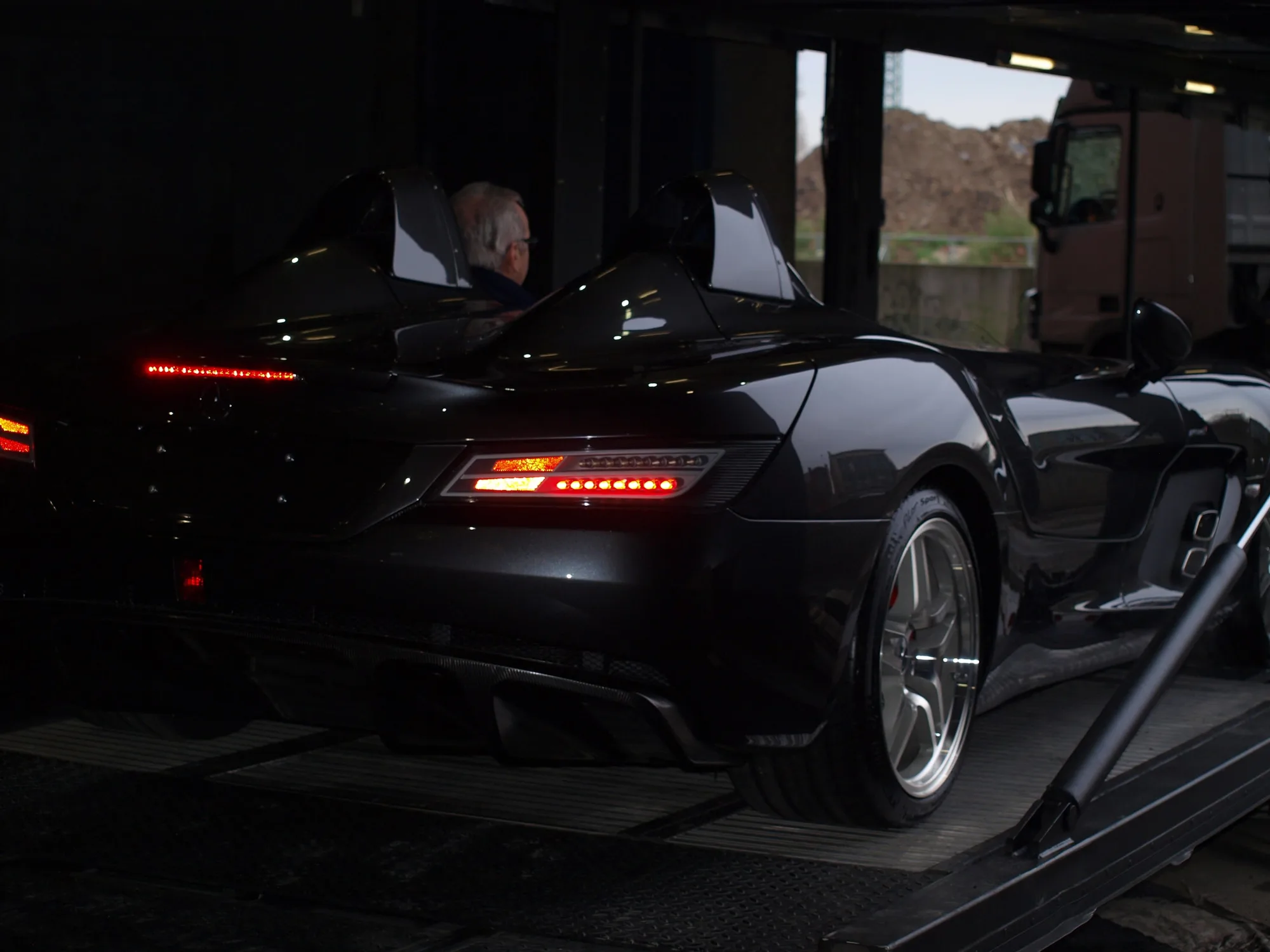
Reversed in
Reversed aboard so it drives out forwards. A car with this much overhang is not turned on a deck.
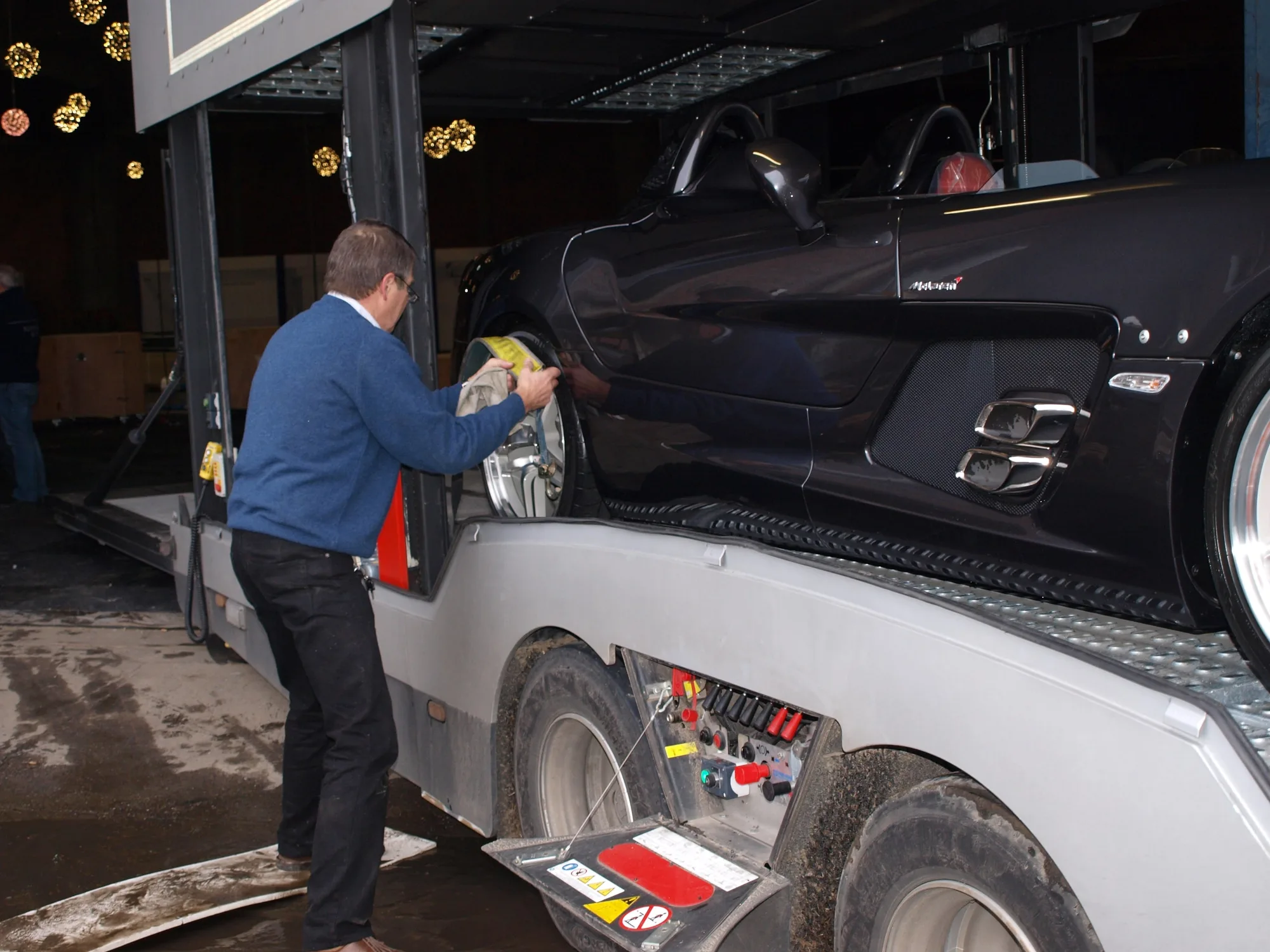
Four points
The car sits on its own suspension. The straps hold the wheels, and the wheels hold the car.
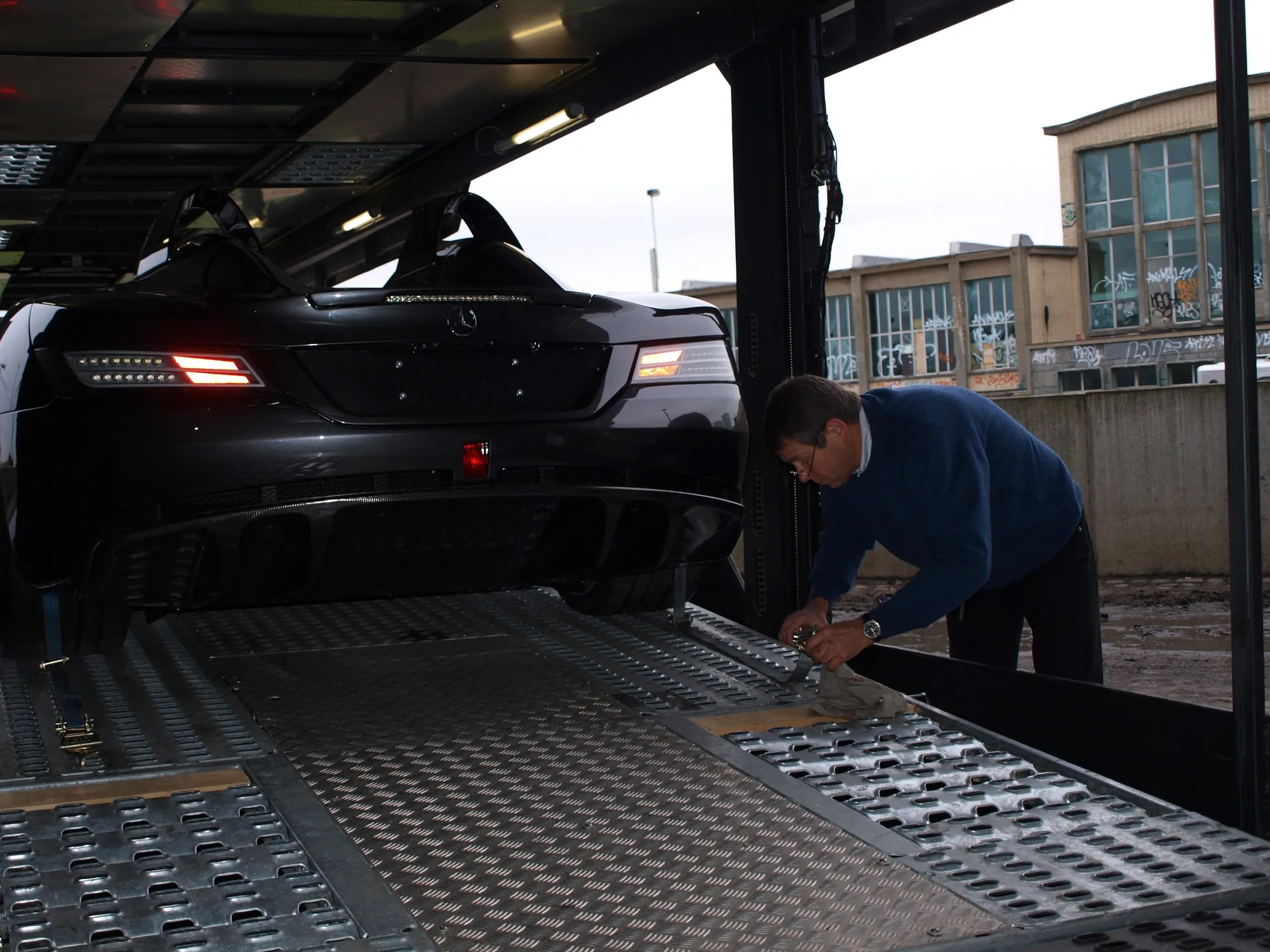
Tensioned by hand
Tight enough that nothing moves, loose enough that the suspension works. Judged, not measured.
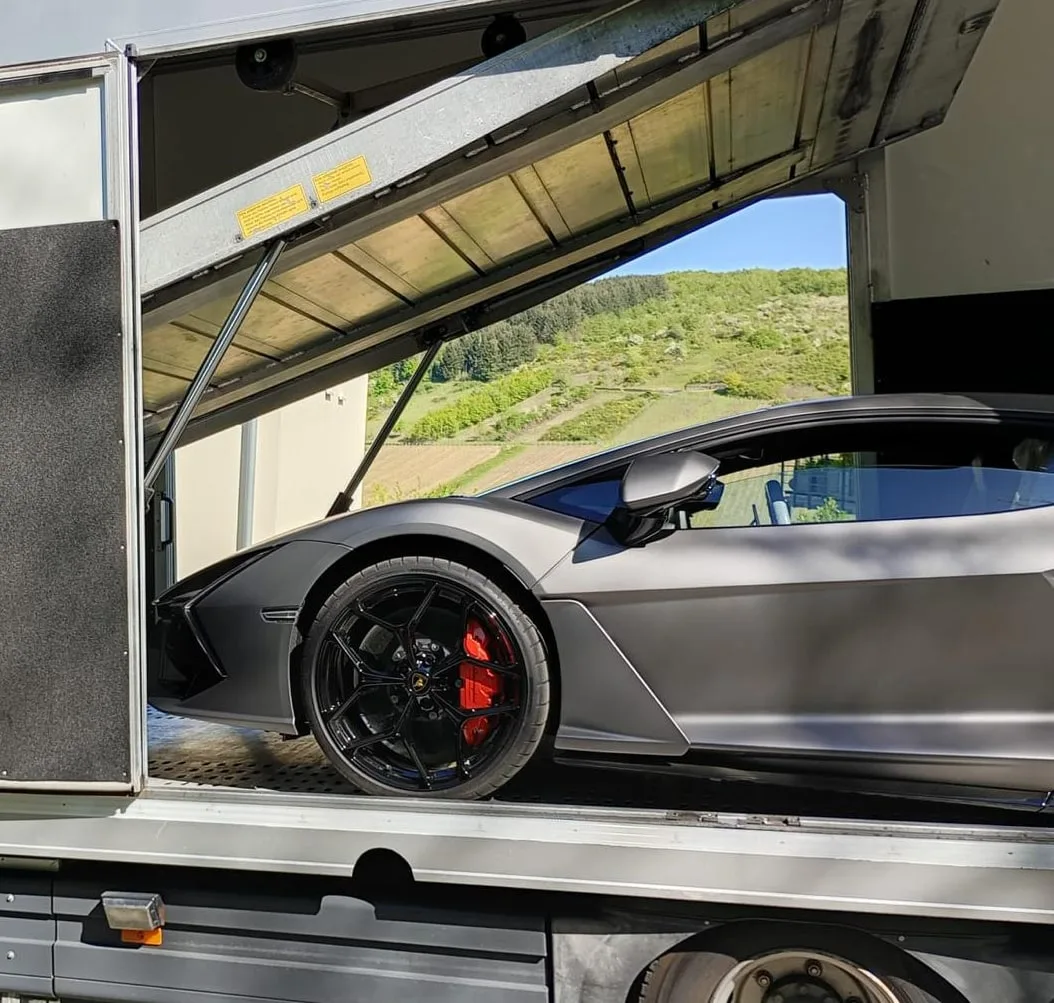
Open flank
The side opening exists to check the lashing without moving anything.
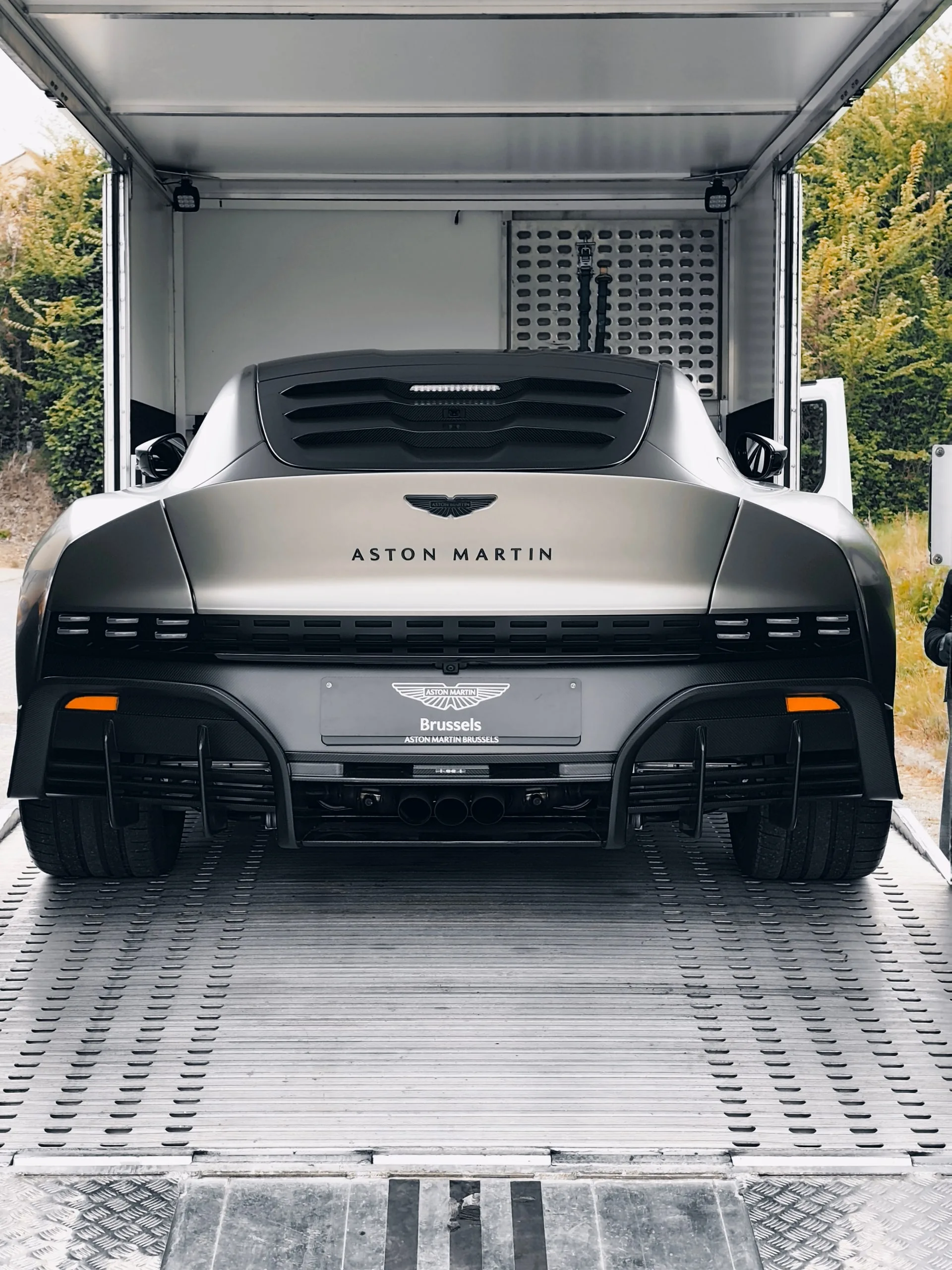
Enclosed cabin
Padded walls, clean lighting, no other car close enough to touch it.
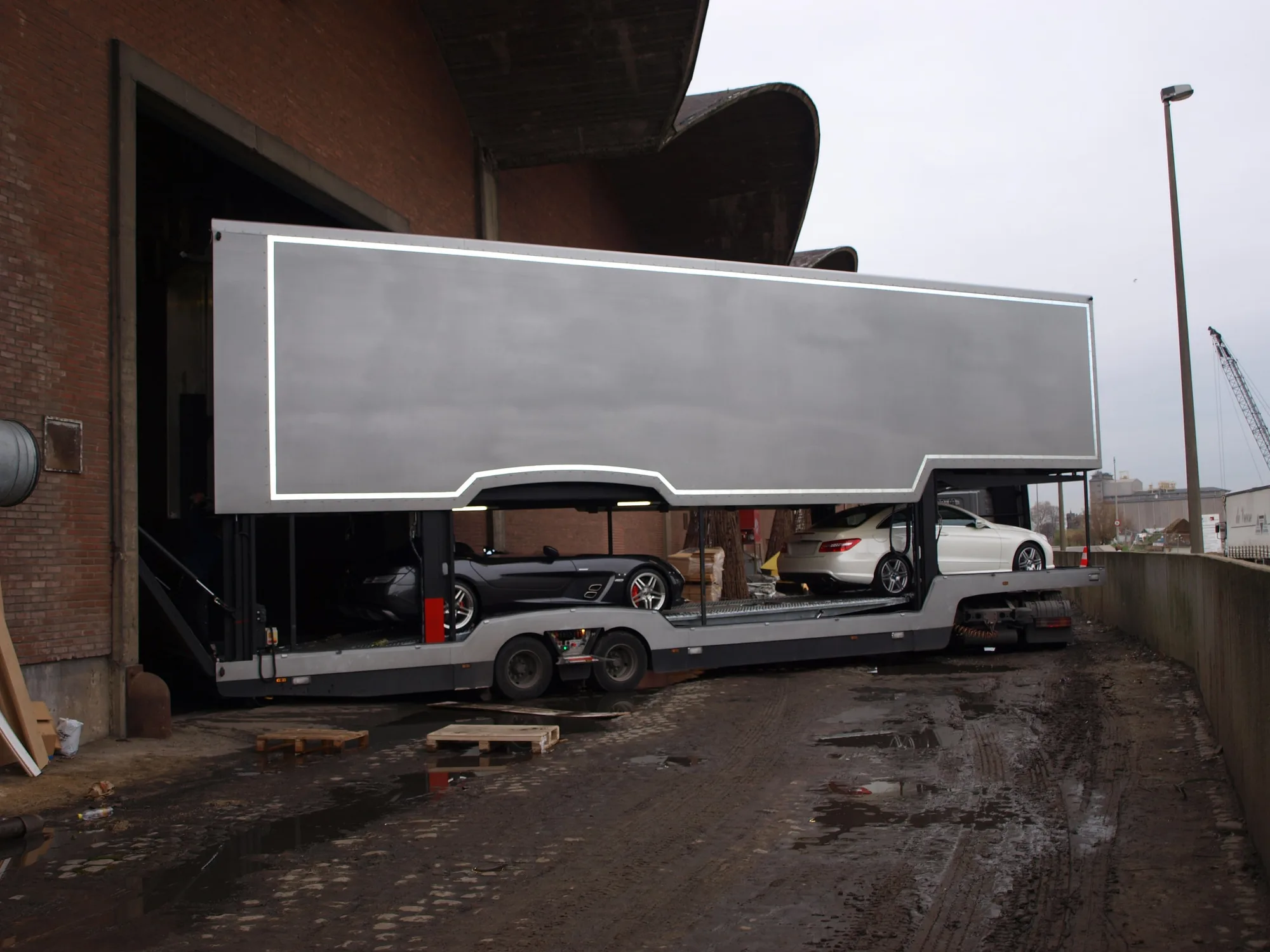
On the quay
A car that crosses water arrives at a dock, not at a dealership. Someone has to be there.
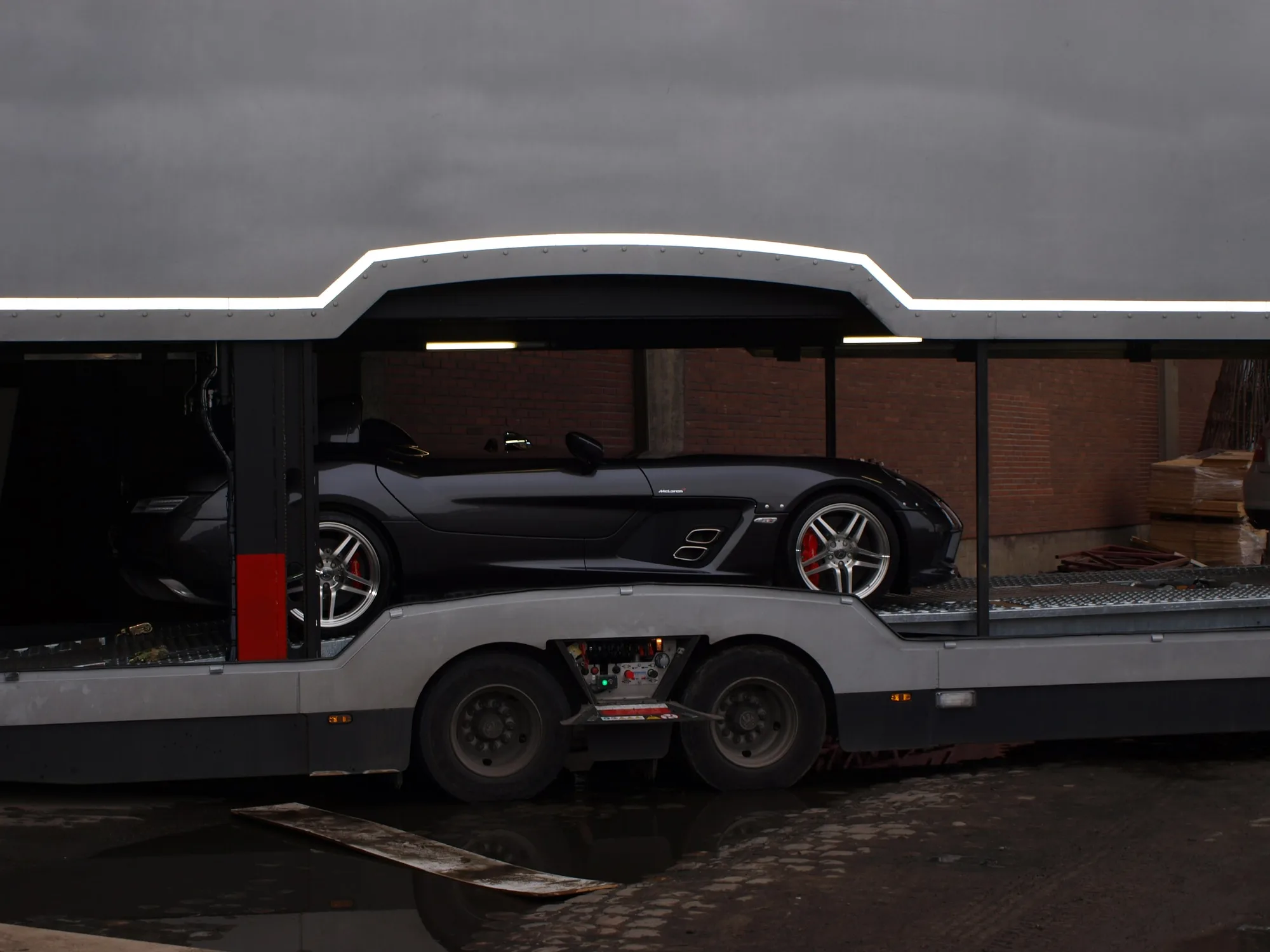
Waiting on the deck
Loaded and left closed until the address is confirmed. The truck waits, the car stays inside.
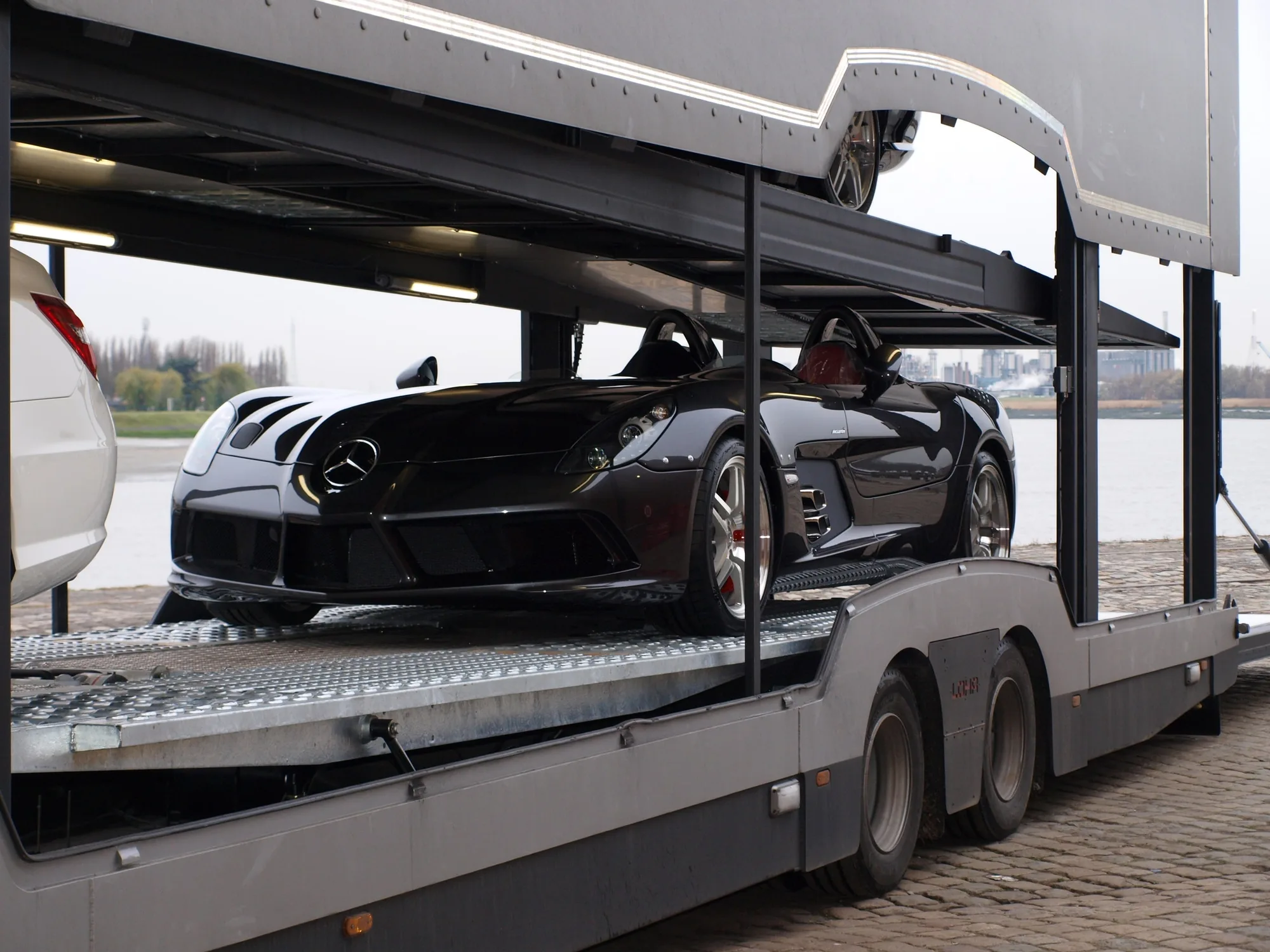
Two off the boat
Both cars came off the same ship. They leave on the same truck, to two different addresses.
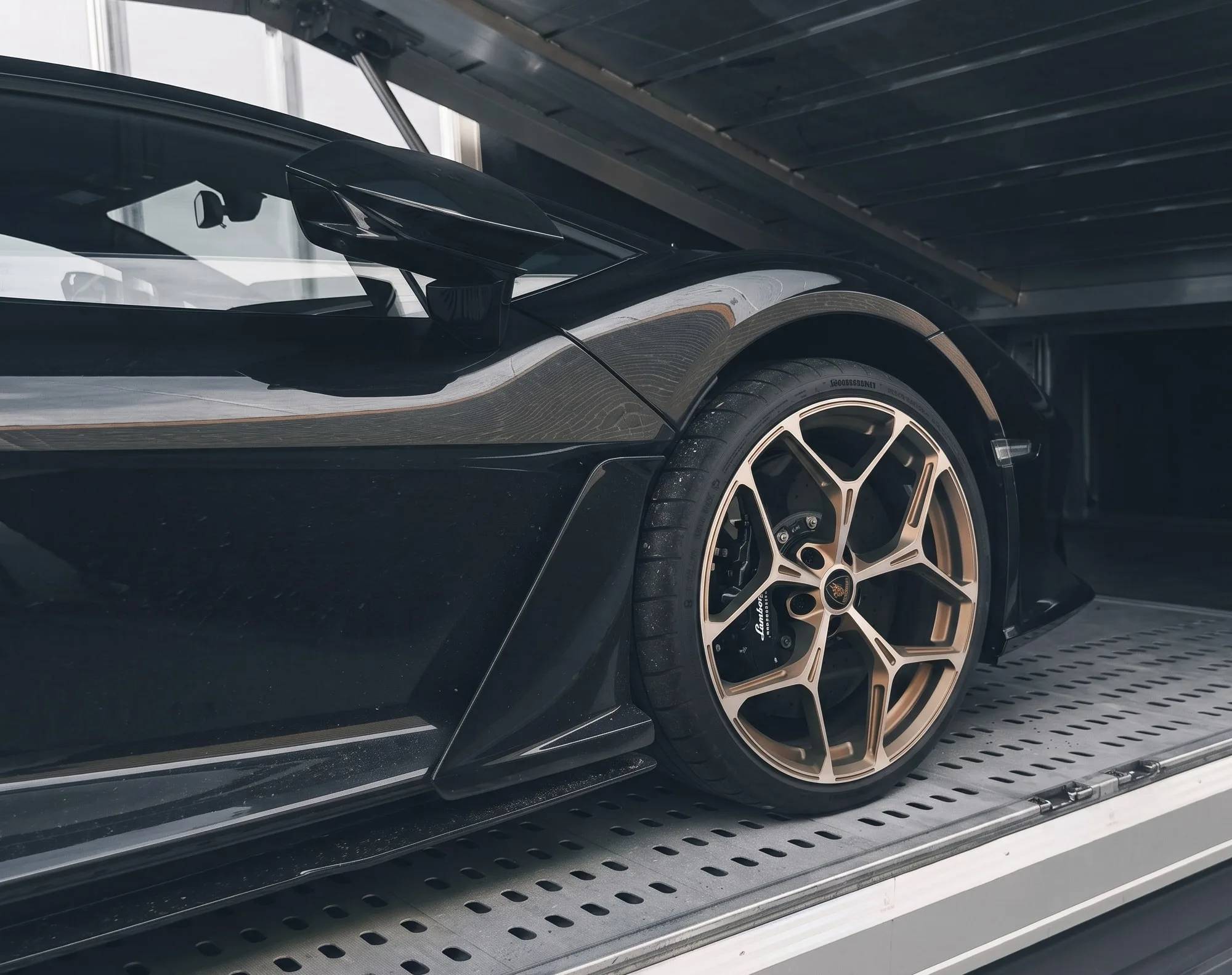
Under the top deck
A few centimetres above the roof, measured before loading.
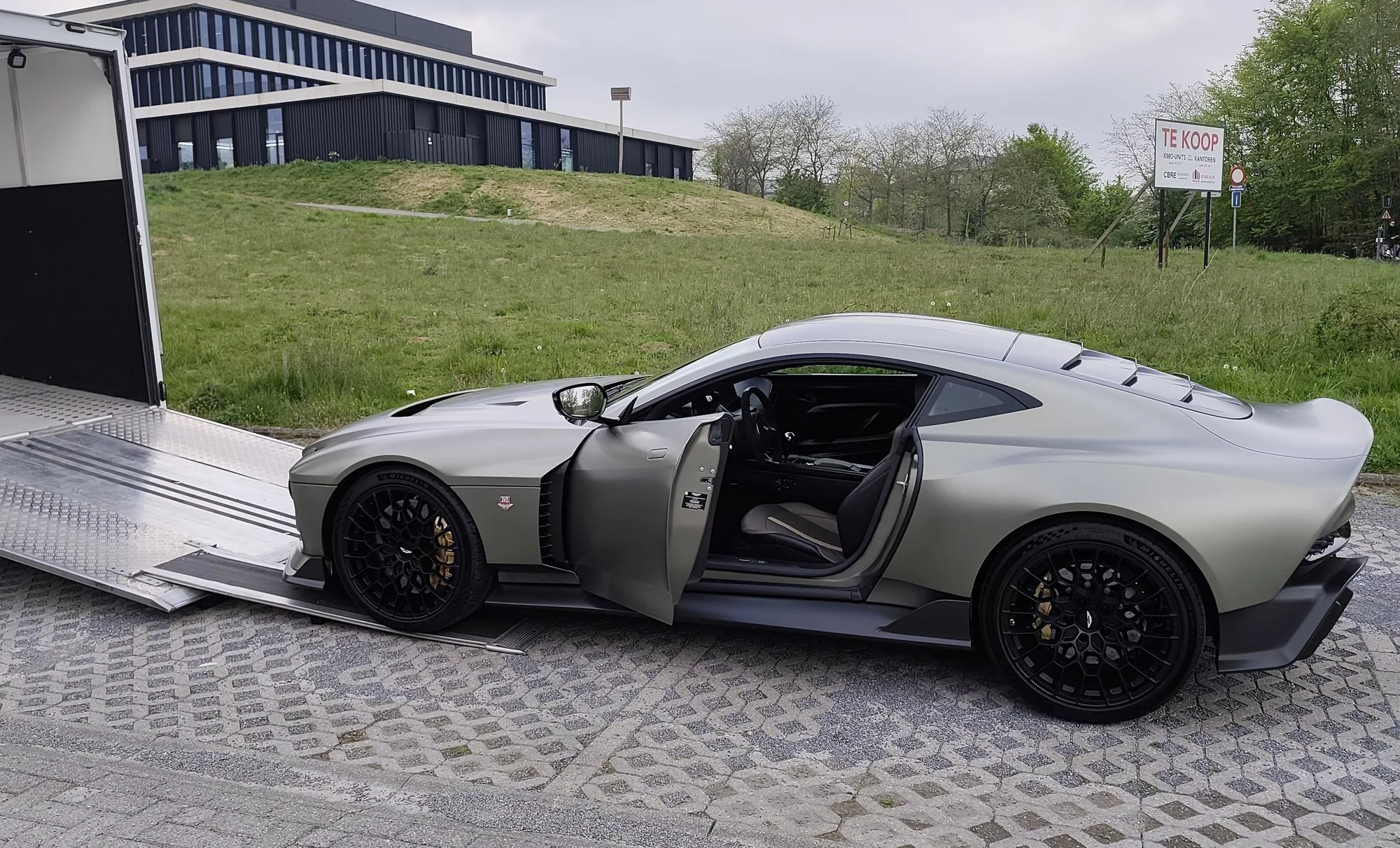
Door open
Delivered ready to drive, keys handed over in person.
Down onto cobbles
Cobbles are crossed at walking pace, wheels straight.
Both sides open
With both sides open the car is inspected before a single strap comes off.
Checked before the gate
The last check is made where the truck is loaded, not at the first roundabout.
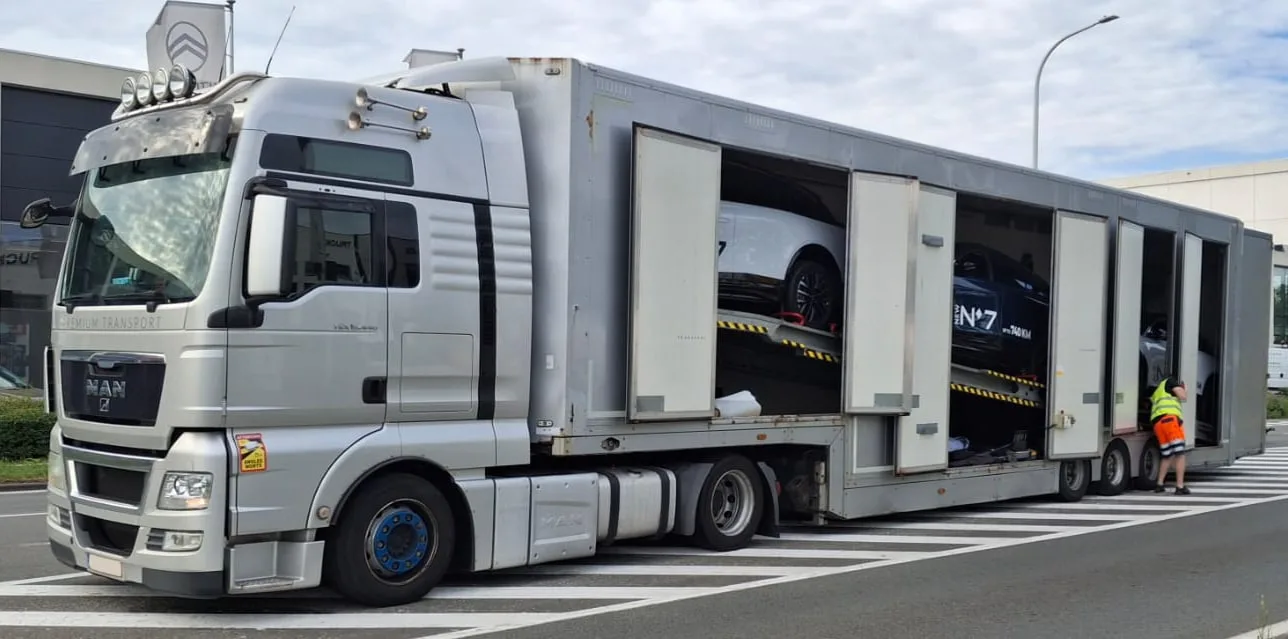
Press fleet
Several test cars moved together, each returned to its own address.
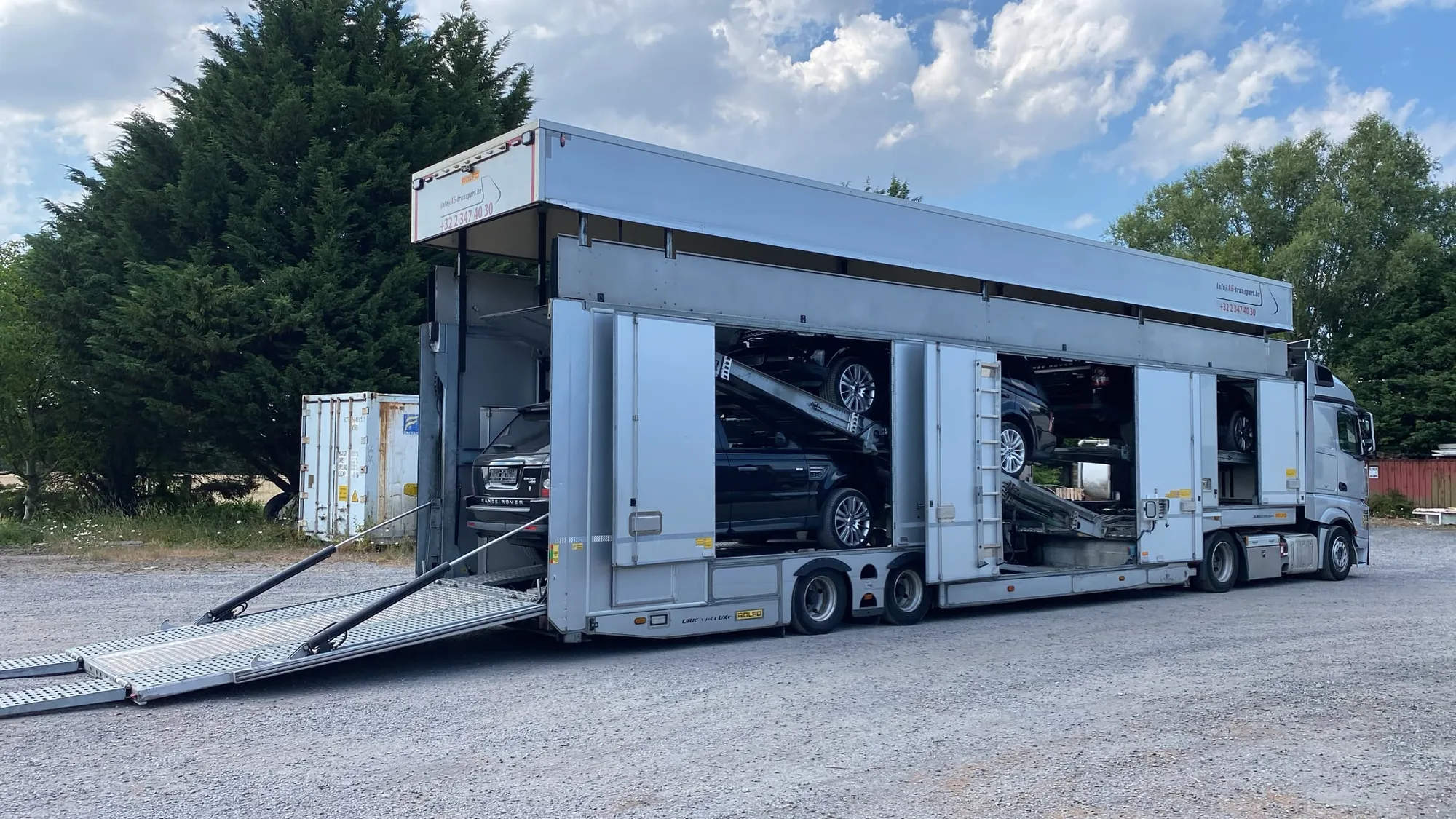
Ramps deployed
Three cars aboard, one comes down at a time.
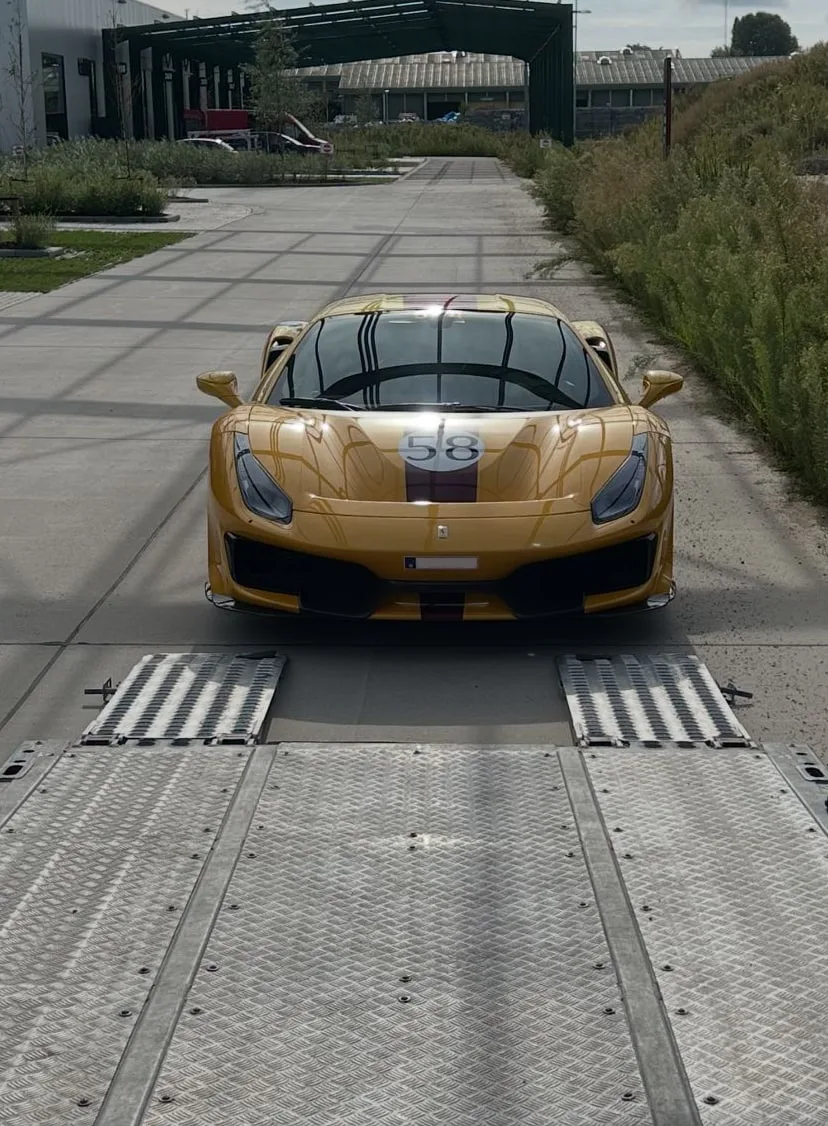
Collected in Spain
The car rolls up to the ramps. The crew does the rest.
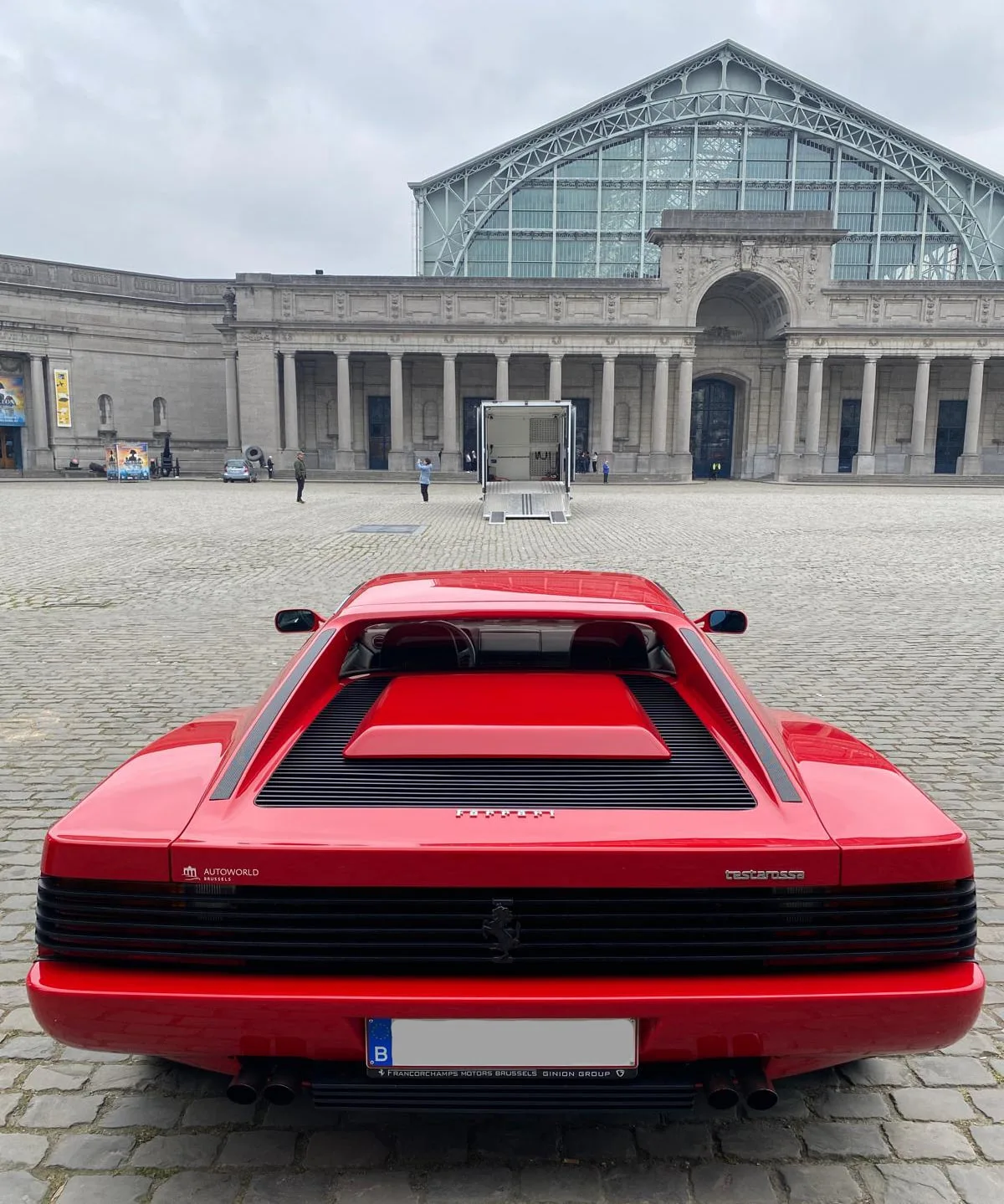
At the museum door
The truck parks at the entrance. The car covers only the last few metres.
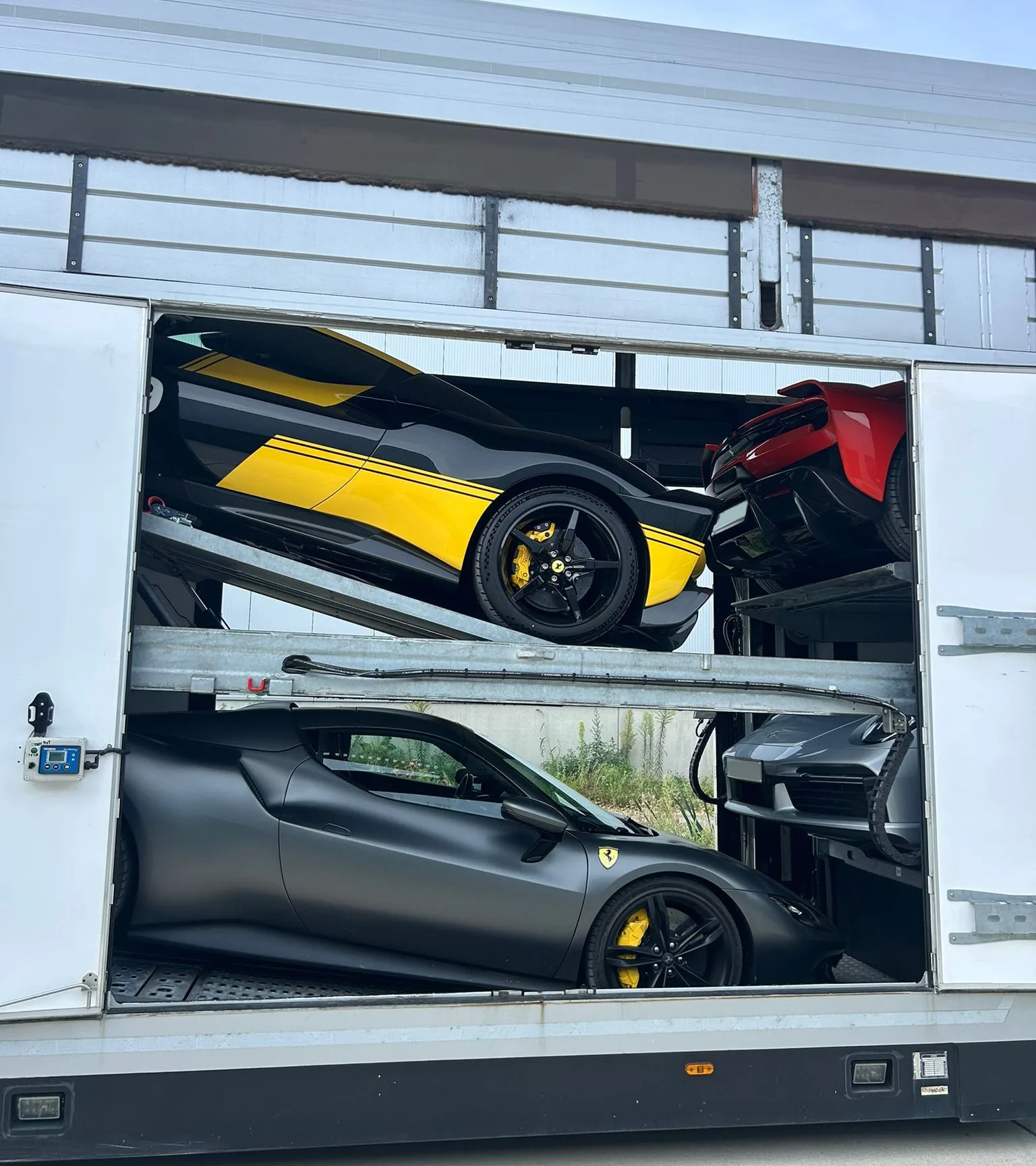
Open along the side
The side opens along its whole length: we check without unloading anything.
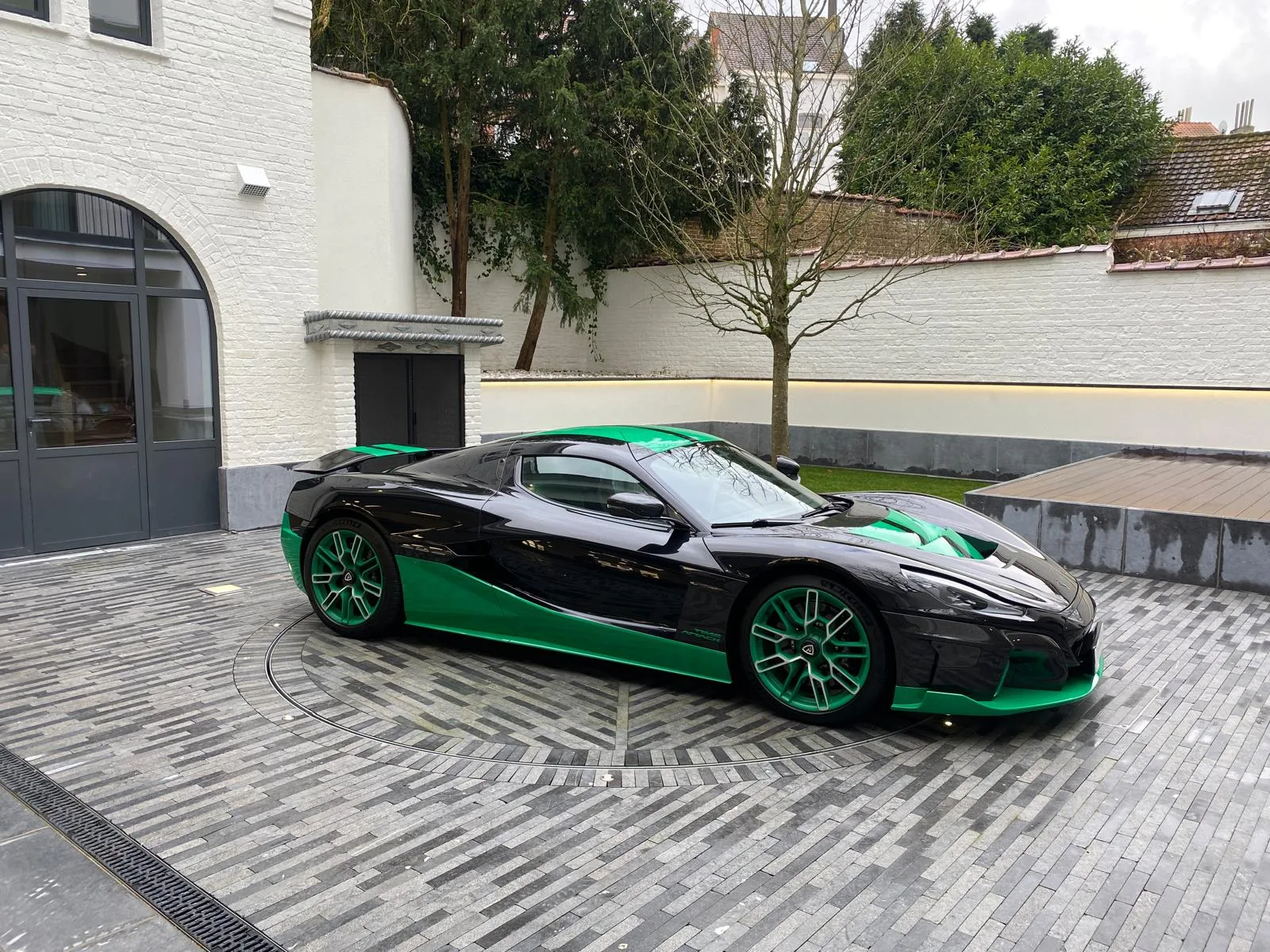
Delivered to the door
It reaches its courtyard without covering a metre on its own wheels.
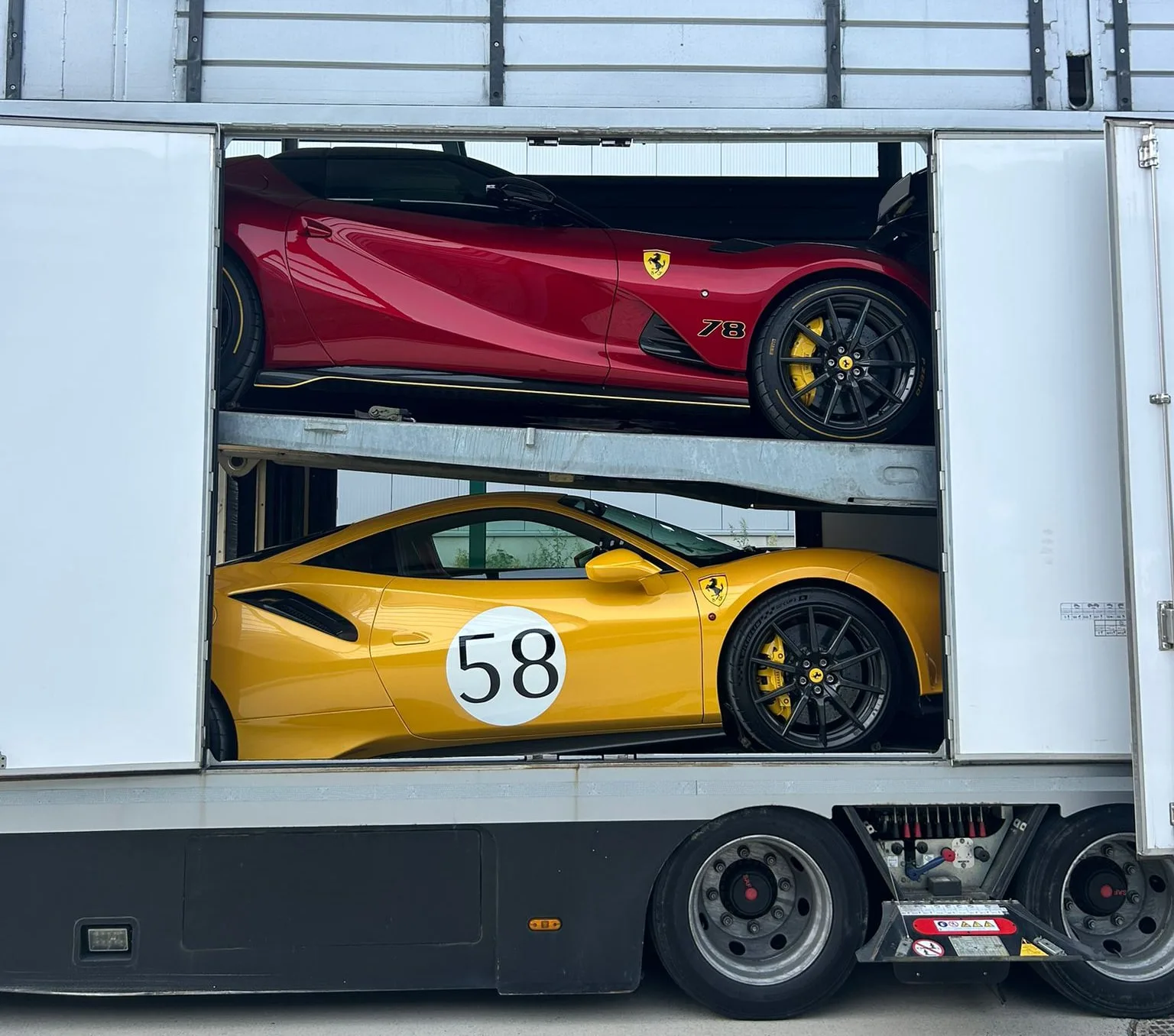
Two decks, two numbers
Several cars, one load, all taken aboard the same day in Spain.
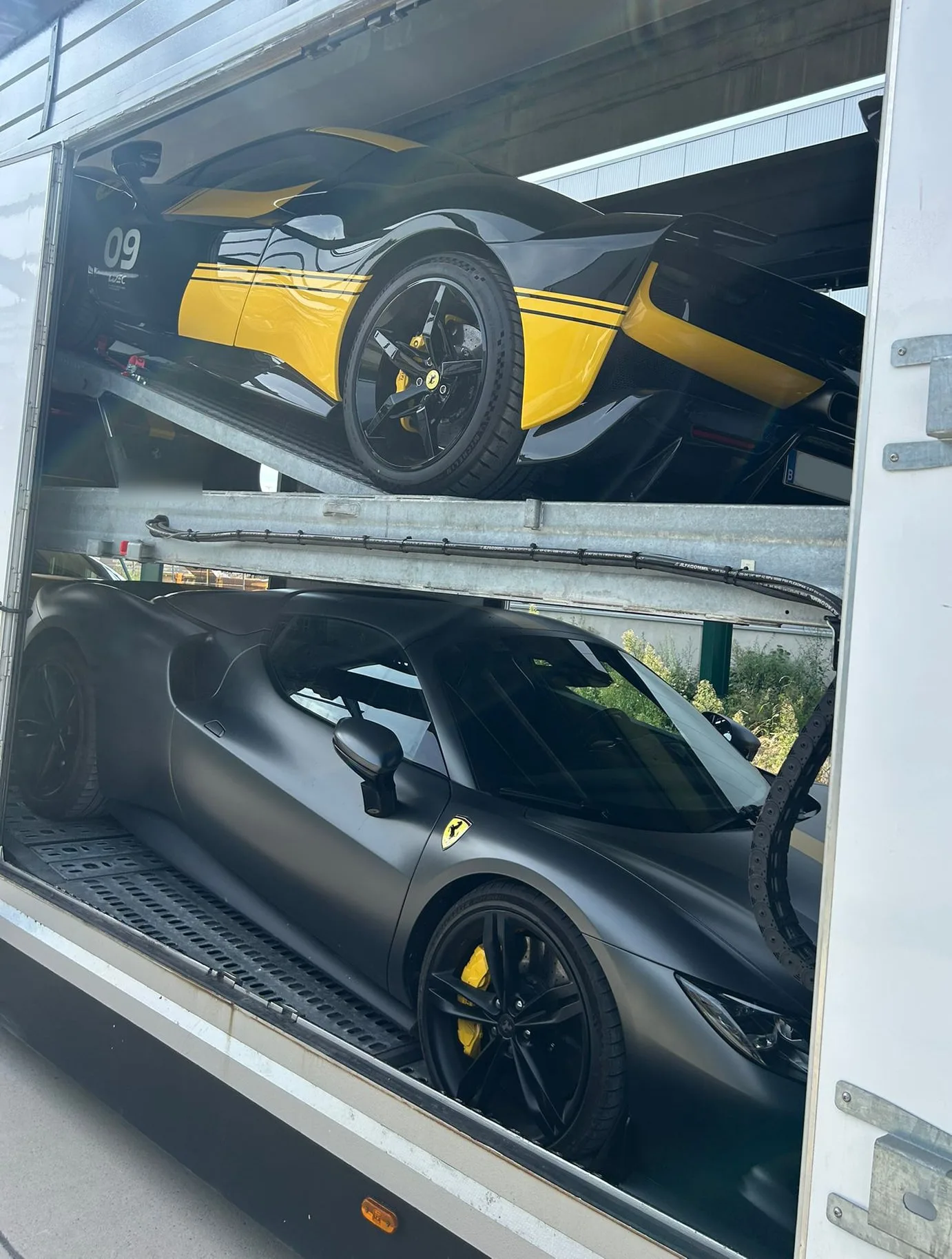
Set to the centimetre
The upper deck is set car by car, for height as much as for length.
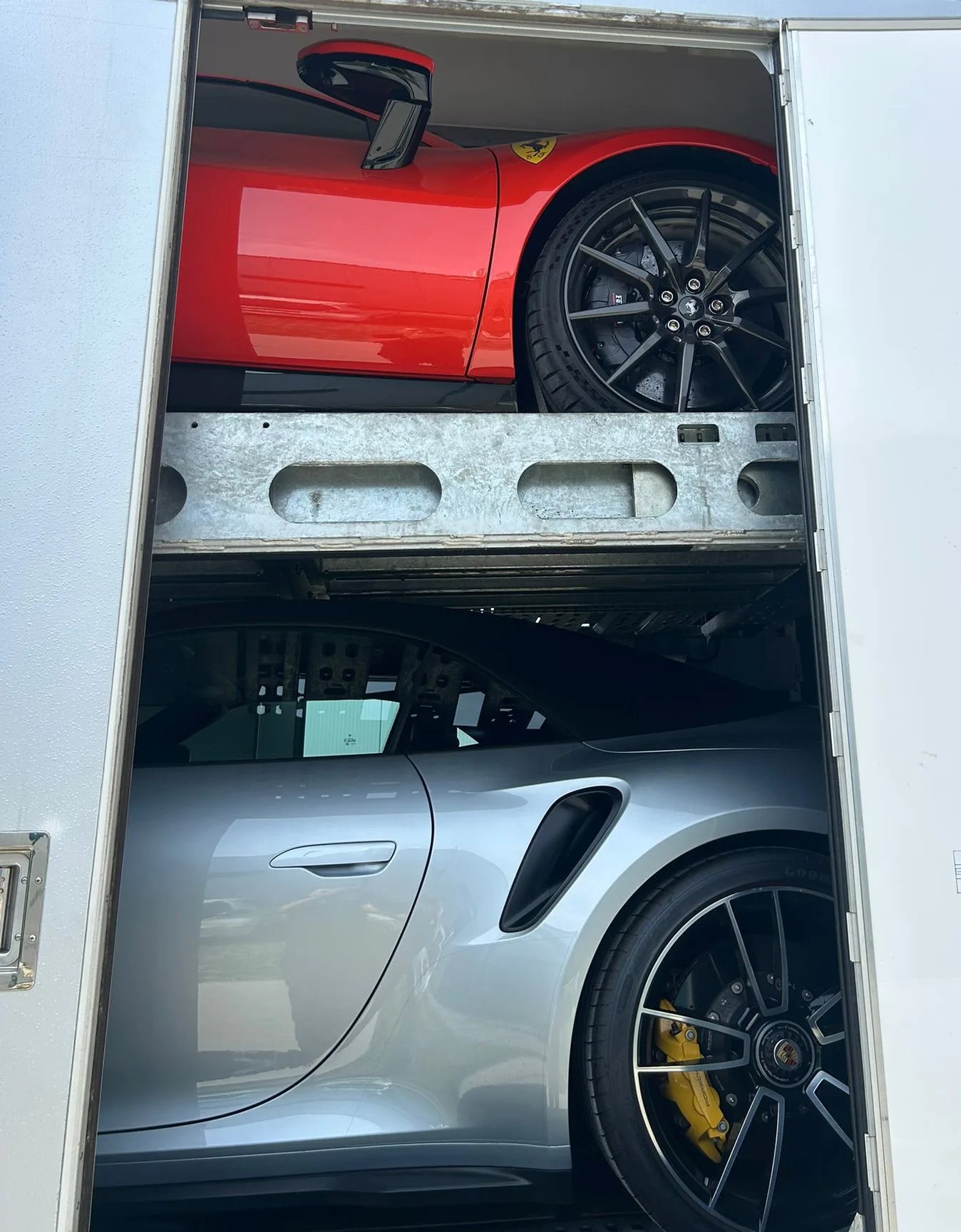
Two marques, one truck
One truck, several cars: each has its own address at both ends.
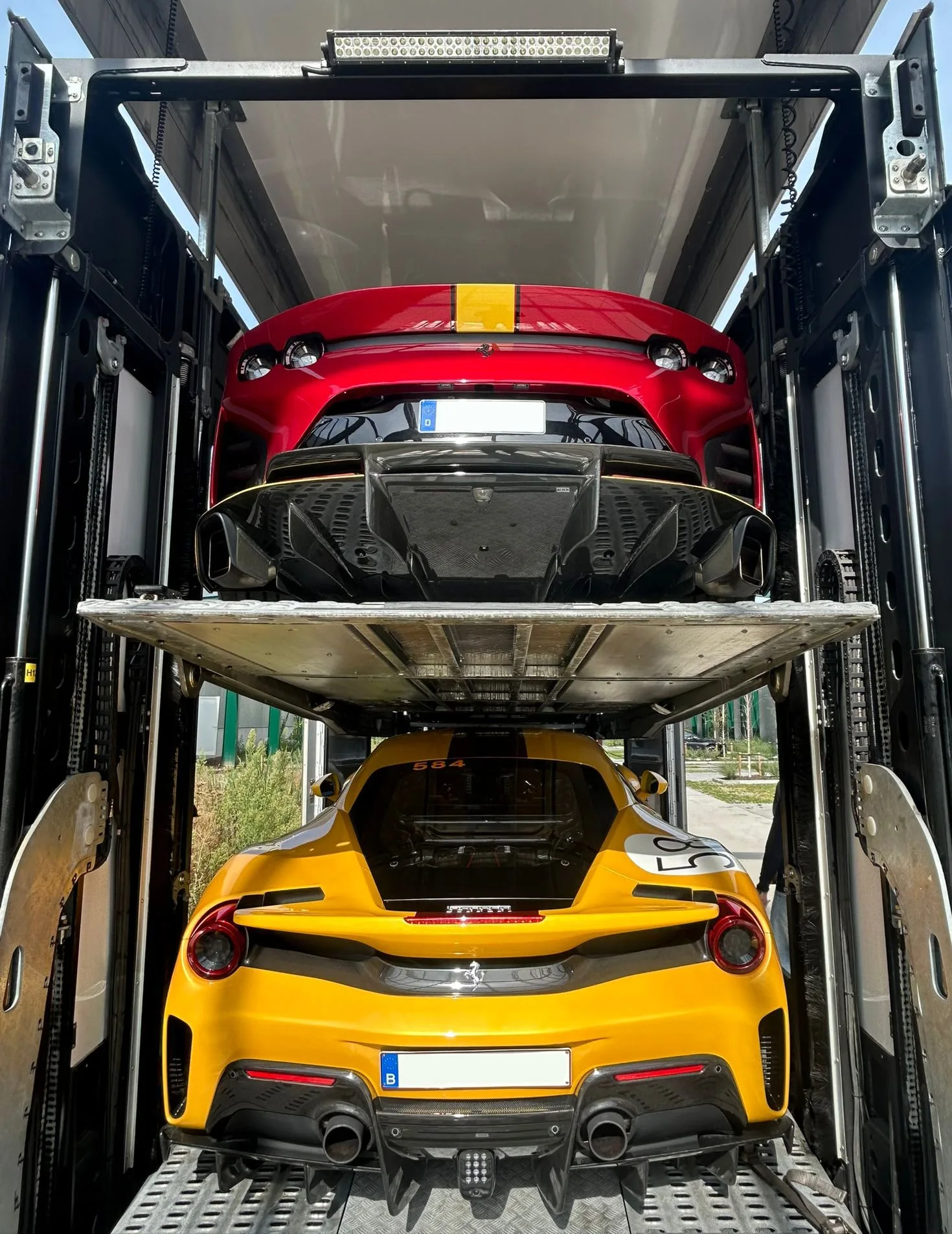
When the doors open
When the doors open, everything is where the crew left it.
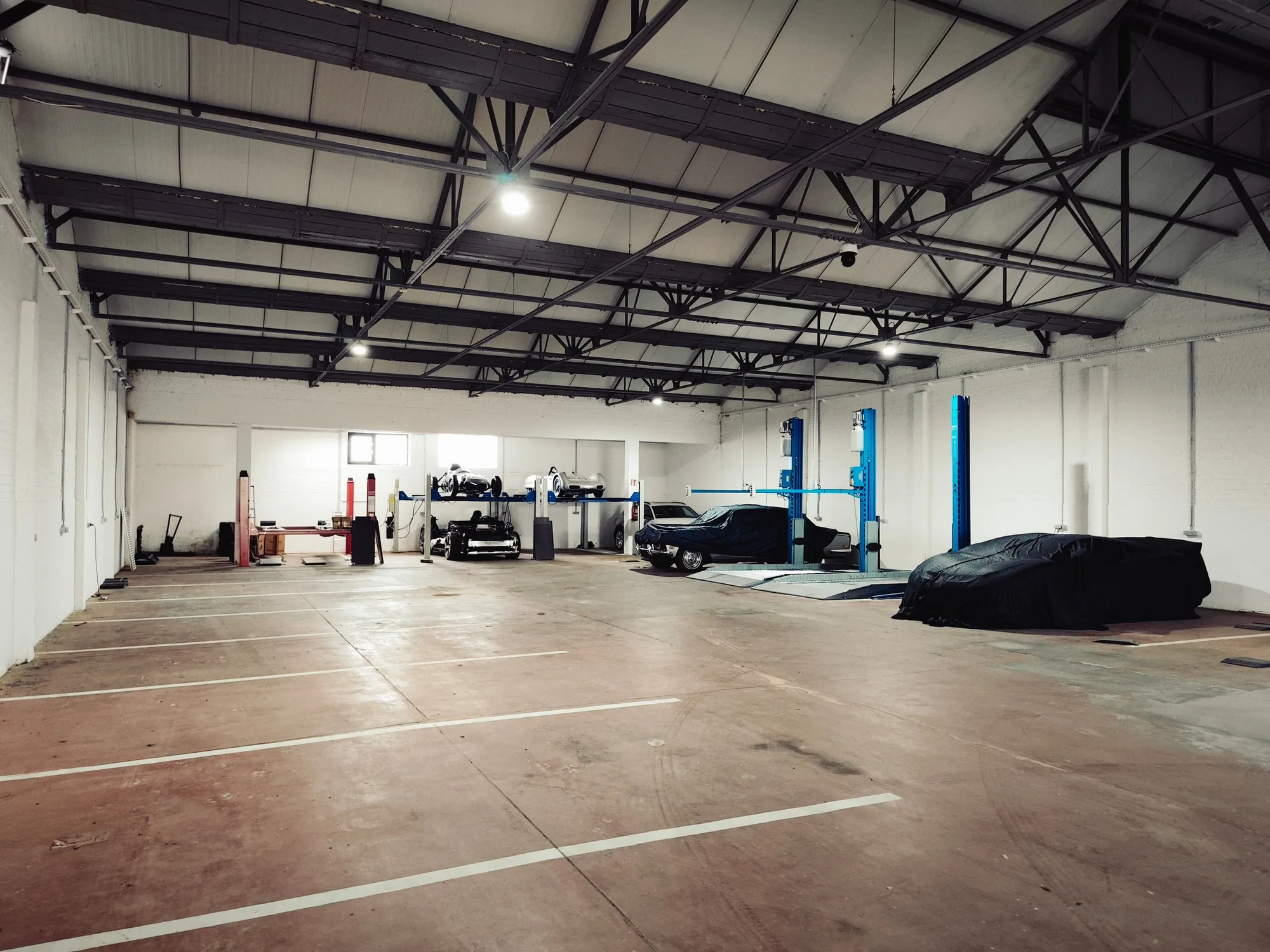
The building
A closed building and marked bays: every car has its own place.
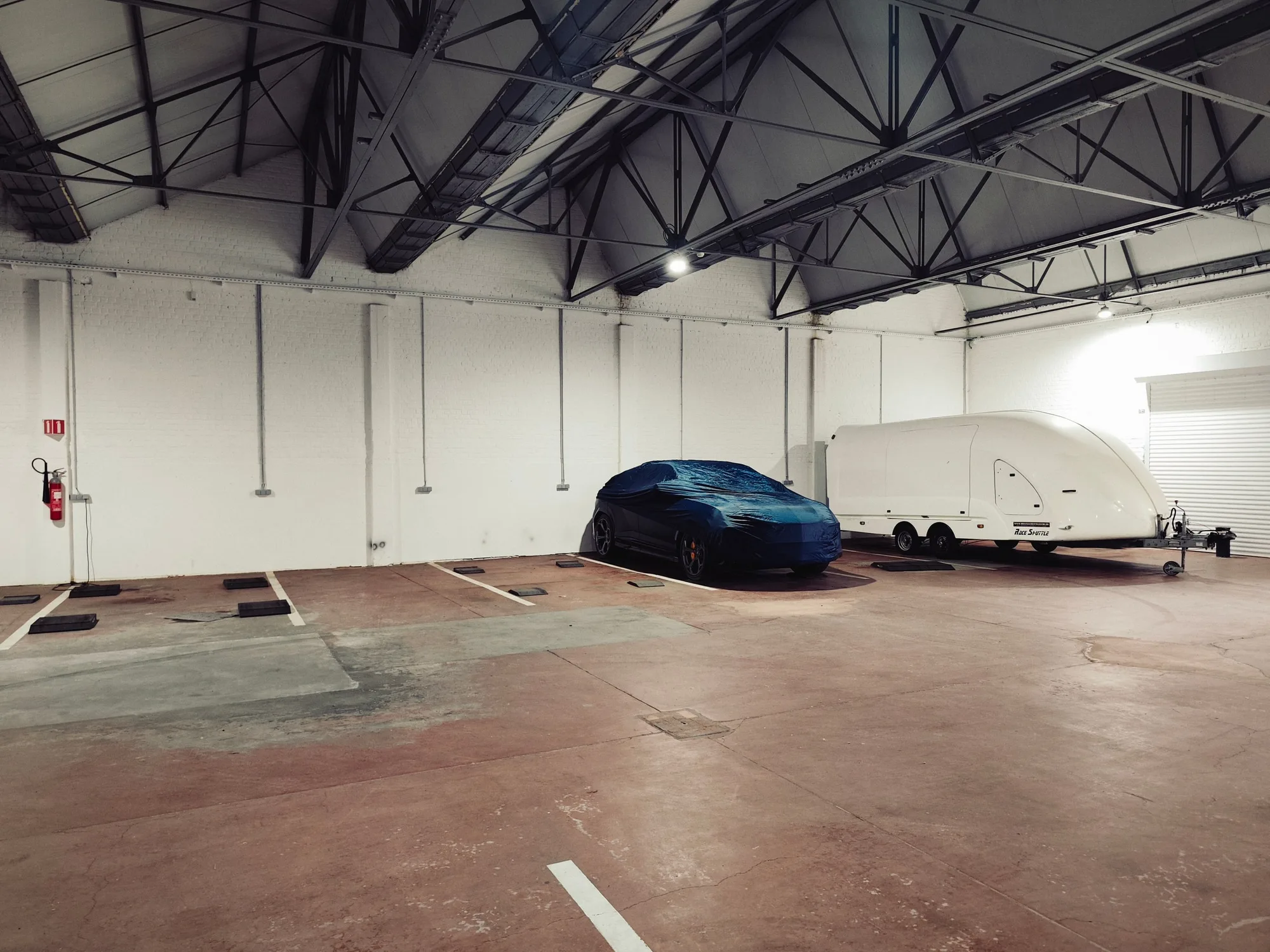
Doors shut
Nothing of ours sleeps outside. The shutter closes on what is inside.
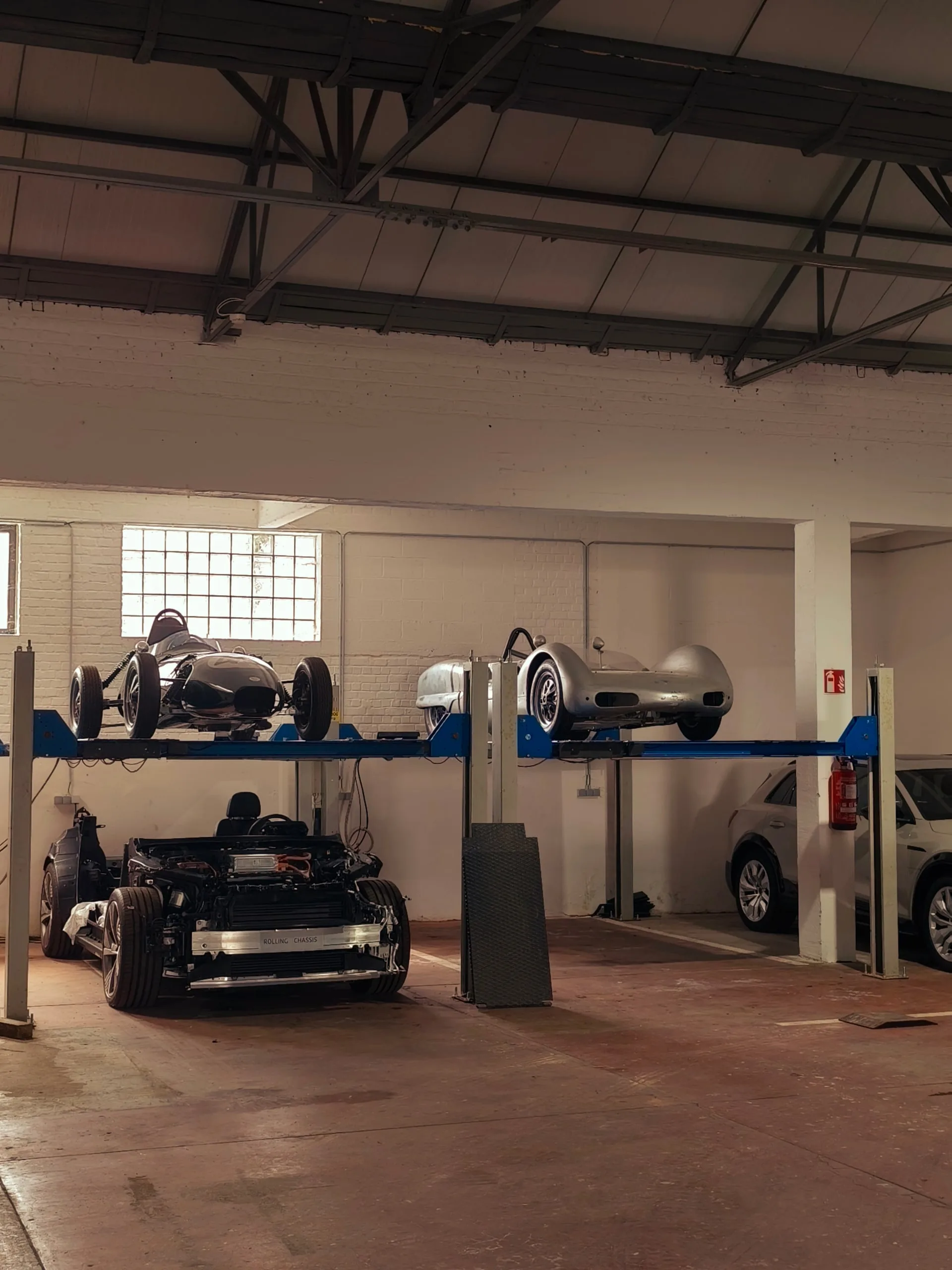
Up on the lifts
The lifts double the floor without a single car touching another.
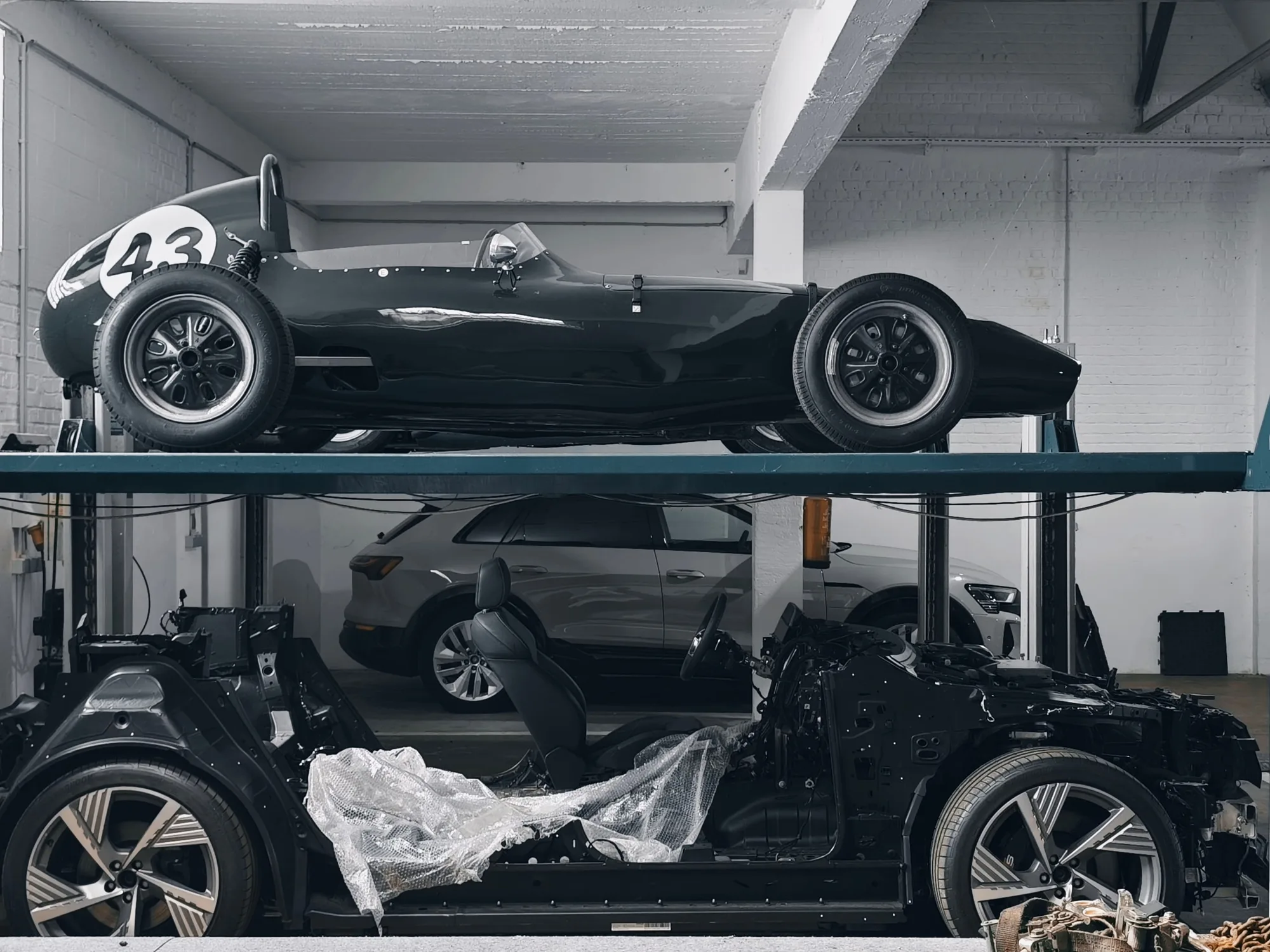
Two levels
A racing car above a bare chassis: storage does not pick what it keeps.
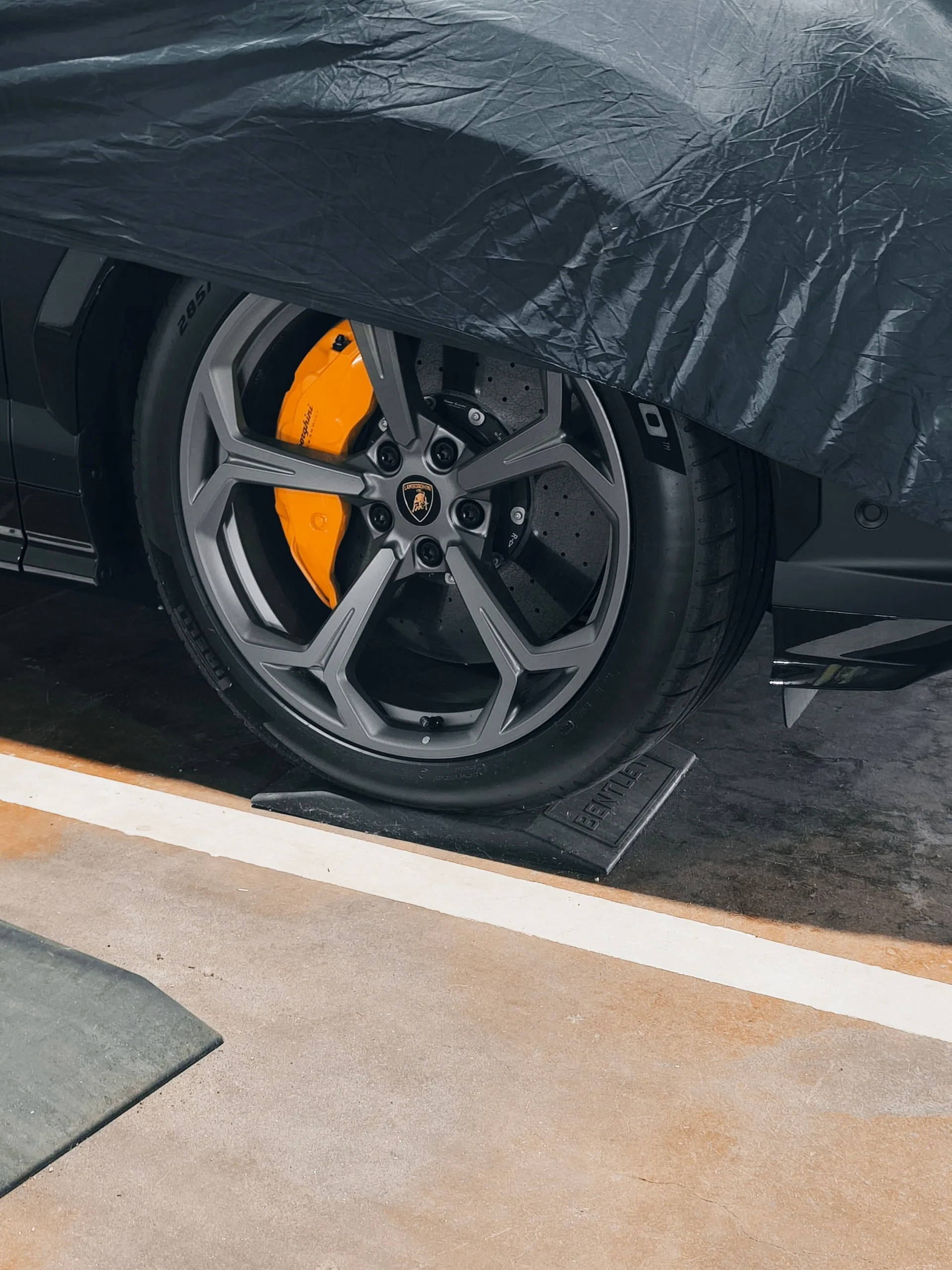
Under the cover
The tyre rests on a pad. That is what stops it flat-spotting while parked.
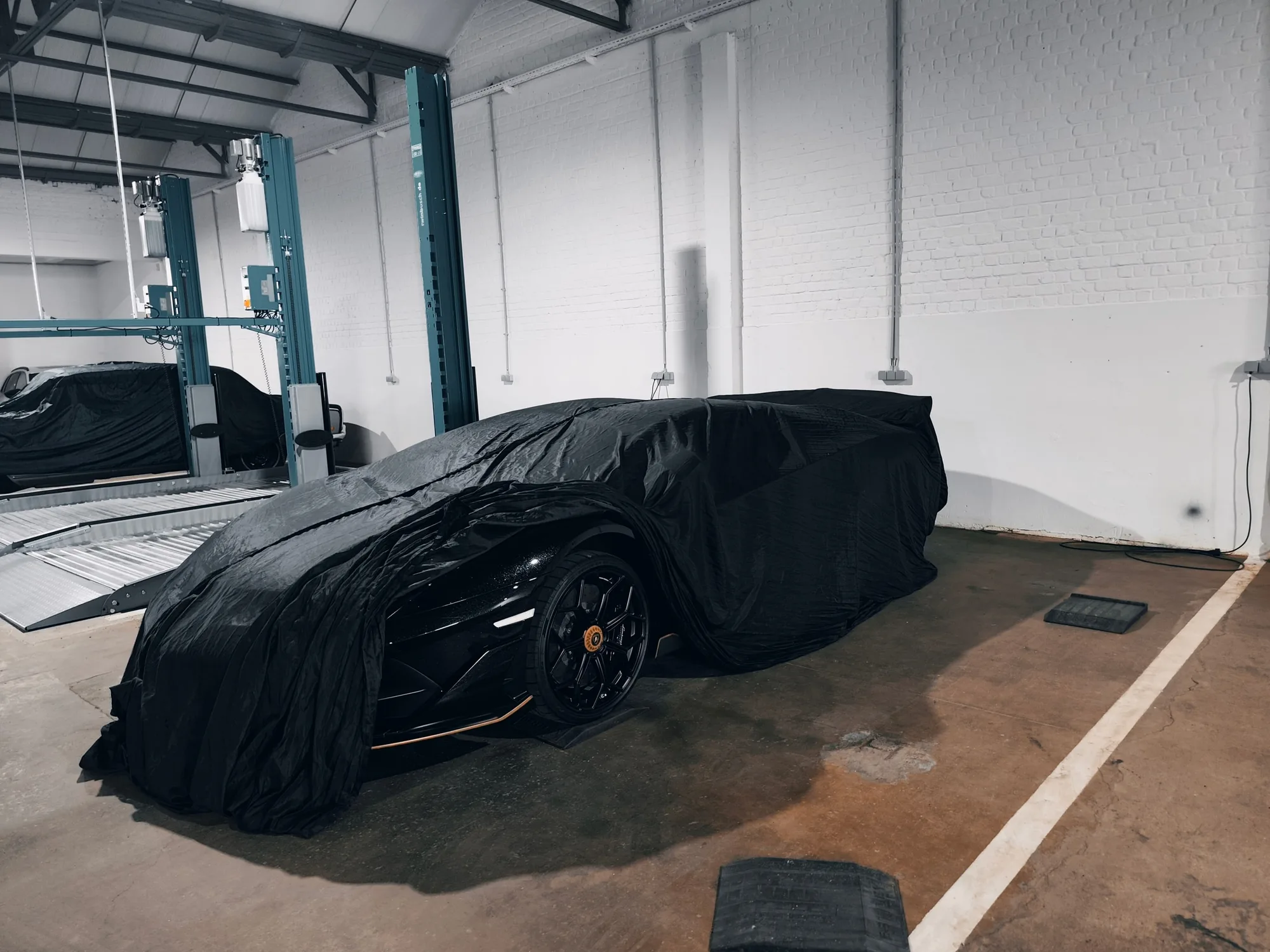
In its place
Cover on, bay assigned: it does not move again until the day it leaves.
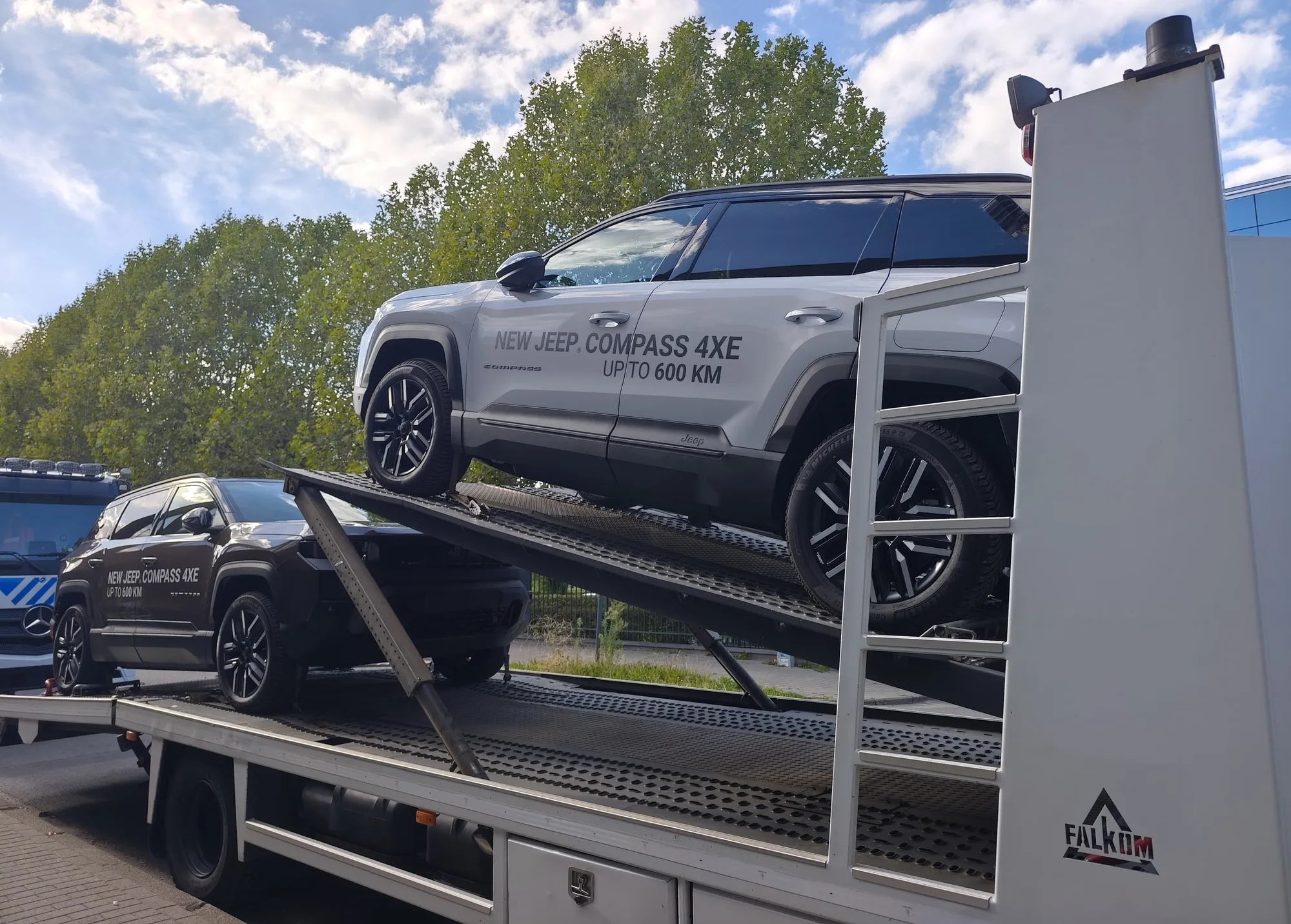
Two on one flatbed
The tilting deck carries a second car without making the truck any longer.
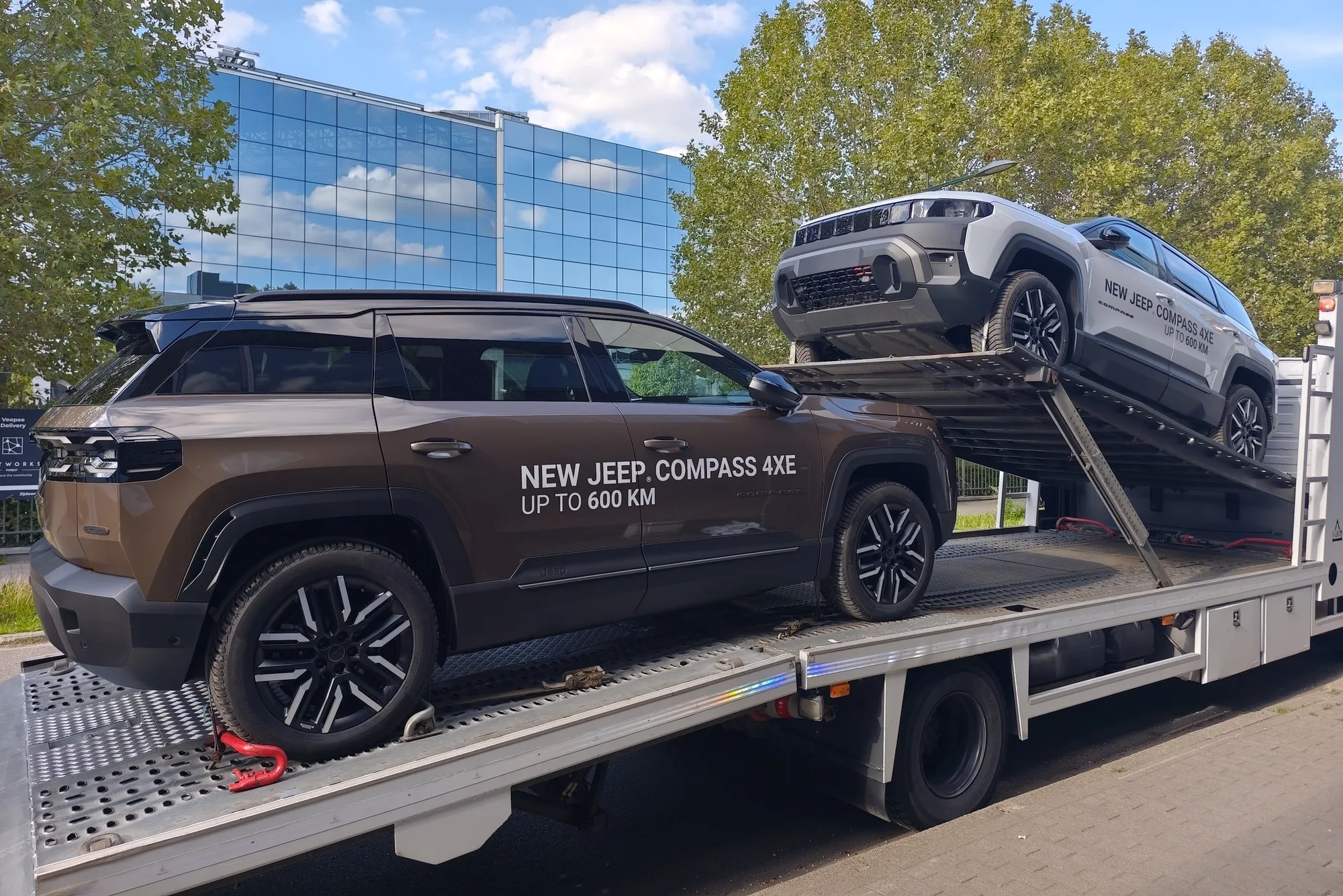
Roadshow cars
A demonstration car must reach the roadshow without a single extra kilometre.
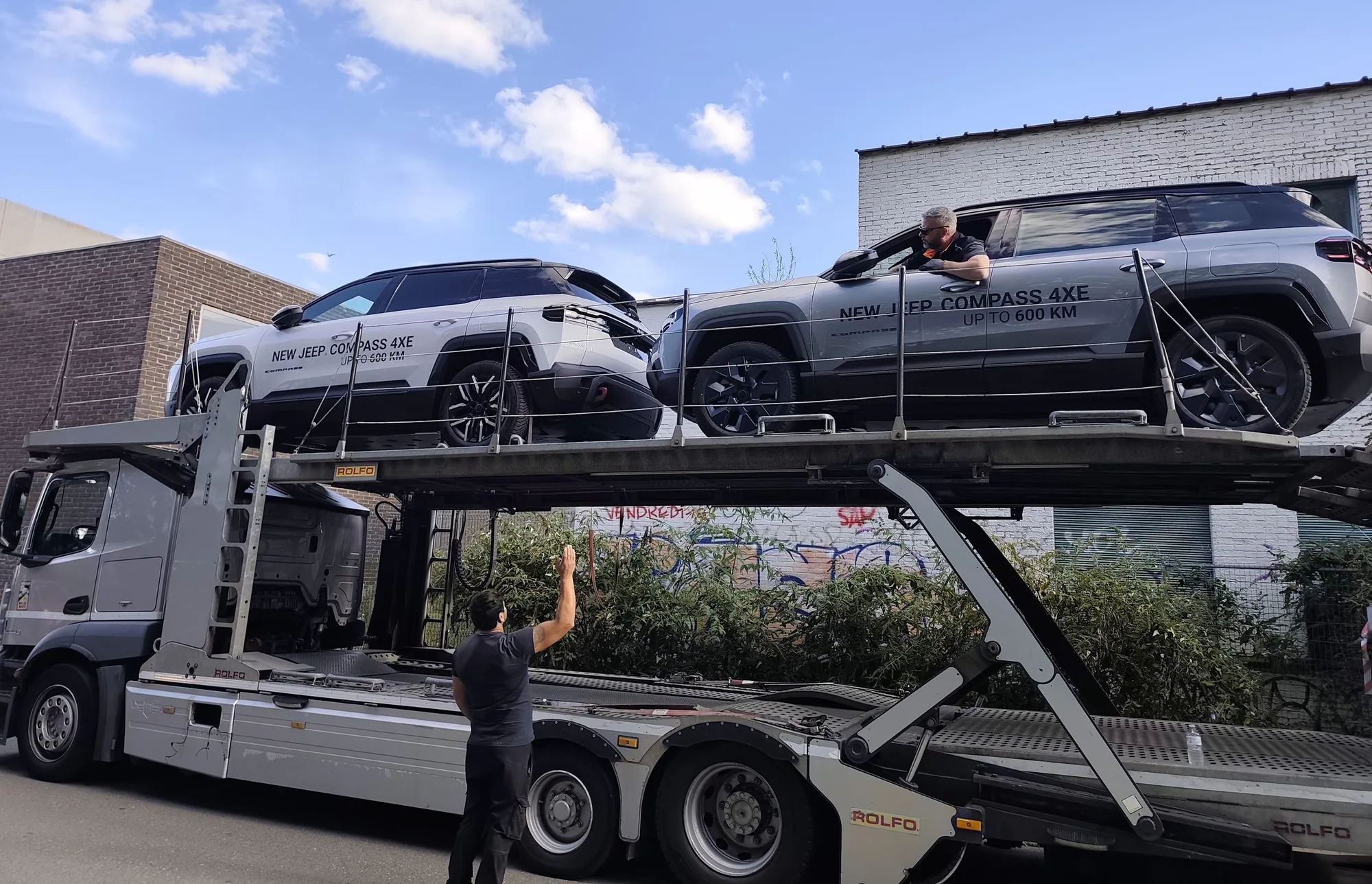
Guided from below
On the upper deck the driver cannot see the wheels. The one on the ground sees them for him.
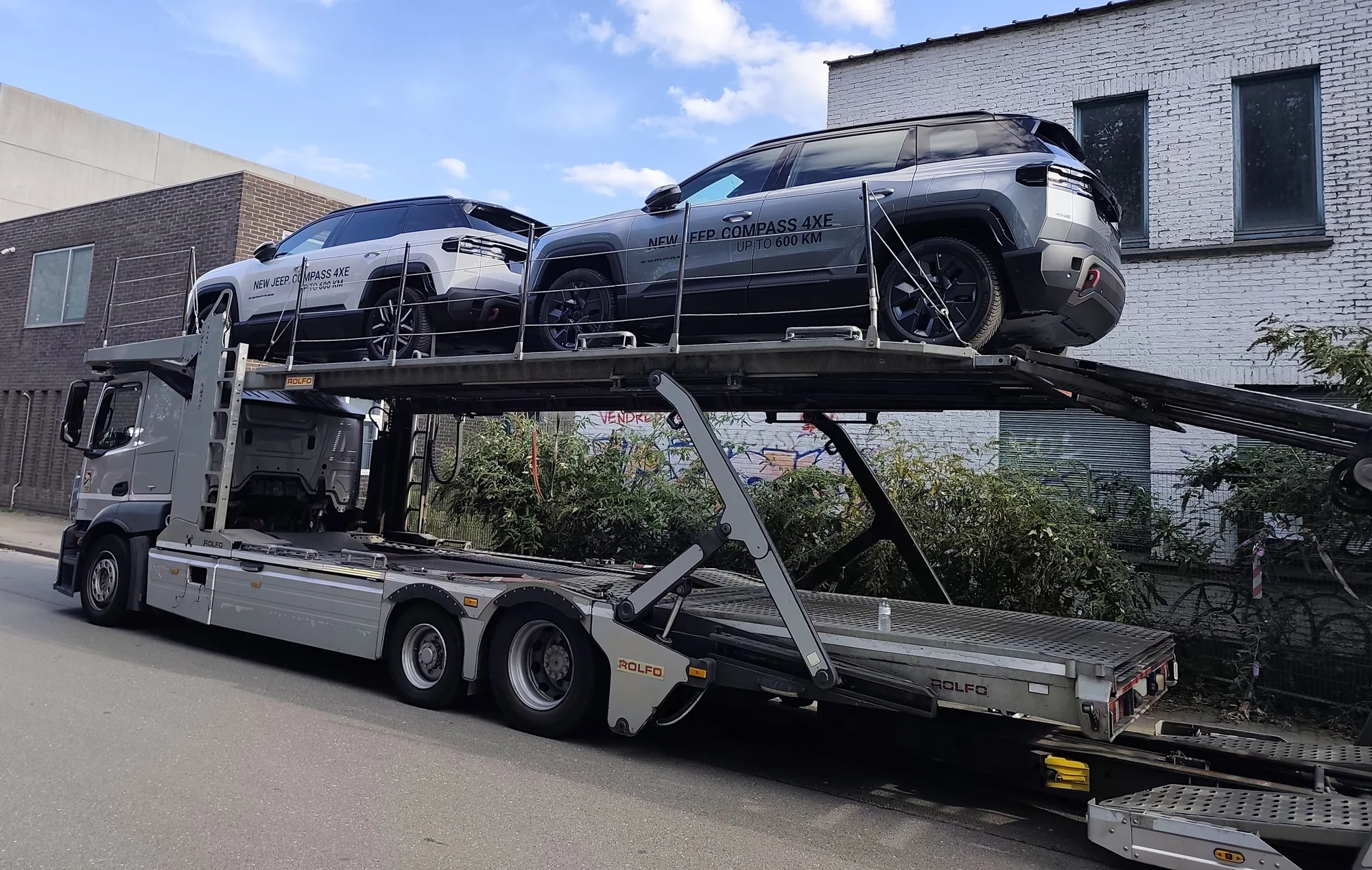
Loaded at the kerb
A roadshow fleet travels together: every car arrives on the same day.
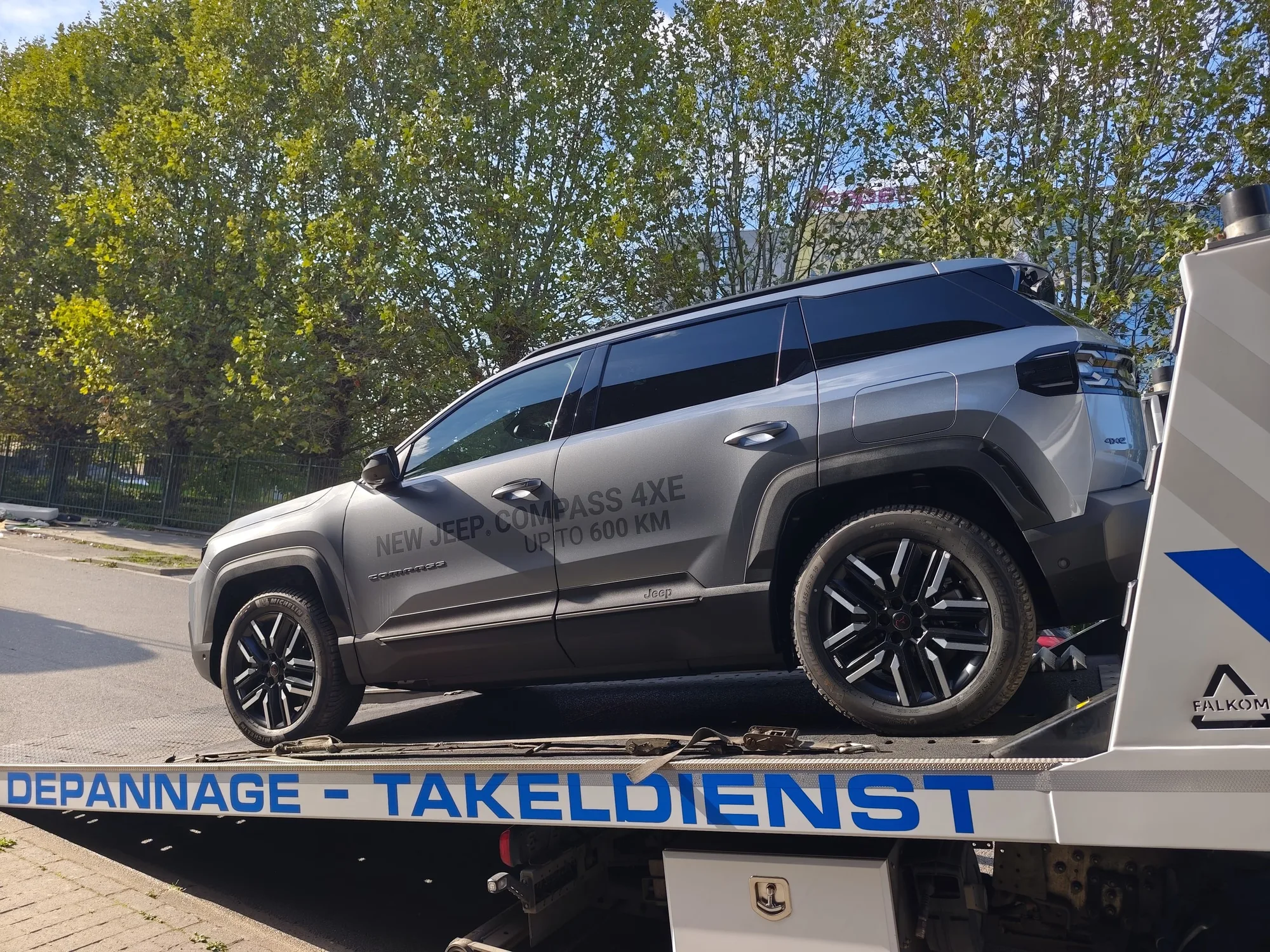
Lettering intact
The cars wear their event lettering: nothing rubs against the sides on the way.
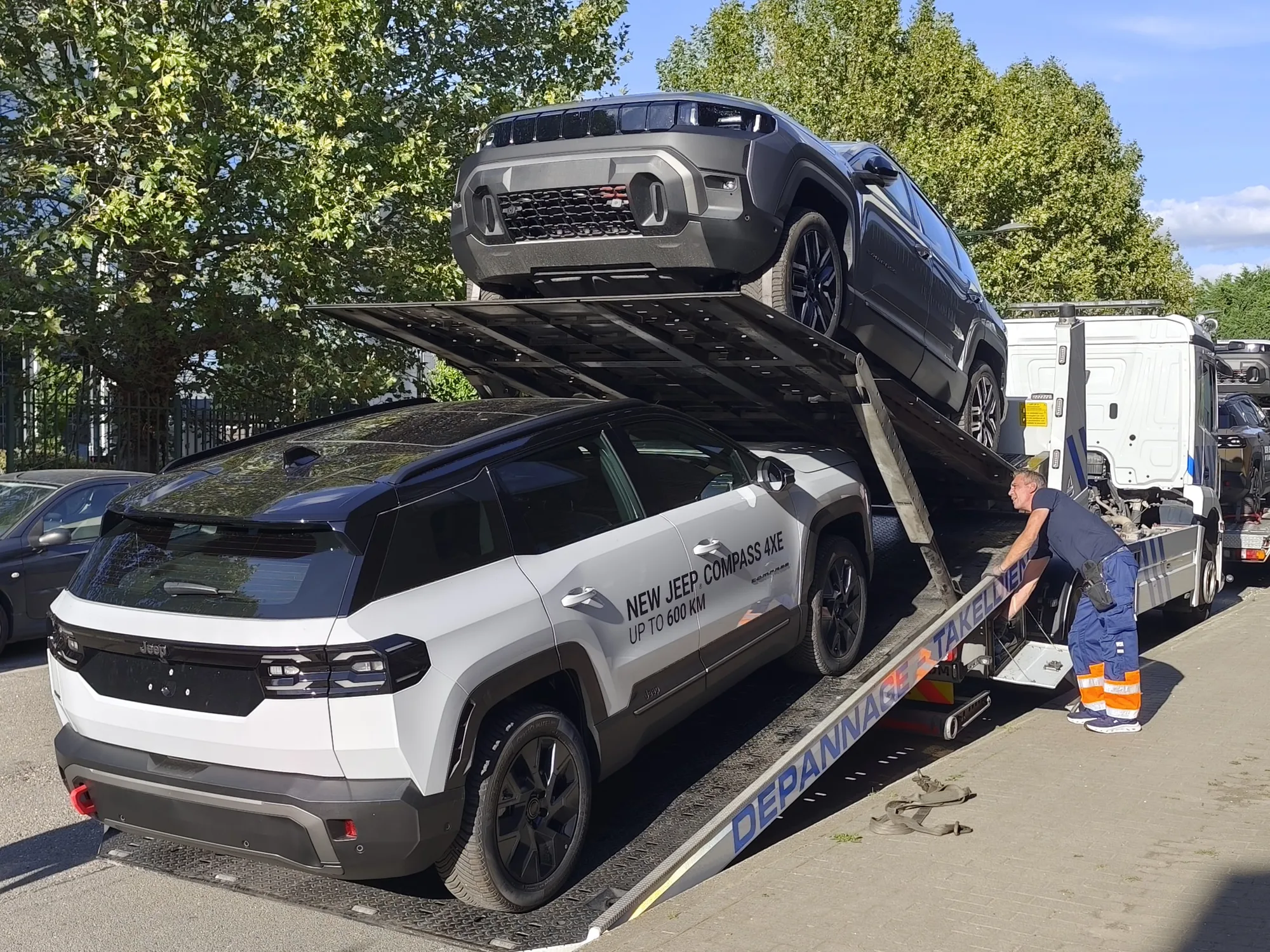
Bed down to the ground
The bed slides down to the ground: the car climbs a gentle slope and touches nothing.
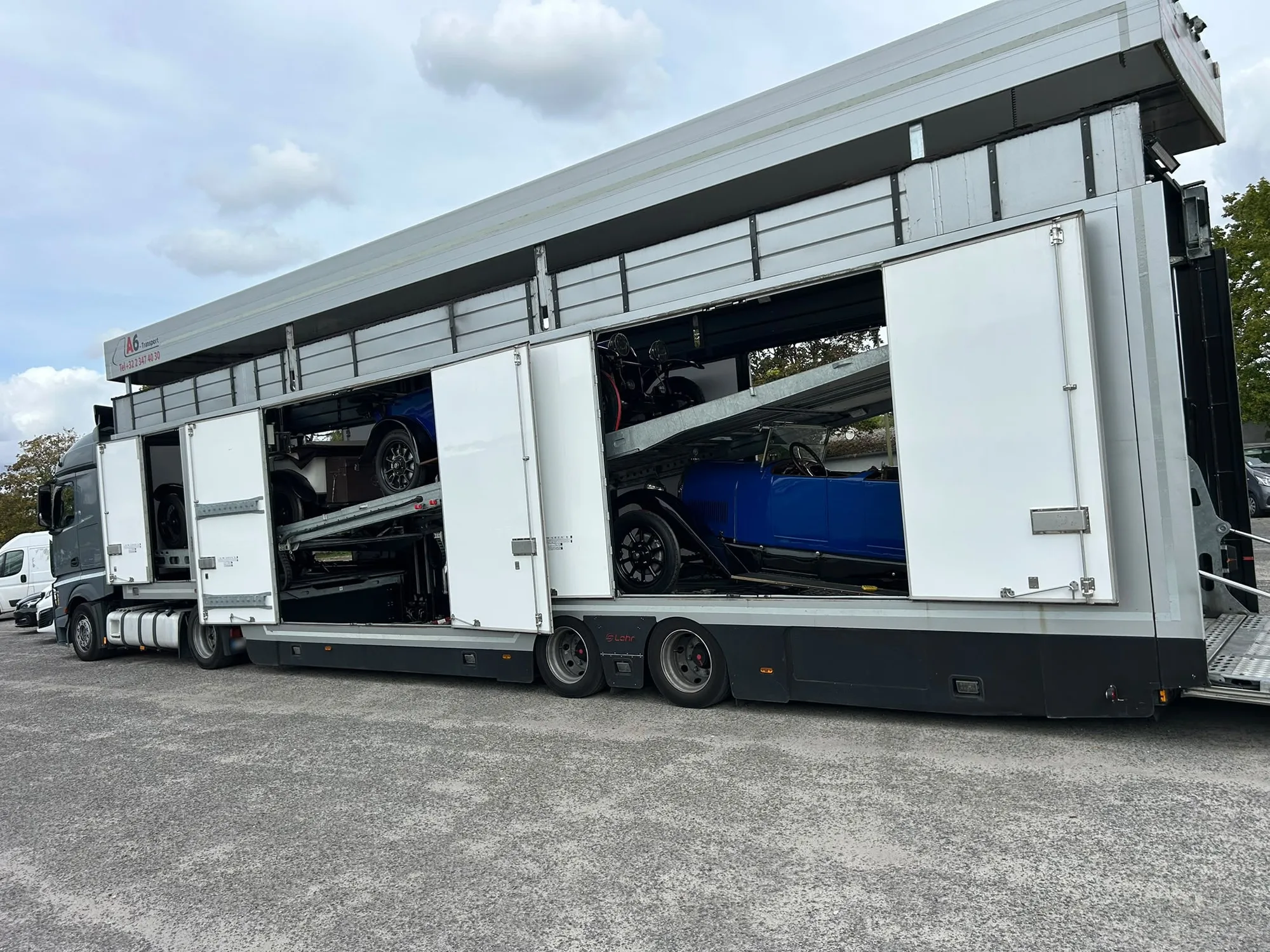
Two decks of pre-war cars
Loaded for the Circuit des Remparts: pre-war cars on both decks.
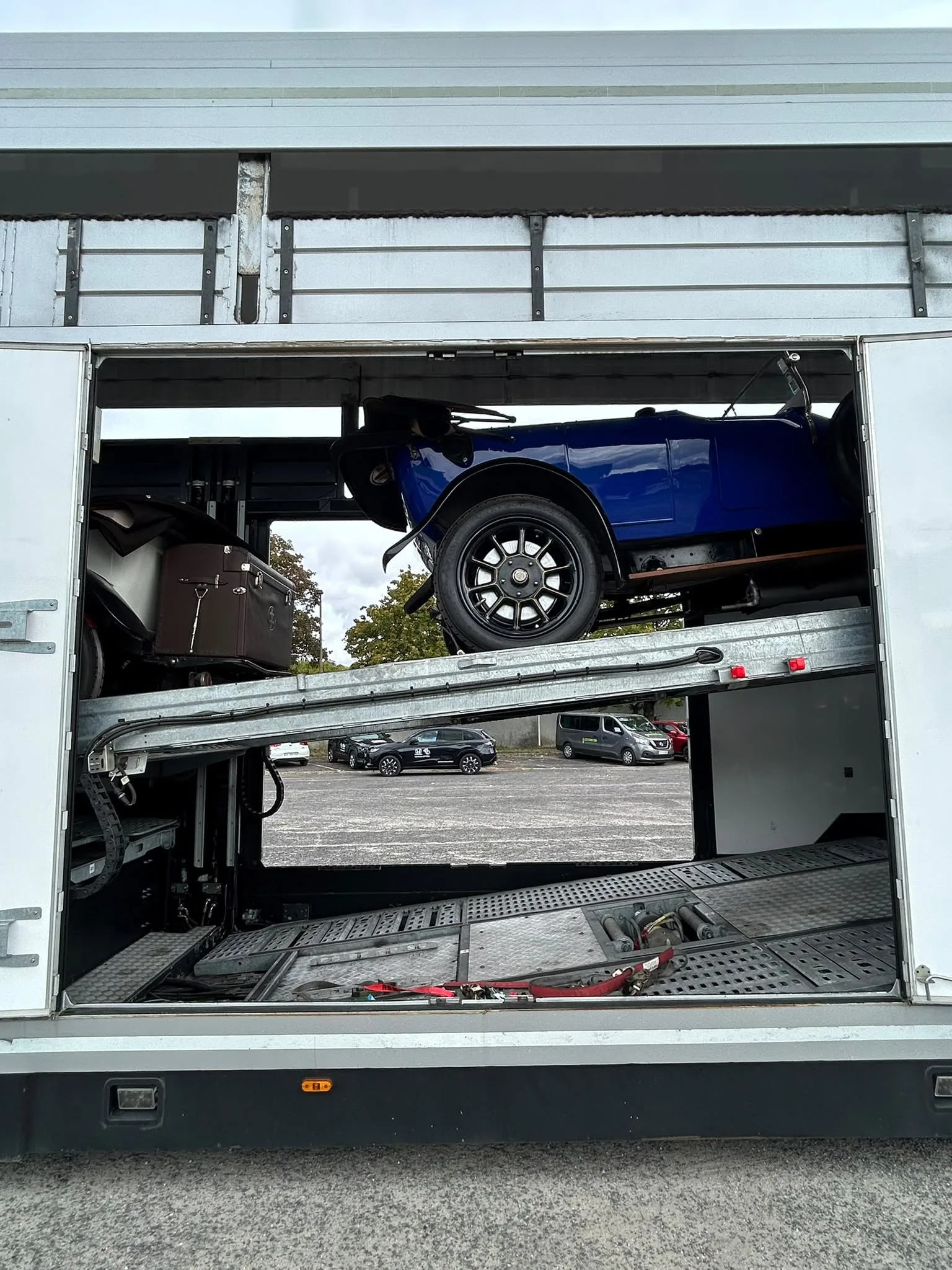
Through the side door
Trunk, hood, running boards: a car of this age travels with everything it carries.
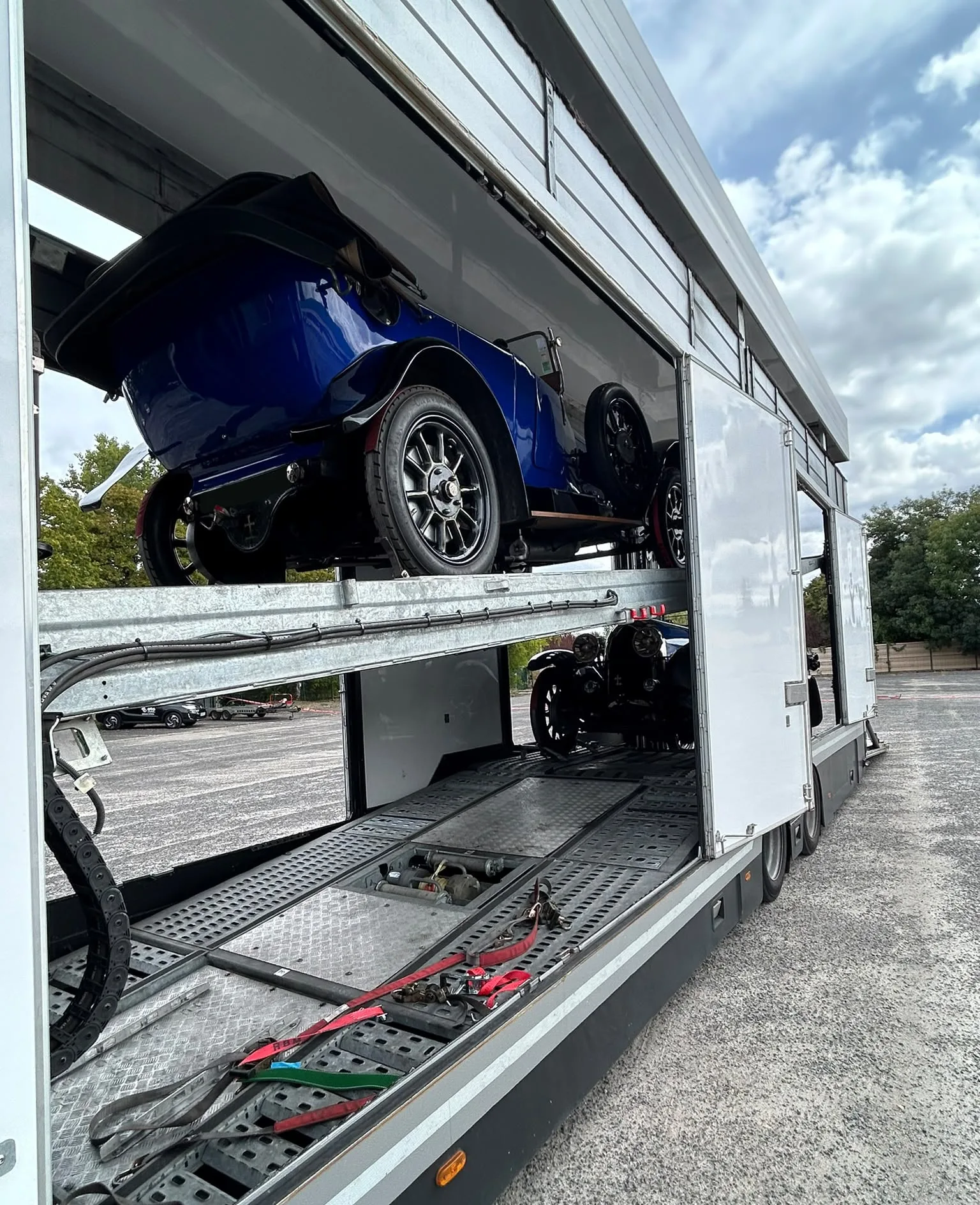
On the upper deck
Wings, running boards, hood: every protrusion on an old car is measured before it goes up.
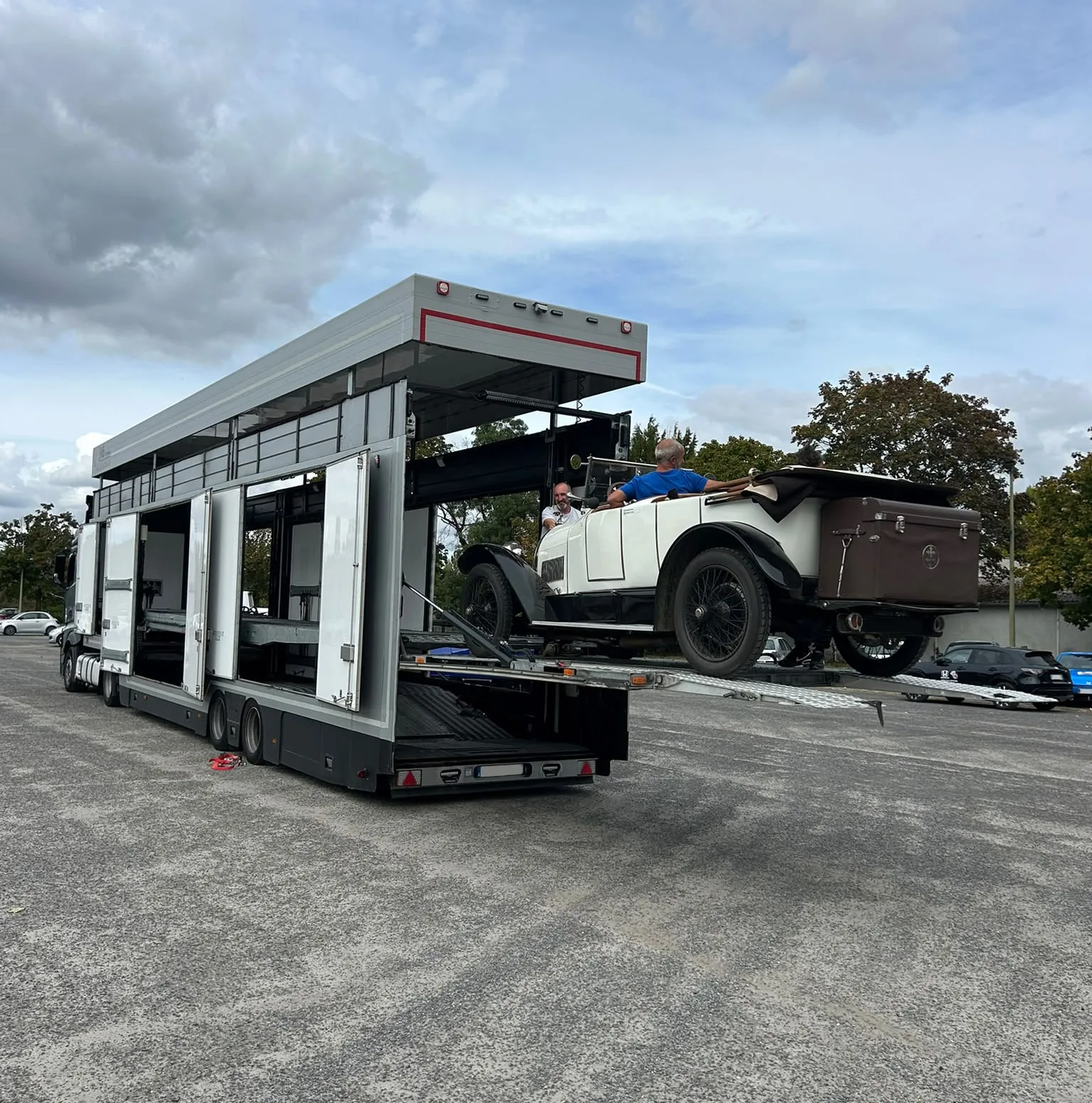
Up the ramp, at walking pace
It climbs at walking pace under its own power. From the ramp's edge, someone watches the wings.
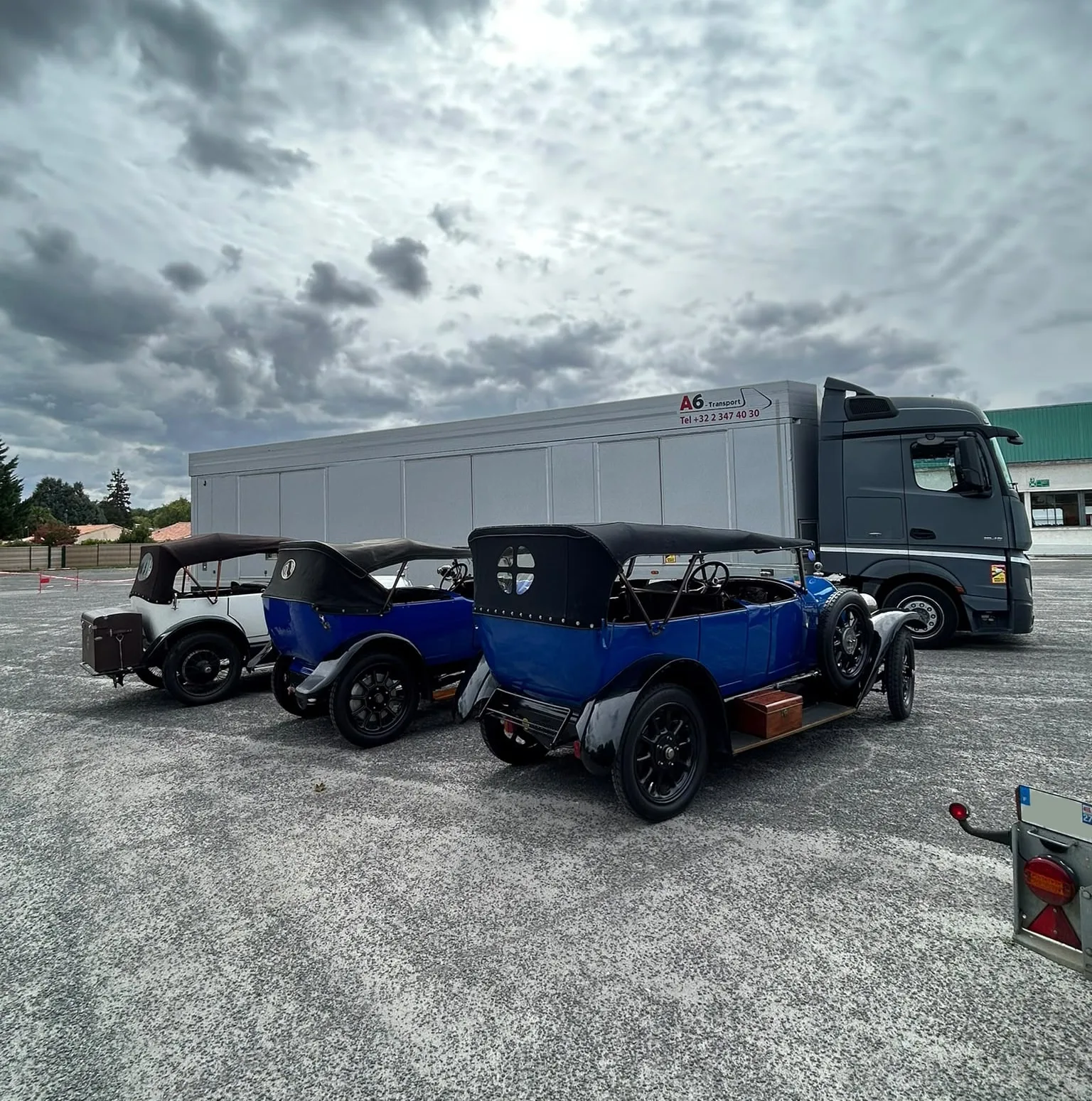
Hoods up
A canvas hood stops a shower, not a day on the motorway.
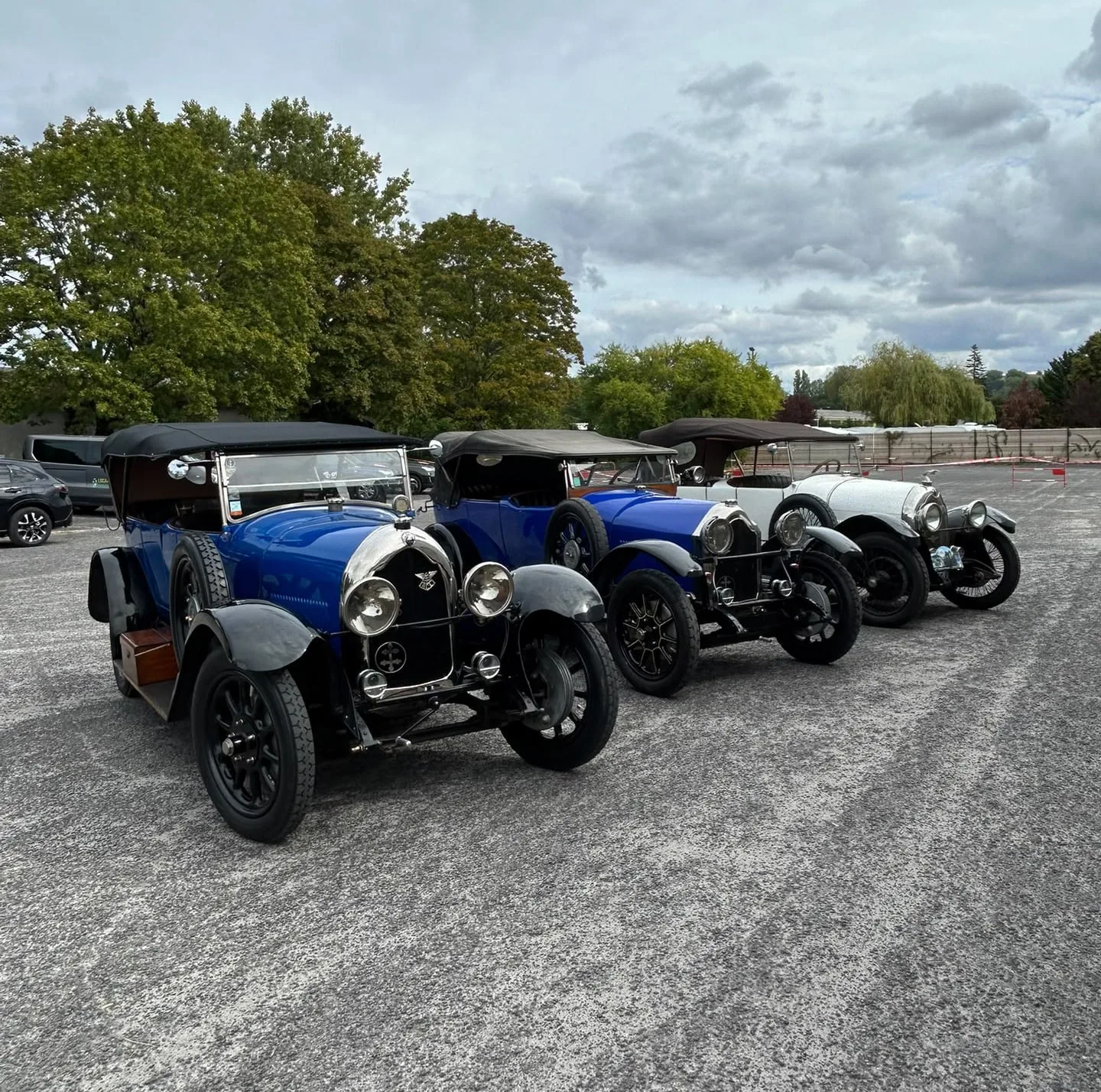
Circuit des Remparts
In Angoulême they drive around the ramparts. Until then, they travel under cover.
No photographs match your search.